The Karnataka High Court has reaffirmed the limited scope of appellate review in interlocutory injunction matters, holding that an appellate court cannot substitute its own view without demonstrating perversity or arbitrariness in the trial court’s order. This judgment underscores the critical importance of disclosing material documents, such as registered partition deeds, at the earliest stage of litigation.
Background & Facts
The Dispute
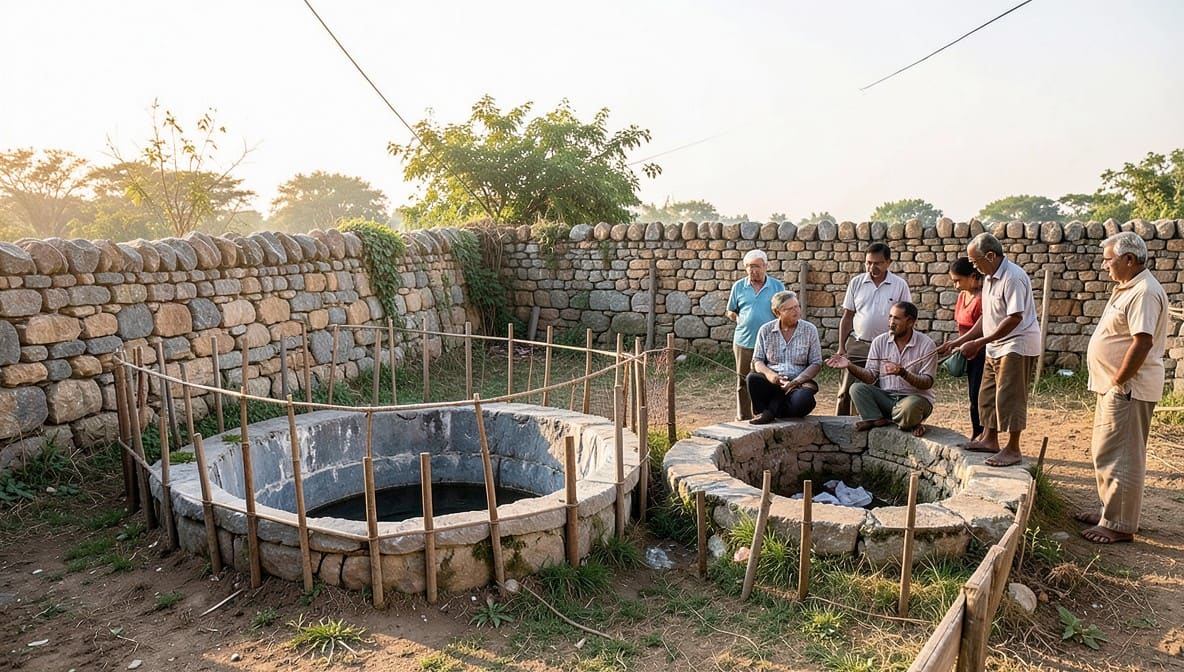
The dispute arises from a civil suit filed by the plaintiff, alleging a common ancestral right over a well located on family property. The plaintiff sought a temporary injunction under Order XXXIX Rules 1 and 2 of the Code of Civil Procedure, 1908, restraining defendant No.1 from using the well for commercial purposes. The plaintiff claimed the well was ancestral and shared by all siblings, including defendant No.1 and defendant No.2. However, the defendant filed a written statement disclosing a registered partition deed executed among the family members, which the plaintiff had deliberately omitted from his pleadings.
Key Facts
- The plaintiff and defendants are siblings who inherited property in Amadalli, Karwar, Uttara Kannada
- A registered partition deed was executed among the parties, the exact date of which is not specified but was produced during proceedings
- The disputed well was dug by defendant No.1 after the partition
- A second well, existing prior to partition, was acknowledged by all parties as accessible to the plaintiff
- The plaintiff’s suit (O.S. No. 117/2024) sought declaration of common right and injunction against commercial use of the disputed well
- The plaintiff did not disclose the existence of the registered partition deed in his plaint or supporting documents
Procedural History
- Date of filing of suit: O.S. No. 117/2024 filed before the Principal Civil Judge and JMFC-II, Karwar (exact date not specified, but application under Order XXXIX filed thereafter)
- 05.09.2024: Trial Court rejected the plaintiff’s application for temporary injunction under Order XXXIX Rules 1 and 2 of CPC, holding that the plaintiff had not made out a prima facie case and had suppressed material facts
- 19.12.2024: Appellate Court (Principal Senior Civil Judge and CJM, Karwar) allowed M.A. No. 9/2024 under Order XLIII Rule 1(r) CPC, reversed the trial court’s order, and granted temporary injunction
- 2026: Writ Petition No. 102661 of 2026 filed before the High Court of Karnataka at Dharwad under Article 227 of the Constitution
- 23.06.2026: Judgment delivered by Justice Sachin Shankar Magadum
The Parties' Positions
Plaintiff (Respondent in Writ): Argued that the well was ancestral and shared by all siblings; claimed equal right to draw water; contended that commercial use by defendant No.1 would deprive him of his legitimate access; asserted that the appellate court correctly appreciated the prima facie case.
Defendant No.1 (Petitioner in Writ): Contended that the well was constructed by him after partition under a registered deed; that the plaintiff deliberately suppressed this document; that the trial court rightly refused injunction; that the appellate court exceeded its limited jurisdiction by substituting its own view without finding perversity.
Relief Sought
The petitioner sought quashing of the appellate court’s order dated 19.12.2024, restoration of the trial court’s order dated 05.09.2024, and a direction that all contentions be adjudicated at trial without prejudice.
The Legal Issue
The central question was whether an appellate court, exercising jurisdiction under Order XLIII Rule 1(r) of the CPC, may reverse a trial court’s refusal to grant a temporary injunction without recording any finding that the trial court’s discretion was arbitrary, capricious, or perverse, particularly when material evidence (a registered partition deed) was suppressed by the plaintiff.
Arguments Presented
For the Appellant/Petitioner
Learned counsel for the petitioner argued that the appellate court’s interference was impermissible under settled principles of appellate review. He relied on the fact that the trial court had properly considered the registered partition deed and found that the plaintiff had failed to disclose it, thereby undermining his claim of common ownership. He cited Sri. S. R. Sankaran v. Sri. S. R. Srinivasan and K. S. Puttaswamy v. Union of India to emphasize that appellate courts cannot act as courts of first impression and must defer to the trial court’s assessment of prima facie evidence unless perversity is established. He further submitted that suppression of material documents vitiates the plaintiff’s claim to equitable relief.
For the Respondent/State
Learned counsel for the respondent argued that the well was ancestral and that the plaintiff had an equal right to its use. He contended that the appellate court was justified in granting injunction to preserve the status quo pending trial, as the plaintiff’s right to water was at stake. He did not dispute the existence of the partition deed but argued that its relevance was secondary to the plaintiff’s equitable claim.
The Court's Analysis
The Court observed that the trial court had correctly identified the suppression of the registered partition deed as a material fact that directly undermined the plaintiff’s claim of common ownership. The deed, produced by the defendant, showed that the disputed well was constructed after partition and was not part of the shared property. The trial court, having considered this document and the attendant circumstances, rightly declined to grant an injunction.
"The Appellate Court, however, has brushed aside this material document and substituted its own view without recording any finding that the order passed by the Trial Court suffered from perversity. Such an approach, in the considered view of this Court, is impermissible."
The Court emphasized that appellate jurisdiction under Order XLIII Rule 1(r) CPC is narrow and confined to correcting errors of law or jurisdiction, not to re-appreciating evidence or substituting views. The appellate court’s failure to explain how the trial court’s discretion was arbitrary or perverse rendered its order legally unsustainable.
The Court further clarified that the plaintiff’s claim to a common right over the well must be established through evidence at trial. The interim relief granted by the appellate court, without addressing the suppression of the partition deed, amounted to a premature adjudication of the merits.
The Verdict
The writ petition is allowed. The order dated 19.12.2024 passed by the Principal Senior Civil Judge and CJM, Karwar, in M.A. No. 9/2024 is quashed. The order dated 05.09.2024 passed by the Principal Civil Judge and JMFC-II, Karwar, rejecting the application under Order XXXIX Rules 1 and 2 of CPC, is restored. All rival contentions are kept open for adjudication at trial. Any observations made herein are confined to the interlocutory stage and shall not influence the trial court’s final determination.
What This Means For Similar Cases
Suppression of Material Documents Vitiates Equitable Relief
- Practitioners must ensure full disclosure of all relevant documents, especially registered deeds, at the stage of interim applications
- Courts will not grant injunctions to parties who conceal material facts that directly contradict their claims
- Failure to disclose a partition deed in a property dispute may result in dismissal of injunction applications
Appellate Courts Cannot Substitute Trial Court’s Discretion
- Appellate courts under Order XLIII Rule 1(r) CPC must identify perversity, arbitrariness, or illegality in the trial court’s order
- Mere disagreement with the trial court’s factual assessment is insufficient to justify reversal
- The burden lies on the appellant to demonstrate that the trial court’s discretion was exercised without reason or in bad faith
Interim Orders Must Not Prejudice Trial on Merits
- Observations made during interim proceedings are not binding on the trial court
- Parties must not treat interim orders as de facto judgments on ownership or rights
- Evidence must be led fully at trial; no inference can be drawn from the grant or denial of temporary relief