The Himachal Pradesh High Court has set aside an appellate order granting an injunction against construction on joint land, holding that the First Appellate Court exceeded its jurisdiction by not finding perversity in the trial court's order dismissing the injunction application. The Court emphasized that appellate courts must not substitute their discretion for that of the trial court unless the trial court's order is shown to be perverse or suffers from legal infirmities.
Background & Facts
The Dispute
The petitioners, Manmohan Chandel and Kali Ram, filed a petition under Article 227 of the Constitution of India challenging the judgment dated 07.05.2024 passed by the Court of learned Additional District Judge-I, Solan, H.P. (First Appellate Court), in CMA No.13-AK/14 of 2023. The appeal was preferred by respondents No.1 to 5 against the order dated 02.12.2023 passed by the Court of learned Civil Judge, Arki, District Solan, H.P. (trial Court), in CMA No.221/6 of 2023, in Civil Suit No.156/1 of 2023.
Key Facts
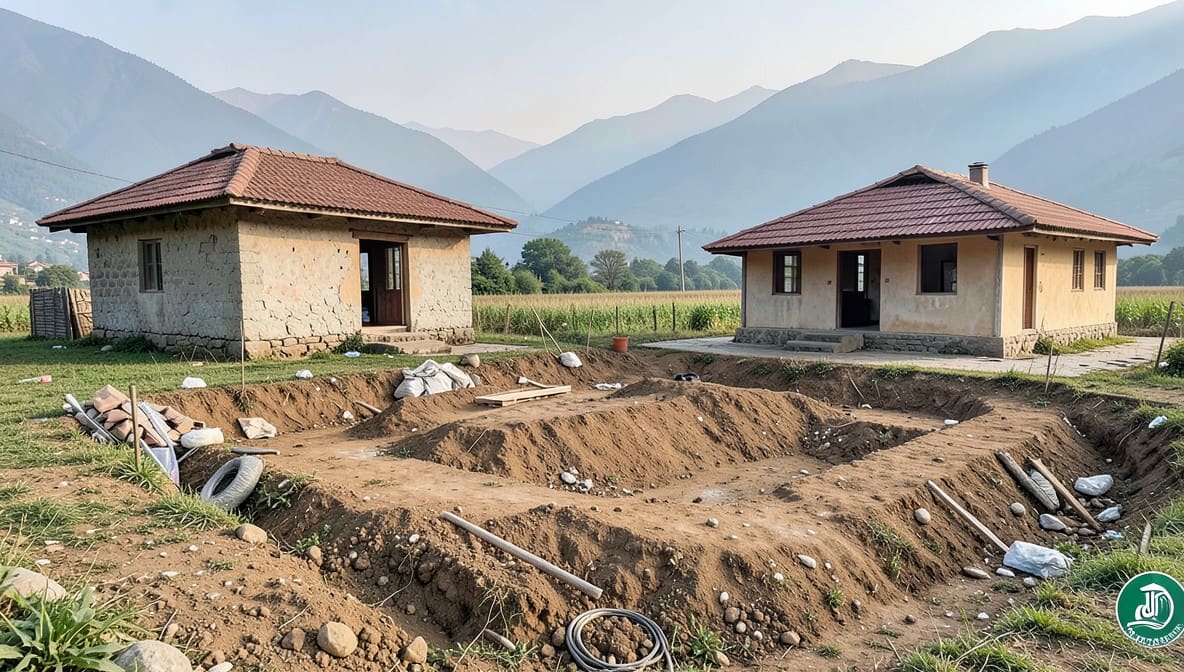
- The suit land (Kewat No.17 min, Khata No.41, measuring 03-12-00 bighas) is situated at village Rehuta, Post Office Piplughat, Tehsil Arki, District Solan, H.P., and is jointly owned by the parties.
- Defendant No.3 invited applications for setting up a petrol pump, and defendant No.1 applied and was sanctioned vide letter dated 09.02.2021.
- Plaintiffs alleged that defendant No.1 approached plaintiff No.2 and family members for NOC, which was denied on the ground that the land had not been partitioned.
- Plaintiffs filed a civil suit for permanent prohibitory injunction, which was withdrawn on 07.07.2023 without reserving the right to file afresh.
- Plaintiffs filed the present suit on 19.07.2023, alleging that defendants started digging and excavation work on 17.07.2023.
- Defendants contended that they had obtained written NOC from plaintiff No.1 and oral NOC from plaintiffs No.2 to 5 and other co-sharers, and had spent a huge amount for development of the land since July 2019.
- Defendants also relied on a rent agreement (Annexure P-10) showing that co-sharer Desh Raj had rented his share to defendant No.1 for Rs.50,000 per year for 20 years.
Procedural History
- 09.02.2021: Defendant No.3 sanctioned petrol pump dealership in favor of defendant No.1.
- July 2019: Defendants claim to have started development work for petrol pump installation.
- 24.11.2018: Defendant No.3 allotted petrol pump dealership to defendant No.1.
- 22.08.2020: Plaintiff No.2 made a complaint to defendant No.3 via email regarding the petrol pump application.
- 28.03.2022: Defendant No.3 assured that petrol pump would not be installed on the suit land.
- 16.07.2023: Defendants threatened plaintiffs to install petrol pump on the suit land.
- 07.07.2023: Earlier suit filed by plaintiff No.2 was dismissed as withdrawn.
- 19.07.2023: Present suit filed by plaintiffs for permanent prohibitory injunction.
- 02.12.2023: Trial Court dismissed the application under Order 39 Rules 1 and 2 CPC, holding that defendants had placed on record NOC issued by plaintiff No.1 and plaintiffs had not approached the court with clean hands.
- 07.05.2024: First Appellate Court allowed the appeal, granted injunction restraining defendants from interfering with the suit land until legal partition.
- 21.07.2026: Present petition allowed by the High Court, setting aside the appellate order and restoring the trial court's order.
Relief Sought
The petitioners sought quashing of the appellate order dated 07.05.2024 and restoration of the trial court's order dated 02.12.2023 dismissing the injunction application.
The Legal Issue
The central question was whether the First Appellate Court exceeded its jurisdiction under Order 43 of the CPC by allowing the appeal against the trial court's order dismissing the application under Order 39 Rules 1 and 2 CPC, without recording findings that the trial court's order suffered from perversity.
Arguments Presented
For the Appellant/Petitioners
- The First Appellate Court failed to record findings that the trial court's order was perverse or suffered from legal infirmities.
- The appellate court cannot substitute its discretion for that of the trial court unless the trial court's order is shown to be perverse.
- The plaintiffs had withdrawn the earlier suit without reserving the right to file afresh, which disentitles them to equitable relief.
- The defendants had obtained NOCs and spent a huge amount for development, which should not be ignored.
For the Respondent/State
- The First Appellate Court correctly reversed the trial court's order, as the trial court failed to consider the impact of the withdrawal of the earlier suit and the issuance of NOCs.
- The defendants' actions were in collusion with defendant No.3, and the plaintiffs' suit was filed to prevent the installation of the petrol pump.
- The plaintiffs had not initiated partition proceedings, and their share was small, which could be compensated in terms of money.
The Court's Analysis
The Court examined the scope of appellate jurisdiction under Order 43 of the CPC and the principles governing interference with discretionary orders under Order 39 Rules 1 and 2 CPC. The Court relied on the Supreme Court's decision in Ramakant Ambalal Choksi v. Harish Ambalal Choksi & Others, which held that appellate courts must not interfere with the trial court's discretion unless the trial court's order is shown to be perverse or suffers from legal infirmities.
"The appellate court in an appeal from an interlocutory order granting or declining to grant interim injunction is only required to adjudicate the validity of such order applying the well settled principles governing the scope of jurisdiction of appellate court under Order 43 of the CPC which have been reiterated in various other decisions of this Court. The appellate court should not assume unlimited jurisdiction and should guide its powers within the contours laid down in the Wander (supra) case."
The Court also examined the meaning of "perverse" as defined in various dictionaries and judicial precedents, holding that a perverse order is one that is against the weight of evidence or the direction of the judge on a point of law. The Court emphasized that inadequacy of evidence or a different reading of evidence is not perversity.
The Court found that the First Appellate Court failed to record findings that the trial court's order suffered from perversity or legal infirmities. The Court also noted that the plaintiffs had withdrawn the earlier suit without reserving the right to file afresh, which disentitles them to equitable relief.
The Verdict
The petition was allowed. The Court set aside the appellate order dated 07.05.2024, restored the trial court's order dated 02.12.2023 dismissing the injunction application, and disposed of the miscellaneous applications. The Court directed the record to be sent back. No costs were awarded.
What This Means For Similar Cases
Appellate Courts Must Not Substitute Discretion
- Appellate courts must not interfere with the trial court's discretion unless the trial court's order is shown to be perverse or suffers from legal infirmities.
- The appellate court's role is to adjudicate the validity of the trial court's order, not to substitute its own discretion.
Perversity Must Be Demonstrated
- To interfere with a discretionary order, the appellate court must find that the trial court's order is perverse, i.e., against the weight of evidence or the direction of the judge on a point of law.
- Inadequacy of evidence or a different reading of evidence is not perversity.
Equitable Reliefs Require Clean Hands
- Parties seeking equitable reliefs, such as injunctions, must approach the court with clean hands.
- Withdrawal of a suit without reserving the right to file afresh disentitles the party to equitable relief.
Documentary Evidence Is Crucial
- Documentary evidence, such as NOCs and rent agreements, plays a crucial role in determining the rights of parties.
- Courts must consider such evidence while adjudicating disputes involving joint land and construction activities.