The Himachal Pradesh High Court has reiterated the limited scope of interference under Article 227 of the Constitution, holding that an order denying interim injunction under Order 39 Rules 1 and 2 CPC cannot be set aside unless it constitutes a perverse finding. The judgment underscores that appellate courts must refrain from reappreciating evidence unless the lower court’s findings are irrational or against the weight of evidence.
Background & Facts
The Dispute
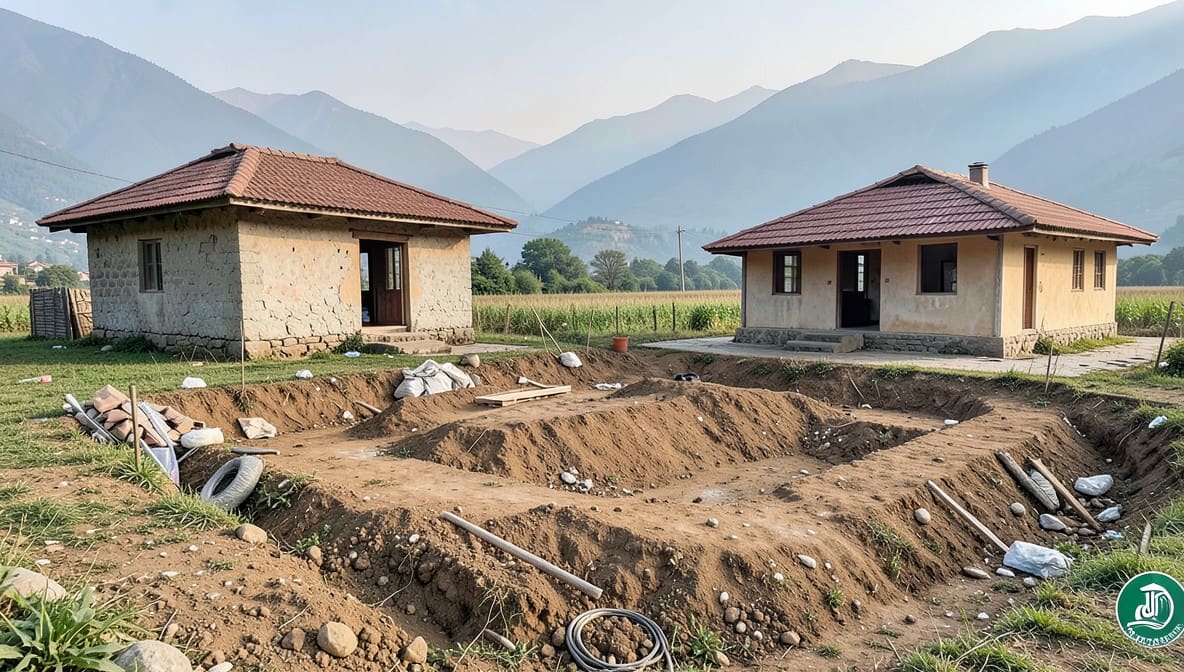
The petitioner, Chuni Lal, filed a civil suit for permanent prohibitory injunction against his real brother, Rakesh Kumar (defendant No. 1), and his wife (defendant No. 2). The suit sought to restrain the defendants from digging, constructing, or interfering with the suit land - measuring khata No. 56 min, khatauni No. 92 min, khasra Nos. 100, 103, 107 (03-12-00 bighas), recorded as Shamlat Deh in joint possession - until its partition by metes and bounds. The land is situated in village Damehra, Pargana Ajmerpur, tehsil Bharari, District Bilaspur, H.P.
Key Facts
- The parties are real brothers, with defendant No. 2 being the wife of defendant No. 1.
- The plaintiff alleged that the defendants were attempting to excavate and construct on the suit land, which is jointly owned.
- Alongside the suit, the plaintiff filed an application under Order 39 Rules 1 and 2 CPC seeking interim relief to restrain the defendants from:
- Digging any part of the land
- Changing the nature of the land
- Cutting trees
- Excavating for construction
- Occupying any portion of the suit land
Procedural History
- Date of Suit Filing: Not explicitly mentioned, but the application under Order 39 Rules 1 and 2 CPC was filed alongside the suit.
- 25.04.2023: The learned Civil Judge, Court No. 3, Ghumarwin, dismissed the interim injunction application in CMA No. 1154 of 2022.
- Appeal Filed: The plaintiff appealed the order under Order XLIII Rule 1(r) CPC before the Additional District Judge, Ghumarwin.
- 03.01.2026: The First Appellate Court dismissed the appeal (Civil Miscellaneous Appeal No. 474 of 2023).
- Present Petition: The plaintiff filed the present petition under Article 227 challenging both the trial court and appellate court orders.
The Parties' Positions
Plaintiff’s Contention
The plaintiff argued that the lower courts erred in dismissing the interim injunction application, contending that the defendants’ actions - digging and constructing on the joint land - would cause irreparable harm and dispossession. He relied on the provisions of Order 39 Rules 1 and 2 CPC, which empower courts to grant interim injunctions to prevent injury or dispossession.
Defendants’ Contention
The defendants contested the suit and the interim application, taking the following stands:
- The plaintiff did not approach the court with clean hands and concealed material facts.
- The parties had undergone a private partition, and the defendants were in separate possession of their share.
- The plaintiff had already constructed two houses on the land, and the defendants were merely exercising their right to construct on their portion.
The defendants’ reply was not specifically rebutted in the plaintiff’s replication, leaving their assertions unchallenged.
Relief Sought
The petitioner sought:
- Quashing of the orders dated 25.04.2023 (trial court) and 03.01.2026 (appellate court).
- Grant of interim injunction under Order 39 Rules 1 and 2 CPC restraining the defendants from interfering with the suit land.
The Legal Issue
The central question before the High Court was: Whether the dismissal of the interim injunction application by the lower courts constituted a perverse finding warranting interference under Article 227 of the Constitution?
Arguments Presented
For the Petitioner
The petitioner contended that:
- The lower courts misapplied the provisions of Order 39 Rules 1 and 2 CPC by dismissing the interim injunction application without considering the prima facie case and balance of convenience.
- The defendants’ actions - digging and constructing - would cause irreparable injury, justifying interim relief.
- The findings of the lower courts were against the weight of evidence and thus perverse, warranting interference under Article 227.
For the Respondents
The respondents were not represented before the High Court. However, their written submissions before the lower courts argued:
- The plaintiff concealed material facts, including his own construction on the land.
- The parties had privately partitioned the land, and the defendants were in separate possession.
- The plaintiff’s conduct disentitled him to equitable relief under Order 39 Rules 1 and 2 CPC.
The Court's Analysis
The High Court, relying on precedents from the Supreme Court, examined the scope of Article 227 and the meaning of perverse findings.
Scope of Article 227
The Court reiterated that Article 227 confers supervisory jurisdiction, not appellate jurisdiction. Interference is warranted only to:
- Correct jurisdictional errors.
- Prevent grave miscarriage of justice.
- Set aside perverse findings - i.e., findings that are:
- Based on no evidence or thoroughly unreliable evidence.
- Against the weight of evidence.
- Irrational or outrageously defies logic.
Meaning of Perverse Findings
The Court extensively quoted the Supreme Court’s decision in Arulvelu and Another v. State ((2009) 10 SCC 206), which defined perverse findings as:
"A finding which is not only against the weight of evidence but is altogether against the evidence itself."
Other judicial interpretations cited included:
- Gaya Din v. Hanuman Prasad: Findings unsupported by evidence or against the law.
- Parry's (Calcutta) Employees' Union v. Parry & Co. Ltd.: Findings contrary to evidence.
- M. S. Narayanagouda v. Girijamma: Orders made in conscious violation of pleading and law.
- S.R. Tewari v. Union of India ((2013) 6 SCC 602): Findings based on no evidence or unreliable evidence.
Application to the Present Case
The Court observed:
- The defendants had specifically pleaded that the plaintiff concealed material facts and had already constructed two houses on the land.
- The plaintiff’s replication did not rebut these allegations, leaving them uncontroverted.
- The trial court dismissed the interim application based on the defendants’ stand, which was not irrational or against evidence.
- The First Appellate Court upheld the trial court’s findings, which did not suffer from perversity.
The Court concluded:
"When a specific stand has been taken by the defendants, in their reply to application under Order 39 Rules 1 and 2 CPC, which has even not been replied in the replication, in such situation, this Court is of the view that findings of the learned trial Court, as upheld by the learned First Appellate Court, does not fall within the definition of ‘perverse findings’."
The Verdict
The High Court dismissed the petition under Article 227, holding:
- The lower courts’ orders did not constitute perverse findings.
- There was no jurisdictional error or grave miscarriage of justice warranting interference.
- The pending applications, if any, were also disposed of.
What This Means For Similar Cases
Interim Injunction Denial Not Perverse Without Irrationality
Practitioners must note that:
- Article 227 is not an appellate remedy - it is a supervisory jurisdiction limited to correcting jurisdictional errors or perverse findings.
- Denial of interim injunction under Order 39 Rules 1 and 2 CPC will not be interfered with unless the lower court’s findings are:
- Based on no evidence.
- Against the weight of evidence.
- Irrational or illogical.
Material Facts Must Be Disclosed in Pleadings
- Parties seeking interim relief must approach the court with clean hands - concealment of material facts (e.g., prior construction, private partition) can fatalize the claim.
- Unrebutted assertions in the defendants’ reply can weaken the plaintiff’s case and justify denial of interim relief.
Limited Scope for Reappreciation of Evidence
- Appellate courts cannot reappreciate evidence under Article 227 - they can only intervene if the findings are perverse.
- Practitioners should focus on demonstrating perversity in lower court orders rather than rearguing the merits of the case.