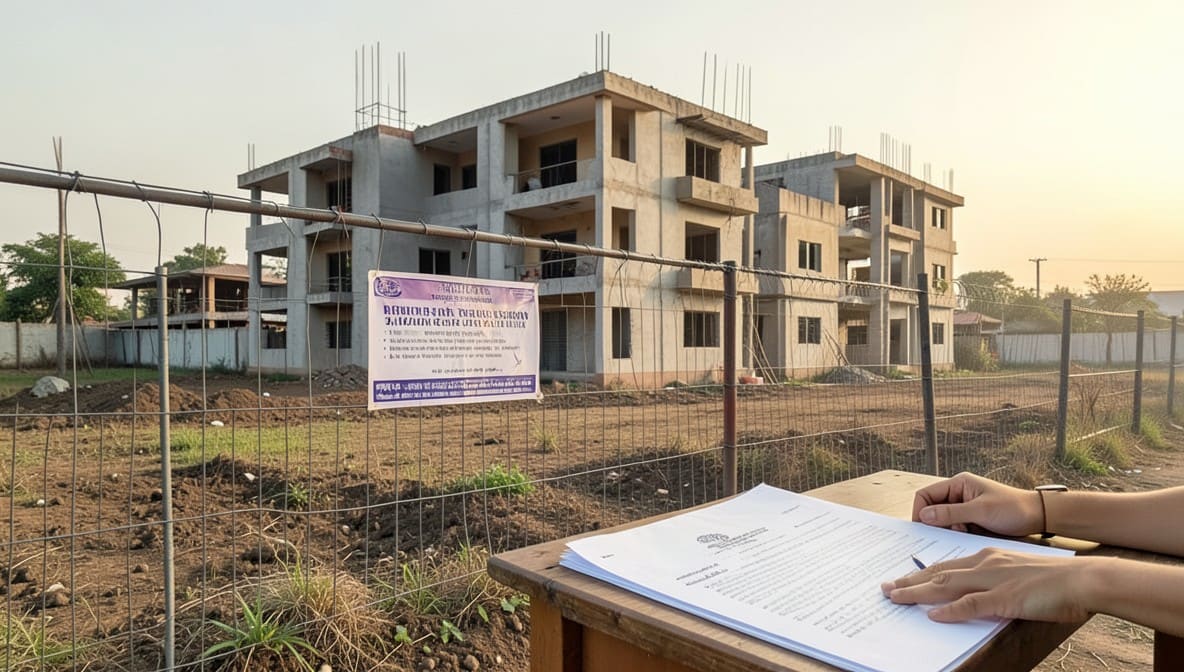
The High Court of Madhya Pradesh has set aside the First Appellate Court's order reversing the trial court's refusal to grant an injunction, underscoring the limited scope of appellate interference in discretionary orders and the importance of burden of proof in property disputes involving registered wills. The Court emphasized that the First Appellate Court erred by shifting the burden of proof, relying on inadmissible evidence, and failing to consider the settled principles governing the grant of injunctions under Order 39 Rules 1 and 2 of the CPC.
Background & Facts
The Dispute
The petitioners, heirs of late Smt. Agya Kaur, challenged the First Appellate Court's order dated 23.09.2025 in Miscellaneous Civil Appeal No. 62 of 2025. The appeal reversed the trial court's order dated 10.03.2025, which had rejected the respondent's application for an injunction under Order 39 Rules 1 and 2 of the CPC in a partition and cancellation of will suit filed by the respondent.
Key Facts
-
Family Settlement and Will Execution:
- A family settlement was executed on 10.03.2010 among the heirs of Smt. Agya Kaur, excluding the petitioners.
- Smt. Agya Kaur executed a registered will on 16.12.2010 bequeathing her remaining properties to Indrajeet Singh (petitioners' predecessor) and his wife Daljeet Kaur.
- Smt. Agya Kaur passed away on 20.09.2013, and the suit lands were mutated in the name of Indrajeet Singh and Daljeet Kaur from 2017-2022.
- After Indrajeet Singh's death in 2023, the petitioners were mutated as heirs.
-
Suit and Injunction Application:
- The respondent filed a suit for partition and cancellation of the will in 2024, along with an application for injunction.
- The trial court rejected the injunction application on 10.03.2025, finding no prima facie case, no balance of convenience, and no irreparable loss.
- The respondent appealed under Order 43 Rule 1(r) CPC, which was allowed by the First Appellate Court on 23.09.2025.
-
First Appellate Court's Errors:
- The First Appellate Court relied on a handwriting expert's report not part of the trial court's record.
- It failed to consider the application under Order 41 Rule 27 CPC for admitting additional evidence.
- It shifted the burden of proof to the petitioners to disprove the respondent's claim that the property was purchased from funds provided by her brothers.
Procedural History
- 10.03.2010: Family settlement executed among heirs of Smt. Agya Kaur.
- 16.12.2010: Registered will executed by Smt. Agya Kaur bequeathing properties to Indrajeet Singh and Daljeet Kaur.
- 20.09.2013: Death of Smt. Agya Kaur.
- 2017-2022: Mutation of suit lands in the name of Indrajeet Singh and Daljeet Kaur.
- 2023: Death of Indrajeet Singh; mutation in the name of petitioners.
- 2024: Respondent filed suit for partition and cancellation of will (Regular Civil Suit No. 342-A/2024) along with injunction application.
- 10.03.2025: Trial court rejected injunction application.
- 23.09.2025: First Appellate Court allowed appeal, reversed trial court's order, and granted injunction.
- 28.03.2025: Present petition filed under Article 227 of the Constitution of India.
Relief Sought
The petitioners sought quashing of the First Appellate Court's order dated 23.09.2025, restoration of the trial court's order dated 10.03.2025, and expedited disposal of the main suit.
The Legal Issue
The central question was whether the First Appellate Court, while exercising jurisdiction under Order 43 Rule 1(r) CPC, could reverse the trial court's discretionary order refusing an injunction without proper reasons, shifting the burden of proof, and relying on inadmissible evidence.
Arguments Presented
For the Petitioners
- The First Appellate Court erred by shifting the burden of proof to the petitioners to disprove the respondent's claim that the property was purchased from funds provided by her brothers.
- The Court relied on Metpalli Lasum Bai v. Metapalli Muthaih (2025 SCC Online 1488) and Mohd Mehtab Khan v. Khushnuma Ibrahim Khan (2013) 9 SCC 221 to argue that the First Appellate Court exceeded its jurisdiction by interfering with the trial court's discretionary order.
- The handwriting expert's report was not part of the trial court's record and was admitted without following due procedure under Order 41 Rule 27 CPC.
- The First Appellate Court failed to consider the settled principles governing the grant of injunctions under Order 39 Rules 1 and 2 CPC.
For the Respondent
- The trial court erred by rejecting the injunction application without considering the respondent's claim that the will was concocted and the property was purchased from funds provided by her brothers.
- The First Appellate Court correctly relied on the handwriting expert's report and other documents to find a prima facie case, balance of convenience, and irreparable loss.
- The respondent argued that the will was never disclosed during Agya Kaur's lifetime and was executed under suspicious circumstances.
The Court's Analysis
The Court examined the scope of interference under Article 227 of the Constitution of India and Order 43 Rule 1(r) CPC. It held that the First Appellate Court exceeded its jurisdiction by reversing the trial court's discretionary order without proper reasons and by shifting the burden of proof.
"Prima-facie, it transpires that the First Appellate Court has not considered the fact that the burden of proof is on the person, who has pleaded the case to that extent. In the present case, the plaintiff has pleaded that the property purchased by Smt. Agya Kaur is from the fund given by her brother, but while deciding the appeal, the First Appellate Court has shifted the burden on the present petitioners, who are defendants, to produce such documents to show that Agya Kaur has her own income and the property was not purchased from the fund given by her brother."
The Court emphasized that the burden of proof lies on the party alleging fraud or benami transactions, as per Sections 63 and 68 of the Indian Evidence Act, 1872. It reiterated that a registered will carries a presumption of genuineness and that the First Appellate Court erred by ignoring this presumption.
The Court also held that the First Appellate Court failed to consider the settled principles governing the grant of injunctions under Order 39 Rules 1 and 2 CPC, including the requirement to establish a prima facie case, balance of convenience, and irreparable loss. It noted that the First Appellate Court relied on inadmissible evidence (the handwriting expert's report) and failed to follow due procedure under Order 41 Rule 27 CPC for admitting additional evidence.
The Court further held that the First Appellate Court's order was perverse and illegal, warranting interference under Article 227 of the Constitution of India. It restored the trial court's order dated 10.03.2025 and directed the trial court to expedite the main suit.
The Verdict
The petitioners succeeded. The Court allowed the petition under Article 227 of the Constitution of India, quashed the First Appellate Court's order dated 23.09.2025, and restored the trial court's order dated 10.03.2025 rejecting the injunction application. The Court directed the trial court to expedite the main suit and dispose of it as early as possible.
What This Means For Similar Cases
Appellate Courts Must Respect Trial Court's Discretion
- Appellate courts cannot interfere with the trial court's discretionary orders unless the trial court's exercise of discretion is perverse, illegal, or palpably incorrect.
- The First Appellate Court's order was set aside because it failed to defer to the trial court's discretion and substituted its own views without proper reasons.
Burden of Proof in Property Disputes
- The burden of proof lies on the party alleging fraud or benami transactions to establish their claim.
- A registered will carries a presumption of genuineness, and the burden shifts to the party disputing the will to prove its invalidity.
Inadmissible Evidence and Procedural Compliance
- Appellate courts cannot rely on evidence not part of the trial court's record unless due procedure under Order 41 Rule 27 CPC is followed.
- Handwriting expert reports must be proved by examining the expert and providing an opportunity for cross-examination.
Scope of Article 227 of the Constitution of India
- Article 227 empowers the High Court to interfere with orders passed by subordinate courts if they are perverse, illegal, or violate principles of natural justice.
- The Court emphasized that the First Appellate Court's order was perverse and illegal, warranting interference under Article 227.