The Karnataka High Court, in a recent judgment, reaffirmed the fundamental principle that plaintiffs seeking mandatory injunctions must prove their case on merits and cannot succeed merely by relying on weaknesses in the defendant's case. The Court set aside an appellate decree that had erroneously reversed a trial court's dismissal, emphasizing that the burden of proof lies squarely on the plaintiff to establish their entitlement to relief under Section 100 of the Code of Civil Procedure, 1908.
Background & Facts
The Dispute
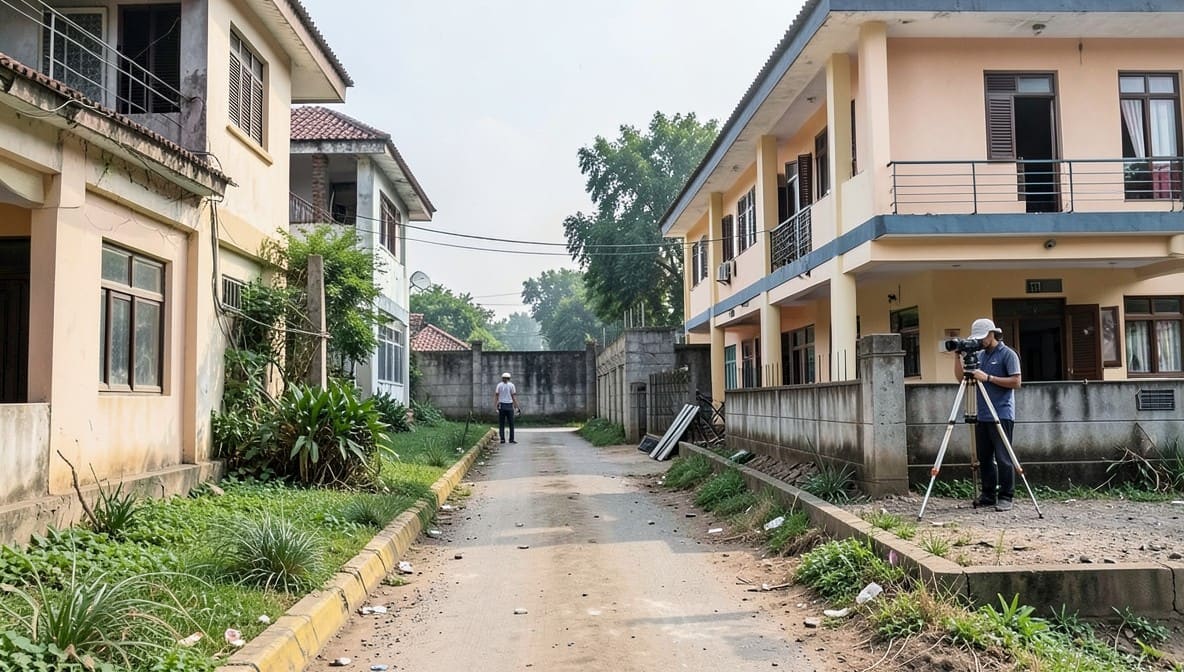
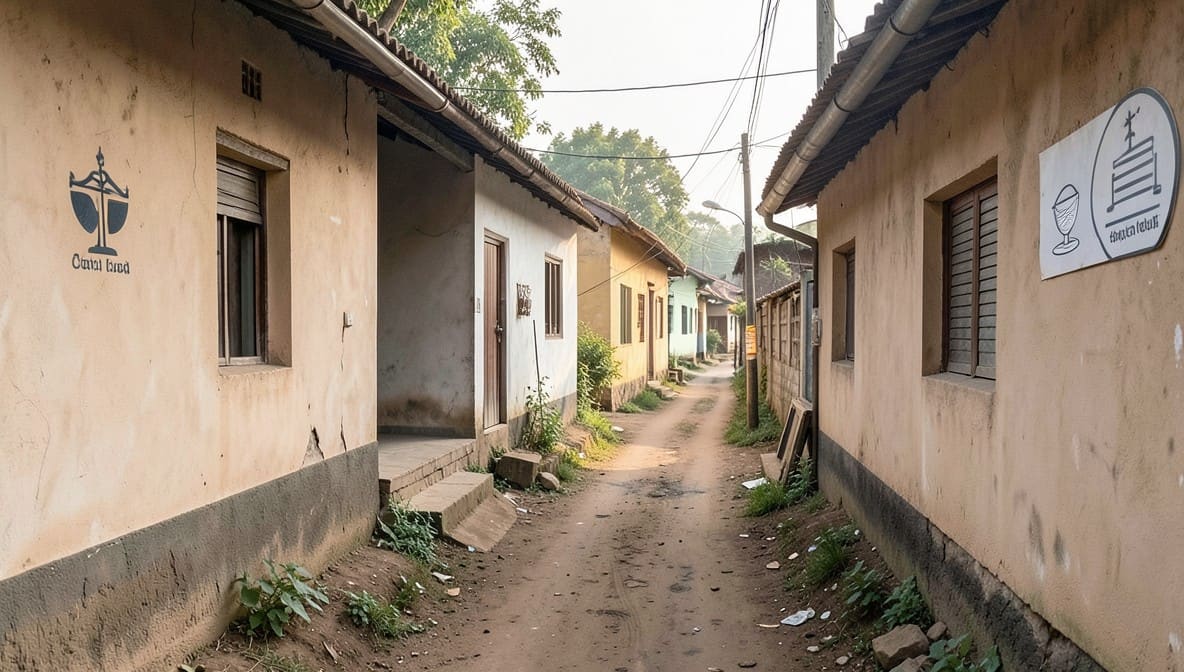
The case originated from a property dispute between Smt. Jogera Yellamma (defendant) and Sri Edigara Chandrappa (plaintiff) in Kulahalli Village, Harapanahalli Taluk. The plaintiff filed a suit (O.S. No. 138/1999) seeking a mandatory injunction directing the defendant to demolish a construction allegedly encroaching upon a passage between their houses. The plaintiff claimed the passage had existed from time immemorial and was being used by him and the public.
Key Facts
- The plaintiff alleged that the defendant demolished her hut in December 1998 and constructed a new house, encroaching upon the passage and resting the roof on the plaintiff’s western wall.
- The plaintiff claimed ownership of House No. 41, described as ancestral property, and contended that the defendant’s construction blocked a passage measuring 8 feet x 40 feet.
- The defendant admitted the existence of an 8-foot space but denied it was a public passage. She claimed to have purchased the portion from Sri Sannayallappa for Rs. 1,500 and obtained a license from the Gram Panchayat for construction.
- The defendant further contended that she had paid Rs. 3,100 to the plaintiff for using the western wall as a common wall.
Procedural History
The case progressed through multiple stages:
- 31.08.1999: Plaintiff filed O.S. No. 138/1999 before the Civil Judge (Junior Division), Harapanahalli.
- 02.09.2005: Trial court dismissed the suit, holding the plaintiff failed to prove the existence of a public passage or his ownership of House No. 41.
- R.A. No. 60/2005: Plaintiff appealed to the Civil Judge (Senior Division), Harihar.
- 22.12.2007: First appellate court allowed the appeal, reversed the trial court’s decree, and decreed the suit for mandatory injunction.
- RSA No. 1835/2008: Defendant filed a regular second appeal before the Karnataka High Court, Dharwad Bench.
- 23.10.2010: High Court admitted the appeal on substantial questions of law.
- 10.01.2012: Appeal dismissed for non-filing of paper book.
- 15.03.2023: Appeal restored after applications to recall the dismissal order.
- 01.07.2025: Legal representatives of the deceased defendant brought on record.
- 03.07.2026: High Court allowed the appeal, setting aside the first appellate court’s decree.
Relief Sought
The plaintiff sought:
- A mandatory injunction directing the defendant to demolish the construction over the disputed passage.
- In default, permission to demolish the construction at the defendant’s cost.
The defendant sought dismissal of the suit, contending the construction was on her own property and duly licensed.
The Legal Issue
The central questions before the High Court were:
- Whether the first appellate court erred in casting the burden of proof on the defendant to establish ownership of the disputed passage, instead of requiring the plaintiff to prove his case on merits.
- Whether the first appellate court was justified in reversing the trial court’s findings without holding that the trial court had erred in its appreciation of evidence.
Arguments Presented
For the Appellant (Defendant)
- The first appellate court grossly erred in reversing the trial court’s well-reasoned judgment without properly considering pleadings and evidence.
- The plaintiff failed to prove ownership of House No. 41, as the property stood in the name of his father (Ex. P1).
- The plaintiff did not adduce evidence to prove the existence of a public passage or his right to maintain the suit.
- The first appellate court relied on the weakness of the defendant’s case rather than the strength of the plaintiff’s evidence, contrary to settled legal principles.
- The plaintiff’s laches and acquiescence (delay in objecting to the construction) disentitled him to equitable relief.
For the Respondent (Plaintiff)
(Note: The plaintiff did not appear to contest the appeal after his counsel retired.)
The Court's Analysis
The High Court critically examined the first appellate court’s reasoning and found it legally unsustainable. Key observations included:
-
Burden of Proof:
"It is well settled that the initial burden of proving the case always lies on the person who approaches the court."
The Court emphasized that the plaintiff failed to discharge this burden. While the plaintiff claimed ownership of House No. 41, Ex. P1 (a document on record) showed the property stood in his father’s name. The plaintiff admitted this during cross-examination, yet the first appellate court incorrectly held that the defendant never disputed the plaintiff’s ownership.
-
Evidence Appreciation: The trial court had rightly dismissed the suit on the grounds that the plaintiff failed to prove:
- The existence of a public passage between the houses.
- That the passage was being used by the plaintiff and others.
- That the defendant’s construction was illegal or unauthorized.
The first appellate court, however, drew an adverse inference against the defendant for failing to prove her purchase of the passage from Sri Sannayallappa, despite the defendant’s categorical denial that the space was a public passage. The High Court held:
"The shifting of onus of proof on the other side or drawing of an adverse inference would arise only when the plaintiff succeeds in making out his case."
The first appellate court’s conclusion was not based on positive evidence adduced by the plaintiff but solely on the weakness of the defendant’s case, which is legally impermissible.
-
Laches and Acquiescence: The Court noted the plaintiff’s delay in initiating legal action. The plaintiff:
- Submitted a representation to the Gram Panchayat on 11.12.1998 but took no further action until August 1999.
- Claimed to have been away from the village for five months (from 08.02.1999) due to his father-in-law’s illness, but Ex. P3 (his representation) showed the defendant had already commenced construction by December 1998.
The first appellate court ignored these material facts, which were crucial for determining whether the plaintiff was entitled to discretionary relief like a mandatory injunction.
-
Appellate Review: The High Court reiterated that appellate courts must reappraise evidence but cannot reverse findings without identifying errors in the trial court’s reasoning. The first appellate court failed in this duty, as its judgment was based on erroneous legal principles rather than a proper evaluation of the plaintiff’s case.
The Verdict
The High Court allowed the regular second appeal and passed the following orders:
- Set aside the judgment and decree dated 22.12.2007 passed in R.A. No. 60/2005 by the Civil Judge (Senior Division), Harihar.
- Restored the judgment and decree dated 02.09.2005 passed in O.S. No. 138/1999 by the Civil Judge (Junior Division), Harapanahalli, which dismissed the plaintiff’s suit.
- Directed the Registry to send back the records to the concerned courts for compliance.
What This Means For Similar Cases
Plaintiffs Must Prove Their Case on Merits
This judgment reinforces that mandatory injunctions are discretionary remedies, and plaintiffs cannot succeed merely by pointing to weaknesses in the defendant’s case. Practitioners must:
- Adduce clear evidence to prove ownership, rights, and the existence of the alleged wrong.
- Discharge the initial burden of proof before expecting the defendant to disprove the claims.
- Avoid relying on adverse inferences unless the plaintiff has established a prima facie case.
Acquiescence and Laches Can Defeat Relief
- Delay in action can disentitle plaintiffs to equitable relief. Courts may deny mandatory injunctions if the plaintiff acquiesced to the defendant’s actions or failed to object promptly.
- Practitioners should document objections (e.g., notices, representations) at the earliest stage to avoid allegations of laches.
Appellate Courts Must Scrutinize Evidence Independently
- Appellate courts cannot reverse trial court findings without identifying specific errors in the lower court’s reasoning.
- Weaknesses in the defendant’s case cannot substitute for the plaintiff’s failure to prove their own case.
- Appellate judgments must engage with all material facts, including those related to laches, acquiescence, and evidence appreciation.
This judgment serves as a critical reminder for litigants and practitioners that equitable relief is not automatic and burden of proof is non-negotiable in civil suits.