The Himachal Pradesh High Court has reaffirmed the limited scope of appellate jurisdiction under Order 43 of the CPC, holding that an appellate court cannot re-evaluate evidence or substitute the trial court’s discretionary findings unless the lower court’s order is perverse. The decision sets aside a prior appellate order and restores the trial court’s dismissal of an application under Order 39 Rules 1 and 2 CPC.
Background & Facts
The Dispute
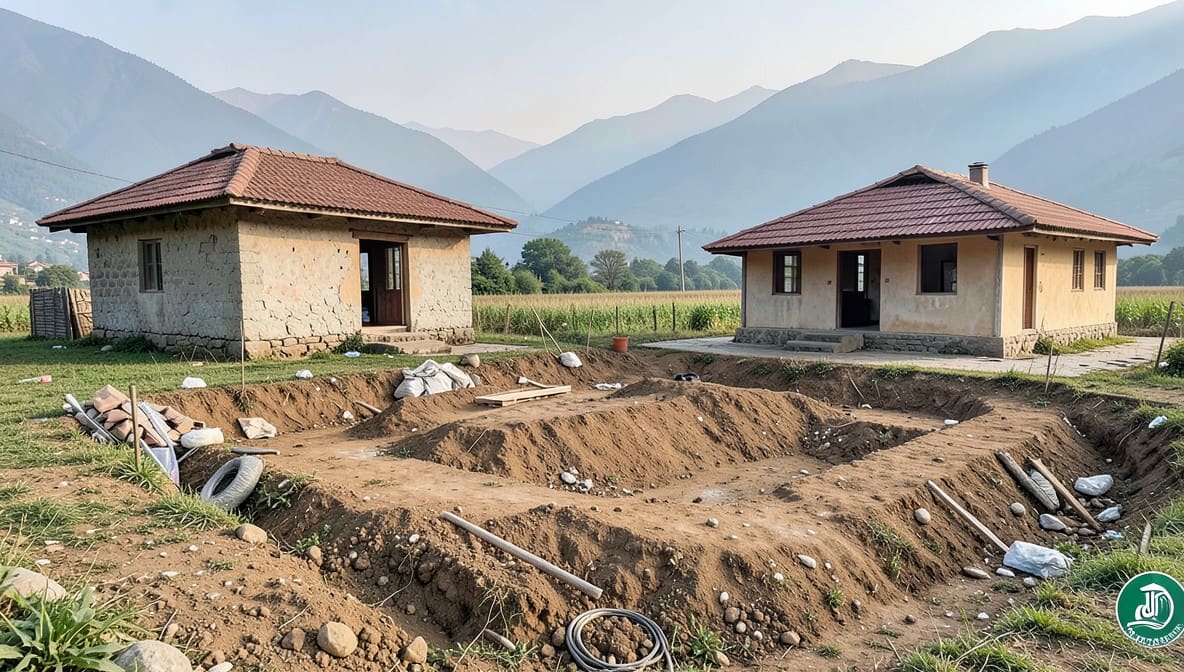
The petitioners, Nirmala Thapa & Anr., filed a civil suit (CMA No. 20/D/2022) against the respondent, Akshay Thapa, seeking cancellation of a Family Settlement Deed dated 15.02.2021, mutation entries No. 2349 (12.11.2020) and No. 2377 (25.02.2021), and a Will dated 15.02.2019. The suit land comprised Khata No. 228, Khatauni No. 400, Khasra Nos. 1686/358 and 360 (00-09-87 hectares) at Mohal Sidhpur, Mauza Khaniyara, Tehsil Dharamshala, District Kangra, H.P. The petitioners also sought a permanent prohibitory injunction restraining the defendants from alienating the suit land.
Key Facts
- 15.02.2021 - Family Settlement Deed executed, forming the basis of the suit.
- 12.11.2020 - Mutation No. 2349 of inheritance recorded on the basis of the Family Settlement Deed.
- 25.02.2021 - Mutation No. 2377 recorded and sanctioned.
- 15.02.2019 - Will executed by the testator (Sh. Birender Singh Thapa) in favour of Defendant No. 1.
- 13.11.2018 - Earlier Will dated, granting Defendant No. 1 a life-interest in the suit land.
- 20.01.2020 - Predecessor-in-interest of the parties expired.
- 15.09.2019 - Will dated 15.02.2019 allegedly executed in favour of Defendant No. 2.
- 20.01.2024 - Trial Court (Civil Judge, Court No. 1, Dharamshala) dismissed the application under Order 39 Rules 1 and 2 CPC.
- 02.06.2025 - First Appellate Court (District Judge, Kangra) allowed the appeal and set aside the trial court’s order, directing that the defendants be restrained from alienating the suit land.
- 30.07.2026 - Himachal Pradesh High Court delivered the present judgment.
Procedural History
- 20.01.2024: Trial Court dismissed the application under Order 39 Rules 1 and 2 CPC.
- 02.06.2025: First Appellate Court allowed the appeal, set aside the trial court’s order, and ordered a status-quo restraining the defendants.
- 30.07.2026: Petition filed under Article 227 of the Constitution; High Court heard and delivered the judgment.
Parties' Positions
- Petitioners argued that the appellate court exceeded its jurisdiction, that the trial court’s discretion was exercised correctly, and that the order was not perverse.
- Respondent contended that the appellate court was right to intervene because the trial court had erred in dismissing the application and that the order was arbitrary.
Relief Sought
The petitioners sought (i) setting aside the appellate order dated 02.06.2025, (ii) restoration of the trial court order dated 20.01.2024, (iii) dismissal of the application under Order 39 Rules 1 and 2 CPC, and (iv) continuation of the status-quo restraining alienation of the suit land.