High Courts judgments

10232 High Courts judgments explained in plain English: what was decided, the law applied and why it matters. Page 50 of 427.

BNS Section 308(5) & 308(6) | Sting Operations in Public Interest Not Blackmail: MP HC Grants Anticipatory Bail to Journalist
Case Law Analysis
|Madhya Pradesh High Court

BNS Section 308(5) & 308(6) | Sting Operations in Public Interest Not Blackmail: MP HC Grants Anticipatory Bail to Journalist

Madhya Pradesh High Court ruled that sting operations exposing illegal female foeticide do not constitute blackmail under Bharatiya Nyaya Sanhita, granting anticipatory bail to a journalist. The judgment reinforces investigative journalism's protection when acting in public interest, setting a precedent for press freedom under criminal law.

POCSO Act Bail | Minor's Consent Irrelevant but Accused's Youth and Clean Record Justify Bail : MP HC
Case Law Analysis
|Madhya Pradesh High Court

POCSO Act Bail | Minor's Consent Irrelevant but Accused's Youth and Clean Record Justify Bail : MP HC

Madhya Pradesh High Court grants bail in a POCSO case, emphasizing that while the minor's consent is immaterial, the accused's young age (20 years), lack of flight risk, and absence of evidence tampering concerns warrant release. The ruling underscores that POCSO bail considerations may include mitigating factors beyond the offense's gravity, impacting bail jurisprudence in sexual offense cases involving young accused.

Order IX Rule 9 CPC | Litigant Cannot Be Penalized for Lawyer's Negligence: MP HC Restores Dismissed Suit
|Madhya Pradesh High Court

Order IX Rule 9 CPC | Litigant Cannot Be Penalized for Lawyer's Negligence: MP HC Restores Dismissed Suit

Madhya Pradesh High Court rules that a litigant's suit cannot be dismissed due to their lawyer's absence, emphasizing that procedural defaults by counsel should not prejudice the client. The Court restored the suit under Order IX Rule 9 CPC, reinforcing that medical emergencies and genuine inability to attend hearings are valid grounds for restoration, even if not communicated to the lawyer.

Section 483 BNSS | Omnibus Dowry Allegations Without Specific Evidence Insufficient to Deny Bail : MP HC
Case Law Analysis
|Madhya Pradesh High Court

Section 483 BNSS | Omnibus Dowry Allegations Without Specific Evidence Insufficient to Deny Bail : MP HC

Madhya Pradesh High Court rules that general dowry harassment allegations, without specific evidence linking the accused to the offense, cannot justify continued custody under Bharatiya Nagarik Suraksha Sanhita. The judgment underscores the need for individualized culpability in dowry-related bail applications, impacting bail jurisprudence under the new criminal procedure code.

OTP & CVV Validation Shifts Liability to Consumer | Bank Not Liable for Unauthorised Credit Card Transactions : Uttarakhand SCDRC
Case Law Analysis
|Uttarakhand High Court

OTP & CVV Validation Shifts Liability to Consumer | Bank Not Liable for Unauthorised Credit Card Transactions : Uttarakhand SCDRC

Uttarakhand State Consumer Disputes Redressal Commission rules that banks are not liable for fraudulent credit card transactions if OTP and CVV were validated, even if the consumer did not authorize the payment. The ruling underscores that consumers must report unauthorized transactions within three days to avoid liability, shifting the burden of proof to the cardholder.

Section 5 Limitation Act | 12-Day Delay in Quasi-Criminal Appeal Must Be Condoned on Merits: MP HC
Case Law Analysis
|Madhya Pradesh High Court

Section 5 Limitation Act | 12-Day Delay in Quasi-Criminal Appeal Must Be Condoned on Merits: MP HC

Madhya Pradesh High Court sets aside dismissal of a criminal appeal under Section 138 NI Act solely on a 12-day delay, emphasizing that quasi-criminal matters demand a liberal approach to condonation. The ruling mandates merits hearing where delay is minimal and attributable to rural ignorance or procedural lapses, reinforcing access to justice in statutory appeals.

RCI-Recognized Qualifications Prevail Over NCTE for Special Education Teachers Under Article 14 & 16 : MP HC
Case Law Analysis
|Madhya Pradesh High Court

RCI-Recognized Qualifications Prevail Over NCTE for Special Education Teachers Under Article 14 & 16 : MP HC

Madhya Pradesh High Court holds that Rehabilitation Council of India (RCI) qualifications supersede NCTE approval for Special Education Teachers, quashing arbitrary denial of appointment. The ruling reinforces constitutional safeguards under Articles 14 and 16, ensuring non-discriminatory employment practices for RCI-certified professionals.

Article 226 Writ | MP HC Mandates Disposal of Anganwadi Workers' Minimum Wages Representation Within 2 Months : MP HC
Case Law Analysis
|Madhya Pradesh High Court

Article 226 Writ | MP HC Mandates Disposal of Anganwadi Workers' Minimum Wages Representation Within 2 Months : MP HC

The Madhya Pradesh High Court directed the State to decide the pending representation of Anganwadi Workers Union for minimum wages within two months, emphasizing statutory duties and living wage requirements. The ruling reinforces the obligation of administrative authorities to dispose of representations in a time-bound manner, impacting thousands of Anganwadi workers across the state.

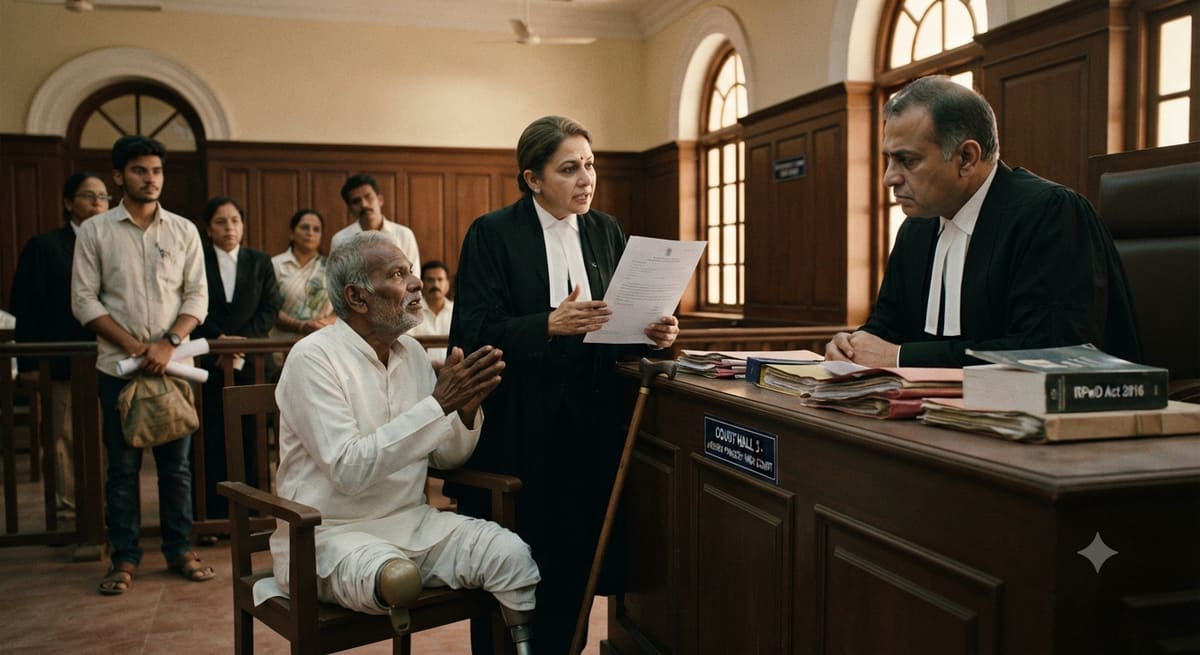
Natural Justice Violated | Disabled Vendor's Shop Relocation Denied Without Hearing Under RPwD Act : AP HC Grants Liberty to Challenge
Case Law Analysis
|Andhra Pradesh High Court

Natural Justice Violated | Disabled Vendor's Shop Relocation Denied Without Hearing Under RPwD Act : AP HC Grants Liberty to Challenge

Andhra Pradesh High Court highlights the arbitrary denial of a disabled vendor's shop relocation request without a hearing, violating principles of natural justice and the Rights of Persons with Disabilities Act, 2016. The court granted liberty to challenge the rejection, reinforcing the state's obligation to ensure procedural fairness in administrative decisions affecting disabled individuals.

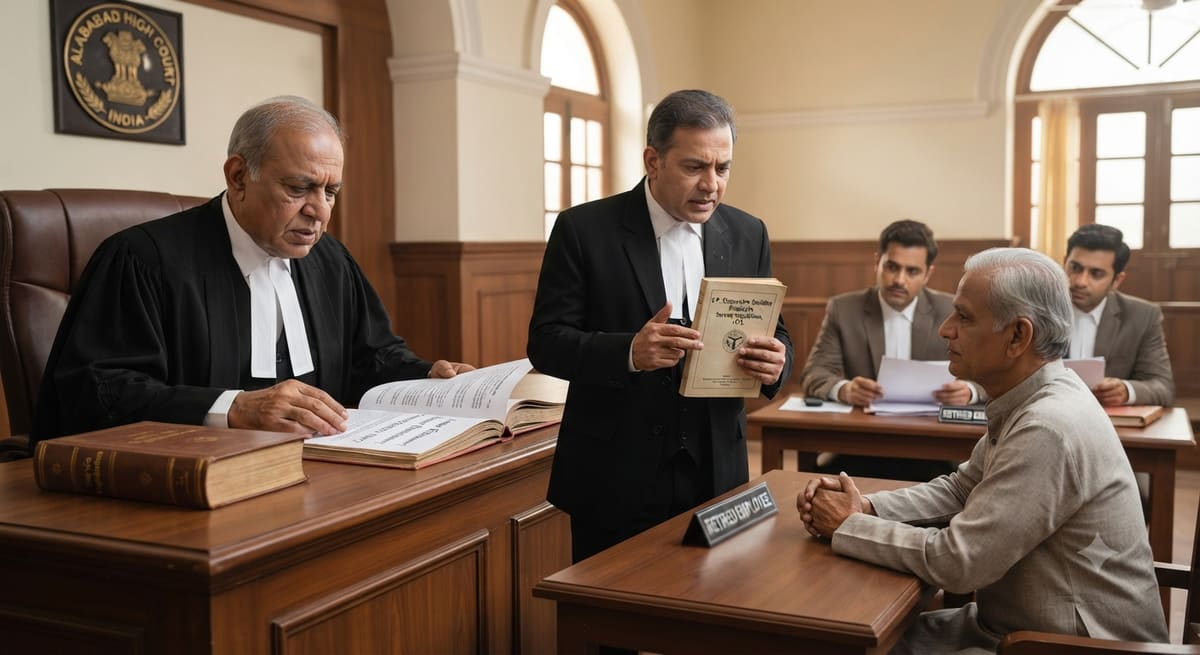
Leave Encashment Cannot Be Withheld Pending Disciplinary Inquiry | U.P. Cooperative Societies Employees Service Regulations, 1975 : Allahabad HC
Case Law Analysis
|Allahabad High Court

Leave Encashment Cannot Be Withheld Pending Disciplinary Inquiry | U.P. Cooperative Societies Employees Service Regulations, 1975 : Allahabad HC

The Allahabad High Court has ruled that cooperative employees are entitled to full leave encashment upon superannuation, regardless of pending disciplinary proceedings, as no provision under the 1975 Regulations permits such withholding. This reinforces earned benefits as non-negotiable rights, protecting thousands of cooperative sector workers from arbitrary financial delays by employers.

Section 482 CrPC | Prima Facie Offence During Ongoing Investigation Bars FIR Quashing : Allahabad HC
Case Law Analysis
|Allahabad High Court

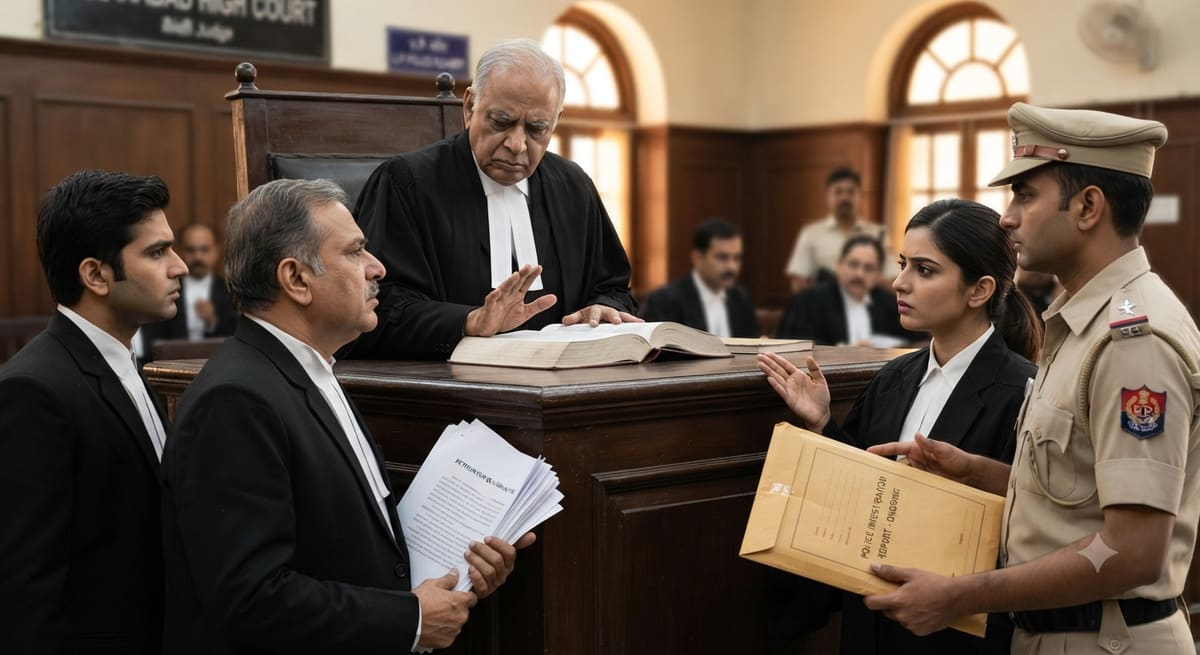
Section 482 CrPC | Prima Facie Offence During Ongoing Investigation Bars FIR Quashing : Allahabad HC

The Allahabad High Court reaffirmed that where an FIR discloses a prima facie case of forgery and fraud in educational qualifications, the investigation must proceed without interference - even if the accused claims prior verification. This upholds the principle that courts cannot prematurely shut down probes merely because the accused was appointed through allegedly forged documents, preserving the integrity of criminal investigations under Section 482 CrPC.

CM Rise School Scheme | Minimum Five-Year Posting Protection Bars Arbitrary Transfers Without Unavoidable Circumstances : MP HC
Case Law Analysis
|Madhya Pradesh High Court

CM Rise School Scheme | Minimum Five-Year Posting Protection Bars Arbitrary Transfers Without Unavoidable Circumstances : MP HC

The Madhya Pradesh High Court has ruled that teachers appointed under the CM Rise School Scheme cannot be transferred before completing their mandated five-year tenure unless unavoidable circumstances are clearly documented. This sets a binding precedent for administrative fairness in government education postings, protecting contractual teachers from capricious transfers and reinforcing contractual obligations of state schemes.

FSS Act Section 51 | Delay in Lab Report + 1.2% Deviation Nullifies Penalty: MP HC
Case Law Analysis
|Madhya Pradesh High Court

FSS Act Section 51 | Delay in Lab Report + 1.2% Deviation Nullifies Penalty: MP HC

The Madhya Pradesh High Court has ruled that an unexplained delay in the food analysis report, coupled with a marginal 1.2% deviation from standards, renders a penalty under Section 51 of the FSS Act unsustainable. This sets a critical precedent for food businesses: procedural lapses by authorities can override minor non-compliance, reinforcing due process over strict liability in food safety enforcement.