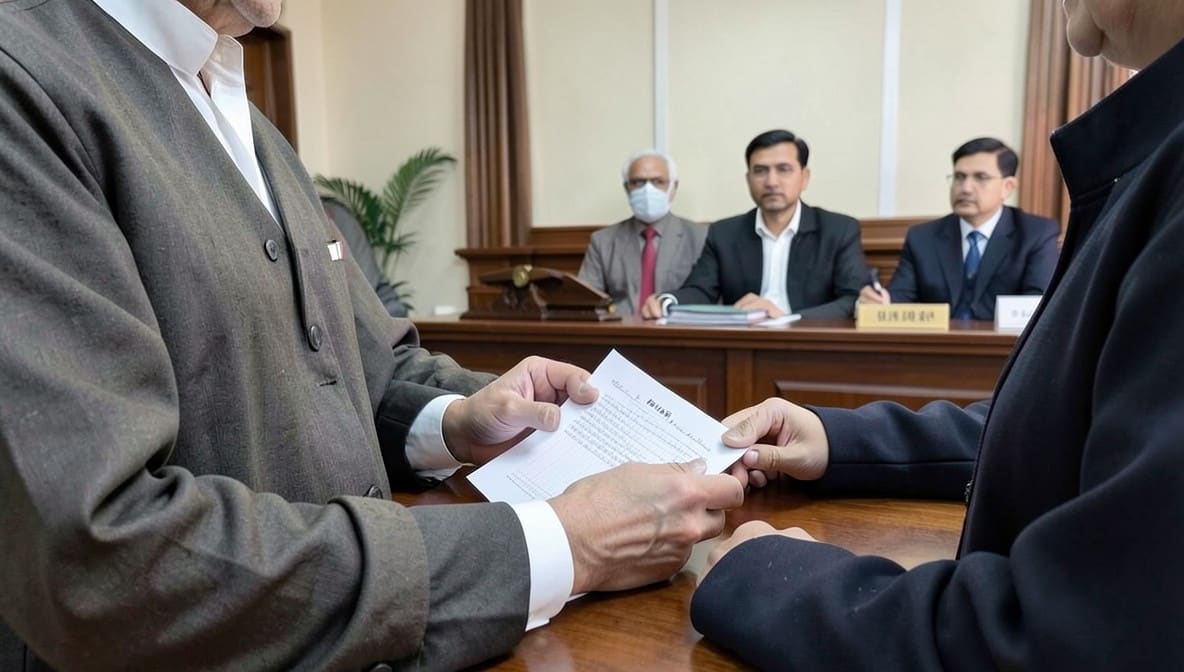
In a significant ruling on bail jurisprudence, the Madhya Pradesh High Court has underscored the mandatory requirement under Section 483 of the Bharatiya Nagarik Suraksha Sanhita, 2023 (BNSS) that grounds of arrest must be communicated in writing to the accused. The Court held that failure to comply with this procedural safeguard renders the arrest invalid, entitling the accused to bail regardless of the offence's gravity. This judgment reinforces the Supreme Court's recent directives on arrest procedures, particularly in cases under the NDPS Act.
Background & Facts
The Dispute
The applicant, Ramgopal Gupta, was arrested on 17.02.2026 in connection with FIR/Crime No. 185/2026 registered at Police Station Kotwali, District Katni (Madhya Pradesh). The case pertains to offences under Sections 8 read with Section 20 of the Narcotic Drugs and Psychotropic Substances Act, 1985 (NDPS Act), following the recovery of 18.20 kg of Ganja from his conscious possession. The applicant has been in custody since the date of arrest.
Key Facts
- 17.02.2026: Applicant arrested under the NDPS Act; 18.20 kg Ganja recovered from his possession.
- Arrest Memo: Prepared in a template format, merely stating that information of arrest was given to the applicant but omitting specific grounds of arrest.
- Communication of Arrest: While the applicant's sister was informed of the arrest, no written grounds of arrest were provided to the applicant himself, as required by law.
- Bail Application: Filed under Section 483 of the BNSS, arguing that the procedural lapse entitled the applicant to bail.
Procedural History
- 17.02.2026: Applicant arrested and remanded to custody.
- MCRC-31030-2026: Bail application filed before the Madhya Pradesh High Court, Jabalpur Bench.
- 10.07.2026: Present order passed by Hon'ble Shri Justice Ramkumar Choubey.
The Parties' Positions
For the Applicant
- False Implication: The applicant is innocent and has been falsely implicated.
- Procedural Irregularity: The arresting authorities failed to communicate the grounds of arrest in writing, as mandated by the Supreme Court in Mihir Rajesh Shah v. State of Maharashtra & another ((2026) 1 SCC 500).
- Entitlement to Bail: The sole ground of non-compliance with procedural safeguards is sufficient to grant bail.
For the Respondent/State
- Irregularity Not Challengeable at Bail Stage: Any procedural irregularities should be addressed during trial, not at the bail stage.
- Sufficient Compliance: The applicant was informed of his arrest through the arrest memo, and his sister was duly informed. Since the applicant was aware of the contraband recovered from his possession, he was also aware of the grounds of arrest.
- Gravity of Offence: Given the quantity of contraband (18.20 kg Ganja), the applicant is not entitled to bail.
Relief Sought
The applicant sought release on regular bail under Section 483 BNSS, arguing that the failure to provide written grounds of arrest invalidated his custody.
The Legal Issue
The central question before the Court was whether the failure to communicate grounds of arrest in writing, as mandated by the Supreme Court in Mihir Rajesh Shah, renders the arrest procedurally invalid, thereby entitling the accused to bail under Section 483 BNSS, irrespective of the offence's gravity.
Arguments Presented
For the Applicant
The applicant's counsel relied on the Supreme Court's decision in Mihir Rajesh Shah v. State of Maharashtra & another ((2026) 1 SCC 500), which held that grounds of arrest must be communicated in writing to the accused. The counsel argued that the arrest memo in this case was a template document lacking specificity about the grounds of arrest, thereby violating the procedural safeguards laid down by the Supreme Court. This non-compliance, it was contended, invalidated the arrest and entitled the applicant to bail.
For the Respondent/State
The State's counsel opposed the bail application, arguing that:
- Procedural irregularities, if any, should be challenged during trial, not at the bail stage.
- The applicant was aware of the grounds of arrest since the contraband was recovered from his conscious possession.
- The arrest memo, though template-based, sufficiently informed the applicant of his arrest.
- The quantity of contraband (18.20 kg Ganja) made the offence grave, justifying denial of bail.
The Court's Analysis
The Court meticulously examined the procedural requirements for arrest under Section 483 BNSS and the Supreme Court's directives in Mihir Rajesh Shah and Dr. Rajendra Rajan v. Union of India and another (SLP (Cri.) No. 3327 of 2026). The analysis focused on the following key principles:
-
Mandatory Written Communication: The Court emphasized that the grounds of arrest must be communicated in writing to the accused, as held in Mihir Rajesh Shah. This requirement is not merely procedural but a fundamental safeguard to ensure transparency and fairness in arrest proceedings.
-
Template Arrest Memos Insufficient: The Court observed that the arrest memo in this case was bereft of specific grounds of arrest, merely stating that information of arrest was given to the applicant. Such template-based documents do not satisfy the legal requirement of written communication, as they lack the specificity needed to inform the accused of the reasons for their arrest.
"The memo of arrest of the applicant, which is placed on the case diary indicates there is no mention about the specificity of contraband or its quantity, allegedly recovered from the possession of the applicant. Seemingly, the arrest memo appears to have been prepared in a template-form, which merely contains a bare statement about information of arrest given to the applicant, however, it is bereft of any ground of arrest."
-
Supreme Court Precedent: The Court relied on the recent decision in Dr. Rajendra Rajan, where the Supreme Court held that failure to provide written grounds of arrest invalidates the arrest. In that case, the Supreme Court directed the release of the appellants on bail, despite the offence's gravity, solely on the ground of procedural non-compliance.
"The Supreme Court in Dr. Rajendra Rajan v. Union of India and another [...] passed the following orders:-
'22. On going through the arrest memo, we find that it has been prepared in a template format and contains a statement to the effect that the arresting officer had explained the grounds of arrest to the accused before the arrest. Thus, the arrest memo, by itself, reflects that the grounds of arrest had been orally explained to the accused before the process of formal arrest was undertaken. Consequently, it was incumbent upon the arresting officer to have supplied the memo of grounds of arrest in writing to the accused two hours prior to producing them before the Magistrate as per the mandate of Mihir Rajesh Shah (supra) which apparently has not been followed in this case.
- In the wake of the above discussion, we are of the firm view that the appellants are entitled to be released from custody by giving them the benefit of the ratio laid down in Mihir Rajesh Shah (supra). Accordingly, it is hereby directed that the appellants shall be released on bail forthwith, subject to furnishing bail bonds to the satisfaction of the trial Court and such other conditions as it may deem fit to impose.'"
-
No Waiver of Rights: The Court rejected the State's argument that the applicant's awareness of the contraband recovery obviated the need for written communication. The right to written grounds of arrest is a non-derogable safeguard, and its violation cannot be cured by the accused's presumed knowledge of the offence.
-
Bail as a Remedy for Procedural Lapses: The Court held that bail is the appropriate remedy for procedural lapses in arrest, even in cases involving grave offences like those under the NDPS Act. This approach aligns with the Supreme Court's emphasis on procedural compliance as a cornerstone of criminal justice.
The Verdict
The Court allowed the bail application and directed the release of the applicant, Ramgopal Gupta, on the following terms:
- The applicant shall furnish a personal bond of Rs. 50,000 (Rupees Fifty Thousand only) with one surety in the like amount to the satisfaction of the trial Court.
- The applicant shall comply with the provisions of Section 480(3) BNSS, which likely pertain to conditions for bail, such as regular appearance before the Court.
- The applicant's release is subject to the trial Court's satisfaction regarding the bail bonds and any additional conditions it may impose.
The Court did not delve into the merits of the NDPS Act offence, as the bail was granted solely on the ground of procedural non-compliance with the arrest requirements.
What This Means For Similar Cases
Procedural Compliance Is Non-Negotiable
This judgment reinforces that procedural safeguards in arrest are not mere formalities but fundamental rights of the accused. Practitioners must:
- Scrutinize arrest memos for compliance with Mihir Rajesh Shah and Dr. Rajendra Rajan. Template-based documents lacking specificity will invalidate the arrest.
- Challenge arrests where written grounds are not provided, even if the accused is aware of the offence. Awareness does not cure procedural non-compliance.
- Argue for bail as a remedy for procedural lapses, regardless of the offence's gravity. Courts are increasingly inclined to grant bail where arrest procedures are violated.
The Burden Shifts to the State
- State Must Prove Compliance: The onus is on the prosecution to demonstrate that written grounds of arrest were provided to the accused. Mere oral communication or template-based arrest memos will not suffice.
- Documentary Evidence is Key: Practitioners should demand copies of arrest memos, communication records, and any written grounds provided to the accused. The absence of such documents will strengthen bail applications.
Implications for NDPS Act Cases
- Bail Not Automatic for Grave Offences: While the NDPS Act presumes denial of bail for grave offences, this judgment shows that procedural non-compliance can override such presumptions.
- Quantity of Contraband May Not Matter: Even in cases involving large quantities of contraband (e.g., 18.20 kg Ganja), courts may grant bail if arrest procedures are violated.
- Defence Strategy: Defence counsel should prioritize procedural challenges in NDPS Act cases, as these can be more effective than merits-based arguments at the bail stage.
A New Threshold for Bail
- Supreme Court's Stance: The reliance on Dr. Rajendra Rajan and Mihir Rajesh Shah indicates that the Supreme Court is adopting a strict stance on arrest procedures. Lower courts are likely to follow this trend.
- Judicial Activism: This judgment reflects judicial activism in upholding procedural rights, even in cases involving serious offences. Practitioners should leverage this trend in bail applications.
- Precedent for Other Statutes: While this case pertains to the NDPS Act, the principles laid down are applicable to arrests under any statute, including the IPC, PMLA, and UAPA.