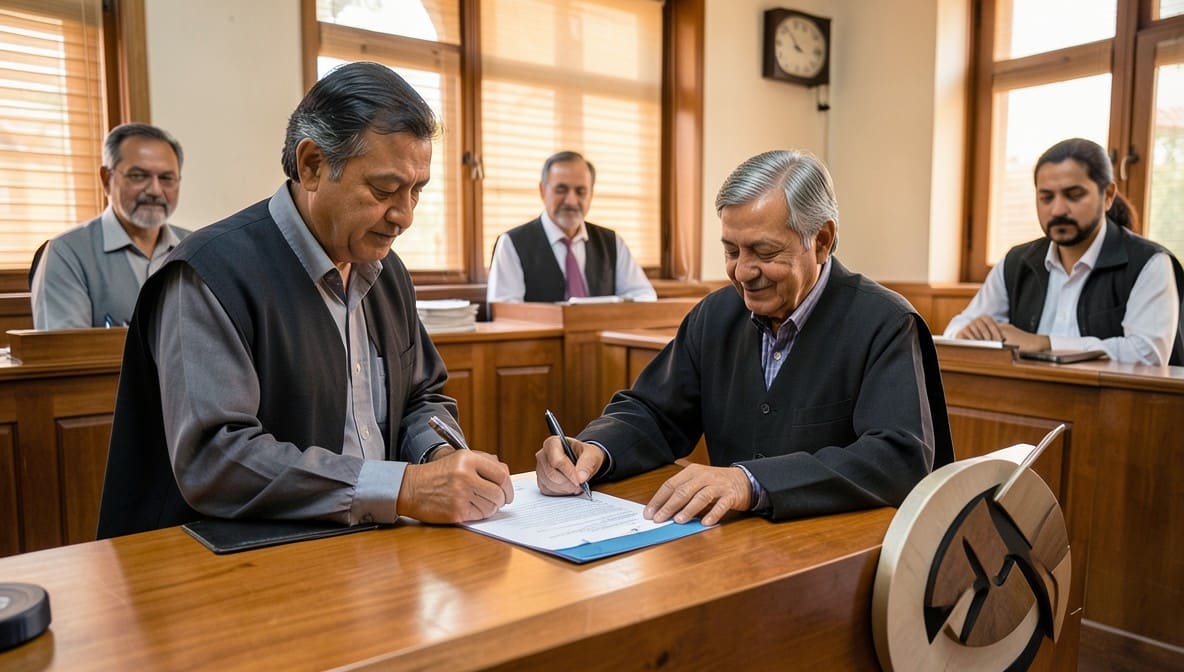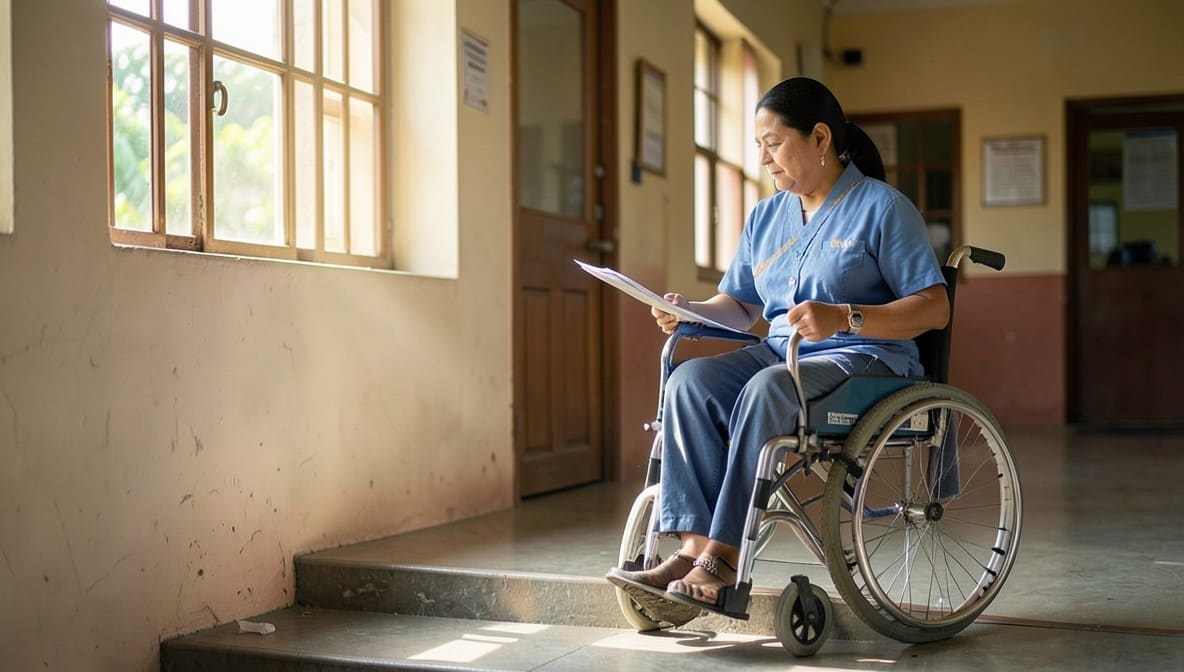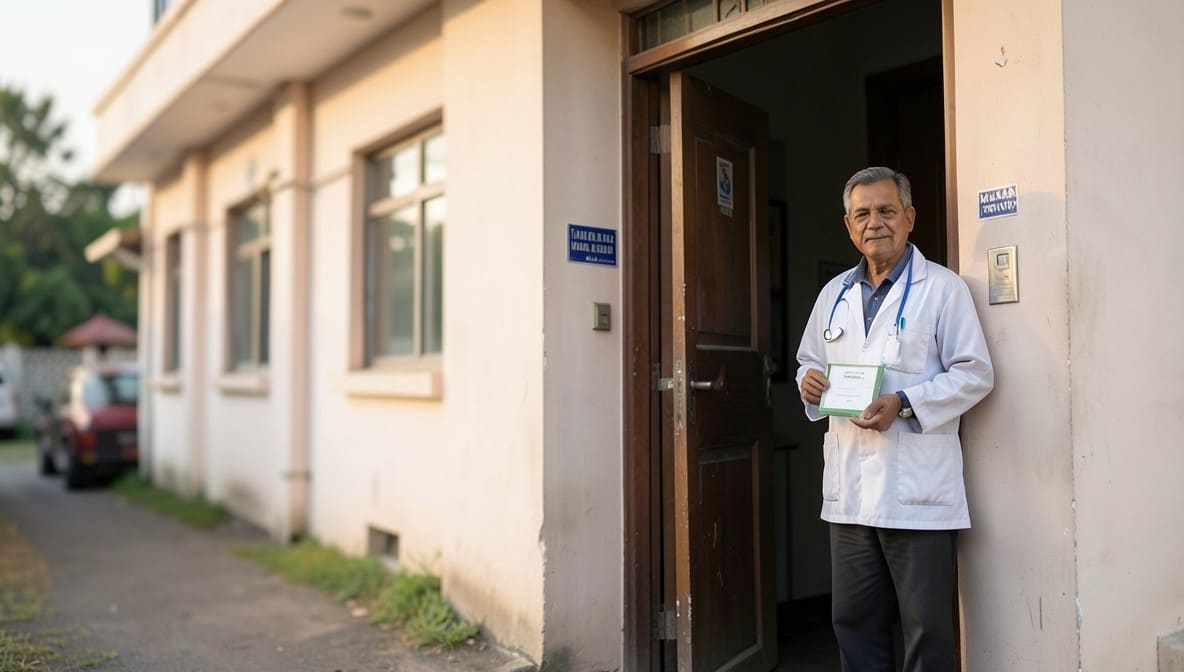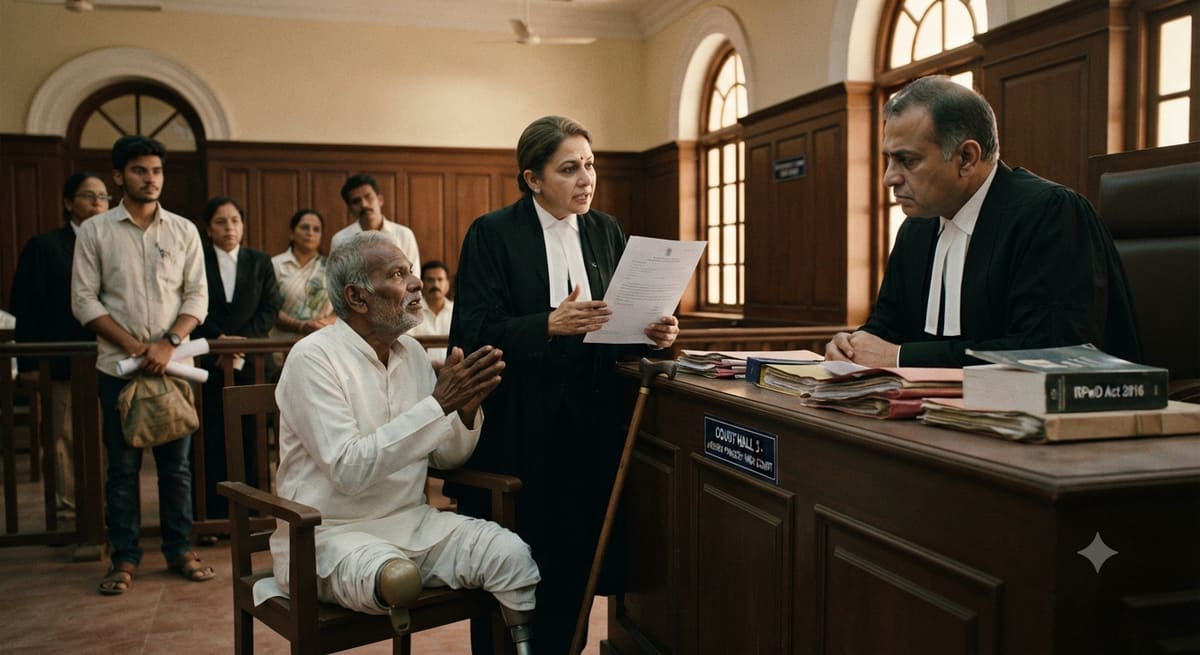
The Andhra Pradesh High Court has dismissed a writ petition filed by a mentally retarded individual, represented by his mother, seeking relocation of his shop within Government General Hospital premises. While the Court did not adjudicate on the merits, it granted liberty to file a fresh petition challenging the rejection of the representation, highlighting potential violations of natural justice and the Rights of Persons with Disabilities Act, 2016.
Background & Facts
The Dispute
The petitioner, Bahunadam Sivakrishna, a mentally retarded individual represented by his natural guardian and mother, Bahunadam Anuradha, operates a shop (sloop) allotted to him near wards I and 104 of the Government General Hospital, Guntur. The petitioner sought relocation of his shop to a more accessible location beside the MCH Building within the hospital premises, citing difficulties in operating the shop at its current location.
Key Facts
The petitioner was allotted a shop vide proceedings dated 02.01.2017 near wards I and 104 of Government General Hospital, Guntur.
On 17.03.2026, the petitioner submitted a representation to the respondents seeking relocation of his shop to the Overhead Tank Location beside the MCH Building.
The respondents rejected the petitioner’s representation without providing an opportunity for hearing or considering the specific needs of the petitioner under the Rights of Persons with Disabilities Act, 2016.
The petitioner alleged that the rejection was arbitrary, illegal, and violative of principles of natural justice, as well as Articles 14, 19(1)(g), and 21 of the Constitution of India.
Procedural History
17.03.2026: Petitioner submitted a representation to the respondents seeking relocation of his shop.
Date not specified: Respondents rejected the representation without a hearing.
Date of filing: Writ Petition No. 15823 of 2026 was filed under Article 226 of the Constitution of India seeking a Writ of Mandamus to declare the respondents' action illegal and direct relocation of the shop.
During pendency: The Court directed the 3rd respondent to examine the petitioner’s representation dated 17.03.2026 and pass appropriate orders in accordance with law.
10.07.2026: The Court noted that the respondents had rejected the petitioner’s claim and dismissed the writ petition as withdrawn, granting liberty to file a fresh writ petition challenging the rejection order.
Relief Sought
The petitioner sought the following reliefs:
A declaration that the respondents' action in rejecting the representation dated 17.03.2026 was illegal, arbitrary, and violative of principles of natural justice.
A direction to the respondents to permit the relocation of the petitioner’s shop to the Overhead Tank Location beside the MCH Building in Government General Hospital, Guntur.
Protection of the petitioner’s rights under Articles 14, 19(1)(g), and 21 of the Constitution of India and the Rights of Persons with Disabilities Act, 2016.
The Legal Issue
The primary legal question was whether the respondents' rejection of the petitioner’s representation without affording a hearing or considering the petitioner’s disability violated principles of natural justice and the provisions of the Rights of Persons with Disabilities Act, 2016, thereby warranting intervention under Article 226 of the Constitution of India.
Arguments Presented
For the Petitioner
The petitioner contended that the respondents' action in rejecting the representation without a hearing was arbitrary and violative of principles of natural justice.
It was argued that the petitioner, being a person with disabilities, was entitled to special consideration under the Rights of Persons with Disabilities Act, 2016, which mandates reasonable accommodation and non-discrimination.
The petitioner relied on Articles 14, 19(1)(g), and 21 of the Constitution of India to argue that the rejection infringed upon his right to livelihood and dignity.
For the Respondents
The respondents, represented by the Government Pleader for Medical Health, did not present detailed counter-arguments in the judgment text. However, it can be inferred that they rejected the petitioner’s claim on administrative grounds without addressing the disability-specific concerns.
The Court's Analysis
The Court did not delve into the merits of the petitioner’s claims, as the writ petition was dismissed as withdrawn. However, the Court made the following observations:
The Court initially directed the 3rd respondent to examine the petitioner’s representation dated 17.03.2026 and pass appropriate orders in accordance with law.
Upon rejection of the representation by the respondents, the Court granted liberty to the petitioner to file a fresh writ petition challenging the rejection order.
While the Court did not analyze the legal principles in depth, the order implicitly acknowledges the potential violation of natural justice and the need for compliance with statutory obligations under the Rights of Persons with Disabilities Act, 2016.
The Verdict
The Court dismissed the writ petition as withdrawn, granting liberty to the petitioner to file a fresh writ petition challenging the rejection order dated 17.03.2026. There was no order as to costs, and all pending interlocutory applications, if any, were closed.
What This Means For Similar Cases
Principles of Natural Justice Must Be Followed in Administrative Decisions
Administrative authorities must afford a fair hearing to individuals before rejecting their representations, especially when the decision affects their livelihood or fundamental rights.
Failure to provide a hearing can render the decision arbitrary and violative of Article 14 of the Constitution of India, warranting judicial intervention under Article 226.
Rights of Persons with Disabilities Act, 2016 Imposes Positive Obligations
The Rights of Persons with Disabilities Act, 2016 mandates reasonable accommodation and non-discrimination in all spheres, including access to public spaces and livelihood opportunities.
Authorities must consider the specific needs of persons with disabilities while making administrative decisions. A blanket rejection without such consideration may attract judicial scrutiny.
Liberty to Approach Courts Reinforces Access to Justice
The Court’s decision to grant liberty to file a fresh writ petition underscores the importance of access to justice for aggrieved parties.
Practitioners should note that even if a petition is dismissed as withdrawn, the Court may still grant liberty to challenge the underlying administrative action, providing an opportunity to rectify procedural or substantive errors.