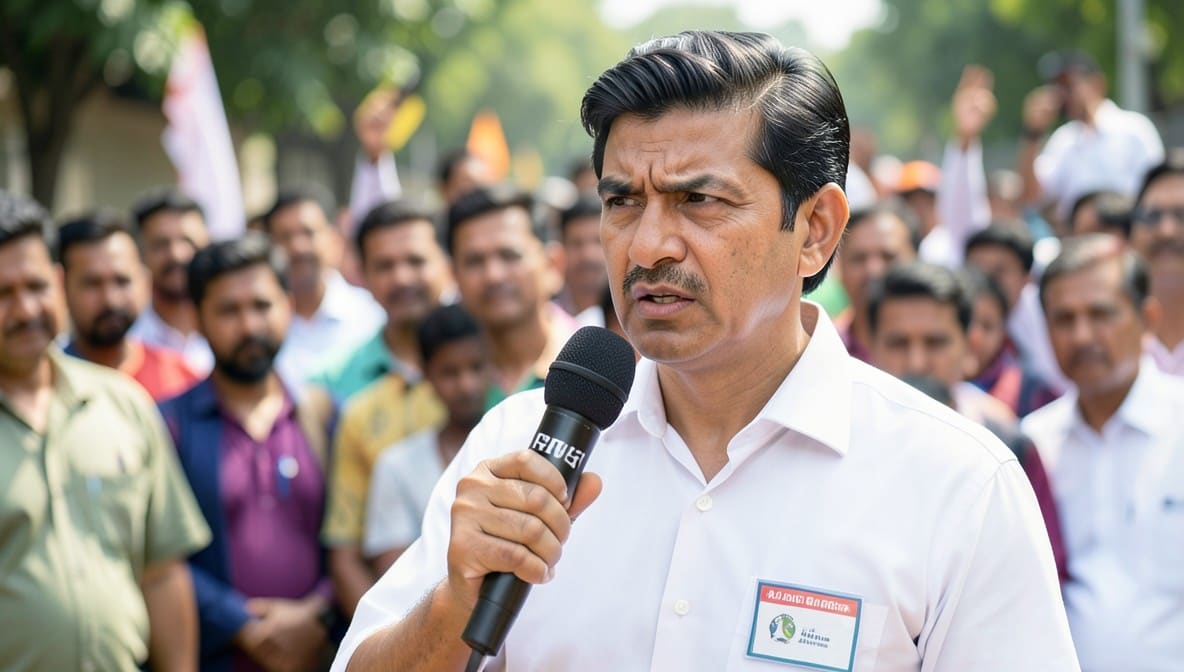
The Madhya Pradesh High Court recently granted anticipatory bail to a journalist who conducted a sting operation exposing illegal prenatal sex determination and female foeticide, holding that such acts in public interest do not amount to blackmail under Bhartiya Nyaya Sanhita, 2023. The judgment underscores the delicate balance between investigative journalism and criminal liability, offering critical guidance for media professionals and law enforcement agencies.
Background & Facts
The Dispute
The applicant, Vinay Arora, is a journalist associated with Tehelka Digital News who conducted a sting operation exposing illegal prenatal sex determination, unlawful abortions, and female foeticide in various nursing homes and hospitals in Dewas, Madhya Pradesh. The operation was carried out in violation of the Preconception and Prenatal Diagnostic Techniques (Prohibition of Sex Selection) Act, 1994 (PCPNDT Act) and the Medical Termination of Pregnancy Act, 1971 (MTP Act). Following the sting, an FIR was registered against him under Sections 308(5), 308(6), 61(2), and 3(5) of the Bhartiya Nyaya Sanhita, 2023 (BNS), alleging blackmail and criminal intimidation.
Key Facts
- The applicant conducted a sting operation exposing illegal female foeticide in Dewas, MP
- The operation was carried out between April 2026 (exact dates of the sting not specified in the judgment)
- On 06.04.2026, the video footage of the sting operation was sent to:
- Commissioner, Health Department, Madhya Pradesh
- Chairperson of the National Human Rights Commission (NHRC)
- Director General of Police (DGP), Madhya Pradesh
- Chief Medical and Health Officer (CM&HO), Dewas
- On 07.04.2026, an FIR (Crime No. 194/2026) was registered at Police Station Kotwali, Dewas, under the aforementioned provisions of BNS
- The applicant contends that the FIR was filed in retaliation for exposing the illegal racket
Procedural History
- 07.04.2026: FIR registered under Sections 308(5), 308(6), 61(2), and 3(5) of BNS
- Date not specified: Co-accused Shrikant @ Bhau enlarged on bail by the High Court on 28.04.2026 (MCRC No. 19820/2026)
- Date not specified: Co-accused Vinay Arora (another individual) enlarged on bail on 02.07.2026 (MCRC No. 23198/2026)
- 26.05.2026: Co-accused Anuj Agrawal filed Special Leave to Appeal (Criminal) No. 9645/2026 before the Supreme Court, which passed an interim order restraining coercive steps
- 10.07.2026: Present bail application (MCRC No. 31763/2026) filed before the Madhya Pradesh High Court
The Parties' Positions
For the Applicant
- The applicant acted in public interest to expose a large-scale illegal female foeticide racket
- The FIR was filed in retaliation for the sting operation, constituting abuse of criminal justice machinery
- Co-accused persons had already been granted bail, indicating the applicant’s parity in innocence
- The Supreme Court’s interim order in Anuj Agrawal v. State of Madhya Pradesh restrained coercive action, implying the case’s weak foundation
For the Respondent/State
- The applicant’s actions amounted to blackmail and criminal intimidation under BNS
- The allegations were serious in nature, warranting denial of anticipatory bail
Relief Sought
The applicant sought anticipatory bail under Section 482 of the Bharatiya Nagarik Suraksha Sanhita, 2023 (BNSS), arguing that:
- He was falsely implicated due to mala fide intentions
- His actions were in public interest and did not constitute an offence
- Co-accused had already been granted bail, justifying parity
The Legal Issue
The central question before the Court was whether a sting operation conducted in public interest to expose illegal activities (such as female foeticide) could be construed as blackmail or criminal intimidation under Sections 308(5), 308(6), 61(2), and 3(5) of the Bhartiya Nyaya Sanhita, 2023, thereby justifying denial of anticipatory bail.
Arguments Presented
For the Applicant
- Relied on the principle that investigative journalism in public interest cannot be criminalized as blackmail
- Cited the timeline of events, demonstrating that the video footage was sent to authorities before the FIR was registered, negating any intent to blackmail
- Argued that the FIR was a retaliatory measure for exposing the illegal racket
- Highlighted that co-accused had been granted bail, justifying parity for the applicant
For the Respondent/State
- Contended that the applicant’s actions amounted to blackmail, as he recorded videos without consent and allegedly attempted to extort the complainant
- Emphasized the seriousness of the allegations, warranting denial of bail
The Court's Analysis
The Court examined the chronology of events and the nature of the applicant’s actions to determine whether they constituted an offence under BNS. Key observations included:
-
Public Interest vs. Criminal Liability: The Court noted that the applicant had sent the sting operation footage to multiple authorities, including the Health Department, NHRC, and DGP, before the FIR was registered. This timeline suggested that the applicant’s primary intent was to expose wrongdoing, not to blackmail the complainant.
"Taking into account the fact that on 06.04.2026 (Annexure A/2), the video of Sting Operation was already sent to the Commissioner, Health Department, Madhya Pradesh, Chairperson of NHRC, DGP of Madhya Pradesh as well as CM&HO, Dewas and on 06/07.04.2026, it was sent to CMHO, Dewas and only after that FIR was registered on 07.04.2026, this Court is inclined to allow this application."
-
Retaliatory Nature of the FIR: The Court implicitly accepted the applicant’s argument that the FIR was filed in retaliation for the sting operation, rather than as a genuine criminal complaint. This was bolstered by the fact that co-accused had already been granted bail, indicating the case’s weak merits.
-
No Prima Facie Case of Blackmail: The Court refrained from commenting on the merits of the case but observed that the timeline of events did not support the State’s contention of blackmail. The applicant’s actions were directed toward authorities, not the complainant, undermining the allegation of criminal intent.
-
Balancing Investigative Journalism and Criminal Law: While the Court did not explicitly articulate a legal test, its reasoning suggests that sting operations in public interest should not be automatically criminalized unless there is clear evidence of mala fide intent (e.g., extortion or blackmail).
The Verdict
The Court allowed the bail application without commenting on the merits of the case. The applicant was directed to be released on bail in the event of arrest, subject to the following conditions:
- Execution of a personal bond in the sum of Rs. 50,000
- Furnishing one solvent surety in the like amount
- Availability for interrogation by police as and when required
- Compliance with conditions under Section 438(2) of the Code of Criminal Procedure, 1973 (applicable via BNSS)
What This Means For Similar Cases
Sting Operations in Public Interest Are Not Automatically Criminal
- Journalists and activists conducting sting operations to expose illegal activities (e.g., corruption, female foeticide, or other offences) can argue that their actions are protected under public interest, provided they do not engage in extortion or blackmail
- Prosecutors must distinguish between genuine investigative journalism and malicious intent before registering FIRs under provisions like Sections 308 or 61 of BNS
- Courts should consider the timeline of events (e.g., whether evidence was shared with authorities before any alleged blackmail) to assess the bona fides of the accused
Retaliatory FIRs Will Face Scrutiny
- Defence lawyers can argue that FIRs filed after exposure of illegal activities (e.g., by journalists or whistleblowers) are retaliatory and lack merit
- Judicial precedents like this case can be cited to challenge the validity of FIRs where the complainant’s motive appears suspect
- Authorities must ensure that complaints against journalists or activists are not filed to suppress investigative reporting
Bail Conditions for Investigative Journalists
- Anticipatory bail under Section 482 of BNSS may be granted more liberally where the accused demonstrates public interest intent
- Personal bonds and sureties are likely to be imposed, but courts may avoid onerous conditions if the accused’s actions are found to be in good faith
- Compliance with interrogation requests remains mandatory, but journalists can seek protection from coercive measures if they cooperate with investigations