Bombay High Court judgments

2128 Bombay High Court judgments explained in plain English: what was decided, the law applied and why it matters. Page 6 of 89.

DRT Lacks Power to Condone Delay Beyond 45 Days in Securitisation Applications | SARFAESI Act : Bombay HC
Case Law Analysis
|Bombay High Court

DRT Lacks Power to Condone Delay Beyond 45 Days in Securitisation Applications | SARFAESI Act : Bombay HC

Bombay High Court ruled that Debts Recovery Tribunal (DRT) cannot condone delay beyond 45 days in filing securitisation applications under SARFAESI Act, relying on Supreme Court precedent. The judgment clarifies that DRAT erred in allowing condonation where the statutory limitation period was breached, impacting auction purchasers and secured creditors.


Joint Measurement Ordered in Boundary Dispute | Bombay HC Nagpur Bench Clarifies Evidence Collection in Civil Suits
Case Law Analysis
|Bombay High Court

Joint Measurement Ordered in Boundary Dispute | Bombay HC Nagpur Bench Clarifies Evidence Collection in Civil Suits

Bombay HC Nagpur Bench quashed a trial court's rejection of a joint measurement application in a boundary dispute, holding that conflicting measurement reports necessitate joint measurement for accurate resolution. The ruling clarifies that such evidence collection is permissible even in suits for declaration and injunction, not just encroachment cases.

POCSO Act | 'Age of Discretion' in Consensual Relationships Trumps Minority: Bombay HC (Aurangabad)
Case Law Analysis
|Bombay High Court

POCSO Act | 'Age of Discretion' in Consensual Relationships Trumps Minority: Bombay HC (Aurangabad)

Bombay High Court (Aurangabad Bench) granted bail to a married accused in a POCSO case despite the victim being a 17-year-old minor, holding she had attained the age of discretion and her conduct indicated consensual involvement. The court emphasized the 15-hour FIR delay, lack of forceful evidence, and the victim's contradictory statements as critical factors in bail jurisprudence.

Employer-Employee Relationship Established | Bombay HC Upholds Labour Court's Award of Rs.15L Compensation : Bombay HC
Case Law Analysis
|Bombay High Court

Employer-Employee Relationship Established | Bombay HC Upholds Labour Court's Award of Rs.15L Compensation : Bombay HC

Bombay High Court upheld the Labour Court's finding of an employer-employee relationship between Johnson & Johnson Ltd. and workman Mahadev Badadal, declaring his termination illegal. The court directed payment of Rs.15,00,000 as lump-sum compensation to his legal heir, along with statutory benefits and 10% annual interest from 21 November 2016.

Section 17(2)(b) Maternity Benefit Act | HC Quashes Lumpsum Hardship Award Beyond Statutory Limits : Bombay HC
Case Law Analysis
|Bombay High Court

Section 17(2)(b) Maternity Benefit Act | HC Quashes Lumpsum Hardship Award Beyond Statutory Limits : Bombay HC

Bombay High Court sets aside a Rs. 1,00,000 compensation awarded under the Maternity Benefit Act, holding that hardship awards must stay within statutory limits under Section 17(2)(b). The ruling clarifies that tribunals cannot grant lump-sum damages exceeding the Act's prescribed framework, impacting future employment disputes involving maternity benefits.

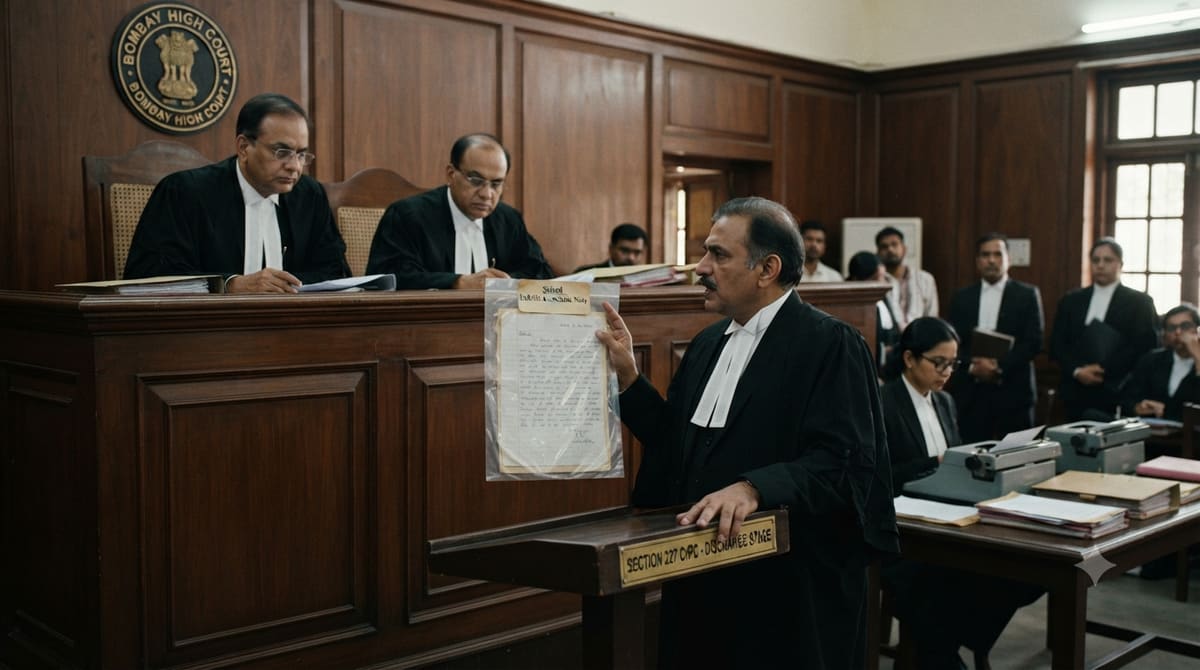
Section 227 CrPC | Seized Suicide Note Must Be Produced at Discharge Stage for Fair Adjudication: Bombay HC
Case Law Analysis
|Bombay High Court

Section 227 CrPC | Seized Suicide Note Must Be Produced at Discharge Stage for Fair Adjudication: Bombay HC

The Bombay High Court has ruled that a suicide note seized during investigation and documented in the panchnama must be produced before the trial court during discharge proceedings under Section 227 CrPC. This ensures the accused’s right to a fair hearing and prevents the prosecution from withholding material evidence that could undermine the case against them, reinforcing natural justice in criminal proceedings.

Pre-constitutional Caste Records Valid Despite Spelling Variations | Warthi vs Watthi Dispute Upheld: Bombay HC (Nagpur Bench)
Case Law Analysis
|Bombay High Court

Pre-constitutional Caste Records Valid Despite Spelling Variations | Warthi vs Watthi Dispute Upheld: Bombay HC (Nagpur Bench)

The Bombay High Court has ruled that minor spelling discrepancies in pre-constitutional documents-such as 'Watthi' versus 'Warthi'-do not invalidate caste claims when genealogical continuity and official records support identity. This sets a critical precedent for OBC certificate applicants relying on colonial-era records, reinforcing that procedural technicalities cannot override substantive historical evidence under natural justice.

Territorial Jurisdiction for Land Suits | Leave Under Clause XII Does Not Confer Venue Authority: Bombay HC
Case Law Analysis
|Bombay High Court

Territorial Jurisdiction for Land Suits | Leave Under Clause XII Does Not Confer Venue Authority: Bombay HC

The Bombay High Court holds that even with prior leave under Clause XII of the Letters Patent, a suit for immovable property located outside Greater Bombay cannot proceed in Mumbai courts after transfer to the City Civil Court. This reaffirms Section 20 of the CPC as the decisive test for territorial jurisdiction, overriding procedural convenience granted under Letters Patent - a vital clarification for property litigants and practitioners navigating inter-court transfers.

Judicial Restraint in Bail Orders | Courts Cannot Make Defamatory Remarks Against Non-Parties Without Hearing : Bombay HC (Nagpur Bench)
Case Law Analysis
|Bombay High Court

Judicial Restraint in Bail Orders | Courts Cannot Make Defamatory Remarks Against Non-Parties Without Hearing : Bombay HC (Nagpur Bench)

The Bombay High Court has ruled that judges issuing bail orders cannot make adverse, defamatory observations about non-parties-such as corporations-without affording them a fair opportunity to respond. This reinforces natural justice as a non-negotiable limit on judicial commentary, protecting corporate reputations from collateral damage in criminal proceedings and setting a critical precedent for judicial conduct in PMLA and other financial crime cases.

Conscious Possession Under NDPS Act | Bail Granted When Contraband Recovered Solely from Co-Accused Without Knowledge or Control: Bombay HC
Case Law Analysis
|Bombay High Court

Conscious Possession Under NDPS Act | Bail Granted When Contraband Recovered Solely from Co-Accused Without Knowledge or Control: Bombay HC

The Bombay High Court held that mere proximity to a co-accused and call detail records cannot establish conscious possession under the NDPS Act when contraband is recovered exclusively from another person. This ruling reinforces that knowledge and control are indispensable elements for conviction and bail denial in drug cases, protecting individuals from guilt by association.

Section 36 MVP Act | Sarpanch Must Prove Service of Statutory Notice for Monthly Meetings to Avoid Disqualification : Bombay HC
Case Law Analysis
|Bombay High Court

Section 36 MVP Act | Sarpanch Must Prove Service of Statutory Notice for Monthly Meetings to Avoid Disqualification : Bombay HC

The Bombay High Court has ruled that a Sarpanch cannot escape disqualification under Section 36 of the Maharashtra Village Panchayat Act merely by asserting that meetings were held - the burden lies squarely on the Sarpanch to prove formal notice was served to all members. This sets a critical precedent for rural governance, making procedural rigor non-negotiable in panchayat administration and empowering villagers to challenge opaque decision-making.

MOFA Section 11 | Competent Authority Cannot Amend Deemed Conveyance via Corrigendum to Allocate Proportionate Recreational Area: Bombay HC
Case Law Analysis
|Bombay High Court

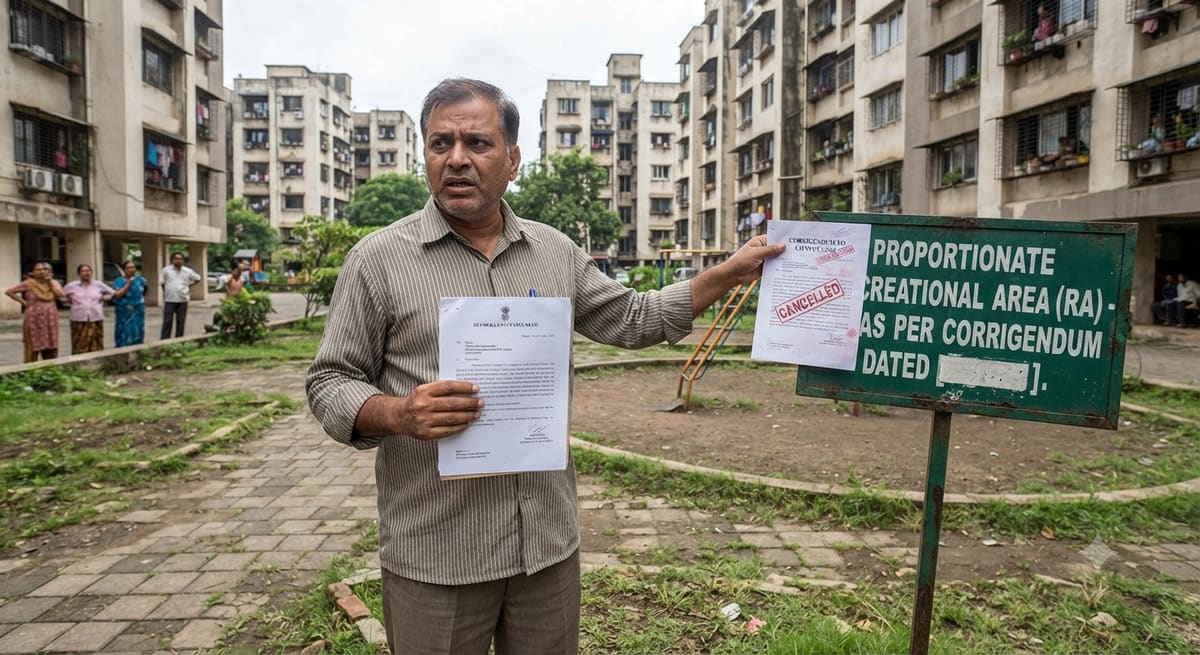
MOFA Section 11 | Competent Authority Cannot Amend Deemed Conveyance via Corrigendum to Allocate Proportionate Recreational Area: Bombay HC

The Bombay High Court has ruled that once a deemed conveyance certificate is issued under MOFA, the Competent Authority becomes functus officio and cannot later alter property allocations-such as proportionate shares in recreational space-through a corrigendum. This clarifies that clerical corrections under MOFA cannot resolve substantive disputes over land division, protecting societies and developers from post-conveyance administrative overreach.

MRTP Act Sections 49, 126, 127 | Long-Term Land Reservation Without Acquisition Violates Right to Property; Statutory Process Cannot Be Bypassed by Writ: Bombay HC
Case Law Analysis
|Bombay High Court

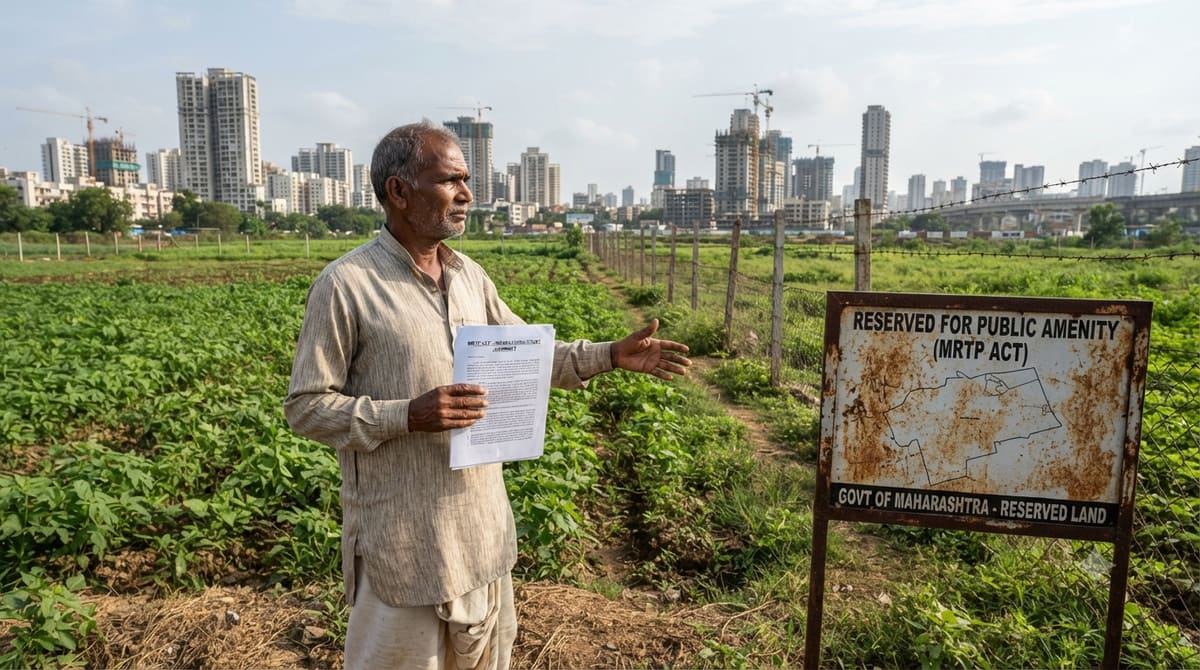
MRTP Act Sections 49, 126, 127 | Long-Term Land Reservation Without Acquisition Violates Right to Property; Statutory Process Cannot Be Bypassed by Writ: Bombay HC

The Bombay High Court ruled that indefinite reservation of private land under the MRTP Act, without initiating formal acquisition under Sections 49, 126, and 127, amounts to an unconstitutional deprivation of property rights. Authorities cannot rely on administrative delay or changed land use plans to avoid statutory acquisition - this decision binds all municipal bodies holding land in legal limbo for over four decades.

Section 223(1) BNSS | Accused Must Be Heard Before Cognizance in SEBI Special Courts: Bombay HC
Case Law Analysis
|Bombay High Court

Section 223(1) BNSS | Accused Must Be Heard Before Cognizance in SEBI Special Courts: Bombay HC

The Bombay High Court has ruled that Special Courts under the SEBI Act cannot take cognizance of offences without first affording the accused an opportunity to be heard, as mandated by the first proviso to Section 223 of the BNSS 2023. This sets a critical procedural safeguard for financial defendants, ensuring fair trial rights are not bypassed even in regulatory prosecutions.

Section 528 BNSS | Monetary Deposit Cannot Be Imposed as Precondition for Bail: Bombay HC Reinforces Supreme Court’s Merit-Based Bail Doctrine
Case Law Analysis
|Bombay High Court

Section 528 BNSS | Monetary Deposit Cannot Be Imposed as Precondition for Bail: Bombay HC Reinforces Supreme Court’s Merit-Based Bail Doctrine

The Bombay High Court has struck down a Rs. 28 lakh deposit condition for bail, affirming that financial capacity cannot substitute judicial evaluation of merits under Section 528 BNSS. This ruling strengthens the constitutional right to liberty by rejecting economic barriers to release, impacting thousands of undertrials facing similar arbitrary conditions across Maharashtra.

Section 154B-7 MCS Act | Revision Against Deputy Registrar’s Order Lies with Divisional Joint Registrar, Not State Government: Bombay HC
Case Law Analysis
|Bombay High Court

Section 154B-7 MCS Act | Revision Against Deputy Registrar’s Order Lies with Divisional Joint Registrar, Not State Government: Bombay HC

The Bombay High Court has settled a critical jurisdictional conflict by holding that revision petitions against orders of a Deputy Registrar under the MCS Act must be filed before the Divisional Joint Registrar, not the State Government. This clarifies the statutory hierarchy of appellate authority in cooperative society disputes, ensuring uniformity and preventing forum shopping by litigants seeking higher-level review.