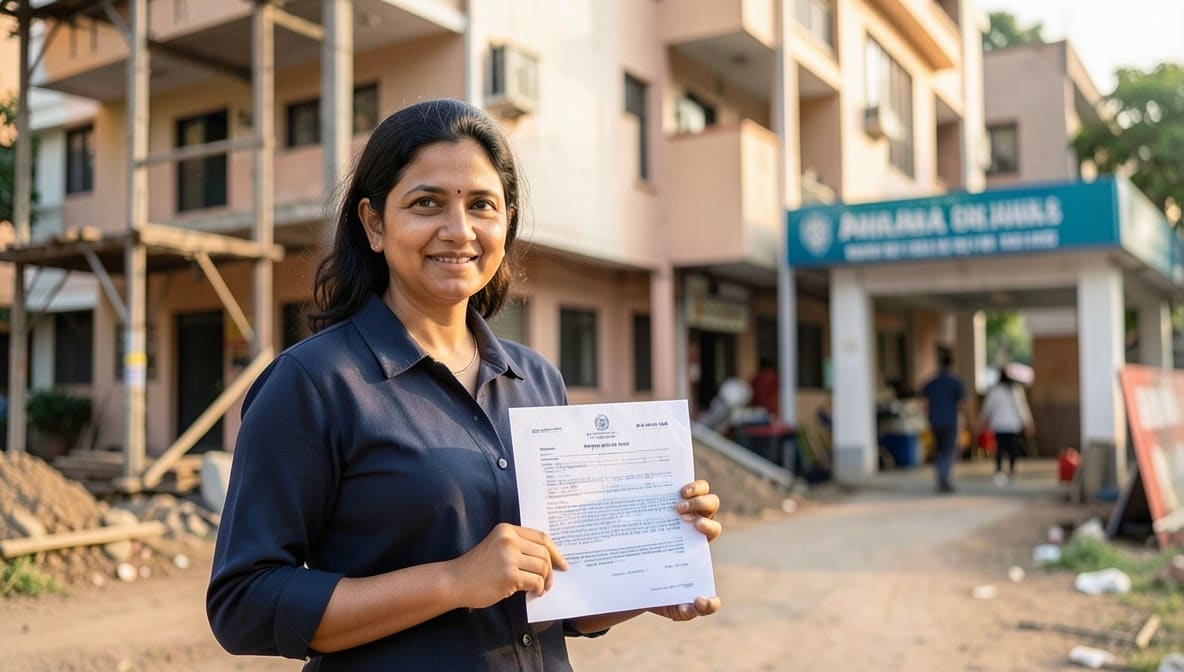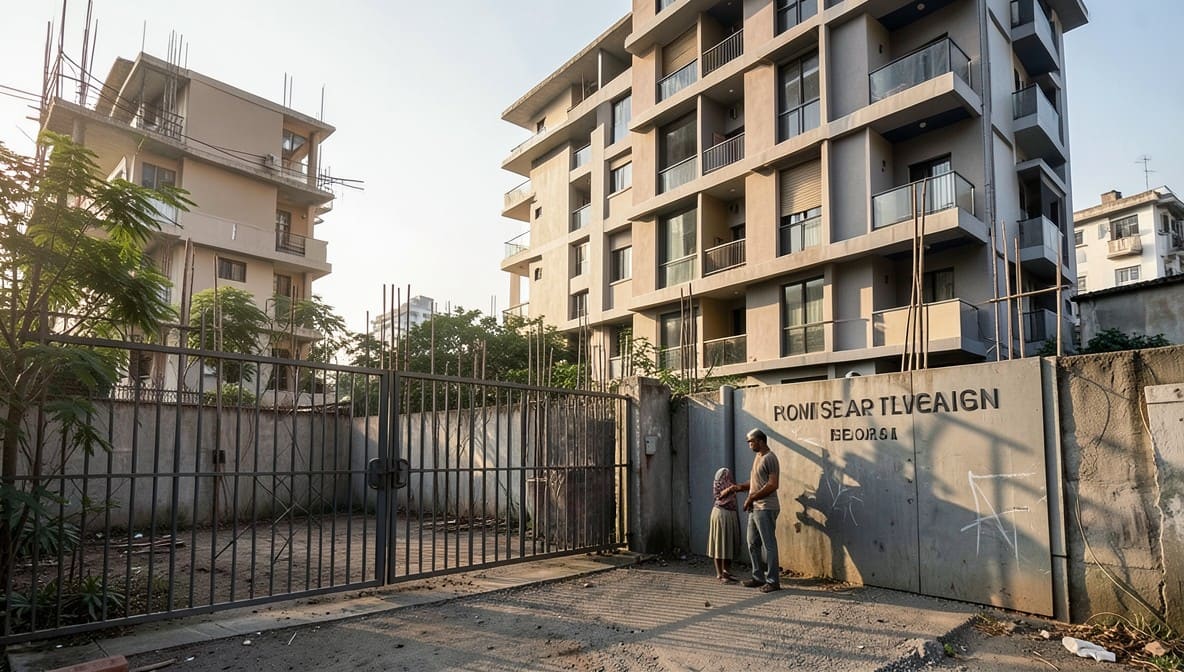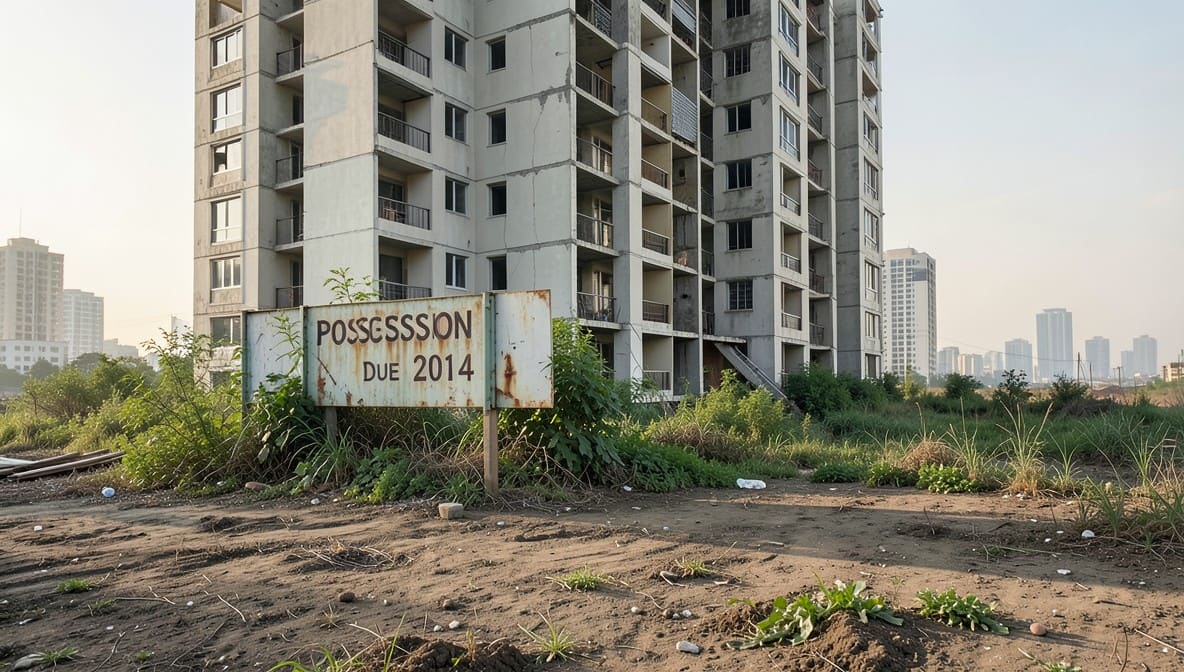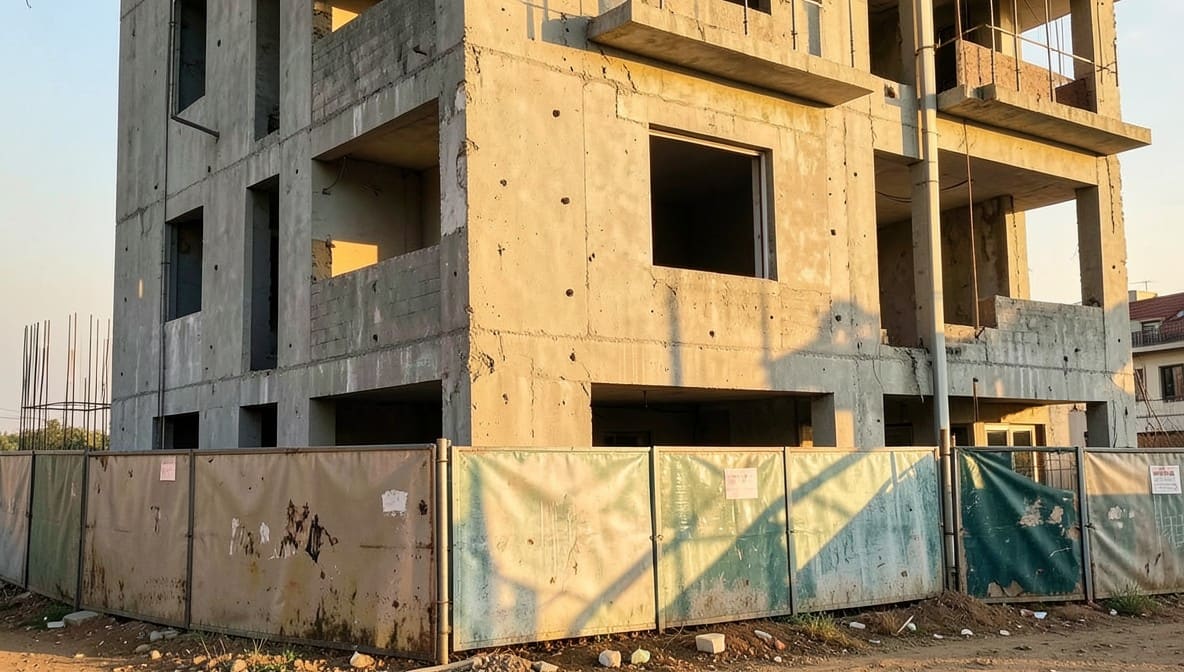
The West Bengal State Consumer Disputes Redressal Commission delivered a significant ruling in a housing dispute, holding the legal heirs of a deceased developer and the land owner jointly liable for refunding Rs. 17,00,000 with 9% interest and Rs. 20,000 legal costs. The judgment underscores the vicarious liability of land owners who cancel development agreements without informing buyers, leaving consumers in financial distress.
Background & Facts
The Dispute
The complainant, Smt. Sima Das, entered into an agreement in August 2011 with M/s S. P. Enterprise, a proprietorship firm represented by Sri Samar Purkayastha, for the purchase of a shop room measuring 300 sq. ft. in a multi-storied building named "Subodh Bhaban." The total consideration was Rs. 30,00,000, of which the complainant paid Rs. 17,00,000 by cheque by 24.04.2013. The delivery of the shop room was scheduled within 18 months from the agreement date.
Key Facts
- 18.02.2009: Development agreement executed between Smt. Roma Bose (land owner, OP No. 5) and M/s S. P. Enterprise for construction of "Subodh Bhaban" on a 50-50 share basis.
- 20.02.2009: Registered power of attorney executed by the land owner in favour of the developer.
- August 2011: Complainant entered into an agreement of sale for a shop room with the developer for Rs. 30,00,000.
- By 24.04.2013: Complainant paid Rs. 17,00,000 via cheque.
- 25.06.2014: Sri Samar Purkayastha, the proprietor of M/s S. P. Enterprise, passed away, leaving his legal heirs Smt. Purnima Purkayastha (OP No. 2) and Smt. Atreyee Purkayastha (OP No. 3).
- 25.08.2014: OP No. 5 (land owner) cancelled the development agreement and revoked the power of attorney without informing the complainant.
- Post-25.08.2014: OP No. 5 engaged a new developer, and construction resumed. Flats and shop rooms were sold to others without informing the complainant.
- 16.09.2017: Complainant sent a legal notice to OP Nos. 5 and 7 demanding delivery of the shop room or refund.
- 23.10.2017: OP Nos. 1 to 4 replied, admitting their role as local promoters but refusing to assure delivery of the shop room.
Procedural History
- CC/454/2018: Complaint filed before the West Bengal State Consumer Disputes Redressal Commission on 2018 (exact date not specified).
- 02.07.2026: Final order passed by the Commission.
Relief Sought
The complainant sought:
- Delivery of possession of the shop room and execution of the deed of conveyance, or
- Refund of Rs. 17,00,000 with interest, and
- Compensation for harassment and legal expenses.
The Legal Issue
The central question was whether the legal heirs of a deceased developer and the land owner, who cancelled the development agreement without informing the buyer, could be held vicariously liable under the Consumer Protection Act, 1986 for refund of the consideration amount, compensation, and legal costs.
Arguments Presented
For the Complainant
- The complainant, a consumer under the Consumer Protection Act, 1986, paid Rs. 17,00,000 for a shop room but was denied possession due to the developer's death and subsequent cancellation of the agreement.
- The land owner (OP No. 5) and her attorneys (OP Nos. 6 and 7) were aware of the sale agreement but failed to inform the complainant about the cancellation of the development agreement.
- Cited Kolkata West International City Pvt. Ltd vs Debasish Rudra III (2019) and DLF Homes Panchkula Pvt Ltd vs D.S Dhanda (2020) to argue that buyers cannot be made to wait indefinitely for possession and that interest on refund should be payable from the date of deposit.
- Relied on Civil Appeal Nos. 3642-3646 of 2018 to argue that the land owner could not absolve herself of liability, as it would result in "grave injustice" to the complainant.
For the Opposite Parties
- OP Nos. 2 and 3 (legal heirs of the deceased developer) filed written versions but did not adduce any evidence.
- OP Nos. 5, 6, and 7 did not appear or contest the complaint.
The Court's Analysis
The Commission analyzed the case under the Consumer Protection Act, 1986, emphasizing the following:
-
Consumer Status: The complainant was held to be a consumer as she paid consideration for the procurement of a shop room.
-
Failure to Deliver: The developer, substituted by his legal heirs, failed to deliver the shop room, entitling the complainant to relief.
-
Vicarious Liability of Land Owner: OP No. 5 (land owner) was held vicariously liable because:
- She cancelled the development agreement and revoked the power of attorney without informing the complainant.
- She was aware of the sale agreement between the complainant and the deceased developer.
- She engaged a new developer and sold shop rooms to others without assuring the complainant of delivery.
The Commission relied on Civil Appeal Nos. 3642-3646 of 2018 to hold that the land owner could not "wash her hands off" from the matter, as it would cause grave injustice to the complainant.
-
Precedents on Refund and Interest: The Commission cited:
"In Kolkata West International City Pvt. Ltd vs Debasish Rudra III (2019), the Supreme Court held that a home buyer cannot be made to wait for possession of the flat for an indefinite period." "In DLF Homes Panchkula Pvt Ltd vs D.S Dhanda (2020), it was observed that interest on refund should be payable from the date of deposit."
-
Compensation for Harassment: The Commission awarded compensation at 9% simple interest per annum from the date of each payment till realization, holding the OPs jointly and severally liable.
The Verdict
The Commission allowed the complaint and passed the following orders:
-
OP Nos. 2 and 3 (legal heirs of the deceased developer) were directed to jointly and/or severally refund Rs. 17,00,000 to the complainant within 45 days from the date of the order.
-
OP Nos. 2, 3, 5, 6, and 7 were directed to jointly and/or severally pay compensation at 9% simple interest per annum from the date of each payment till full realization, within 45 days.
-
OP Nos. 2, 3, 5, 6, and 7 were directed to jointly and/or severally pay Rs. 20,000 as legal expenses to the complainant within 45 days.
-
Non-compliance within the stipulated period would entitle the complainant to execute the award.
What This Means For Similar Cases
Land Owners Cannot Evade Liability by Cancelling Agreements
- Land owners who cancel development agreements or revoke powers of attorney without informing buyers can be held vicariously liable under the Consumer Protection Act, 1986.
- The Commission relied on Civil Appeal Nos. 3642-3646 of 2018 to emphasize that land owners cannot absolve themselves of responsibility if it results in injustice to consumers.
Interest on Refund Runs from Date of Payment
- Following DLF Homes Panchkula Pvt Ltd vs D.S Dhanda (2020), the Commission held that interest on refund is payable from the date of deposit.
- Practitioners should argue for interest from the date of payment, not from the date of the complaint or order.
Joint and Several Liability for Legal Heirs and Land Owners
- Legal heirs of deceased developers and land owners who cancel agreements can be held jointly and severally liable for refunds, compensation, and legal costs.
- This judgment reinforces that all parties involved in a development agreement - including land owners and their attorneys - share responsibility for consumer protection.
Actionable Takeaways for Practitioners
-
For Consumers:
- Ensure all parties to a development agreement are impleaded in complaints to avoid procedural delays.
- Demand interest on refunds from the date of payment, citing DLF Homes Panchkula Pvt Ltd vs D.S Dhanda.
-
For Developers/Land Owners:
- Inform buyers immediately of any changes to development agreements or powers of attorney.
- Failure to do so may result in vicarious liability for refunds and compensation.
-
For Consumer Forums:
- Hold land owners accountable alongside developers for consumer grievances.
- Award interest from the date of payment to ensure fair compensation.