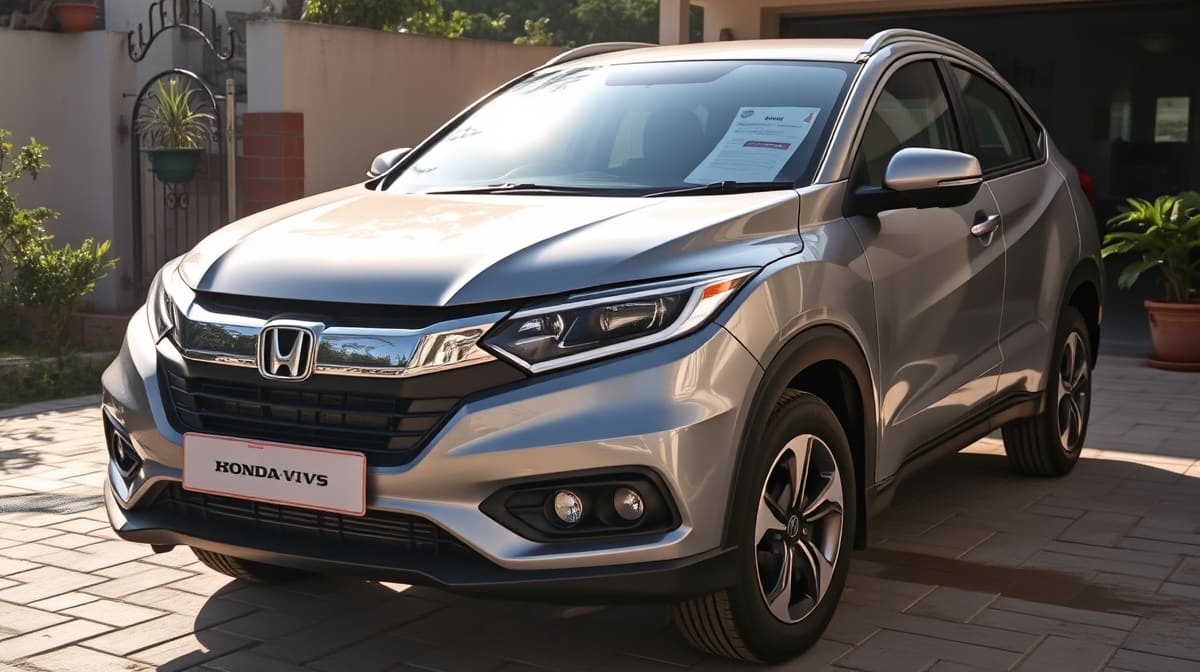
The Uttarakhand State Consumer Commission has clarified that an automobile manufacturer cannot be held liable for defects in tyres supplied by a third-party manufacturer, absent any warranty coverage or direct control over the component. This ruling reinforces the principle that liability under consumer law must be tied to the party responsible for the specific defective product.
Background & Facts
The Dispute
The dispute arose from a consumer complaint filed by Sh. Gaurav Arora against Honda Cars India Pvt. Ltd. (appellant), Michelin India Private Limited (respondent No. 2), and Divine Automobiles Private Limited (respondent No. 3). The complainant alleged that the tyres fitted on his newly purchased Honda BR-V vehicle were defective, rendering the vehicle unusable. He sought replacement of the tyres or refund of their cost, along with compensation and litigation expenses.
Key Facts
- The complainant purchased the Honda BR-V 1.5 V MT IDTEC vehicle on 09.05.2018 from Divine Automobiles Private Limited, an authorised dealer of Honda Cars India Pvt. Ltd., for Rs. 12,54,208
- The vehicle was fitted with tyres manufactured by Michelin India Private Limited, not by Honda
- The complainant alleged that two tyres developed bubbles and one tyre had a cut
- The complainant raised the issue with the dealer in April 2019
- On 03.04.2019, Michelin India’s technical experts inspected the tyres and issued a report concluding that the damage was not due to manufacturing defect but due to road impact
- The report stated: "When a vehicle accidentally runs over a pot-hole or kerb, the tyre takes a severe shock to the tread area... resulting in the sidewall of the tyre to over-flex beyond its limit... The pinching of tyre sidewall breaks the casing plies inside the tyres which can be seen as a deformation or cut on the sidewall/inner liner"
- The report explicitly stated that the damage was not covered under warranty as it was not a manufacturing defect
- The complainant did not produce any counter-expert evidence or independent technical report
- The complainant had received insurance compensation for one of the damaged tyres
Procedural History
- 09.05.2018: Purchase of Honda BR-V vehicle from Divine Automobiles Private Limited
- April 2019: Complainant raised grievance regarding tyre defects
- 03.04.2019: Michelin India’s technical inspection report issued, concluding no manufacturing defect
- 2019: Consumer Complaint No. 288 of 2019 filed before District Consumer Disputes Redressal Commission, Haridwar
- 12.03.2021: District Commission allowed the complaint, directing replacement or refund of tyres (Rs. 43,000), 6% interest from 16.09.2019, Rs. 10,000 compensation, and Rs. 5,000 litigation expenses
- 06.01.2022: Appeal filed before State Consumer Commission under Section 41 of Consumer Protection Act, 2019
- 01.08.2025: Commission directed proceeding ex-parte against complainant for non-appearance
- 07.02.2024: Commission directed proceeding ex-parte against respondents No. 2 and 3 for non-appearance
- 07.05.2026: Final hearing held
- 13.05.2026: Judgment pronounced
The Parties' Positions
For the Appellant (Honda Cars India Pvt. Ltd.)
- Argued that it is not the manufacturer of the tyres
- Stated that it does not provide any warranty on tyres
- Emphasized that tyre warranty is exclusively provided by Michelin India Private Limited
- Contended that there is no inherent manufacturing defect in the vehicle itself
- Asserted that liability cannot be extended to it for components supplied by third parties
For the Respondents (Michelin India and Divine Automobiles)
- Michelin India submitted that its technical report conclusively established that the damage was due to road impact, not manufacturing defect
- Divine Automobiles stated it is only a dealer, not a manufacturer, and that the complainant had already received insurance compensation for one tyre
Relief Sought
The complainant sought:
- Replacement of defective tyres with new ones bearing warranty, or refund of Rs. 43,000
- Interest at 6% per annum from 16.09.2019 until payment
- Compensation of Rs. 10,000
- Litigation expenses of Rs. 5,000
The Legal Issue
The central question was whether an automobile manufacturer can be held liable under the Consumer Protection Act, 2019 for defects in tyres manufactured and warranted by a third party, where the manufacturer has no control over the component and provides no warranty for it.
Arguments Presented
For the Appellant
The appellant relied on the principle that liability under consumer law arises only when the complainant establishes deficiency in service or defect in goods supplied by the respondent. It argued that the tyres were not its product, nor was it the warrantor. The District Commission erred in imposing joint liability without establishing any nexus between the appellant and the defective component. The appellant cited the expert report from Michelin India, which conclusively ruled out manufacturing defect, and emphasized that the complainant failed to rebut it.
For the Respondent
The respondents did not appear or file written submissions. The Commission noted that the complainant, despite being present initially, failed to appear after 11.03.2022 and did not submit any evidence to contradict the technical report. The absence of any expert opinion or independent verification rendered the complainant’s allegations unsubstantiated.
The Court's Analysis
The Commission undertook a rigorous analysis of the evidence and the statutory framework under the Consumer Protection Act, 2019. It observed that the complainant’s grievance was exclusively with the tyres, which were manufactured by Michelin India and not by Honda Cars India. The appellant had no role in the design, production, or warranty of the tyres.
"The damage observed in the tyre is not a manufacturing defect, hence the company is unable to extend warranty benefits."
The Commission held that the expert report from Michelin India, which was detailed, technical, and addressed directly to the complainant, constituted credible evidence. The complainant did not challenge this report with any counter-expert opinion, nor did he produce photographs, maintenance records, or any other corroborative material.
The Commission further noted that the District Commission had failed to apply its mind to the distinction between the vehicle and its components. It held that imposing liability on the automaker for a third-party component, without any warranty linkage or control, was legally unsustainable. The District Commission had acted beyond its jurisdiction by extending liability to a party not responsible for the defective product.
The Commission emphasized that the burden of proof lies with the complainant to establish deficiency in service or defect in goods. In the absence of such proof, and in the presence of a credible technical report to the contrary, the complaint could not be sustained.
The Verdict
The appeal was allowed. The impugned order dated 12.03.2021 of the District Consumer Disputes Redressal Commission was set aside. Consumer Complaint No. 288 of 2019 was dismissed in its entirety. No compensation, refund, interest, or litigation expenses were awarded to the complainant. The amount deposited by Honda Cars India Pvt. Ltd. with the State Commission was ordered to be released in its favour. No costs were imposed on any party.
What This Means For Similar Cases
Liability Is Tied to Control and Warranty
- Practitioners must establish a direct link between the respondent and the defective component to invoke liability under consumer law
- Automakers cannot be held liable for third-party components unless they are the warrantor or have exercised control over the component’s supply
- Complaints targeting vehicle manufacturers for tyre, battery, or audio system defects must clearly establish the manufacturer’s responsibility for those parts
Expert Evidence Is Decisive
- Technical reports from manufacturers, when detailed and impartial, carry substantial weight in consumer forums
- Complainants must produce counter-expert evidence to rebut such reports; mere allegations are insufficient
- Failure to challenge credible technical evidence will result in dismissal of the complaint
Procedural Non-Compliance Is Fatal
- Complainants who fail to appear before the Commission after initial filing risk ex-parte proceedings and dismissal
- Absence of evidence, combined with non-appearance, severely weakens a consumer complaint
- Courts will not entertain claims based on unsubstantiated assertions when objective evidence contradicts them