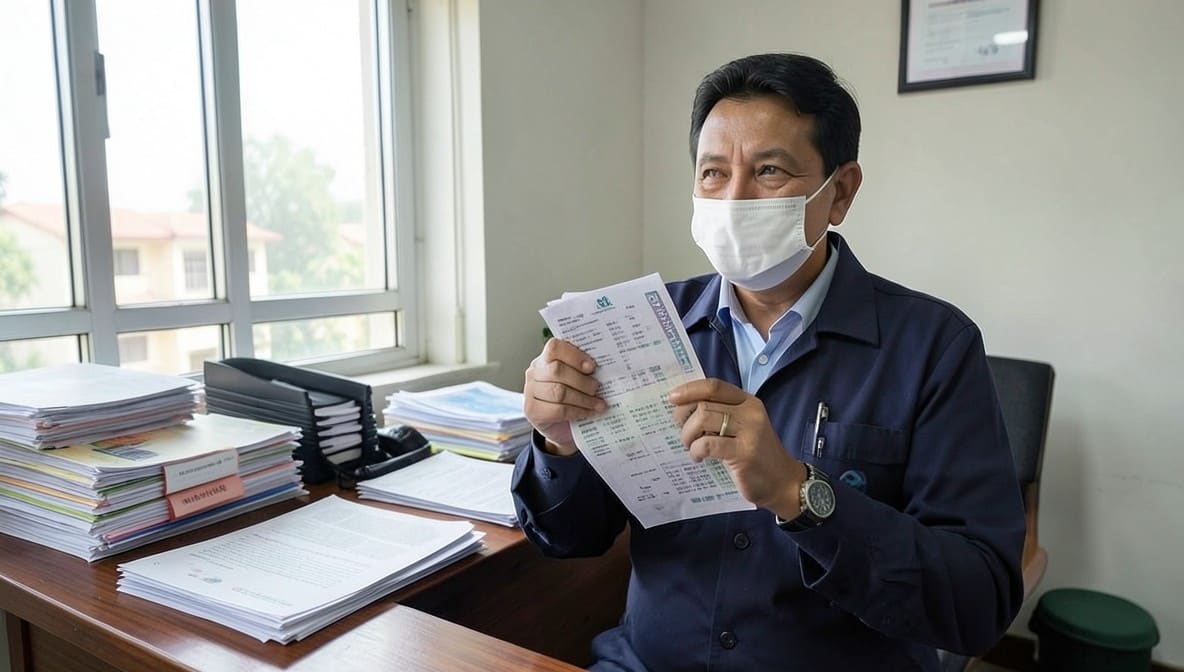
The Supreme Court has reaffirmed that consumer courts cannot award massive compensation based on unauthenticated photocopies and speculative claims, reinforcing the foundational requirement of credible evidence in consumer disputes.
Background & Facts
The Dispute
The respondent, Aashna Roy, a management graduate and former senior executive, visited the ITC Maurya Hotel’s beauty salon on 12 April 2018 for a haircut. She alleged that the service was deficient, leading to severe professional and psychological consequences, including loss of modelling assignments, job opportunities, and mental trauma. She filed a complaint before the National Consumer Disputes Redressal Commission (NCDRC) seeking ₹2 crore in compensation.
Procedural History
- 2018: Original complaint filed (Consumer Case No.1619 of 2018) claiming ₹3 crore.
- 2021: NCDRC awarded ₹2 crore compensation, finding deficiency in service and medical negligence.
- 2023: Supreme Court upheld the finding of deficiency but set aside the compensation amount, noting absence of material evidence to justify the quantum.
- 2023 (Remand): Respondent enhanced claim to ₹5.2 crore and submitted photocopies of documents including emails, certificates, pay slips, and medical letters.
- 2023: NCDRC again awarded ₹2 crore, relying on the same unverified documents.
- 2026: Appeal filed before Supreme Court challenging the second award.
Relief Sought
The appellant, ITC Limited, sought to set aside the compensation award, arguing that the respondent failed to authenticate documents, denied cross-examination, and presented speculative, uncorroborated claims. The respondent sought full enforcement of the ₹2 crore award, contending that technicalities should not bar relief in consumer-friendly forums.
The Legal Issue
The central question was whether photocopies of unauthenticated documents, without corroboration, witness examination, or compliance with basic evidentiary norms, can sustain a compensation award of ₹2 crore in a consumer dispute under the Consumer Protection Act, 1986.
Arguments Presented
For the Appellant
Learned counsel for ITC Limited argued that the respondent’s evidence consisted entirely of dim, unverified photocopies lacking: (i) Section 65B certification under the Indian Evidence Act for electronic records; (ii) affidavits from document authors; (iii) proof of payment or acceptance of offers; and (iv) any link between the haircut and alleged losses. Reliance was placed on Chief Administrator, HUDA v. Shakuntala Devi, Charan Singh v. Healing Touch Hospital, and Nizam’s Institute of Medical Sciences v. Prasanth S. Dhanaka to underscore that compensation must be grounded in tangible loss, not conjecture. The appellant also highlighted that applications for production of originals and cross-examination were ignored by the Commission, violating principles of natural justice.
For the Respondent
The respondent, appearing in person, contended that consumer forums are meant to be accessible and not bound by rigid procedural rules. She argued that her educational background and career trajectory demonstrated the gravity of her loss, and that requiring her to produce originals or summon witnesses was unduly burdensome. She asserted that the Supreme Court had already affirmed the deficiency in service, and that the quantum should be determined based on the trauma suffered, not technical compliance.
The Court's Analysis
The Court examined the nature of proceedings under the Consumer Protection Act, 1986, noting that while the Indian Evidence Act does not strictly apply, principles of natural justice remain inviolable. The Court emphasized that the Commission’s role is not to act as a tribunal of equity without evidentiary boundaries.
"The damages cannot be awarded merely on presumptions or whims and fancies of the complainant. To make out a case for award of damages, especially when the claim is to the tune of crores of rupees, some trustworthy and reliable evidence has to be led."
The Court meticulously dissected each document submitted by the respondent: pay slips showed continued employment before and after the incident; emails lacked formal offers or salary details; modelling certificates were undated and unverified; medical certificates lacked qualifications of the issuer and were first produced only on remand. Crucially, the respondent never entered the witness box, nor did she seek commission for examination of third-party witnesses.
The Court distinguished between procedural flexibility and evidentiary negligence. While consumer forums may relax formalities, they cannot dispense with the core requirement of proof. The Commission’s reliance on the respondent’s assertion that she "could not maintain originals" was deemed insufficient to justify a ₹2 crore award. The Court noted that even under relaxed rules, the burden of substantiating a claim - especially one of such magnitude - remains with the claimant.
The Court further held that the appellant’s applications for cross-examination and production of originals were properly filed and ignored, thereby violating fair play as articulated in R.V.E. Venkatachala Gounder v. Arulmigu Viswesaraswami & V.P. Temple. The failure to object at the earliest opportunity does not waive admissibility, but the failure to even attempt authentication after denial renders the evidence legally untenable.
The Verdict
The appellant succeeded. The Supreme Court held that photocopies of unauthenticated documents, without corroboration or opportunity for cross-examination, cannot justify a compensation award of ₹2 crore. The NCDRC’s order was modified to restrict compensation to the ₹25 lakh already deposited and released by the appellant during the first round of litigation.
What This Means For Similar Cases
Documentary Evidence Must Be Authenticated
- Practitioners must now insist on Section 65B compliance for electronic records in consumer complaints.
- Photocopies alone, especially for high-value claims, are insufficient; original documents or certified copies must be produced.
- Failure to authenticate documents at the earliest opportunity may be deemed a waiver under Venkatachala Gounder.
Cross-Examination Cannot Be Denied on Technical Grounds
- Consumer forums must provide a mechanism for cross-examination, whether through written questions, video conferencing, or commission.
- Denial of cross-examination on grounds of "consumer-friendliness" violates natural justice and renders findings vulnerable to reversal.
- Advocates should file formal applications for cross-examination and preserve objections in writing.
Compensation Must Be Tethered to Provable Loss
- Claims for emotional distress or lost opportunities require objective corroboration - pay slips, contracts, bank statements, or third-party affidavits.
- Courts will not apply a "thumb rule" for crore-scale claims; speculative assertions will be rejected.
- Practitioners should prepare detailed tables mapping each claim to supporting evidence, as done by the appellant in this case.