The West Bengal State Consumer Disputes Redressal Commission has reaffirmed that consumer complaints disclosing plausible claims of unauthorized electronic banking transactions cannot be summarily dismissed at the admission stage without affording parties an opportunity to present evidence. This ruling reinforces the quasi-judicial obligation to adjudicate on merits where factual disputes arise, even under the summary procedure of the Consumer Protection Act.
Background & Facts
The Dispute
The appellant, Sri Rana Yadav, maintained a savings bank account with Oriental Bank of Commerce, Barrackpore Branch. His mobile number, linked to this account, was also registered with his Paytm wallet. On 17.07.2020 at approximately 11:54 a.m., he received an SMS from mobile number 9832838337 claiming his KYC had been suspended. A person identifying as Deepak Kumar then contacted him, instructing him to update KYC details via the Paytm app. Acting on this instruction, the appellant entered personal details including Aadhaar and PAN information. He was then asked to transfer Rs.20 via UPI to activate his wallet. Immediately after this nominal transaction, five separate debits totaling Rs.49,242.35 were made from his bank account. The appellant asserts he never shared any OTP or consented to these transfers.
Key Facts
- The appellant’s bank account was debited in five UPI transactions on 17.07.2020 totaling Rs.49,242.35
- He immediately contacted the bank helpline and blocked his debit card on the same day
- On 18.07.2020, he filed a written complaint with the bank and lodged an FIR with police
- He made multiple representations to Paytm and other service providers
- Only Rs.15,000 was eventually refunded by the bank, leaving Rs.34,242.35 unrecovered
- The complaint alleged deficiency in service by the bank for failing to prevent unauthorized transactions and for inadequate fraud detection mechanisms
Procedural History
- 17.07.2020: Unauthorized transactions occur
- 18.07.2020: Complaint filed with bank and police; debit card blocked
- 08.12.2021: District Consumer Disputes Redressal Commission, North 24 Parganas, dismisses complaint CC/170/2021 at admission stage
- 08.01.2022: First Appeal No. SC/19/A/29/2022 filed before State Commission
- 31.07.2023: State Commission issues Order No.6 directing ex parte proceedings due to non-appearance of respondents
- 21.05.2024: State Commission condones 31-day delay in filing appeal upon payment of Rs.1,000 to State Consumer Welfare Fund
- 02.08.2024: Cost of Rs.1,000 deposited; delay condoned
Relief Sought
The appellant sought setting aside of the District Commission’s order dated 08.12.2021, restoration of the complaint for adjudication on merits, and eventual compensation for the unrecovered amount of Rs.34,242.35 along with interest and costs.
The Legal Issue
The central question was whether a Consumer Commission may dismiss a complaint at the admission stage on the ground that the complainant allegedly contributed to the loss by sharing KYC details, without affording the parties an opportunity to present evidence or obtain a written response from the bank.
Arguments Presented
For the Appellant
The appellant’s counsel argued that the District Commission committed a jurisdictional error by adjudicating on merits without issuing notice to the bank, without obtaining any written statement, and without permitting evidence. He relied on the RBI Circular dated 06.07.2017 on Customer Protection in Unauthorized Electronic Transactions, which imposes a duty on banks to implement robust authentication mechanisms and limit customer liability in cases of fraud. He contended that mere sharing of KYC details does not equate to consent for fund transfer, and that the burden of proving unauthorized access lies with the bank. He emphasized that the complaint disclosed a triable issue requiring examination of OTP generation, transaction authentication, and bank’s fraud detection protocols.
For the Respondent
The Respondents did not appear before the State Commission despite service of notices. No written submissions or evidence were filed by the bank or any other party.
The Court's Analysis
The State Commission observed that while Consumer Commissions are vested with summary jurisdiction, they remain quasi-judicial bodies bound by the principles of natural justice. The power to dismiss a complaint at the threshold is not a license to adjudicate disputed facts without a hearing. The Commission emphasized that the District Commission’s finding - that the appellant had acted at his own risk by sharing KYC details - was a determination on merits that required evidentiary support.
"The dispute raised in the complaint is not one capable of being decided merely on assumptions or presumptions. It necessarily involves examination of several factual aspects including the issue of use/sharing of the OTP, the nature of the disputed transactions and whether such transaction was induced by fraud, the mode through which they were effected, the authentication mechanism employed, the role, if any, played by the A/C in facilitating such transactions, the steps taken by the banking institution upon receipt of information regarding the alleged fraud and the applicability of the regulatory framework governing unauthorised electronic transactions."
The Commission held that the District Commission erred in assuming that KYC disclosure automatically negated any deficiency in service by the bank. It noted that the RBI Circular places obligations on banks to detect and prevent fraudulent transactions, and that the complainant’s failure to verify the caller’s identity does not absolve the bank of its duty to secure transactions. The Commission cited Dr. J.J. Merchant v. Shrinath Chaturvedi to reinforce that expeditious disposal under the Consumer Protection Act cannot override the right to a fair hearing. The summary nature of proceedings is meant to simplify, not to substitute, adjudication.
The Commission further clarified that it was not expressing any opinion on the merits of the case or the bank’s liability. Its sole finding was that the complaint disclosed a triable consumer dispute requiring adjudication on evidence.
The Verdict
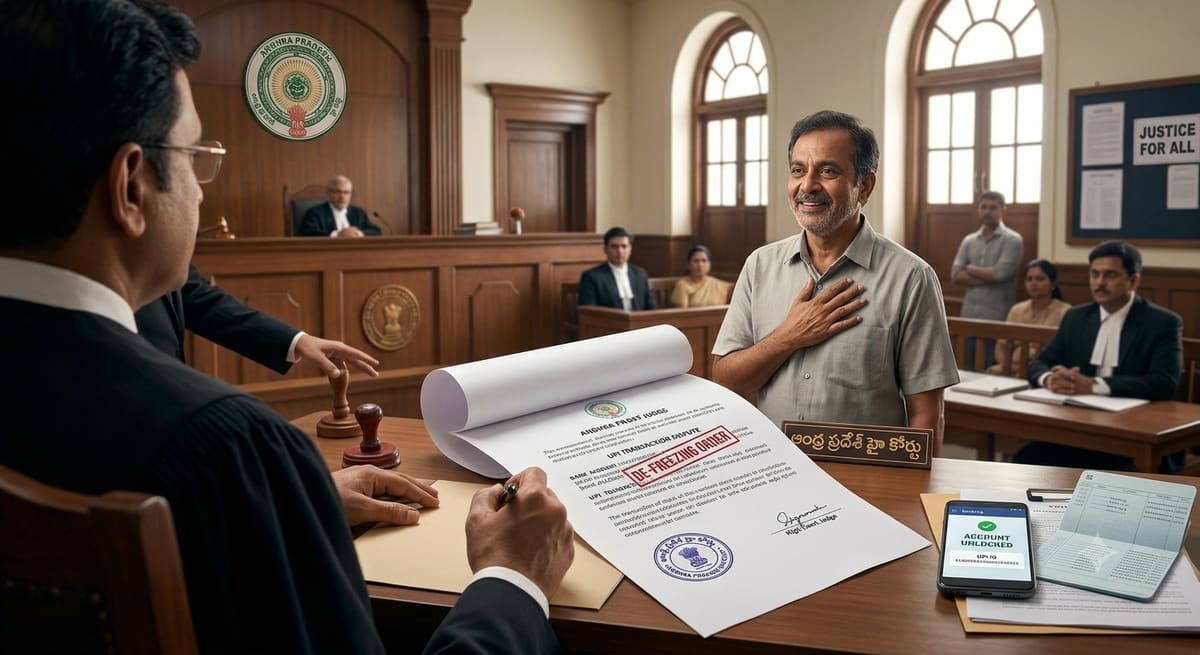
The appeal was allowed. The impugned order dated 08.12.2021 dismissing the complaint was set aside. The complaint case CC/170/2021 was remanded to the District Consumer Disputes Redressal Commission, North 24 Parganas, for fresh adjudication on merits. The District Commission was directed to issue notice to the respondents, afford a reasonable opportunity of hearing, and decide the matter based on pleadings and evidence. The parties are directed to appear before the District Commission on 14.07.2026. There shall be no order as to costs in the appeal.
What This Means For Similar Cases
Summary Dismissal Requires Strict Scrutiny
- Practitioners must challenge summary dismissals of consumer complaints where unauthorized electronic transactions are alleged
- Courts cannot presume contributory negligence from KYC disclosure alone
- Banks must be given opportunity to explain their authentication protocols and fraud detection measures
RBI Circulars Are Binding on Adjudication
- RBI guidelines on unauthorized transactions are not merely advisory but form part of the legal framework for determining deficiency in service
- Failure to comply with RBI’s customer protection norms may constitute deficiency under Section 2(1)(g) of the Consumer Protection Act, 2019
- Banks must demonstrate implementation of multi-factor authentication and real-time fraud monitoring
Evidence Is Non-Negotiable
- No finding on liability can be made without hearing the bank’s version
- Complaints involving digital fraud require examination of transaction logs, OTP logs, IP addresses, and call records
- Merely alleging fraud is insufficient; the complainant must be given chance to substantiate with evidence