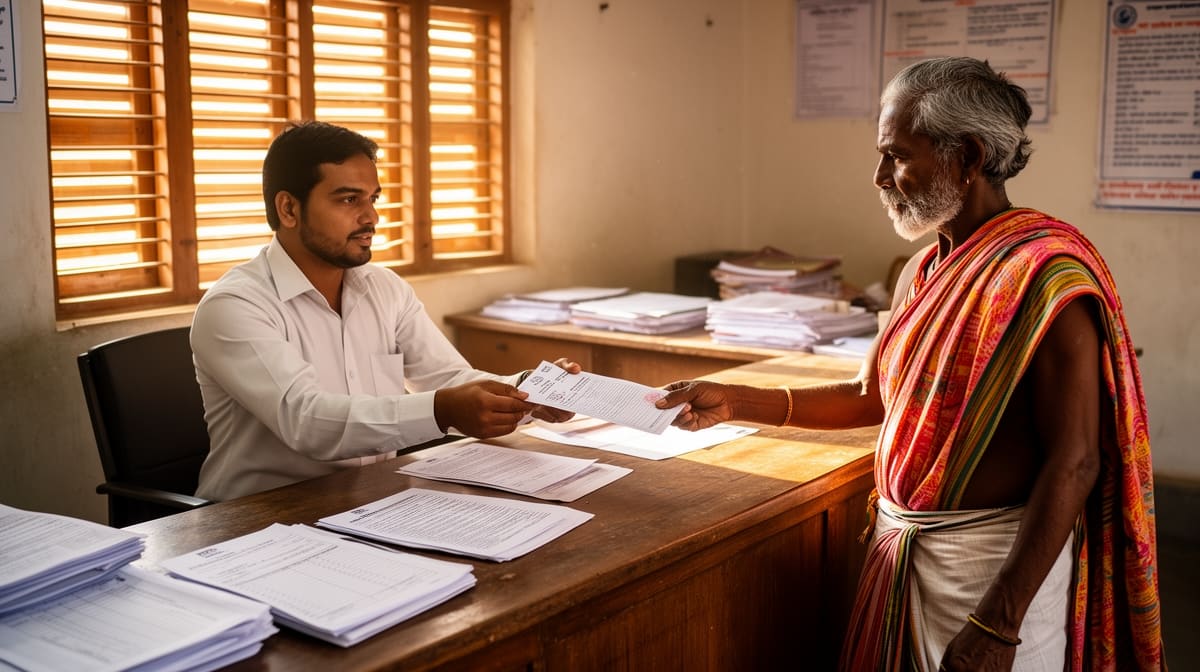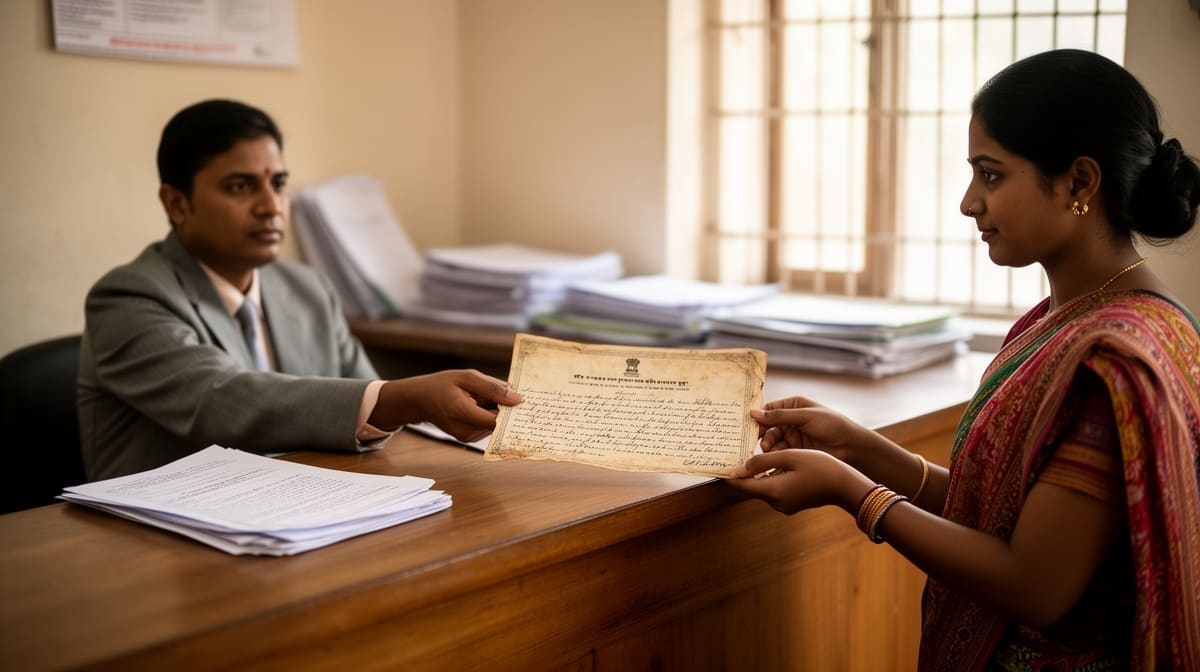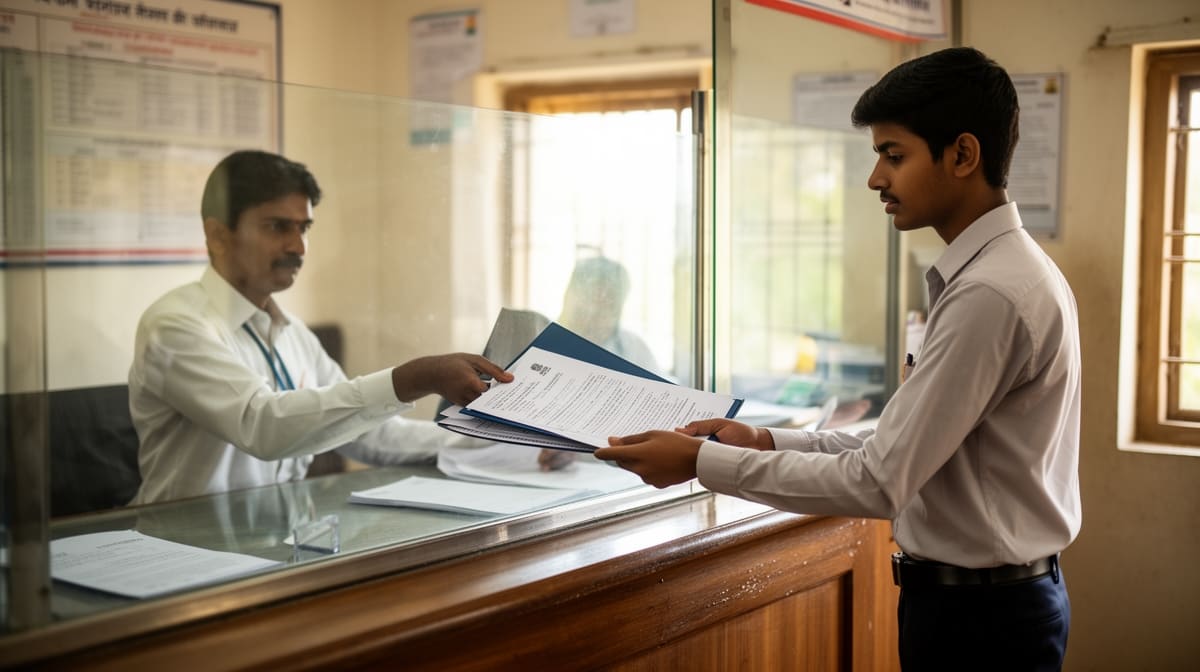
The Bombay High Court has clarified that state authorities cannot demand pre-constitutional documents to verify caste claims under the Maharashtra Caste Certificate Act, 2000. This ruling reinforces the statutory framework that limits the role of issuing officers to administrative processing, not substantive verification, thereby protecting applicants from arbitrary delays and procedural overreach.
Background & Facts
The Dispute
The petitioner, Hariom Najuk Bhopse, sought issuance of a caste certificate affirming his belonging to the Koli Mahadeo community, classified as a Scheduled Tribe under the Maharashtra Scheduled Castes, Scheduled Tribes, Vimukta Castes, Other Backward Classes, and Special Backward Class Caste Certificate (Regulation of Verification) Act, 2000. His father had previously obtained a valid caste certificate dated 15/05/1992 from the Executive Magistrate of Amravati, the competent authority at the time. Despite submission of this certificate and other supporting documents through the online portal, the Sub-Divisional Officer, Tiwasa-Bhatkuli, issued five successive orders between December 2023 and July 2024, rejecting the application on grounds of insufficient proof of pre-1950 lineage.
Procedural History
- May 1992: Petitioner’s father obtained valid caste certificate from Executive Magistrate, Amravati
- 2023: Petitioner applied online for renewal/re-issuance of caste certificate
- December 2023 to July 2024: Sub-Divisional Officer issued five rejection orders citing absence of pre-constitutional documents
- February 2026: Writ petition filed before Bombay High Court, Nagpur Bench
Relief Sought
The petitioner sought a writ of mandamus directing the Sub-Divisional Officer to issue the caste certificate without requiring proof of ancestral status prior to 1950, arguing that such a demand violates the Maharashtra Caste Certificate Act, 2000 and Rules, 2003.
The Legal Issue
The central question was whether the Sub-Divisional Officer, acting under Section 4 of the Maharashtra Caste Certificate Act, 2000, is empowered to demand and verify pre-constitutional documents to establish Scheduled Tribe status, or whether such scrutiny exceeds the officer’s statutory mandate.
Arguments Presented
For the Petitioner
The petitioner relied on three prior judgments of the same Bench: Darshana Vinayak Jumale v. The Scheduled Tribe Caste Certificate Scrutiny Committee, Jay Vilas Ghate v. State of Maharashtra, and Bhagyesh Thakare v. The S.T. Caste Certificate Scrutiny Committee. It was argued that the Act and Rules do not require pre-1950 documents, and that the issuance of a valid certificate by a competent authority in 1992 is sufficient. The petitioner further contended that demanding ancestral documentation transforms the Sub-Divisional Officer into an investigative body, contrary to the statutory scheme which reserves verification for the Scrutiny Committee under Section 6.
For the Respondent
The State contended that the petitioner failed to provide documentary evidence tracing lineage to a Scheduled Tribe community prior to 1950, as required under the spirit of the Act and Rules. It argued that without such proof, the claim lacked credibility and that the rejection was a legitimate exercise of due diligence to prevent fraudulent claims.
The Court's Analysis
The Court examined the statutory architecture of the Maharashtra Caste Certificate Act, 2000, distinguishing between the roles of the Sub-Divisional Officer under Section 4 and the Scrutiny Committee under Section 6. It held that the former’s function is purely administrative: to receive, process, and issue certificates based on documents already verified by prior competent authorities. The Court emphasized that Section 4 does not confer investigative powers.
"It is settled position of law that the competent authority under Section 4 of the Act... is not entitled to make a detailed enquiry as to the validity of the claim of the petitioners of belonging to particular Caste/Tribe; for that is the job of the Committee constituted under Section 6 of the said Act."
The Court further cited Namdeo s/o Baburao Ingale v. Scheduled Tribe Caste Certificate Scrutiny Committee and Dhanashree Ravindra Koli v. State of Maharashtra to affirm that demanding pre-1950 documents is not only unauthorized but also contrary to the legislative intent of facilitating access to affirmative action. The repeated rejections based on extraneous grounds were held to be arbitrary and violative of Article 14. The Court concluded that the Sub-Divisional Officer had acted beyond jurisdiction by conducting a substantive inquiry reserved exclusively for the Scrutiny Committee.
The Verdict
The petitioner won. The Court held that Section 4 of the Maharashtra Caste Certificate Act, 2000 does not empower Sub-Divisional Officers to demand or verify pre-constitutional documents. The rejection orders were quashed, and the petitioner was directed to be issued a caste certificate within three weeks.
What This Means For Similar Cases
Caste Certificate Issuance Is Administrative, Not Investigative
- Practitioners must challenge any rejection based on demand for pre-1950 documents as ultra vires Section 4
- Applications supported by a prior valid certificate from a competent authority (e.g., Executive Magistrate) are prima facie sufficient
- Petitions under Article 226 are maintainable where authorities exceed statutory limits
Scrutiny Committee Alone Has Verification Powers
- Only the Scrutiny Committee under Section 6 may conduct inquiry into the authenticity of caste claims
- Sub-Divisional Officers must issue certificates unless documents are patently forged or non-existent
- Any delay or refusal by the issuing officer without referral to the Committee is illegal
Precedent Binding Across Maharashtra
- This judgment, along with Darshana Jumale and Jay Ghate, forms a binding trilogy for all districts in Maharashtra
- District-level officers must immediately cease demanding ancestral documents for caste certificate renewals
- Legal aid clinics and NGOs should use this judgment to challenge systemic delays in tribal and OBC certificate issuance