The Bombay High Court has clarified a critical procedural boundary in the issuance of Scheduled Tribe caste certificates, reinforcing that administrative authorities must not act as adjudicators of tribal identity validity. This judgment restores the statutory division of roles under the Maharashtra Caste Certificate Act, 2000, ensuring that preliminary certification remains a formality grounded in documentary evidence, not substantive inquiry.
Background & Facts
The Dispute
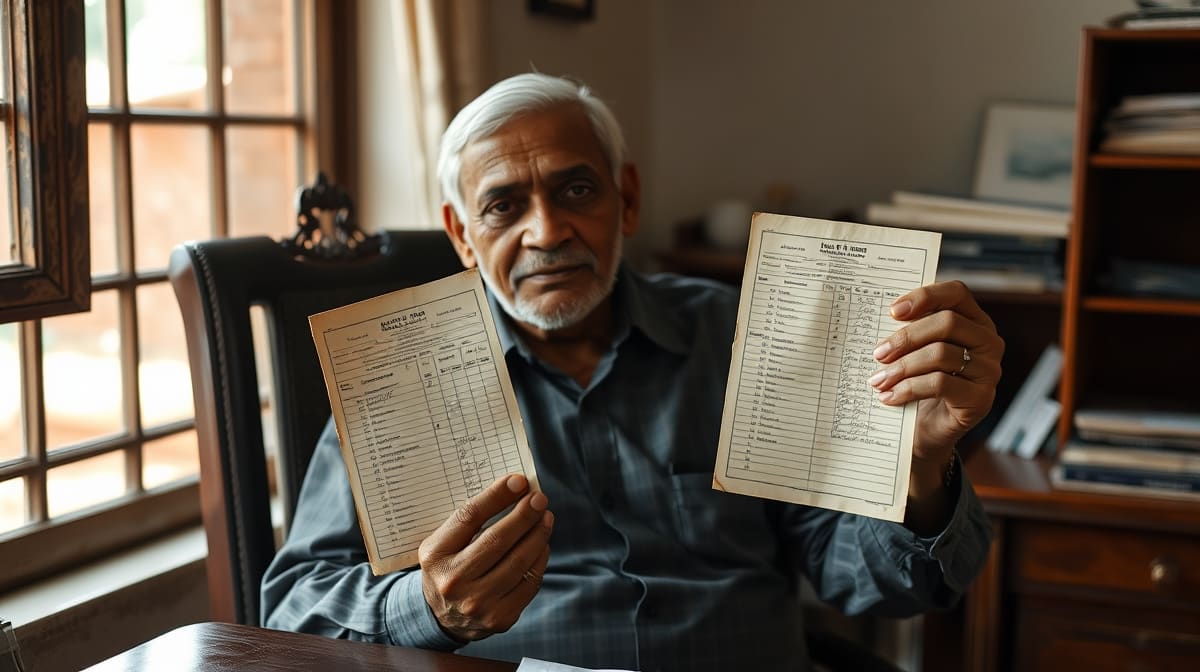
The petitioner, Rajendra Purnaji Rane, sought a Scheduled Tribe certificate claiming membership in the "Koli Mahadeo" tribe, relying on his father’s pre-2000 caste certificate issued on 06/01/1992. Despite this documentary proof, the Sub-Divisional Officer (SDO) of Daryapur rejected his application in 2020, conducting an independent inquiry into the legitimacy of his tribal claim. The petitioner appealed this rejection to the Scheduled Tribe Caste Certificate Scrutiny Committee, which treated the appeal as a proposal for validation and dismissed it on merits, effectively conducting its own investigation into tribal lineage.
Procedural History
- 1992: Petitioner’s father issued a caste certificate recognizing him as "Koli Mahadeo".
- 2020: SDO rejected petitioner’s application, questioning the validity of the tribal claim despite the prior certificate.
- 2025: Scrutiny Committee dismissed the appeal, treating it as a fresh claim requiring proof of tribal affiliation.
- 2025: Writ petition filed before the Bombay High Court, Nagpur Bench, challenging both orders as ultra vires.
Relief Sought
The petitioner sought quashing of both the SDO’s 2020 order and the Scrutiny Committee’s 2025 order, and a direction to issue the caste certificate based on his father’s pre-Act certificate.
The Legal Issue
The central question was whether the Sub-Divisional Officer, under Section 4 of the Maharashtra Scheduled Castes, Scheduled Tribes, De-Notified Tribes (Vimukta Jatis), Nomadic Tribes, Other Backward Classes and Special Backward Category (Regulation of Issuance and Verification of) Caste Certificate Act, 2000, is empowered to investigate the authenticity of a tribal claim, or whether such scrutiny is exclusively reserved for the Scrutiny Committee under Section 6.
Arguments Presented
For the Petitioner
Learned counsel relied on Namdeo s/o Baburao Ingale v. Scheduled Tribe Caste Certificate Scrutiny Committee [2015(2) Mh.L.J. 707] and subsequent judgments including Vishal Namdeo Gopewad v. Scrutiny Committee, Yavatmal, arguing that the SDO’s role is limited to issuing certificates upon prima facie satisfaction of documentary evidence. She contended that the SDO’s detailed inquiry into tribal lineage violated the statutory scheme, which separates issuance from verification. The pre-Act certificate of the father, she argued, was sufficient under the principle of continuity of caste status.
For the Respondent/State
The Additional Government Pleader argued that the Scrutiny Committee had a duty to prevent fraudulent claims and that the SDO’s rejection was justified due to inconsistencies in the petitioner’s claim. He contended that the Committee’s review was necessary to uphold the integrity of the caste certification system, especially in light of rising misuse.
The Court's Analysis
The Court examined the statutory architecture of the Act of 2000 and found a clear demarcation of functions. Section 4 vests in the Sub-Divisional Officer the duty to issue caste certificates upon receipt of prima facie documents, without conducting an inquiry into the validity of the claim. Section 6 establishes the Scrutiny Committee as the sole authority empowered to investigate and verify claims, including those arising from appeals.
"It is settled position of law that the competent authority under Section 4... is not entitled to make a detailed enquiry as to the validity of the claim of the petitioners of belonging to particular Caste/Tribe; for that is the job of the Committee constituted under Section 6 of the said Act."
The Court held that the SDO’s rejection of the application based on an investigation into tribal lineage was a clear excess of jurisdiction. Similarly, the Scrutiny Committee erred by treating the appeal as a fresh application for validation, thereby usurping the SDO’s primary function. The Committee’s role is appellate and procedural, not investigative at the initial stage.
The Court further affirmed that a caste certificate issued before the Act of 2000 remains valid for the purpose of establishing lineage, and the petitioner’s claim was supported by such documentary evidence. The Committee’s attempt to re-litigate the validity of the claim was contrary to the ratio decidendi of Namdeo Ingale and subsequent precedents.
The Verdict
The petitioner won. The Court held that Sub-Divisional Officers cannot conduct detailed inquiries into tribal identity under Section 4 of the Act of 2000, and Scrutiny Committees cannot act as first-tier adjudicators of caste claims. Both impugned orders were quashed, and the SDO was directed to issue the caste certificate within three weeks.
What This Means For Similar Cases
Caste Certificate Issuance Is Ministerial, Not Adjudicatory
- Practitioners must now argue that any rejection of a caste certificate based on substantive scrutiny by the SDO is ultra vires and liable to be quashed.
- Applications must be supported by pre-Act certificates, affidavits, or other documentary proof - no additional evidence of tribal practice is required at this stage.
- Denial of certificates on grounds of "inconsistency" or "doubt" without referral to the Scrutiny Committee is legally unsustainable.
Scrutiny Committees Must Limit Review to Procedural Compliance
- When an appeal is filed against an SDO’s refusal, the Committee must determine only whether the SDO acted within statutory limits, not whether the claim is factually true.
- The Committee cannot demand new documents or initiate independent verification unless the SDO’s certificate is formally referred under Section 6(2).
- Any order by the Committee that substitutes its own factual findings for the SDO’s ministerial function is void.
Pre-Act Certificates Retain Legal Force
- Certificates issued before the Act of 2000 are valid proof of lineage under Section 4.
- Applicants need not re-prove tribal affiliation if they rely on a parent’s pre-2000 certificate.
- Authorities cannot impose new evidentiary burdens on applicants relying on legacy documents.