The Bombay High Court has affirmed that the state’s failure to provide adequate burial grounds for religious minorities violates the fundamental right to dignity under Article 21. In a landmark ruling, the Court ordered the timely development of land reserved under statutory development plans, rejecting bureaucratic delays as a valid excuse for denying essential civic infrastructure to minority communities.
Background & Facts
The Dispute
The petitioners, representing Christian and Muslim communities in Thane, alleged systemic neglect by municipal and state authorities in developing reserved land for burial grounds. Despite repeated assurances and legal directives, no functional cemetery had been constructed for over a decade, forcing families to transport deceased relatives to distant locations like Sewri and Mahalaxmi, often requiring police clearance.
Procedural History
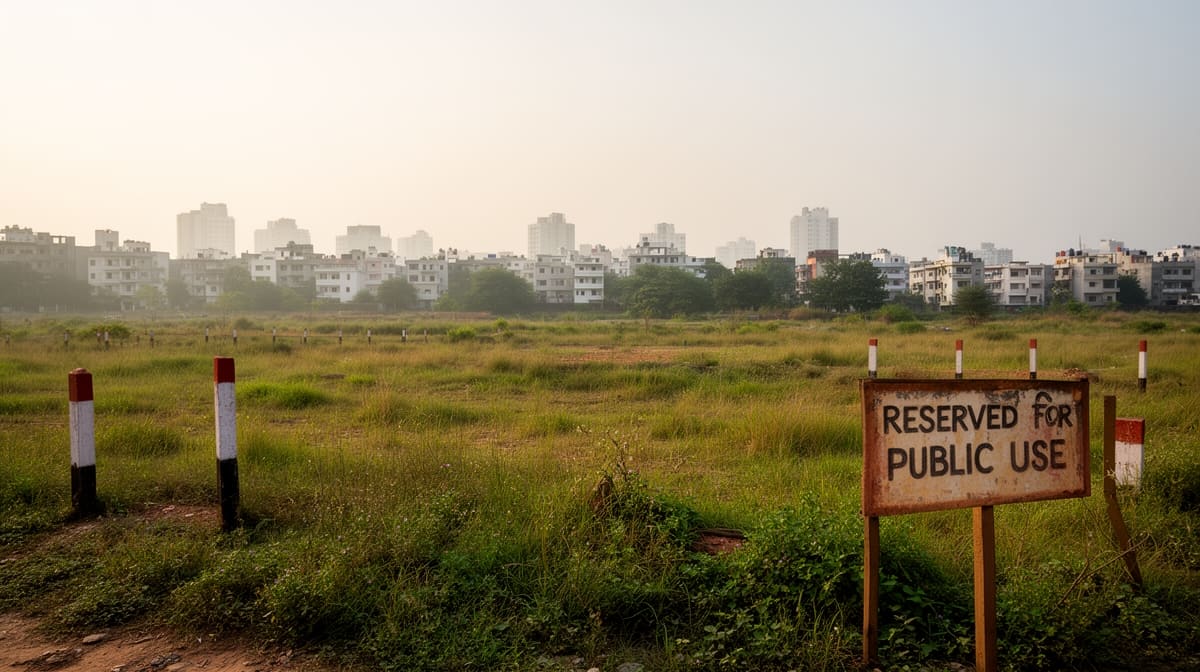
- 2016: Government issued G.R. under Section 37 of MRTP Act reserving 37,000 sq. mts at Bhayanderpada for "Sayukta Smashanbhumi" and "Smruti Udyan", including 3,000 sq. mts for Christian burial.
- 2017: Thane Municipal Corporation (TMC) passed General Body Resolution No. 03 confirming 3,000 sq. mts for Christian cemetery.
- 2021: PIL No. 119 of 2021 filed by Christian activists citing non-compliance.
- 2023: Division Bench directed that reserved plots not be repurposed without due process.
- 2025: Court ordered removal of encroachments and fencing of land; mandated Municipal Commissioner’s personal vetting of affidavits.
- 2025: PIL No. 20 of 2025 filed by Muslim Trust seeking development of 3-hectare plot (Reservation No. 122-D) for Muslim burial.
Relief Sought
Petitioners sought immediate handover of reserved land, completion of burial ground construction within a fixed timeline, and prohibition of any change in land use without statutory compliance.
The Legal Issue
The central question was whether the state’s obligation to provide burial grounds, once land is formally reserved under a statutory development plan, constitutes a justiciable duty under Article 21 of the Constitution, and whether prolonged inaction despite repeated judicial directives amounts to a violation of fundamental rights.
Arguments Presented
For the Petitioners
The petitioners relied on Bandhua Mukti Morcha v. Union of India and Paschim Bengal Khet Mazdoor Samity v. State of West Bengal to argue that access to dignified burial is integral to the right to life. They cited repeated affidavits showing land was reserved, yet development stalled due to alleged encroachments, CRZ restrictions, and lack of possession. They emphasized that the state’s failure to act despite court orders amounted to a breach of public trust.
For the Respondents
The state and municipal authorities contended that land was not fully in their possession due to encroachments, CRZ restrictions, and pending acquisition. They argued that development was underway and timelines were being met, citing work on leveling and fencing. They also claimed alternative burial spaces were available, though no data was provided to substantiate sufficiency.
The Court's Analysis
The Court rejected the state’s reliance on technicalities such as CRZ restrictions and possession disputes as grounds for indefinite delay. It held that once land is formally reserved under a development plan for a public purpose - especially one tied to religious and cultural dignity - the state cannot evade its duty by citing administrative hurdles.
"The right to perform last rites with dignity is not a privilege but a constitutional imperative. Reservation of land is not a symbolic gesture; it is a binding commitment."
The Court distinguished State of U.P. v. Subhash Chandra by noting that in this case, the state had not merely failed to act - it had repeatedly promised action and been directed by courts to do so. The Court emphasized that public interest litigation is not a forum for factual disputes but a mechanism to enforce state accountability when fundamental rights are at stake.
It further held that the mere existence of alternative burial grounds could not justify non-compliance with a specific statutory reservation. The Court noted that the 37,000 sq. mts reserved for Sayukta Smashanbhumi was not merely a proposal - it was a legally recognized allocation under the MRTP Act, and its non-utilization violated the principle of legitimate expectation.
The Court also rejected the argument that CRZ restrictions were insurmountable, observing that the state had previously approved similar projects in CRZ zones with appropriate clearances. The onus, it held, lay with the state to secure permissions - not to abandon the project.
The Verdict
The petitioners succeeded. The Court held that the state must complete construction of all reserved burial grounds within two years and hand over possession of land without further delay. It mandated that if original plots are unavailable due to encroachment or statutory barriers, alternative land must be identified and acquired within three months.
What This Means For Similar Cases
Reserved Land Cannot Be Ignored
- Municipal corporations cannot delay development of land reserved under development plans by citing administrative delays or pending clearances.
- Courts will treat such delays as violations of Article 21 when the reserved use is essential to religious dignity.
- Practitioners must now file PILs not just for non-implementation, but for systemic breach of statutory commitments.
CRZ Restrictions Are Not Absolute Barriers
- CRZ norms do not automatically nullify public utility reservations; authorities must seek exemptions or modifications.
- The burden shifts to the state to prove that alternatives are impossible - not merely inconvenient.
- Legal teams should proactively file applications for CRZ clearance alongside PILs to preempt judicial frustration.
Judicial Directives Carry Binding Weight
- Repeated court orders create a cumulative obligation; non-compliance invites contempt proceedings.
- Affidavits must be personally vetted by top officials (e.g., Municipal Commissioner) to ensure accountability.
- Practitioners should cite this judgment to oppose any request for further adjournments in similar cases.