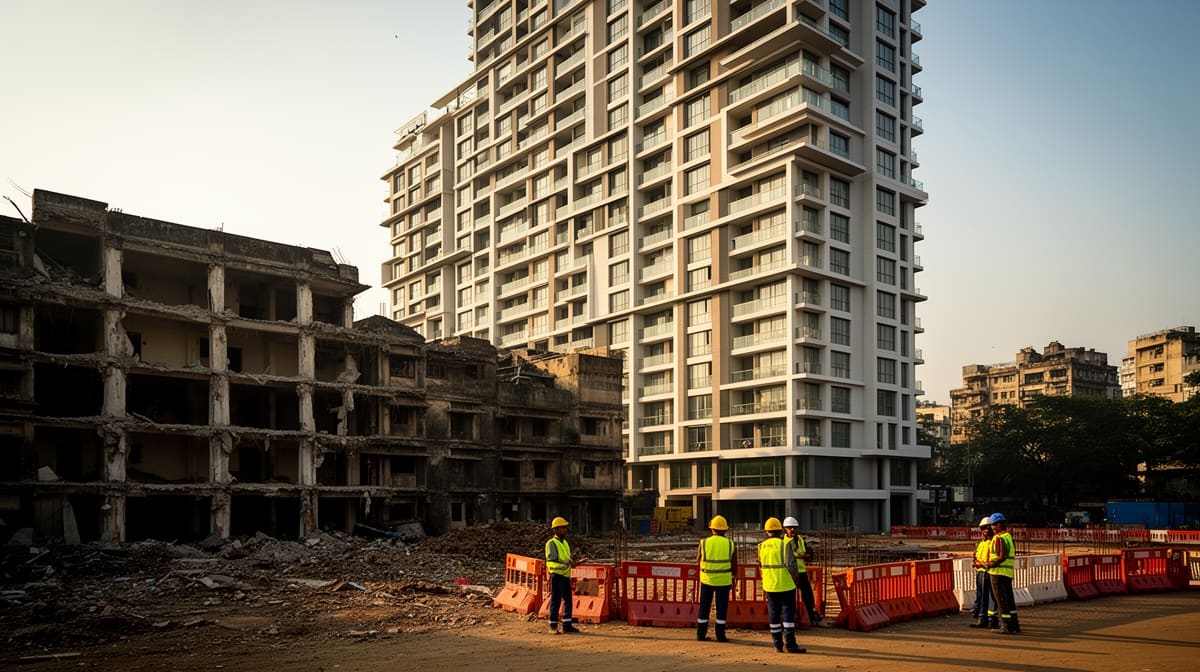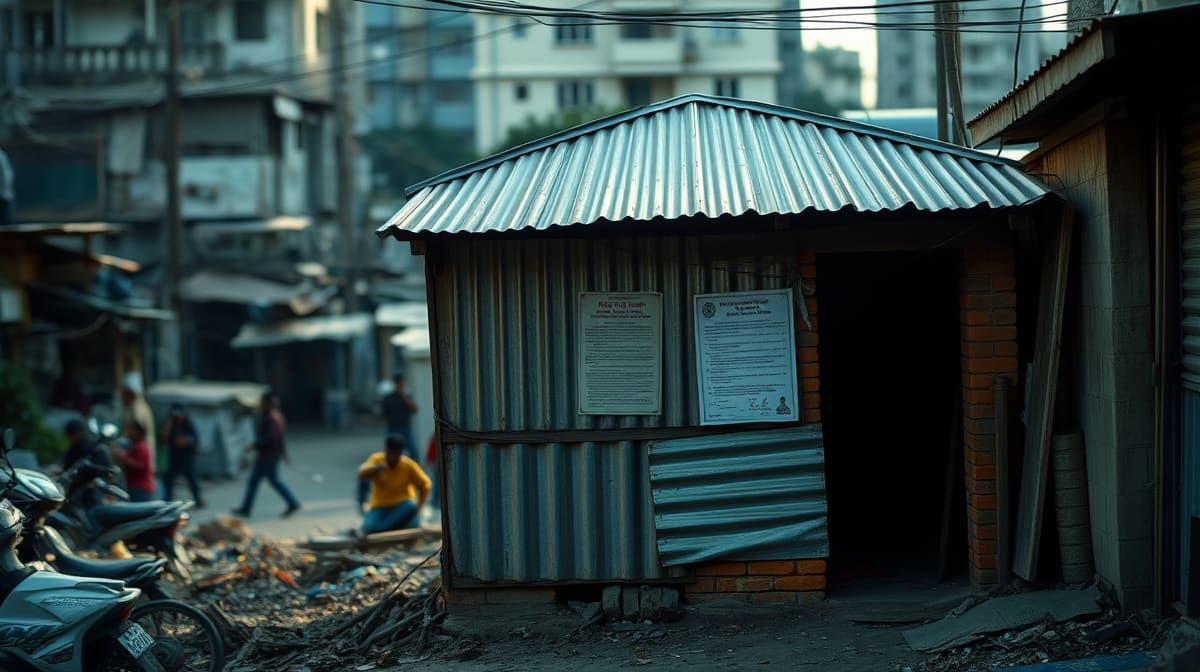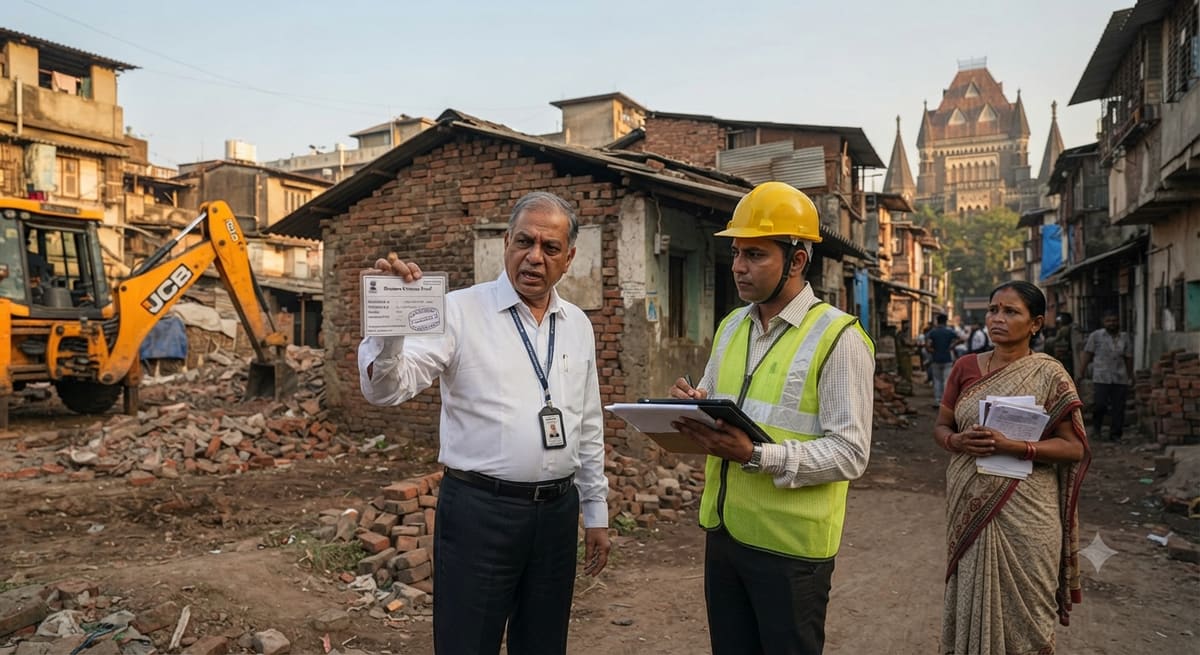
A landmark interim order by the Bombay High Court has established that religious structures within slum redevelopment zones cannot be summarily evicted. Instead, developers must provide alternative, permanent temple accommodation as part of the rehabilitation scheme, affirming the constitutional protection of religious practice even in urban renewal contexts.
Background & Facts
The Dispute
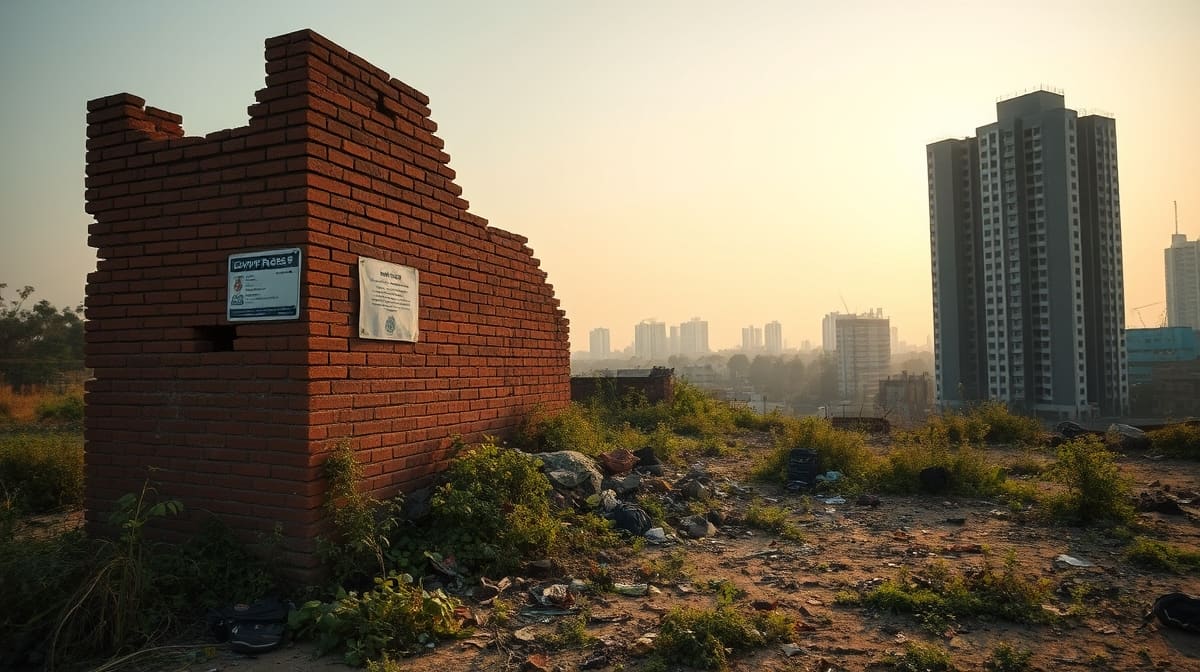
The petitioner, Navdurga Mahila Mandal, claims management and control over a temple structure dedicated to Durga Mata situated on land earmarked for slum redevelopment under the Indira Nagar (Jogeshwari) SRA Co-operative Housing Society. The Competent Authority under the Maharashtra Slum Areas [Improvement, Clearance & Redevelopment] Act, 1971 issued eviction notices, holding that the petitioner failed to prove the temple’s existence prior to the statutory datum line. The petitioner challenged this in a writ petition, asserting that the structure was a long-standing place of worship and entitled to protection under the Slum Act.
Procedural History
- 06.11.2025: Show Cause Notice issued demanding proof of pre-datum existence of the temple structure.
- 11.12.2025: Follow-up notice issued reiterating the demand for documentation.
- 22.01.2026: Competent Authority passed a reasoned order rejecting the petitioner’s claim and directing eviction.
- 27.01.2026: Eviction notice issued, mandating demolition of the structure.
- 09.02.2026: Green Zone Realtors Pvt. Ltd., the appointed redeveloper, intervened as an applicant.
Relief Sought
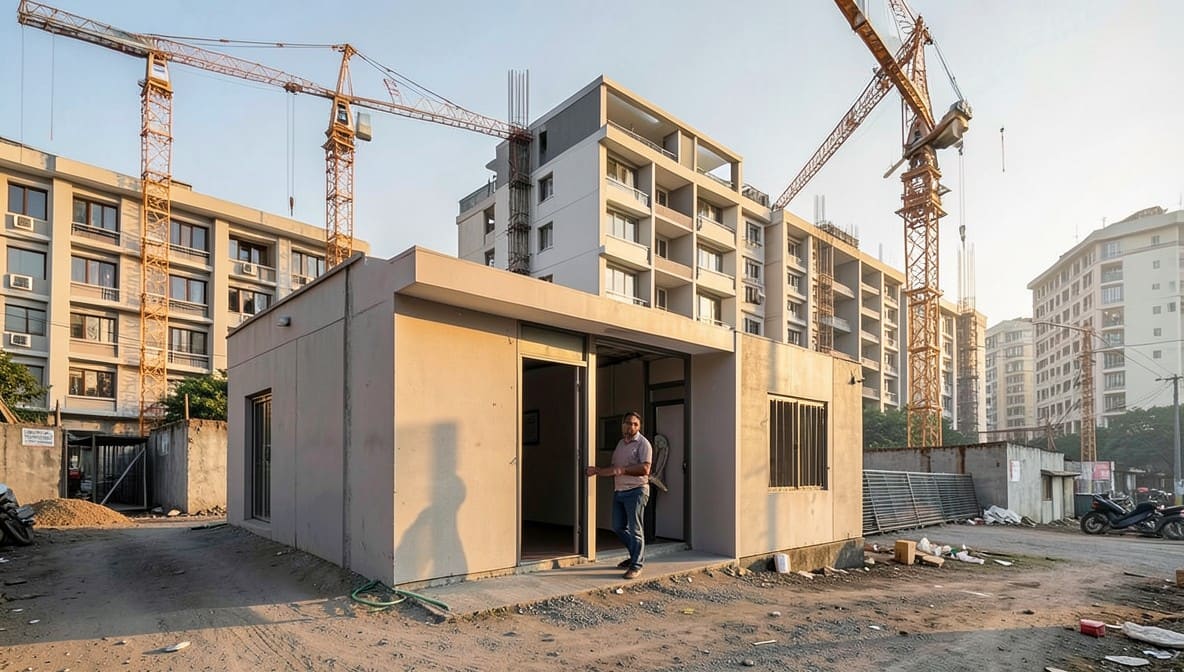
The petitioner sought quashing of the eviction notices and recognition of its right to rehabilitation of the temple structure. The intervenor, Green Zone Realtors, proposed an alternative solution: constructing a new 400 sq. ft. temple within the redevelopment layout, funded by the developer, in exchange for the petitioner vacating the existing structure.
The Legal Issue
The central question was whether the Maharashtra Slum Act permits the eviction of a religious structure without providing an alternative place of worship, and whether such eviction violates the right to freedom of religion under Article 25 of the Constitution.
Arguments Presented
For the Petitioner
The petitioner argued that the temple was a centuries-old religious site, and its demolition would violate Article 25 and the principle of secularism embedded in the Constitution. It relied on S. R. Bommai v. Union of India to assert that religious practices cannot be extinguished for urban development. The petitioner contended that the Competent Authority’s reliance on documentary proof of pre-datum existence was unreasonable, given the informal nature of religious institutions in slum areas.
For the Respondent/State
The State and MHADA contended that the Slum Act requires strict compliance with the datum line for eligibility of rehabilitation. They argued that the petitioner had not produced any official records, tax receipts, or municipal records to establish the temple’s existence prior to the cut-off date. The State maintained that granting exceptions for religious structures would open the floodgates to fraudulent claims and undermine the uniform application of the Act.
The Court's Analysis
The Court acknowledged the State’s procedural concerns but emphasized that the spirit of the Slum Act is not merely to clear slums but to rehabilitate affected communities - including their cultural and religious institutions. The Court noted that the petitioner’s structure was not a commercial or residential unit but a place of worship, which occupies a unique constitutional space.
"The right to worship is not contingent upon the possession of a property title. The State’s duty under the Slum Act includes preserving the social fabric of the community, which includes its religious identity."
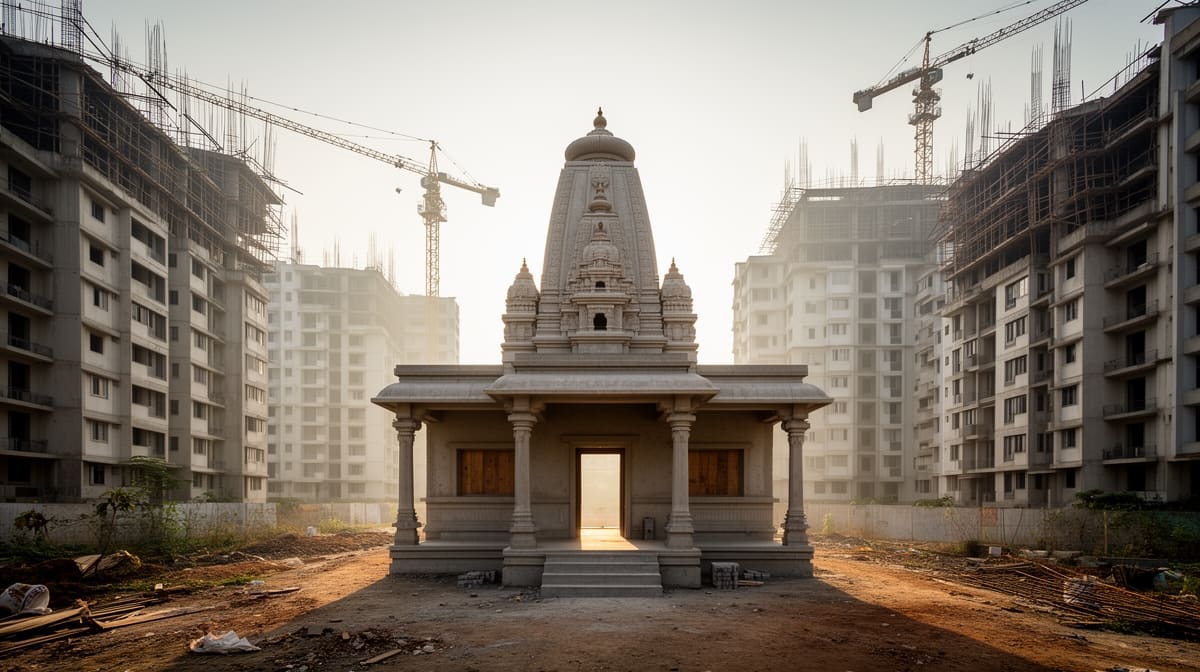
The Court found that the proposed settlement - where the developer agreed to construct a new temple of 400 sq. ft. RERA carpet area using saleable FSI, at its own cost, and with the petitioner’s design approval - was not only pragmatic but constitutionally sound. The Court held that this arrangement satisfied the duty to accommodate under Article 25, without requiring a judicial determination of the temple’s pre-datum status.
The Court further observed that the petitioner’s agreement to forgo transit rent or other compensation was voluntary and did not amount to coercion, given the alternative offered. The Court declined to validate the eviction order, instead treating the settlement as a lawful and equitable resolution.
The Verdict
The petitioner prevailed. The Court held that religious structures in slum redevelopment zones are entitled to alternative accommodation, not eviction, and that developers must integrate such accommodations into their rehabilitation plans. The eviction order was set aside, and the parties’ settlement was recognized as binding, subject to impleading the housing society.
What This Means For Similar Cases
Religious Structures Cannot Be Erased Without Replacement
- Practitioners must now argue that eviction of temples, mosques, or gurudwaras under slum laws requires a constitutionally compliant alternative.
- Developers must proactively identify religious structures during due diligence and include relocation plans in their SRA proposals.
- Competent Authorities cannot rely solely on documentary proof to deny protection to informal religious sites.
Settlements Can Override Procedural Defects in Slum Cases
- Courts will uphold mutually agreed settlements that provide substantive relief, even if technical eligibility criteria are unmet.
- Developers can avoid litigation by offering permanent religious infrastructure as part of FSI utilization.
- Petitioners should be advised to propose concrete alternatives, not just challenge notices.
FSI Can Be Used for Non-Commercial Public Amenities
- The Court implicitly validated the use of saleable FSI for constructing religious structures, setting a precedent for other public amenities like community halls or schools.
- This opens avenues for developers to claim FSI incentives for including social infrastructure in SRA projects.
- Legal teams should now draft SRA agreements with explicit clauses for religious and cultural space allocation.