In a significant ruling on motor accident compensation claims, the Bombay High Court has clarified that loss of income from private practice and salary during leave periods cannot be presumed without documentary evidence. The judgment underscores the burden of proof on claimants under welfare legislation and rejects profiteering claims by government doctors without substantiation.
Background & Facts
The Dispute
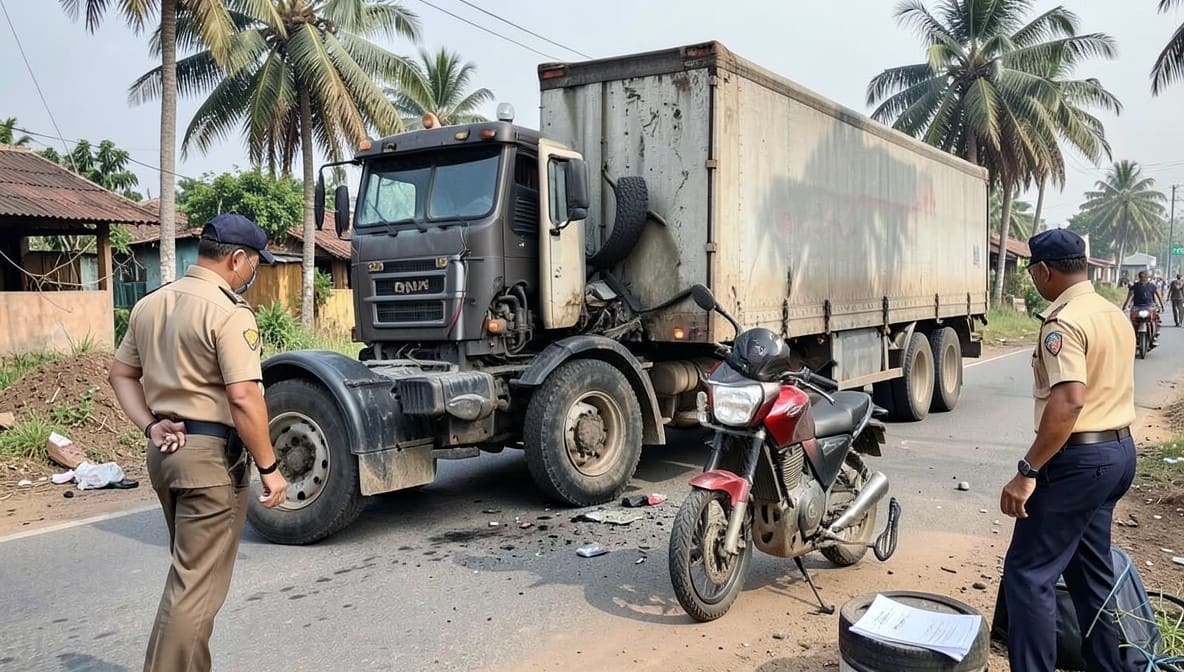
The case arose from a motor accident claim where the respondent, Rohidas Ambadas Chavan (a government doctor), sought compensation for injuries sustained in an accident. The Motor Accident Claims Tribunal, Thane, awarded Rs. 11,71,394 to the claimant, including Rs. 6,60,000 for loss of income from private practice and Rs. 3,66,586 for loss of income due to absence from duty. The appellant, Bajaj Alliance Insurance Co. Ltd., challenged these components of the award.
Key Facts
- The claimant, a government doctor, was injured in a motor accident and filed a compensation claim before the Motor Accident Claims Tribunal, Thane.
- The Tribunal awarded Rs. 11,71,394, including:
- Rs. 6,60,000 for loss of income from private practice (claimed at Rs. 10,000/month).
- Rs. 3,66,586 for loss of income due to absence from duty (11 months of salary).
- The claimant did not plead private practice income in the original application before the Tribunal.
- The claimant admitted in cross-examination that no documentary evidence was produced to substantiate private practice.
- The employer, Ms. Usha Kanchan, admitted in evidence that the claimant drew salary during the leave period.
Procedural History
- 04.07.2012: Motor Accident Claims Tribunal, Thane, awarded Rs. 11,71,394 to the claimant (Order dated 04.07.2012).
- FA No. 157/2015: The Insurance Company filed a First Appeal before the Bombay High Court challenging the award.
- 07.07.2026: The High Court delivered the present judgment, setting aside part of the Tribunal's award.
Relief Sought
The appellant (Insurance Company) sought:
- Quashing of the Tribunal's order to the extent of Rs. 6,60,000 (private practice) and Rs. 3,66,586 (salary during leave).
- Refund of any deposited amounts with accrued interest.
- Direction to the claimant to withdraw only the balance compensation after deducting the impugned amounts.
The Legal Issue
The central question was whether a claimant can be awarded compensation for:
- Loss of income from private practice without documentary evidence or pleading in the original claim.
- Salary during leave periods when the employer admits the claimant was already drawing salary during the said period.
Arguments Presented
For the Appellant (Insurance Company)
- The claimant failed to discharge the burden of proof for private practice income, as no documentary evidence was produced.
- The claimant did not plead private practice income in the original application, raising it only during examination-in-chief.
- The employer’s evidence confirmed the claimant drew salary during the leave period, making the award for loss of income perverse.
- Welfare legislation cannot be used for profiteering, especially by government doctors who must comply with government rules for private practice.
For the Respondent (Claimant)
- Relied on the Madras High Court judgment in Mary Immanuvel & Anr. vs. Periyasamy & Ors. (2017 SCC OnLine Mad 37748), arguing that private practice by government doctors should be presumed.
- Contended that the Tribunal’s award was sustainable as it accounted for the claimant’s loss of earning capacity.
The Court's Analysis
The Court conducted a detailed scrutiny of the Tribunal’s findings and the evidence on record:
-
Salary During Leave Period The Court held that the Tribunal’s finding was perverse because it ignored the admission of the employer (Ms. Usha Kanchan) that the claimant drew salary during the leave period. The Court emphasized:
"If the employer has admitted that the claimant was taking salary during the leave period and that has not been considered by the Tribunal, then awarding compensation on that account is based on material contrary to the facts on record."
Thus, the award of Rs. 3,66,586 for loss of income due to absence from duty was unsustainable.
-
Loss of Income from Private Practice The Court rejected the claimant’s argument that private practice should be presumed, holding:
"The onus is on the person claiming that he is in private practice to show that in effect he was doing private practice and was earning from said practice."
The Court noted:
- The claimant did not plead private practice in the original application.
- The claimant admitted in cross-examination that no documentary evidence was produced.
- No evidence was brought on record to show establishment, patients, or government permissions for private practice.
- The claimant did not even allege that private practice was conducted from his residence.
The Court distinguished the relied-upon Madras High Court judgment, holding:
"This Court is concerned with welfare legislation, and a person who has not led any evidence nor shown any government rules and regulations which would indicate no permission is required, cannot be permitted to take the benefit of welfare legislation for claiming compensation without discharging basic onus."
Thus, the award of Rs. 6,60,000 for private practice income was quashed and set aside.
The Verdict
The Bombay High Court allowed the appeal in part, setting aside the Tribunal’s award to the extent of:
- Rs. 6,60,000 for loss of income from private practice.
- Rs. 3,66,586 for loss of income due to absence from duty.
Operative Directions:
- If the impugned amounts were deposited with the Tribunal, they must be refunded to the Insurance Company along with accrued interest.
- The claimant may withdraw the balance compensation after deducting the above amounts.
- The statutory deposit of Rs. 25,000 is to be transferred to the Tribunal, with liberty to parties to seek refund.
What This Means For Similar Cases
Burden of Proof Is Non-Negotiable
- Claimants must substantiate claims with documentary evidence, especially for loss of income from private practice or salary during leave.
- Presumptions (e.g., private practice by government doctors) cannot replace evidence.
- Welfare legislation cannot be misused for profiteering without discharging the basic onus of proof.
Tribunal Awards Must Align With Evidence
- Tribunals must scrutinize employer admissions (e.g., salary during leave) before awarding compensation.
- Perverse findings (contrary to evidence) will be set aside on appeal.
- Claimants cannot raise new grounds (e.g., private practice) for the first time during examination-in-chief without pleading them in the original claim.
Compliance With Government Rules Is Mandatory
- Government doctors must comply with rules for private practice, including permissions and disclosures.
- Failure to produce documentary evidence (e.g., clinic records, patient registers, government permissions) will defeat the claim.
- Courts will not presume private practice merely because the claimant is a doctor.