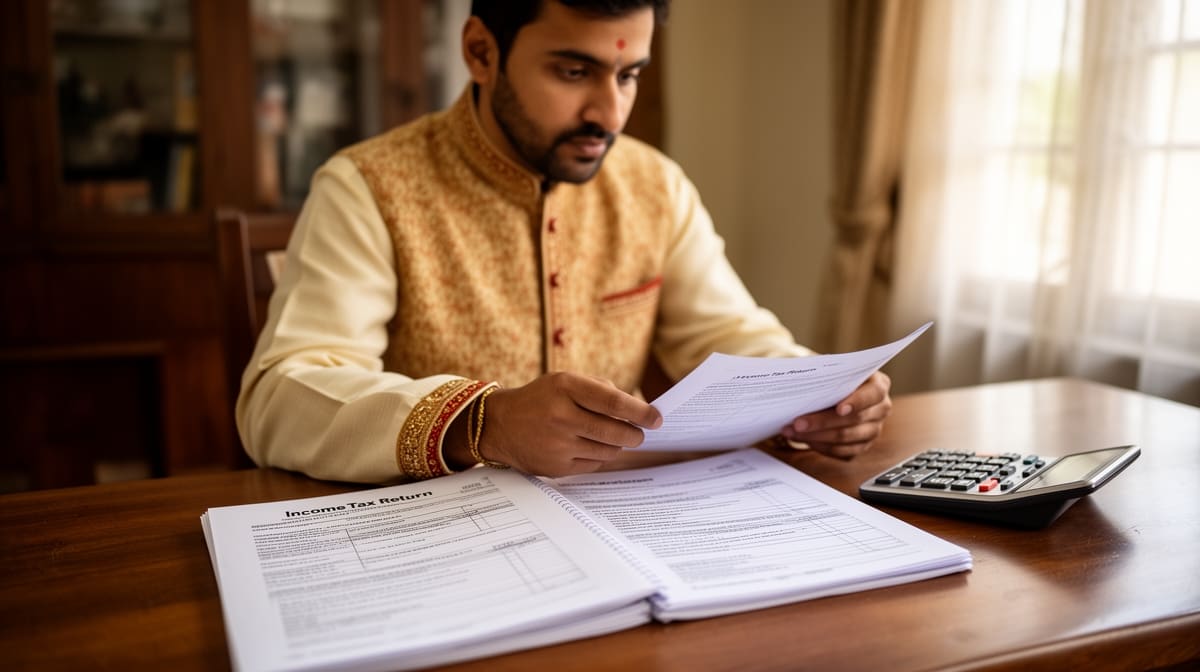
The Bombay High Court’s recent judgment in First Appeal No. 182 of 2015 delivers a critical clarification on how income from Income Tax Returns must be assessed in motor accident compensation cases. The ruling reinforces that only the deceased’s personal income, not income attributed to a Hindu Undivided Family (HUF), can form the basis for calculating loss of dependency. This doctrinal precision will significantly impact how claimants structure evidence and how tribunals evaluate financial loss in wrongful death claims.
Background & Facts
The Dispute
The appellants, widow and children of Ashok Banarsilal Jejani, sought enhanced compensation after their husband and father died in a motor accident on 27 January 2007. The deceased was traveling in a private car when it was struck by a truck owned by Respondent No. 1 and insured by Respondent No. 2. The Motor Accident Claims Tribunal awarded Rs. 7,45,299, which the appellants challenged on the grounds that the Tribunal undervalued the deceased’s annual income by disregarding multiple Income Tax Returns.
Procedural History
- 2007: Claim petition filed under Section 166 of the Motor Vehicles Act
- 2012: Tribunal awarded Rs. 7,45,299 based on net income of Rs. 82,535 per annum
- 2015: Appeal filed before Bombay High Court challenging quantum of compensation
- 2026: Judgment delivered by Justice Neeraj P. Dhote
Relief Sought
The appellants sought enhancement of compensation by including all Income Tax Returns filed by the deceased, arguing that the Tribunal erred in excluding HUF income and applying an incorrect deduction for personal expenses. They relied on National Insurance Company Ltd. v. Pranay Sethi and Magma General Insurance Co. Ltd. v. Nanu Ram to assert that statutory documents like Income Tax Returns must be given primacy.
The Legal Issue
The central question was whether income declared in Income Tax Returns under a Hindu Undivided Family (HUF) can be included in the calculation of the deceased’s annual income for the purpose of determining compensation under Section 166 of the Motor Vehicles Act, or whether only personal income attributable to the deceased’s individual business activity is relevant.
Arguments Presented
For the Appellant
The appellants contended that the Tribunal erred in limiting its assessment to a single Income Tax Return showing Rs. 82,535. They argued that the deceased’s total income, including Rs. 1,17,000 from HUF, should be considered under the principle established in Pranay Sethi, which holds that Income Tax Returns are statutory documents and must be accepted as reliable evidence of income. They further argued that the 1/3rd deduction for personal expenses was excessive given the deceased’s family structure and that future prospects should be enhanced.
For the Respondent
The insurance company countered that the Income Tax Returns cited by the appellants were filed under the HUF, which is a separate legal entity. The deceased’s personal business, ‘Bekari’, was the only source of individual income, and the HUF income was not attributable to him personally. The company emphasized that the business continued post-death, indicating no actual loss of dependency, and that the Tribunal’s assessment was consistent with the evidence.
The Court's Analysis
The Court undertook a meticulous review of the Income Tax Returns and the testimonies of the Income Tax officials examined by the appellants. It noted that while Section 166 permits compensation based on the deceased’s earning capacity, the foundation must be the deceased’s personal income, not income of a separate legal entity like an HUF.
"The Income Tax Returns exhibited as Exhibits 36, 37 and 38 were in respect of the Hindu Undivided Family... This clearly goes to show that the business continued even after the death of Ashok Jejani."
The Court held that the Tribunal correctly excluded HUF income because the deceased’s personal income, as per his own return for assessment year 2005-06, was Rs. 82,535. The Court further clarified that the burden to prove personal dependency lies with the claimants, and mere existence of HUF income does not equate to personal earning capacity.
Regarding the 1/3rd deduction, the Court found it appropriate under settled jurisprudence, especially since the deceased’s father (Appellant No. 4) had been deleted from the claim, leaving only the spouse and two children as dependents. The Court also affirmed the addition of 25% future prospects for a deceased aged between 40 and 50, as per Pranay Sethi, and upheld the conventional heads of compensation: Rs. 15,000 each for funeral expenses and loss of estate, and Rs. 40,000 each for consortium.
The Verdict
The appellants succeeded in part. The Bombay High Court enhanced the compensation from Rs. 7,45,299 to Rs. 10,44,114 by adjusting for future prospects and conventional heads, but rejected the inclusion of HUF income. The Court held that only personal income reflected in Income Tax Returns can be used to calculate loss of dependency, and that HUF income cannot be attributed to the deceased for compensation purposes.
What This Means For Similar Cases
HUF Income Cannot Be Treated as Personal Income
- Practitioners must now clearly distinguish between personal and HUF income in affidavits and tax records
- Claimants must file separate affidavits or certificates from Income Tax Officers confirming which income is attributable to the deceased personally
- Relying on HUF returns without proof of personal benefit will result in rejection of those figures
Future Prospects Must Be Applied Consistently
- For deceased aged 40 - 50, 25% addition for future prospects is now firmly established as the norm
- Tribunals must explicitly state the basis for applying or rejecting future prospects
- Failure to apply this adjustment constitutes a legal error warranting appellate interference
Documentary Evidence Trumps Oral Assertions
- Income Tax Returns are superior to oral testimony or vague claims of income
- Where multiple returns exist, only those filed in the deceased’s individual name are admissible
- Claimants must ensure tax records are properly authenticated and linked to the deceased’s personal business activity