The Rajasthan High Court has delivered a significant judgment addressing the balance between national security imperatives and the rights of property holders near sensitive border areas. In a batch of writ petitions, the Court dismissed challenges to eviction notices issued under the Rajasthan Colonization Act, 1954 and the Rajasthan Land Revenue Act, 1956, holding that unauthorized constructions within 50 kilometers of the Indo-Pak border cannot be shielded under Article 226 of the Constitution when national security concerns are substantiated by credible material.
Background & Facts
The Dispute
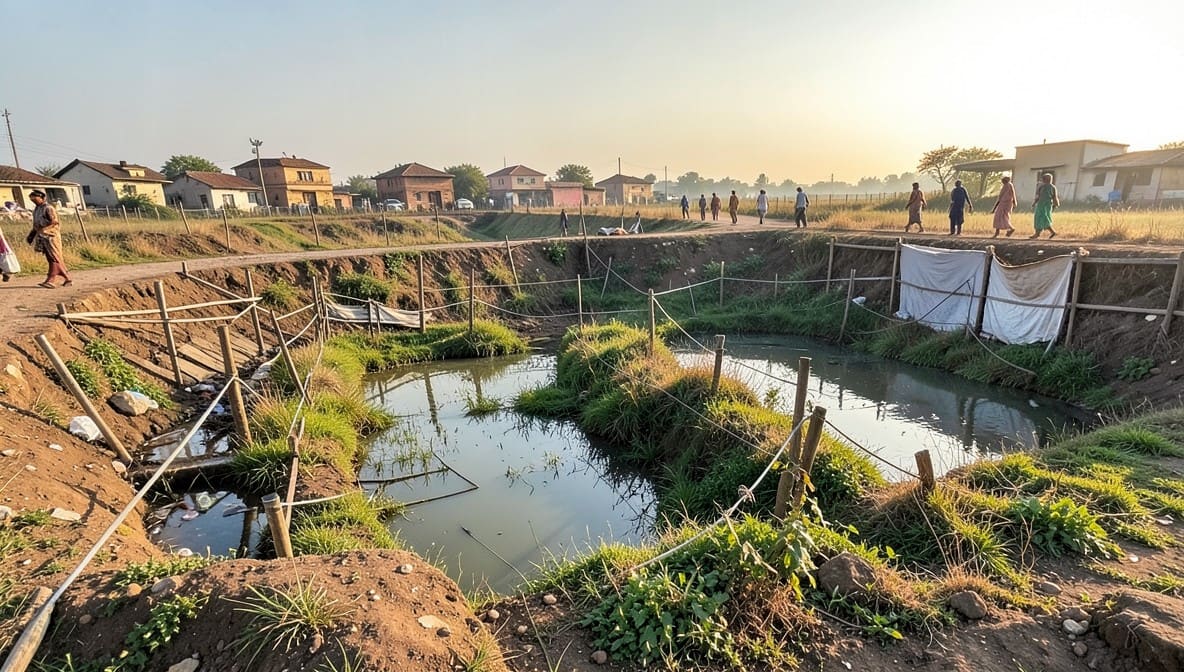
The present batch of writ petitions involves multiple institutions - including Madrasas, Masjids, Dargahs, and religious societies - situated within a 0-50 kilometer radius of the Indo-Pakistan border in districts such as Jaisalmer and Barmer. The petitioners challenged show-cause notices, eviction orders, and resumption proceedings initiated by the respondents (State of Rajasthan and its authorities) under the Rajasthan Colonization Act, 1954, the Rajasthan Land Revenue Act, 1956, and other relevant statutes. The core contention was that these structures were erected without valid permissions and were allegedly operating in unauthorized occupation of Government land.
Key Facts
- The petitioners include religious institutions, societies, and individuals managing Dargahs, Madrasas, and Mosques.
- The impugned notices were issued under Sections 20, 22, and 23 of the Rajasthan Colonization Act, 1954, and Sections 90, 90A, and 91A of the Rajasthan Land Revenue Act, 1956.
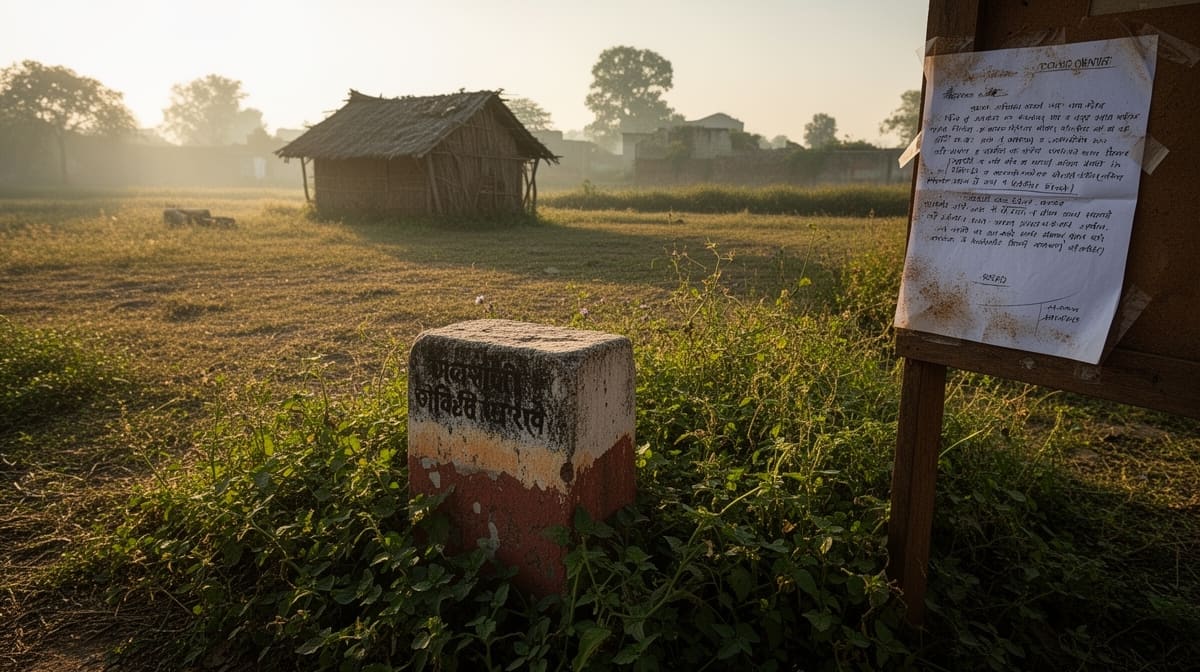
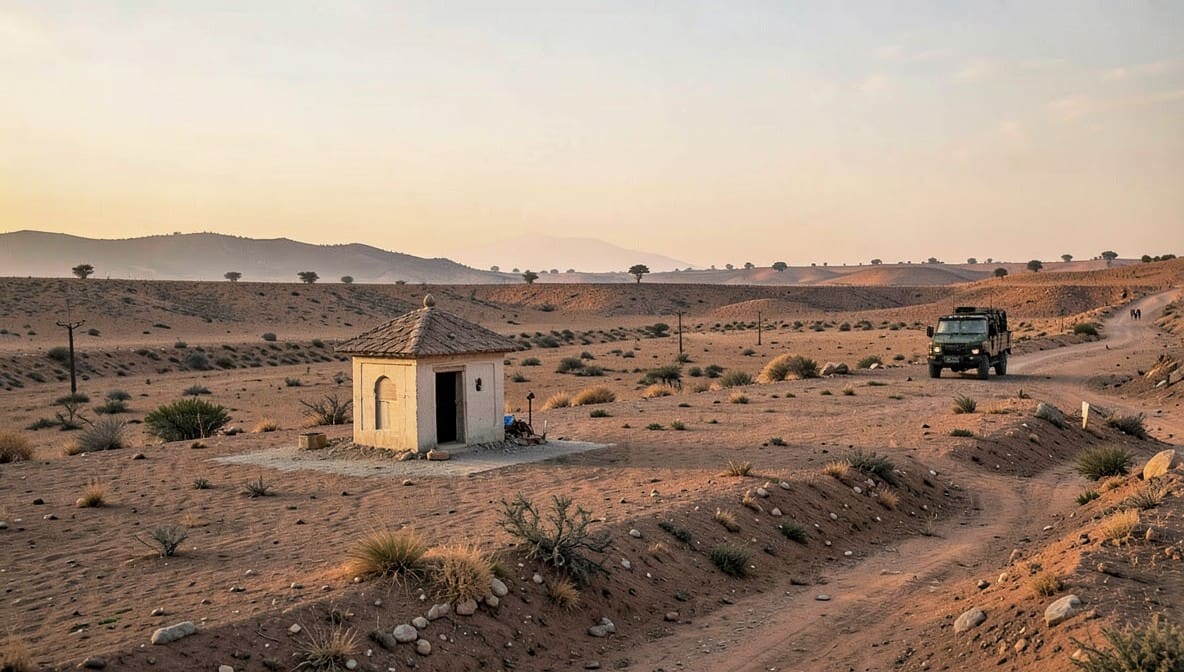
- The properties are located in remote, sparsely populated areas near the international border, raising national security concerns.
- The petitioners alleged that the notices were issued without proper opportunity of hearing and in violation of principles of natural justice.
- The respondents contended that the structures were unauthorized, lacked requisite permissions under the Religious Buildings and Places Act, 1954, and posed potential security risks based on intelligence inputs.
Procedural History
- 14.06.2026: The Union Home Minister declared that structures within 15 km (later extended to 50 km) of the international border would be subject to eviction/demolition on grounds of national security.
- June 2026: Multiple show-cause notices were issued to the petitioners under the Colonization Act and Land Revenue Act, calling upon them to vacate the premises or regularize their occupation.
- June-July 2026: The petitioners failed to appear before the competent authorities despite being afforded opportunities of hearing.
- 13.07.2026: The Rajasthan High Court dismissed the batch of writ petitions, holding them not maintainable at the show-cause stage.
The Parties' Positions
For the Petitioners
- The petitioners argued that the eviction notices were arbitrary and issued in violation of statutory procedures.
- They contended that Section 90A of the Land Revenue Act provides a facilitative mechanism for regularization, which was bypassed by the authorities.
- Reliance was placed on Supreme Court judgments such as Re: Directions in the Matter of Demolition of Structures (2025) 5 SCC 1, which mandate prior notice, opportunity of hearing, and reasoned orders before demolition.
- It was submitted that the principles of natural justice were wholly disregarded, and the notices were issued in a mechanical and premeditated manner.
- The petitioners also alleged that the entire exercise was communal in nature, though no cogent material was placed on record to substantiate this claim.
For the Respondents
- The respondents raised a preliminary objection regarding the maintainability of the writ petitions, arguing that the disputed questions of fact (title, ownership, permissions) could not be adjudicated under Article 226.
- It was contended that the statutory framework under the Colonization Act and Land Revenue Act provides adequate alternate remedies, including appeals before the Revenue Appellate Authority and the Board of Revenue.
- The respondents submitted that the notices were duly served, and the petitioners failed to avail the opportunity of hearing.
- Emphasis was placed on Section 139 of the Border Security Force Act, 1968 and a 2021 notification, which enhanced BSF jurisdiction up to 50 km from the international border for security reasons.
- It was argued that national security considerations warranted a calibrated application of natural justice, and sufficient material existed to justify the impugned action.
The Legal Issue
The central question before the Court was whether writ petitions under Article 226 are maintainable to challenge show-cause notices issued for unauthorized constructions in a sensitive border zone, where national security concerns override strict adherence to procedural safeguards.
Arguments Presented
For the Petitioners
- The petitioners relied on Supreme Court precedents such as Re: Directions in the Matter of Demolition of Structures (2025) 5 SCC 1 to argue that demolition without prior notice and hearing is illegal.
- It was contended that Section 90A of the Land Revenue Act provides a regularization mechanism, which was not considered by the authorities.
- The petitioners alleged procedural impropriety, non-application of mind, and violation of natural justice.
- They argued that the notices were issued in a mechanical manner, and the entire exercise was arbitrary.
For the Respondents
- The respondents argued that the writ petitions were not maintainable as they involved disputed questions of fact (title, ownership, permissions).
- It was submitted that the statutory scheme provides adequate alternate remedies, and the petitioners failed to exhaust them.
- Reliance was placed on Madhaymam Broadcasting Ltd. v. Union of India (2023) 13 SCC 401 to contend that national security considerations may limit the application of natural justice.
- The respondents emphasized that the notices were duly served, and the petitioners did not cooperate with the statutory process.
The Court's Analysis
The Court undertook a detailed scrutiny of the statutory framework, show-cause notices, and judicial precedents cited by both parties. Key observations include:
-
Locus Standi and Maintainability
- The Court noted that most petitions lacked credible documentation establishing the petitioners' authority to represent the concerned institutions.
- It was observed that no permissions were obtained under Sections 5 and 6 of the Religious Buildings and Places Act, 1954, rendering the structures prima facie unauthorized.
-
Statutory Framework and Alternate Remedies
- The Court held that the Rajasthan Colonization Act, 1954 and the Rajasthan Land Revenue Act, 1956 provide a complete statutory mechanism for adjudication, including appeals before the Revenue Appellate Authority.
- Reliance was placed on Executive Engineer, Bihar State Housing Board v. Ramesh Kumar Singh (1996) 1 SCC 327, which holds that writ petitions are not maintainable against mere show-cause notices when alternate remedies exist.
-
National Security and Principles of Natural Justice
- The Court emphasized that national security concerns may warrant a calibrated application of natural justice, particularly in sensitive border areas.
- It was held that sufficient procedural compliance was made, as show-cause notices were issued and opportunities of hearing were afforded.
- The petitioners failed to participate in the statutory process, and thus, no prejudice could be said to have been caused.
-
Distinguishing Precedents
- The Court distinguished the judgments relied upon by the petitioners, noting that:
- Abdul Khalek & Ors. v. State of Assam (2026 INSC 140) involved forest land encroachments, not border security.
- Re: Directions in the Matter of Demolition of Structures (2025) 5 SCC 1 pertained to arbitrary bulldozing of properties belonging to criminals, not religious structures in sensitive zones.
- The present case involved unauthorized constructions in a notified security zone, where national security considerations override strict procedural safeguards.
- The Court distinguished the judgments relied upon by the petitioners, noting that:
-
Role of the Border Security Force (BSF)
- The Court took judicial notice of a 2021 notification under Section 139 of the BSF Act, which enhanced BSF jurisdiction up to 50 km from the international border.
- This notification reflected a policy decision based on intelligence inputs and security threats, including smuggling, infiltration, and cross-border crimes.
"The principle of natural justice that is derived from common law has two primary facets- Audi Alterum Partem and Nemo Judex In Causa Sua. Audi Alterum Partem encapsulates the rule of fair hearing... However, in matters involving national security, confidentiality of inputs, intelligence considerations, and urgency of action may legitimately warrant a calibrated or partial exclusion of such principles."
The Verdict
The Rajasthan High Court dismissed the batch of writ petitions, holding them not maintainable at the show-cause stage. Key directions include:
- No coercive action has been taken till date, and the apprehension of demolition was held to be misconceived and speculative.
- A Committee comprising the District Collector, Superintendent of Police, and a BSF representative shall be constituted to examine cases on an individual basis.
- The Committee may order eviction, demolition, or other appropriate action, considering national security exigencies.
- While principles of natural justice shall not be wholly dispensed with, their application may be tailored based on sensitivity and public interest.
- No order as to costs was passed.
What This Means For Similar Cases
National Security Overrides Strict Procedural Safeguards
- Practitioners must recognize that in sensitive border zones, national security considerations may limit the application of natural justice.
- Courts are likely to defer to executive decisions backed by intelligence inputs and policy notifications, even if strict procedural compliance is not followed.
- Show-cause notices issued in such contexts may not be amenable to writ jurisdiction if alternate remedies exist.
Alternate Remedies Must Be Exhausted First
- Writ petitions under Article 226 are not maintainable at the show-cause stage if disputed questions of fact (title, ownership, permissions) are involved.
- Statutory appeals before the Revenue Appellate Authority and Board of Revenue must be exhausted before approaching the High Court.
- Failure to participate in statutory proceedings weakens the locus standi of petitioners challenging administrative actions.
Documentation and Compliance Are Critical
-
Religious institutions operating in border areas must ensure strict compliance with statutory permissions under the Religious Buildings and Places Act, 1954.
-
Societies and managing bodies must maintain proper resolutions, authorizations, and records to establish locus standi in legal proceedings.
-
Unauthorized constructions in notified security zones are high-risk and may face summary eviction without extended procedural safeguards.
-
For Government Authorities: Ensure procedural fairness even in national security cases, but calibrated application of natural justice is permissible.
-
For Petitioners: Exhaust alternate remedies before approaching writ courts; participate in statutory proceedings to avoid prejudice.
-
For Legal Practitioners: Distinguish precedents based on context - border security cases are not comparable to urban demolition disputes.