The Bombay High Court has reaffirmed the limited scope of judicial review under Section 34 of the Arbitration and Conciliation Act, 1996, dismissing a challenge to an arbitral award that refused to award additional compensation for work deemed within the original tender scope. The judgment underscores the primacy of contractual interpretation and the deference owed to arbitral tribunals, especially when parties agree to forego witness testimony.
Background & Facts
The Dispute
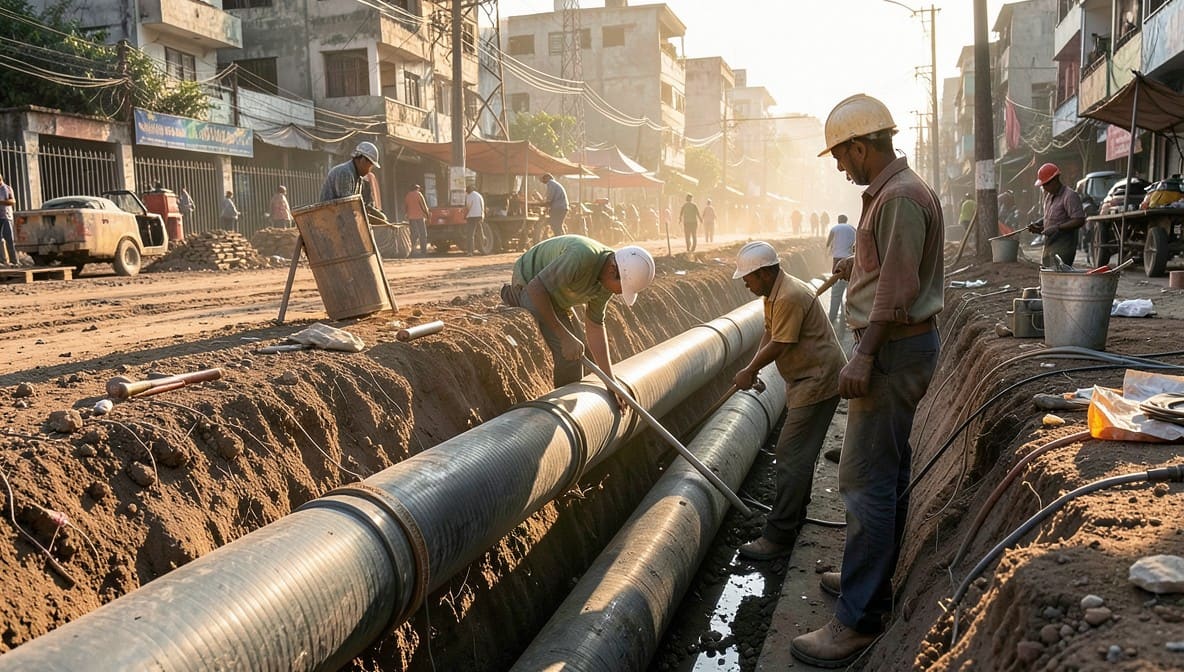
The dispute arose between M/s ACE Pipeline Contracts Pvt. Ltd. (ACE), the petitioner, and M/s Bharat Petroleum Corporation Ltd. (BPCL), the respondent, concerning the hydro testing and repair of an Aviation Turbine Fuel (ATF) pipeline connecting BPCL’s refinery to LBS Road. The pipeline was divided into two segments: a six-kilometre stretch and a three-kilometre stretch. BPCL invited bids for hydro testing and repair work on a running metre basis. ACE submitted the lowest bid and was awarded the contract via a Letter of Intent dated 06.09.2011.
Key Facts
- The tender specified hydro testing as the primary method for detecting leaks, with alternative methods like air cleaning and foam pigging also listed under Clause 10.
- ACE’s bid was based on a rate of Rs. 3,00,000 per kilometre, reduced to Rs. 2,91,000 per kilometre after a 3% discount.
- ACE confirmed in a letter dated 03.09.2011 that the unit of measurement was "kilometre", not "each".
- During hydro testing of the six-kilometre segment, no surface leakage was detected. Pits were dug at six locations to inspect underground sections.
- No leakage was found via hydro testing. Compressed air testing was then employed, revealing a leak beneath an nallah (drainage channel).
- The leak required isolation of the affected section, installation of a bend joint, and replacement of 8.055 metres of pipeline.
- Post-repair hydro testing was conducted on the subdivided segments.
- ACE claimed the air pressure test, excavation, bend installation, and retesting constituted additional work not contemplated in the tender.
- ACE claimed Rs. 1.02 crores in additional compensation, plus 1.5% monthly interest, after deducting Rs. 26.60 lakhs already paid.
- BPCL deducted Rs. 1.28 lakhs as liquidated damages for an eight-week delay.
- BPCL sent a letter dated 13.10.2012 offering Rs. 59,754.83 as a goodwill gesture for "extra work", explicitly stating it was without prejudice and subject to internal approval.
Procedural History
- 06.09.2011: Letter of Intent issued by BPCL to ACE.
- 2011 - 2012: Disputes arose during execution; correspondence exchanged.
- 13.10.2012: BPCL’s letter offering Rs. 59,754.83.
- 2013: Arbitration proceedings commenced.
- 20.08.2014: Impugned Arbitral Award issued, rejecting ACE’s claim of Rs. 1.02 crores.
- 07.01.2015: Commercial Arbitration Petition No. 7 of 2015 filed under Section 34 of the Arbitration Act.
- 08.06.2026: Judgment delivered by the Bombay High Court.
The Parties' Positions
ACE’s Position: The air pressure test, excavation of pits, installation of a bend joint, and retesting after repair were unforeseen and outside the scope of the tender. The unit of measurement was misrepresented ("each" vs. "kilometre"). The claim for Rs. 1.02 crores was justified as four times the original estimate due to extended duration (three months vs. three weeks). The October 13, 2012 letter confirmed BPCL’s admission of extra work.
BPCL’s Position: The tender explicitly contemplated hydro testing, leak detection, repair, and retesting. The use of compressed air was a reasonable alternative when hydro testing failed. The unit of measurement was clearly "kilometre". ACE’s bid was voluntary and based on full inspection. The Rs. 59,754.83 offer was a without-prejudice settlement proposal, not an admission.
Relief Sought
ACE sought setting aside of the Impugned Award dated 20.08.2014, and a direction to the Arbitral Tribunal to award Rs. 1.02 crores plus 1.5% monthly interest from the date of completion, and costs.
The Legal Issue
The central question was whether the arbitral tribunal’s finding that no additional work was performed, and therefore no additional compensation was due, constitutes a patent illegality or perversity warranting interference under Section 34 of the Arbitration and Conciliation Act, 1996, particularly when the parties agreed to decide the matter on contractual interpretation alone without witness testimony.
Arguments Presented
For the Petitioner
ACE contended that the arbitral tribunal ignored material evidence - specifically, BPCL’s letter dated 13.10.2012 offering Rs. 59,754.83 for "extra work" - which, it argued, amounted to an admission that additional work was performed. ACE further claimed that Clause 8.3 of the tender, which allocates liability for faulty material to BPCL, was not considered, despite the leak being attributable to the pipeline’s condition. ACE also argued that the use of compressed air testing, excavation, and bend installation were not contemplated in the tender and thus constituted variation work. The claim for four times the original price was presented as a reasonable multiplier for the extended timeline.
For the Respondent
BPCL argued that the tender conditions, particularly Clause 10, explicitly contemplated leak detection via multiple methods, repair on a running metre basis, and retesting post-repair. The unit of measurement was clearly "kilometre", as confirmed by ACE’s own letter. The compressed air test was a logical extension of the hydro testing process, especially given the pipeline’s passage under an nallah. The October 13, 2012 letter was a without-prejudice settlement offer, not an admission. Clause 8.3 was irrelevant as no faulty material from BPCL was proven. ACE’s claim lacked empirical support and was based on speculative multipliers.
The Court's Analysis
The Court emphasized that under Section 34, courts cannot act as appellate forums to reappreciate evidence or substitute their view of the contract. The arbitral tribunal, composed of a technical expert, was entitled to interpret the tender conditions and assess whether the work performed fell within the agreed scope.
"The activity carried out was very much in conformity with the activity envisaged in the tender document, which entailed the work of hydro testing, finding of leakage points, repairing and retesting after repair, all of which were well within the scope of work."
The Court found that the tribunal’s reasoning, though implicit, was logically sound. The tender clearly provided for retesting after repair, and the use of compressed air was a foreseeable contingency given the pipeline’s route under an nallah. ACE, having inspected the site, could not later claim surprise.
The Court rejected the argument that the October 13, 2012 letter constituted an admission of additional work. It was explicitly labeled as without prejudice and subject to internal approval. Moreover, the amount offered (Rs. 59,754.83) was negligible compared to the Rs. 1.02 crore claim, and crucially, ACE had not pleaded reliance on this letter in its Statement of Claim.
Regarding Clause 8.3, the Court held it was inapplicable as there was no allegation or evidence that BPCL supplied faulty material. The leak was in the pipeline itself - the very subject of the contract - not due to defective materials provided by BPCL.
The Court cited Associate Builders v. Delhi Development Authority and Dyna Technologies v. Crompton Greaves Ltd. to reinforce that arbitral awards based on plausible contractual interpretation, even with implicit reasoning, cannot be set aside merely because the court might have reached a different conclusion.
"The standard to which a judicially trained forum is held is not the standard to which a technical expert forum is to be held. If reasons are implicit and the outcome is fair, the arbitral award should not be lightly interfered with."
The Court concluded that ACE’s claim of a fourfold multiplier was unsupported by any cost breakdown or documentary evidence, and the tribunal was fully justified in rejecting it.
The Verdict
The petition was dismissed. The Impugned Arbitral Award dated 20.08.2014 was upheld. ACE’s claim for Rs. 1.02 crores, 1.5% monthly interest, and costs was rejected in its entirety. BPCL’s deduction of Rs. 1.28 lakhs as liquidated damages for eight weeks’ delay remained valid. No further payment was directed.
What This Means For Similar Cases
Contractual Scope Trumps Post-Hoc Claims
- Practitioners must ensure that claims for additional compensation are pleaded with specificity - including the nature of the extra work, its deviation from the tender, and quantified costs.
- Vague assertions like "it was quite appropriate to pay four times" without supporting data will not survive scrutiny.
- Arbitral tribunals are entitled to rely on the plain language of tender documents to determine scope.
Without-Prejudice Offers Are Not Admissions
- Settlement offers made during negotiations, even if referencing "extra work", cannot be used as evidence of contractual variation unless formally accepted or pleaded.
- Parties must distinguish between goodwill gestures and legal admissions.
- Relying on such letters without incorporating them into pleadings is legally perilous.
Implicit Reasoning in Arbitral Awards Is Sufficient
- Courts will not set aside awards merely because reasons are not explicitly stated - if the outcome is reasonable and grounded in the contract, implicit reasoning suffices.
- The burden is on the challenging party to demonstrate perversity, not just disagreement.
- In non-witness arbitrations, pleadings become the sole basis for adjudication - evidence must be embedded in the pleadings.
Clause 8.3 and Liability Allocation
- Clauses allocating liability based on fault (e.g., faulty material vs. poor workmanship) require clear proof of the party at fault.
- Absent evidence of defective materials supplied by the employer, such clauses cannot be invoked to justify additional claims.
- Contractors cannot convert general pipeline defects into claims under material-fault clauses.
No Automatic Right to Multipliers
- Claims based on time extensions (e.g., "three months instead of three weeks") require documented cost impacts - not arbitrary multipliers.
- Courts and tribunals will not accept speculative multipliers without cost breakdowns.
- Time extension alone does not equate to additional work or entitlement to enhanced payment.