The Chhattisgarh High Court has affirmed that landowners whose property is submerged due to public infrastructure projects are entitled to compensation, even when formal acquisition proceedings have not been initiated. This ruling clarifies the state’s obligation to protect property rights in cases of de facto acquisition through environmental submergence, setting a critical precedent for affected communities in dam and reservoir projects.
Background & Facts
The Dispute
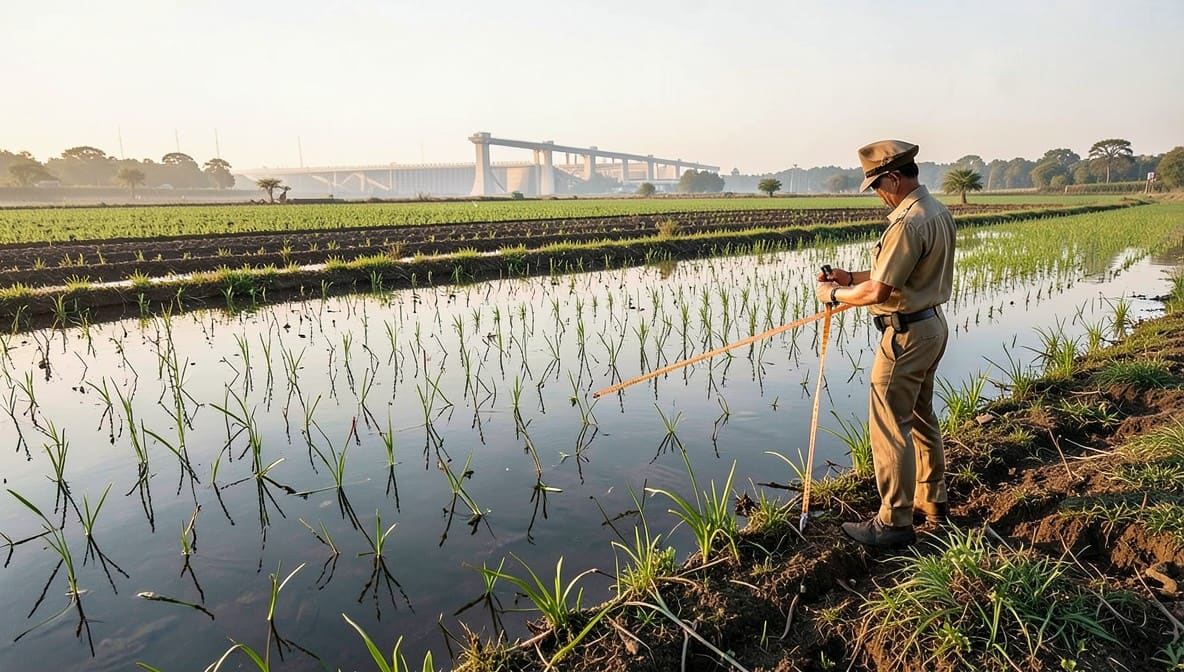
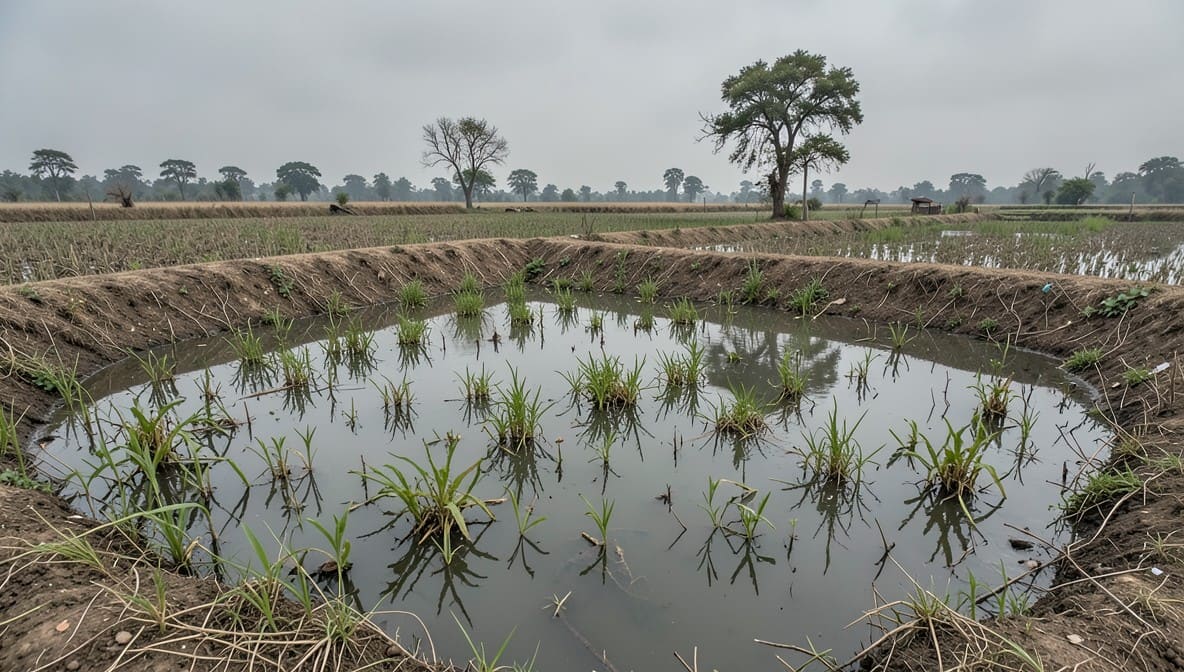
The petitioners, Nand Kisore Rathiya and Buidhuram Rathiya, are landowners in Village Chandrapur, Tehsil Chandrapur, District Sakti, Chhattisgarh. They hold ownership of agricultural land bearing Khasra No. 402/8, measuring 0.13 acre. Following the construction of the Kalma Bairaj dam, their land came under the submergence zone. Despite this, no formal acquisition proceedings under the Land Acquisition Act or any other statutory framework have been initiated by the state authorities. The petitioners have not received any compensation, notice, or survey for their submerged land.
Key Facts
- The petitioners’ land is located in the identified submergence area of the Kalma Bairaj project.
- The land is agricultural and was in active use prior to submergence.
- No acquisition notification under Section 4 or Section 6 of the Land Acquisition Act, 1894, or under RERA or National Water Policy guidelines has been issued.
- No compensation has been offered, nor has any survey or demarcation been conducted.
- The petitioners have made no prior formal claim or representation to the authorities before filing this writ petition.
Procedural History
- Date of submergence: Post-construction of Kalma Bairaj dam (exact date not specified in judgment, but construction completed prior to petition filing).
- Date of petition filing: 2026 (exact date not specified, but petition filed before the High Court of Chhattisgarh, Bilaspur).
- Date of hearing: 07.04.2026.
- No prior litigation or administrative representation by petitioners was recorded.
The Parties' Positions
For the Petitioners
The petitioners, through their counsel Mr. Pranjal Agrawal, argued that:
- Their land has been effectively taken over by the state through submergence.
- The state cannot deny compensation merely because formal acquisition proceedings were not initiated.
- The principle of de facto acquisition entitles them to compensation under constitutional guarantees under Article 300A.
- They seek liberty to file a fresh representation to initiate the process.
For the Respondents
The State, represented by Mr. Shobhit Mishra, Dy. GA, did not contest the factual assertion of submergence. The counsel conceded that the land in question lies within the submergence zone and that no compensation has been granted. The State did not oppose the petitioners’ prayer for liberty to file a representation.
Relief Sought
The petitioners sought:
- Liberty to file a fresh representation before the Collector and Sub-Divisional Officer (Land Acquisition).
- Direction to the authorities to demarcate the land.
- Initiation of acquisition and compensation proceedings.
- Payment of fair compensation for the submerged land.
The Legal Issue
The central question was whether Article 300A of the Constitution of India obligates the state to provide compensation for land that has been effectively acquired through submergence, even in the absence of formal acquisition proceedings under statutory law.
Arguments Presented
For the Petitioner
The petitioners relied on the constitutional guarantee under Article 300A, which prohibits deprivation of property except by authority of law. They argued that submergence constitutes a de facto acquisition, and the state cannot evade its obligation by failing to initiate formal proceedings. They cited State of Haryana v. Mukesh Kumar and Union of India v. Tulsiram Patel to establish that the state’s duty to compensate arises upon actual taking of property, regardless of procedural lapses.
For the Respondent
The State did not advance substantive legal opposition. It acknowledged the factual situation and did not dispute the petitioners’ entitlement to relief. The counsel merely requested that the petition be disposed of with appropriate directions, indicating acquiescence to the petitioners’ prayer.
The Court's Analysis
The Court did not delve into the technicalities of statutory acquisition procedures. Instead, it focused on the constitutional imperative under Article 300A and the principle of equity. The Court observed that when land is rendered unusable due to state-initiated infrastructure projects, the owner is effectively deprived of property. The absence of formal acquisition proceedings cannot be used to deny compensation.
"The state cannot permit the submergence of private land for public purpose and then refuse to compensate on the ground that acquisition proceedings were not initiated. The right to property, though not a fundamental right, remains a constitutional right, and the state must act fairly and justly."
The Court emphasized that the petitioners had not been given any opportunity to present their claim. The failure of the authorities to initiate demarcation or compensation proceedings amounted to administrative inaction. The Court held that granting liberty to file a representation was the most appropriate remedy to ensure procedural fairness without prejudicing the state’s administrative processes.
The Verdict
The petition succeeded. The Court granted liberty to the petitioners to file a fresh representation before the Collector and Sub-Divisional Officer (Land Acquisition) within 15 days from the date of the order. The authorities are directed to demarcate the subject land within 45 days of receipt of the representation. If the land is confirmed to be within the submergence zone, acquisition and compensation proceedings must be initiated and concluded within 90 days of demarcation. The petitioners are entitled to compensation at market value as per prevailing rates, with interest at 6% per annum from the date of submergence until payment.
What This Means For Similar Cases
Submergence Equals De Facto Acquisition
- Practitioners representing landowners affected by dams, reservoirs, or flood control projects must now argue that de facto acquisition triggers Article 300A obligations, even without formal notifications.
- The burden is no longer on the landowner to initiate acquisition; the state must proactively identify and compensate affected properties.
Procedural Lapses Do Not Nullify Rights
- Failure to issue Section 4 or Section 6 notifications under the Land Acquisition Act does not extinguish the right to compensation.
- Courts will now look at the effect of state action, not merely its form.
- This applies equally to land submerged under irrigation projects, mining operations, or urban flooding caused by state infrastructure.
Actionable Steps for Practitioners
- File representations immediately upon confirmation of submergence, attaching satellite imagery or government project maps.
- Demand demarcation and survey under Rule 12 of the Chhattisgarh Land Acquisition Rules, 2018.
- Cite this judgment to oppose any denial of compensation on grounds of procedural non-compliance.
- Claim interest at 6% per annum from the date of submergence, as recognized in this order.