The Andhra Pradesh High Court has affirmed that writ jurisdiction under Article 226 is maintainable when the state admits liability for payment but unjustifiably withholds undisputed dues. This ruling reinforces the principle that arbitrary non-payment of confirmed amounts violates constitutional guarantees and justifies judicial intervention without requiring litigants to exhaust alternative remedies.
Background & Facts
The Dispute
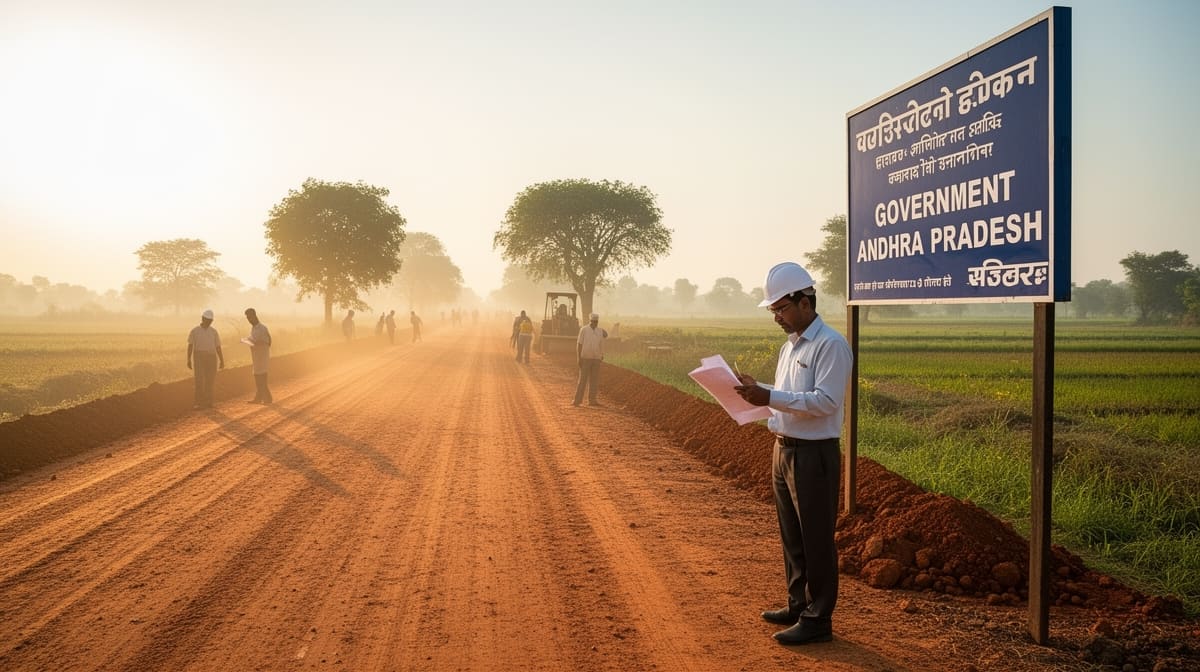
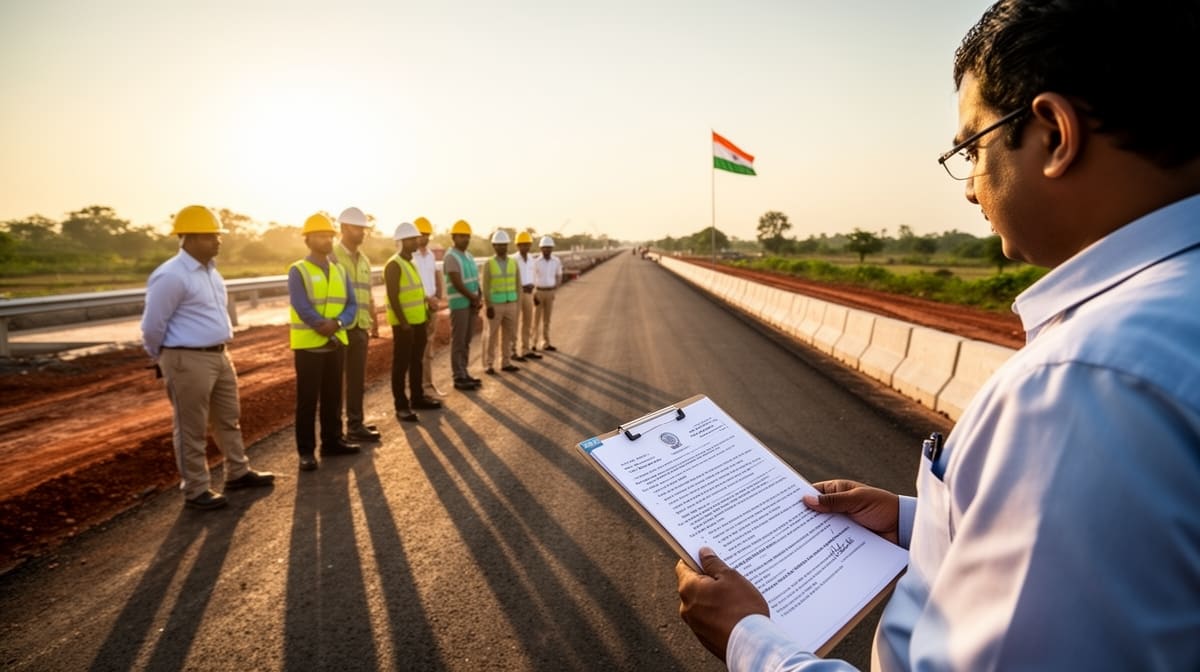
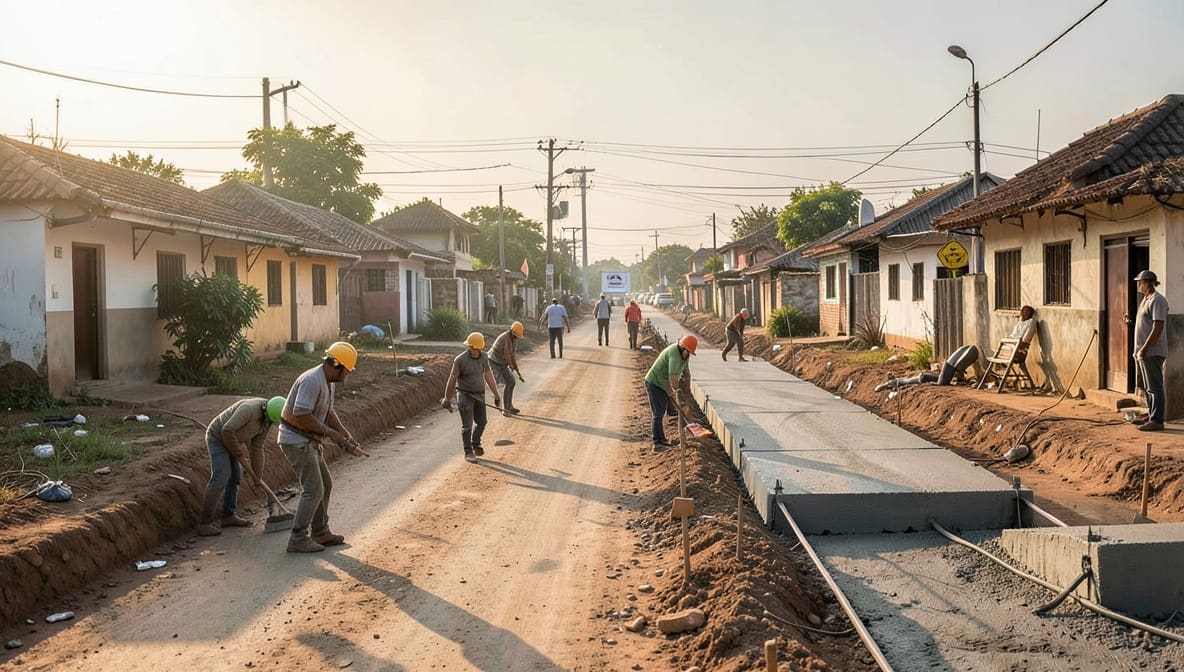
The petitioner, GORANTLA SRINIVASA RAO, a contractor, undertook the execution of works for "Providing Internal CC Roads and side drains from R&B road to GP Office building in Sudivaripalem Village, Inkollu Mandal, Prakasam District" under the Mahatma Gandhi National Rural Employment Guarantee Scheme (MGNREGS) combined with the District Mineral Foundation (DMF) grant. The work was assigned under Work ID No. 087062502001080025.
Key Facts
- The total value of the work executed by the petitioner was Rs. 11,50,236/-
- An amount of Rs. 10,81,678/- had already been paid to the petitioner by the respondents
- The balance amount due and payable was Rs. 68,558/-
- The petitioner had completed the work successfully and obtained necessary approvals
- Despite completion and acceptance, the respondents refused to release the final payment
- The petitioner filed the writ petition on 15.03.2026 seeking release of the outstanding amount with 18% interest
Procedural History
- 15.03.2026: Writ Petition No. 6746/2026 filed before the High Court of Andhra Pradesh at Amaravati
- 08.04.2026: Hearing conducted before Justice Subba Reddy Satti
- 08.04.2026: Respondents submitted written instructions from the Executive Engineer, PRI PIU Division, Bapatla, admitting liability
The Parties' Positions
The petitioner contended that the refusal to release the admitted amount was illegal, arbitrary, and violative of Articles 14, 21, and 300-A of the Constitution, as well as the principles of natural justice. The respondents did not dispute the factual basis of the claim but had delayed payment without justification.
Relief Sought
The petitioner sought:
- A writ of mandamus directing the respondents to release Rs. 68,558/- immediately
- Interest at 18% per annum on the outstanding amount
- Costs of the petition
- Direction to dispose of the pending interim application (IA No. 1 of 2026)
The Legal Issue
The central question was whether a writ petition under Article 226 is maintainable to enforce payment of an admitted and undisputed debt arising from public works executed under MGNREGS, despite the existence of an alternative remedy under contract or administrative procedures.
Arguments Presented
For the Petitioner
The petitioner’s counsel relied on the principle that when the state admits liability and withholds payment without lawful justification, such conduct amounts to arbitrary action under Article 14. He cited M/s Utkal Highways Engineers and Contractors v. Chief General Manager & Ors (2025 SCC Online SC 1400), emphasizing that courts have repeatedly held that non-payment of admitted dues can be remedied through writ jurisdiction, especially where delay is unjustified and the claim is not factually disputed.
For the Respondent
The respondents did not contest the factual assertion of liability. The Assistant Government Pleader submitted the written instructions of the Executive Engineer, which confirmed the petitioner’s entitlement to the balance amount. No legal objection was raised to the maintainability of the writ petition on grounds of alternative remedy.
The Court's Analysis
The Court observed that the respondents had, through official instructions, admitted the petitioner’s entitlement to Rs. 68,558/-. There was no allegation of defective work, non-compliance with specifications, or any dispute regarding the quantum of work done or its acceptance. The Court noted that the state’s delay in releasing the amount, despite clear admission, amounted to arbitrary conduct.
"Be that as it may, the High court has not dealt with the merits of the writ petition. Moreover, it is not an inviolable rule that no money claim can be adjudicated upon in exercise of writ jurisdiction. Non-payment of admitted dues, inter alia, may be considered an arbitrary action on the part of respondents and for claiming the same, a writ petition may lie. Further, throwing a writ petition on ground of availability of alternative remedy after 10 years, particularly, when parties have exchanged their affidavits, is not the correct course unless there are disputed questions of fact which by their very nature cannot be adjudicated upon without recording formal evidence."
The Court held that the doctrine of alternative remedy does not bar writ jurisdiction when the claim is undisputed and the state’s inaction is manifestly arbitrary. The petitioner had no meaningful recourse other than judicial intervention to enforce a right that was already legally established and acknowledged by the state.
The Verdict
The writ petition was allowed. The Court directed the respondents to release the admitted amount of Rs. 68,558/- (Rupees Sixty Eight Thousand Five Hundred and Fifty Eight only) to the petitioner within one month from the date of receipt of a copy of this order. No interest was awarded, and no order was made as to costs. All pending miscellaneous petitions were closed.
What This Means For Similar Cases
Admitted Dues Cannot Be Withheld Arbitrarily
- Practitioners may now confidently invoke Article 226 to enforce payment of undisputed dues under public works schemes like MGNREGS, PMAY-G, or other state-funded programs
- The burden shifts to the state to justify delay or non-payment even if an alternative remedy exists
- Administrative delays in releasing certified payments are now actionable as violations of Article 14
Writ Jurisdiction Is Not Barred by Technicalities
- Courts will not dismiss writ petitions merely because a contractual or administrative appeal mechanism exists, if the claim is admitted and the delay is unreasonable
- The Utkal Highways precedent is now firmly entrenched in Andhra Pradesh jurisprudence
- Petitioners need not wait for years to exhaust internal remedies when the state has already acknowledged liability
Practical Takeaways for Contractors
- Maintain signed completion certificates and payment acknowledgments
- Send formal reminders to the concerned engineering officer upon work completion
- File writ petitions immediately upon refusal to release admitted amounts - no need to wait for internal appeals to exhaust
- Interest claims may be denied if not specifically pleaded or if the court finds the delay was not malicious