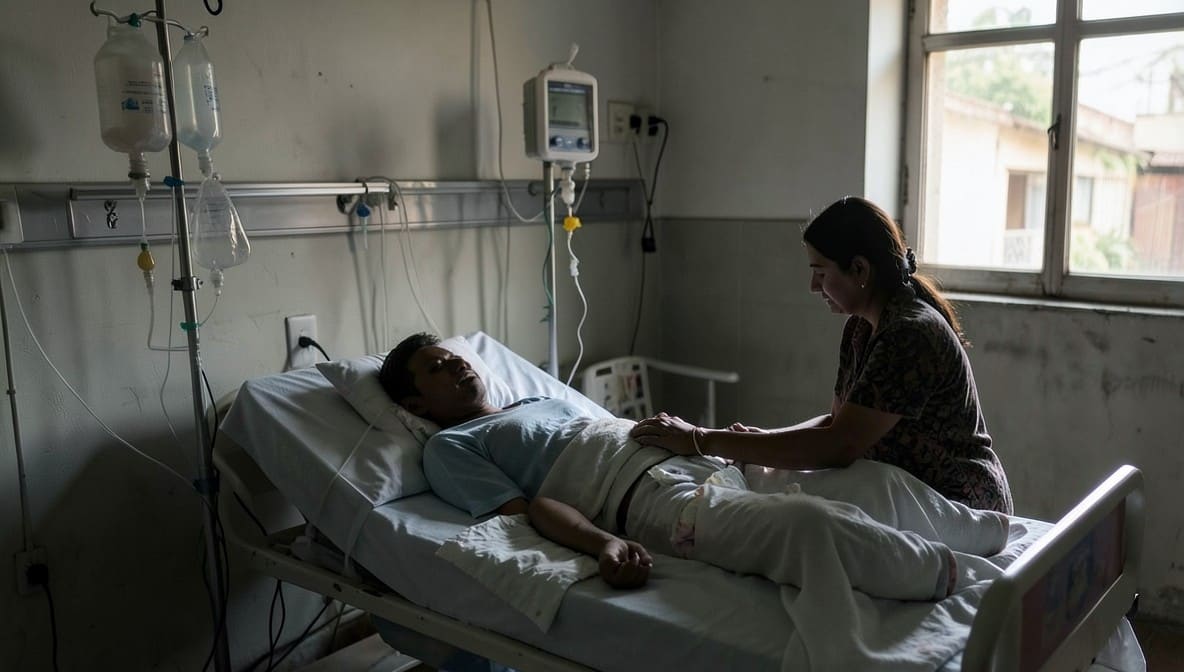
The Bombay High Court has set a significant precedent by enhancing compensation for a minor who remained in a coma for 16 years following a road accident, ultimately leading to her death. The judgment underscores the court's approach to quantifying daily care expenses for prolonged vegetative conditions, offering critical guidance for similar cases under the Motor Vehicles Act, 1988.
Background & Facts
The Dispute
The appellant, Kumari Trupti Umakant Kavale (a minor at the time of the accident), through her father Umakant Kavale, filed an appeal seeking enhancement of compensation awarded by the Motor Accident Claims Tribunal, Nashik (the Tribunal). The minor suffered fatal injuries on 5 March 2003 when a Maruti Omni van dashed her while she was returning from tuition on a bicycle. The accident resulted in a brain hemorrhage, leaving her in a coma until her death on 5 February 2019. Tragically, her mother also passed away in 2016, leaving the father as the sole caregiver.
Key Facts
- The minor was 12 years old at the time of the accident.
- She was admitted to hospitals in Nashik and Mumbai from 5 March 2003 to 24 June 2003.
- Post-discharge, she remained in a vegetative state at home until her death on 5 February 2019.
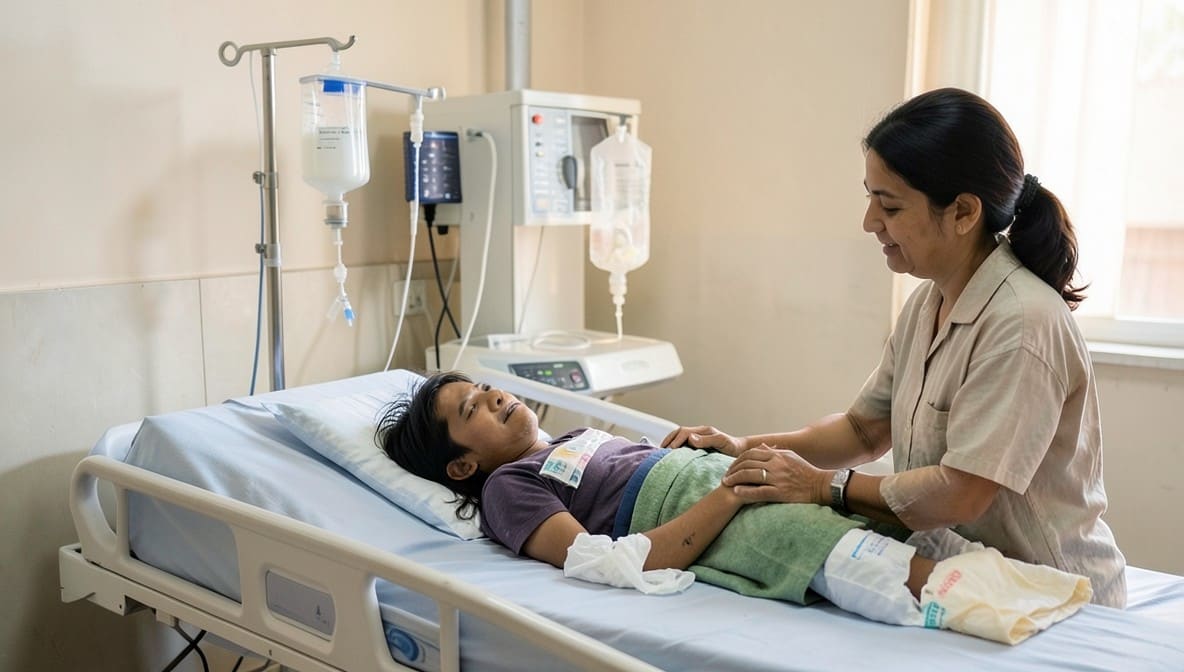
- The father incurred daily expenses for medical care, including urine bags, catheters, feeding tubes, syringes, adult diapers, physiotherapy, doctor’s visits, and attendants.
- The Tribunal awarded Rs. 7,04,000 under various heads, which the appellant sought to enhance.
Procedural History
- 5 March 2003: Accident occurred.
- 24 June 2003: Minor discharged from hospital and remained in coma at home.
- 2007: Tribunal awarded Rs. 7,04,000 as compensation.
- Post-2007: Daughter remained in coma until her death in 2019.
- 2010: First Appeal (FA No. 1814/2010) filed before the Bombay High Court.
- 10 July 2026: Judgment delivered by the Bombay High Court.
Relief Sought
The appellant sought enhancement of the Tribunal’s award, contending that the compensation was inadequate to cover:
- Medical expenses (Rs. 3,26,514 claimed; Rs. 2,19,000 awarded).
- Daily care expenses (Rs. 1,500 per day claimed; Rs. 800-900 per day admitted in cross-examination).
- Pain and suffering (Rs. 4,00,000 claimed; Rs. 50,000 awarded).
- Future medical expenses (Rs. 1,50,000 awarded by the Tribunal).
- Funeral expenses, loss of estate, and loss of consortium (Rs. 84,000 awarded based on National Insurance Co. Ltd. v. Pranay Sethi).
The Legal Issue
The central question was whether the Tribunal’s award of Rs. 7,04,000 was justified, given the prolonged vegetative state of the minor and the daily care expenses incurred by the parents over 16 years. Specifically, the court had to determine:
- Whether the Tribunal erred in not adequately compensating for daily care expenses post-hospitalization.
- Whether the pain and suffering of the parents warranted higher compensation.
- Whether the future medical expenses were reasonably quantified.
Arguments Presented
For the Appellant
- The minor remained in a vegetative state for 16 years, requiring daily medical care (urine bags, catheters, feeding tubes, diapers, etc.).
- The appellant claimed Rs. 1,500 per day for these expenses, amounting to Rs. 85,51,500 for the period from 25 June 2003 to 5 February 2019.
- The pain and suffering of losing an only child, who was in a coma for 16 years, could not be adequately compensated by Rs. 50,000.
- The Tribunal failed to appreciate original medical bills and records submitted as evidence.
For the Respondent (Insurance Company)
- No evidence was led to substantiate the claim of Rs. 1,500 per day for daily expenses.
- The father admitted in cross-examination that daily expenses were Rs. 800-900 per day.
- The Tribunal’s award was reasonable and should not be interfered with.
- Relied on precedents (I. Sudhir Bhulya v. National Insurance Co. Ltd., Rajesh Kumar Kaushik v. Tej Narayan Singh, etc.) to argue that doctor’s evidence was necessary to ascertain disability.
The Court's Analysis
The Court undertook a detailed examination of the heads of compensation awarded by the Tribunal and the appellant’s claims for enhancement:
Medical and Hospital Expenses
- The Tribunal awarded Rs. 2,19,000 for medical expenses, while the appellant claimed Rs. 3,26,514.
- The Court noted that original bills were not always maintained, especially in cases involving prolonged medical care.
- To balance justice, the Court enhanced the medical expenses to Rs. 2,50,000 (an additional Rs. 31,000).
Transportation Expenses
- The Tribunal awarded Rs. 15,000 for transportation between Nashik and Mumbai.
- The Court observed that the distance of 180-200 km and the four-month hospitalization period justified higher expenses.
- The award was enhanced to Rs. 30,000.
Pain and Suffering
- The Tribunal awarded Rs. 50,000 for pain and suffering, which the Court deemed grossly inadequate.
- The Court emphasized the insurmountable pain of losing a young, only child who remained in a coma for 16 years.
- The award was enhanced to Rs. 1,00,000.
Daily Care Expenses Post-Hospitalization
- This was the most contentious issue. The appellant claimed Rs. 1,500 per day, while the father admitted to Rs. 800-900 per day in cross-examination.
- The Court perused the records, including chemist bills and registers maintained by the father, to estimate a reasonable daily expense.
- The Court concluded that Rs. 600 per day was a just estimate