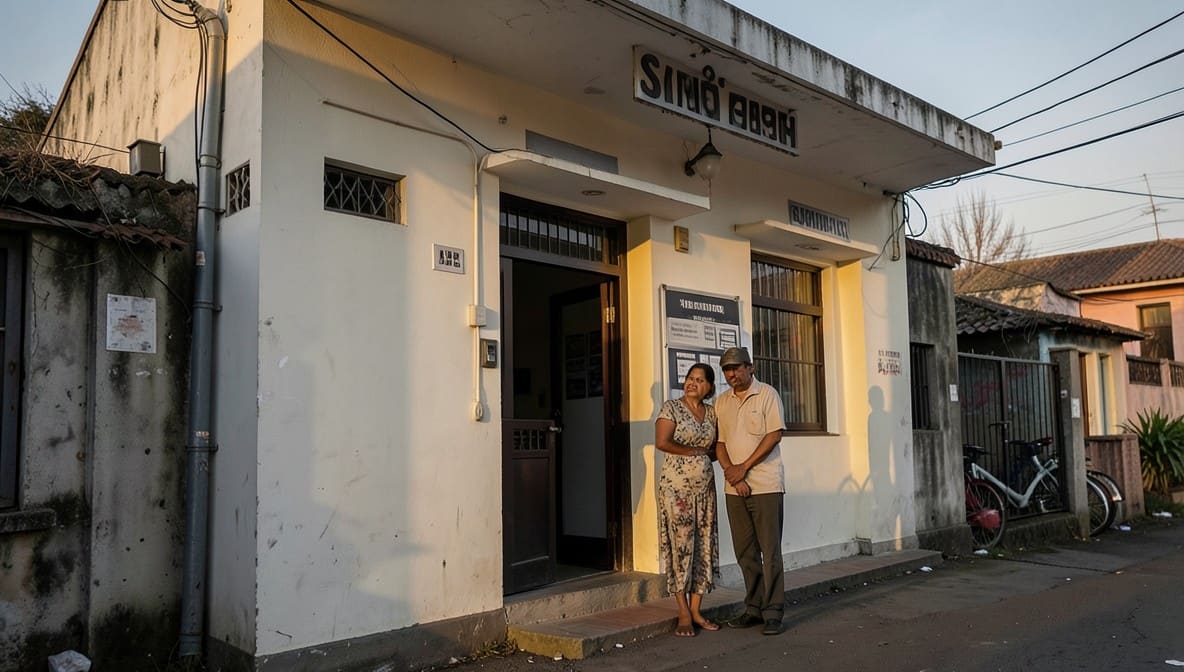
The Andhra Pradesh High Court has reaffirmed the principle that police cannot interfere in civil disputes by summoning parties under threat of arrest. This judgment underscores the limits of police powers and the protection of fundamental rights under Articles 14 and 21 of the Constitution, particularly in matters arising from contractual or civil disagreements.
Background & Facts
The Dispute
The petitioners, residents of Gudivada, Krishna District, were involved in a contractual or civil dispute with the 4th respondent, Shaikh Subhani. The 3rd respondent, the Station House Officer of Gudlavalleru Police Station, summoned the petitioners to the police station at the behest of the 4th respondent and detained them for hours under the threat of arrest. The petitioners alleged that this action was arbitrary, illegal, and violated their fundamental rights under Articles 14 and 21 of the Constitution of India.
Key Facts
- The petitioners were summoned to the police station on multiple occasions in connection with a civil dispute
- The 4th respondent allegedly influenced the police to harass the petitioners
- The petitioners filed a complaint dated 20.09.2021 seeking police intervention, but no action was taken
- A criminal case (Crime No. 191 of 2021) was registered against the petitioners under Section 420 read with Section 34 of the Indian Penal Code, 1860
- The police filed a charge sheet (C.F. No. 12025, dated 29.12.2025) before the jurisdictional Magistrate Court at Machilipatnam
Procedural History
- 20.09.2021: The 1st petitioner filed a complaint with the police
- Date not specified: The petitioners were summoned to the police station and detained under threat of arrest
- Date not specified: Crime No. 191 of 2021 was registered against the petitioners
- 29.12.2025: Charge sheet filed before the Magistrate Court at Machilipatnam
- Date not specified: Writ Petition No. 21952 of 2021 filed before the Andhra Pradesh High Court
- 31.03.2026: The High Court disposed of the writ petition
Relief Sought
The petitioners sought the following reliefs:
- A writ of mandamus declaring the actions of the 3rd respondent as illegal, arbitrary, and ultra vires of his powers
- An order restraining the 3rd respondent from interfering with the petitioners' life and liberty
- Directions to the 2nd respondent to act upon the complaint dated 20.09.2021
The Legal Issue
The central question before the court was whether the police could summon and detain parties in a civil dispute under the threat of arrest, thereby violating their fundamental rights under Articles 14 and 21 of the Constitution.
Arguments Presented
For the Petitioners
The petitioners argued that:
- The actions of the 3rd respondent were arbitrary and violated Articles 14 and 21 of the Constitution
- The police had no jurisdiction to interfere in a civil dispute
- The summoning and detention were done at the behest of the 4th respondent, who had a vested interest in the civil dispute
- The police failed to act upon their complaint dated 20.09.2021, demonstrating bias
For the Respondents
The Assistant Government Pleader for Home submitted that:
- A criminal case (Crime No. 191 of 2021) was registered against the petitioners under Section 420 read with Section 34 of the IPC
- The petitioners were summoned only in connection with the investigation of the said crime
- The police had concluded the investigation and filed a charge sheet before the jurisdictional Magistrate Court
- Except for the registration of the crime and filing of the charge sheet, the police were not interfering in the civil dispute between the petitioners and the 4th respondent
The Court's Analysis
The High Court took note of the submissions made by the Assistant Government Pleader for Home. The court observed that the police had registered a criminal case against the petitioners and filed a charge sheet, which was pending before the jurisdictional Magistrate Court. The court further noted that, apart from the registration of the crime and filing of the charge sheet, the police were not interfering in the civil dispute between the parties.
While the judgment does not explicitly analyze the constitutional violations alleged by the petitioners, the closure of the writ petition based on the submissions of the Assistant Government Pleader implies that the court accepted that the police actions were confined to the criminal investigation and did not extend to harassment in the civil dispute.
The Verdict
The High Court closed the writ petition based on the submissions of the Assistant Government Pleader for Home. The court recorded that:
- A criminal case (Crime No. 191 of 2021) was registered against the petitioners under Section 420 read with Section 34 of the IPC
- The police filed a charge sheet (C.F. No. 12025, dated 29.12.2025) before the jurisdictional Magistrate Court at Machilipatnam
- Except for the registration of the crime and filing of the charge sheet, the police were not interfering in the civil dispute
There was no order as to costs, and the writ petition was disposed of accordingly.
What This Means For Similar Cases
Police Cannot Interfere in Civil Disputes
This judgment reinforces the principle that police powers cannot be used to interfere in civil disputes. Practitioners should note:
- Police cannot summon parties to a civil dispute under threat of arrest unless a cognizable offence is disclosed
- Any such action would violate Articles 14 and 21 of the Constitution and could be challenged under Article 226
- The registration of a criminal case does not give police carte blanche to harass parties in a civil dispute
Criminal Proceedings Must Be Based on Genuine Offences
- The registration of a criminal case (Section 420 IPC) suggests that the police must have reasonable grounds to believe that a cognizable offence has been committed
- If the criminal proceedings are found to be a pretext to interfere in a civil dispute, courts may intervene to protect fundamental rights
- Practitioners should scrutinize the charge sheet and investigation to ensure compliance with legal standards
Remedies for Arbitrary Police Action
- Parties aggrieved by arbitrary police action in civil disputes can approach the High Court under Article 226 for appropriate relief
- The writ of mandamus can be sought to restrain police from interfering in civil disputes
- Habeas corpus may be an appropriate remedy if detention is illegal or arbitrary
- Complaints can be filed with higher police authorities or human rights commissions for redressal