The Andhra Pradesh High Court has reaffirmed a foundational constitutional principle: police authorities have no jurisdiction to intervene in pending civil disputes, even when pressured by private parties. This judgment delivers a clear, unambiguous directive against the misuse of state power to coerce settlement of property conflicts, reinforcing the separation between civil adjudication and criminal enforcement.
Background & Facts
The Dispute
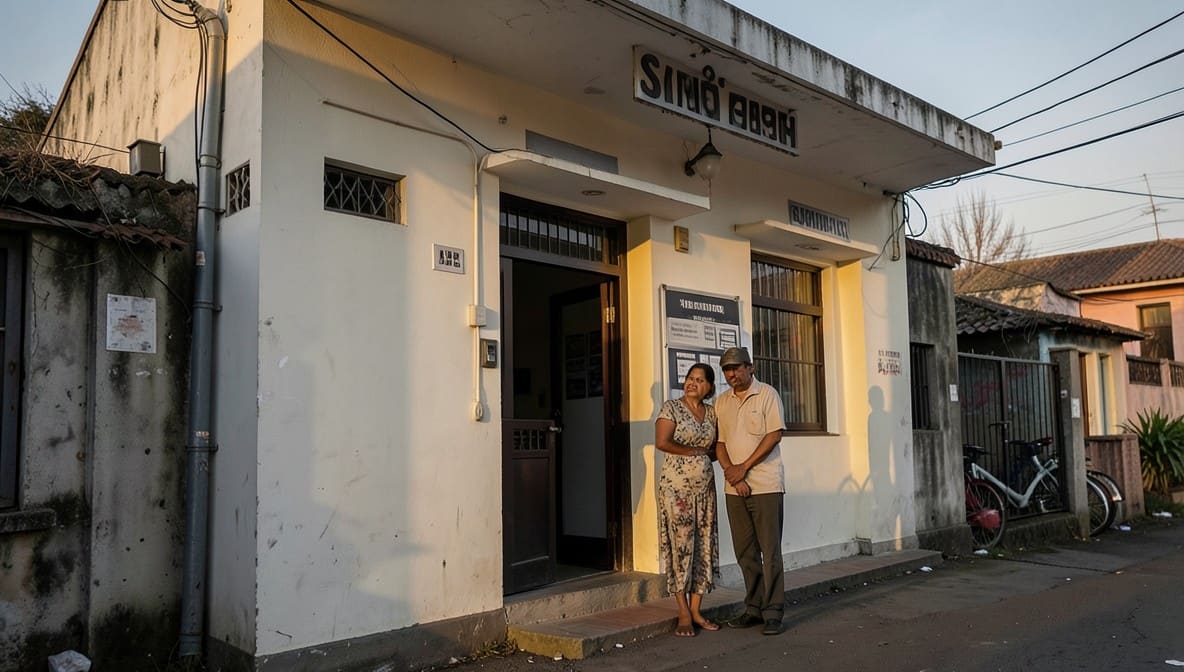
The petitioners, S. Harshavardhan and M. Dharani, operate a park and restaurant under the name A2Z Exotic Park and Restaurants on a leased plot of 0.40 acres in Survey No. 176/2, Chennayagunta Village, Tirupati Urban Mandal. The land is the subject of a pending civil suit, O.S. No. 278 of 2026, before the I Additional Civil Judge (Junior Division), Tirupati. The respondents, including the State of Andhra Pradesh, Director General of Police, Superintendent of Police, Tirupati, and Station House Officers of Alipiri and Tiruchanoor Police Stations, are accused of coercing the petitioners to settle the civil dispute with Respondents 6 and 7 - Anala Surekha and Anala Sunil Kumar - under threat of arrest and false criminal implication.
Key Facts
- The petitioners have been operating the A2Z Exotic Park and Restaurants since at least 2023 on land leased lawfully.
- A civil suit (O.S. No. 278 of 2026) is pending before the I Additional Civil Judge (Junior Division), Tirupati, concerning title and possession of the subject land.
- Respondents 6 and 7, private parties to the civil suit, allegedly approached police authorities to pressure the petitioners into withdrawing from the property.
- The petitioners allege that police officials threatened them with arrest and initiation of false criminal cases if they did not settle the civil dispute.
- No FIR or criminal complaint has been registered against the petitioners.
- The petitioners assert that their business operations are lawful and that police interference constitutes an unlawful infringement of their rights under Articles 19, 21, and 300A of the Constitution.
Procedural History
- 2026: Civil suit O.S. No. 278 of 2026 filed before I Additional Civil Judge (Junior Division), Tirupati.
- March 2026: Petitioners allege commencement of police pressure and threats from Respondents 4, 5, 6, and 7.
- 15.04.2026: Writ Petition No. 10134/2026 filed under Article 226 of the Constitution before the Andhra Pradesh High Court.
- 15.05.2026: Written instructions submitted by Respondents 4 and 5 denying any interference in the civil dispute.
- 15.05.2026: High Court heard arguments and disposed of the writ petition.
The Parties' Positions
Petitioners: Argued that police coercion to settle a subjudice civil matter is illegal, arbitrary, and violative of constitutional rights. They emphasized that civil disputes must be resolved by civil courts alone and that police involvement, even if indirect, amounts to abuse of power.
Respondents 4 and 5 (Police Officials): Submitted written instructions stating they had not interfered in the civil dispute, acknowledged its purely civil nature, and confirmed that no action had been taken against the petitioners.
Respondents 6 and 7 (Private Parties): Did not file any written response.
Relief Sought
The petitioners sought a writ of mandamus:
- Declaring police interference in the subjudice civil dispute as illegal and unconstitutional.
- Directing respondents to cease all threats, coercion, and interference with the petitioners’ business operations.
- Granting interim protection under Section 151 CPC pending disposal of the writ petition.
The Legal Issue
The central question was whether police authorities can coerce private parties to settle a subjudice civil dispute under threat of arrest or criminal implication, and whether such conduct violates Articles 19, 21, and 300A of the Constitution.
Arguments Presented
For the Petitioner
Counsel for the petitioners relied on Maneka Gandhi v. Union of India and K.S. Puttaswamy v. Union of India to argue that any state action infringing personal liberty or property rights without due process is unconstitutional. They contended that police involvement in civil disputes - even if indirect - creates a chilling effect on lawful business operations and amounts to extrajudicial coercion. The petitioners emphasized that the existence of a pending civil suit precludes any police intervention, as per settled law.
For the Respondent
Respondents 4 and 5, through the Government Pleader, submitted that no interference had occurred. They clarified that the police had not initiated any proceedings, issued any notice, or threatened arrest. They affirmed that the matter remained purely civil and was sub judice before the civil court.
The Court's Analysis
The Court examined the nature of the dispute and the conduct alleged. It noted that the petitioners’ claim of coercion was not substantiated by any FIR, complaint, or official record. However, the Court emphasized that the very possibility of such coercion, even if unproven, poses a grave threat to constitutional rights.
"The police are not arbiters of civil disputes. Their role is to maintain law and order, not to act as enforcers of private civil claims. Any threat, explicit or implicit, to initiate criminal proceedings to compel settlement of a subjudice civil matter is an abuse of power and a violation of natural justice."
The Court observed that Respondents 4 and 5 had explicitly disclaimed any interference, which rendered the petitioners’ fears theoretical. Nevertheless, the Court held that the constitutional principle at stake demanded a proactive declaration to prevent future misuse.
The Court distinguished State of U.P. v. Sanjay Kumar and Arnesh Kumar v. State of Bihar, noting that while those cases dealt with arrest in non-bailable offences, the present case involved the broader principle that state machinery cannot be weaponized to resolve private civil conflicts.
The Court further held that even in the absence of actual harm, the potential for abuse under Article 226 warrants judicial intervention to affirm the boundaries of police authority.
The Verdict
The writ petition was disposed of with the following directions: The respondents, particularly the police authorities, are strictly prohibited from interfering in the civil dispute pending before the I Additional Civil Judge (Junior Division), Tirupati, in O.S. No. 278 of 2026. No coercive action, threat of arrest, or implication in false cases shall be taken against the petitioners in connection with the civil matter. There shall be no order as to costs. All pending applications are closed.
What This Means For Similar Cases
Police Cannot Act as Civil Enforcers
- Practitioners must immediately challenge any police communication that links civil litigation to criminal consequences.
- A mere threat - even if unfulfilled - can form the basis of a writ petition under Article 226.
- Police stations must be served with copies of civil court orders to prevent unauthorized interference.
Subjudice Civil Matters Are Off-Limits
- Any attempt by private parties to use police pressure to settle civil suits is legally untenable.
- Courts will treat such conduct as an abuse of process, regardless of whether criminal proceedings are initiated.
- Legal notices to police should be issued whenever civil disputes are being undermined by extrajudicial pressure.
Constitutional Safeguards Apply Even Without Actual Arrest
- Violations of Articles 19, 21, and 300A are actionable even in the absence of physical detention.
- The right to carry on lawful business under Article 19(1)(g) includes protection from coercive state conduct.
- Writ courts will intervene preemptively to prevent erosion of constitutional rights.