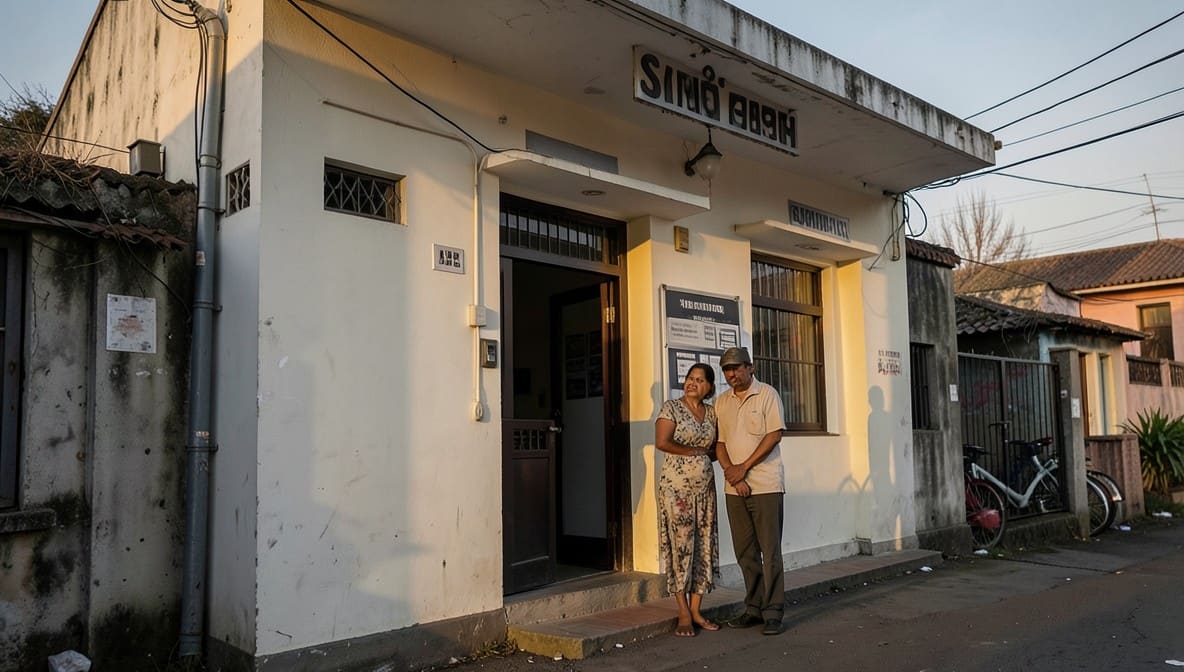
The Andhra Pradesh High Court has clarified that police cannot summon individuals to police stations without a registered crime, especially when the underlying dispute is civil in nature. This ruling reinforces constitutional protections under Articles 14 and 21 against arbitrary state action and sets a clear boundary between criminal investigation and civil adjudication.
Background & Facts
The Dispute
The petitioner, Katakoti Reddy, a 68-year-old cultivator from Prakasam District, was repeatedly summoned by police officials in Ongole without any registered criminal case against him. The petitioner alleges these summonses were not for legitimate investigation but were intended to pressure him into withdrawing a pending civil suit concerning a promissory note.
Key Facts
- The petitioner was accused of taking two damaged electrical poles from a public road in front of his neem garden, which he used to support a tree.
- The poles were allegedly discarded scrap material belonging to the Electricity Department and had been left unattended for over two years.
- No criminal complaint was filed by the Electricity Department until Crime No. 64 of 2026 was registered on an unspecified date prior to the writ petition.
- A civil suit, O.S. No. 804 of 2023, is pending before the Principal Junior Civil Judge, Ongole, for recovery of money under a promissory note.
- The petitioner claims that a change in administrative personnel in the Electricity Department led to the police being used as a tool to influence the outcome of the civil suit.
- The petitioner has not been arrested, nor has any charge sheet been filed.
Procedural History
- Date unknown (prior to 10.04.2026): Petitioner first summoned by police without registration of any crime.
- Date unknown (prior to 10.04.2026): Repeated summonses issued by Station House Officer, Ongole, and subordinate police officials.
- Crime No. 64 of 2026: Registered by the Assistant Executive Engineer, D. Sridhar, against the petitioner under unspecified provisions of the Bharatiya Nagarik Suraksha Sanhita, 2023.
- 10.04.2026: Writ Petition No. 10185 of 2026 filed before the Andhra Pradesh High Court under Article 226.
- 20.04.2026: Hearing conducted before Dr. Justice Y. Lakshmana Rao.
The Parties' Positions
Petitioner’s Position: The summonses were arbitrary, mala fide, and aimed at coercing withdrawal of a civil suit. No crime was committed by taking discarded poles. The police action violated Articles 14 and 21 of the Constitution.
Respondent’s Position: Crime No. 64 of 2026 was duly registered. The summonses were part of lawful investigation under the BNSS. No misuse of power was alleged in writing, and the police were merely following procedure.
Relief Sought
The petitioner sought a writ of mandamus to:
- Declare police summonses without a registered crime as illegal and arbitrary.
- Restrain police from summoning him except in connection with Crime No. 64 of 2026.
- Direct police to cease using summons as a tool to influence civil litigation.
The Legal Issue
The central question was whether police can lawfully summon an individual to a police station under the Bharatiya Nagarik Suraksha Sanhita, 2023, when no crime has been registered against them, and the sole purpose appears to be influencing a pending civil dispute.
Arguments Presented
For the Petitioner
The petitioner’s counsel argued that summonses issued without a registered crime violate Article 21 (right to life and personal liberty) and Article 14 (right to equality). He cited Arnesh Kumar v. State of Bihar to emphasize that police cannot act as instruments of private civil vendettas. The taking of discarded poles did not constitute theft or criminal mischief under Section 378 IPC or its BNSS equivalent, as the material was abandoned and not in the custody of the Electricity Department. The repeated summonses constituted harassment and abuse of process.
For the Respondent
The Assistant Government Pleader submitted that Crime No. 64 of 2026 had been registered, and summonses were issued strictly for investigation under Section 41 of the BNSS. He contended that the court should not interfere in ongoing investigations unless there was clear evidence of mala fide intent. He did not dispute the existence of the civil suit but argued that the police were not bound to ignore a registered complaint merely because a civil matter was pending.
The Court's Analysis
The Court acknowledged that while a crime had been registered, the timing and context of the summonses raised serious concerns about their purpose. The Court noted that the petitioner’s act of taking two discarded poles from a public road, after they had been left unattended for over two years, did not prima facie constitute a criminal offence under the BNSS. The Court emphasized that the mere registration of a case does not validate every investigative step if it is used to coerce a party in a civil dispute.
"The Petitioner cannot be called to the police station unnecessarily without any valid basis."
The Court rejected the notion that registration of a case alone immunizes police conduct from judicial scrutiny under Article 226. It held that the constitutional guarantee against arbitrary state action applies even during investigation. The Court distinguished between lawful investigation and coercive harassment, noting that repeated summonses in the absence of exigent circumstances, particularly when a civil suit is pending, may amount to abuse of power.
The Court further observed that the petitioner, aged 68 and engaged in cultivation, had no prior criminal record and posed no flight risk. The alternative remedies of pre-arrest bail or quashing were not practically viable for a non-arrested individual facing mere summonses. Therefore, judicial intervention under Article 226 was warranted to prevent irreparable harm to personal liberty.
The Verdict
The writ petition was disposed of with the direction that the Respondent Police shall not call the petitioner to the police station unnecessarily, except in connection with Crime No. 64 of 2026. The petitioner shall cooperate fully with the Investigating Officer for the purpose of investigation in Crime No. 64 of 2026. There shall be no order as to costs. All pending miscellaneous petitions are closed.
What This Means For Similar Cases
Police Summoning Requires Proportionality and Legitimacy
- Practitioners must challenge summonses issued without a clear nexus to a registered crime, especially when the complainant is a party to a civil dispute.
- Courts may intervene under Article 226 even before arrest if summonses are used as tools of coercion.
- The burden shifts to the police to demonstrate that each summons is necessary, specific, and not repetitive or harassing.
Civil Disputes Cannot Be Weaponized Through Criminal Process
- A registered FIR does not automatically legitimize police action if the underlying motive is to influence civil litigation.
- Courts will examine the context, timing, and frequency of summonses to detect mala fide intent.
- Lawyers should document all summonses and link them to civil proceedings to build a case for abuse of process.
BNSS Does Not Grant Blanket Authority to Summon
- While Section 41 of the BNSS permits summons for investigation, it is not a carte blanche.
- The principle of proportionality under Article 21 must govern all investigative actions.
- Police must record reasons for each summons and avoid repeated calls without fresh grounds.