The Punjab & Haryana High Court has granted interim regular bail to a petitioner suffering from severe, long-term medical conditions despite charges under serious offences including murder and attempt to murder. The decision underscores that medical exigency, when substantiated by official records, can override the presumption against bail in heinous cases, provided strict conditions are imposed to safeguard the integrity of trial.
Background & Facts
The Dispute
The petitioner, Shamsher Singh @ Monu Rana, is accused in FIR No. 249 dated 08.11.2023 registered at Police Station Farakpur, District Yamuna Nagar, for offences punishable under Sections 302, 307, 326, 328, 201, 467, 468, 471, 120-B of the Indian Penal Code (IPC) and Section 72(A) of the Punjab Excise Act, 1914 (Haryana Amendment Bill, 2020), and Section 42(a) of the Prisons Act, 1894. These charges correspond to the erstwhile provisions under Sections 103(1), 109, 123, 238, 338, 336(3), 340(2), 61(2) of the Bharatiya Nagarik Suraksha Sanhita, 2023 (BNSS). The case involves allegations of homicide, grievous hurt, forgery, criminal conspiracy, and illegal possession of liquor.
Key Facts
- The petitioner has been in judicial custody since the registration of the FIR on 08.11.2023.
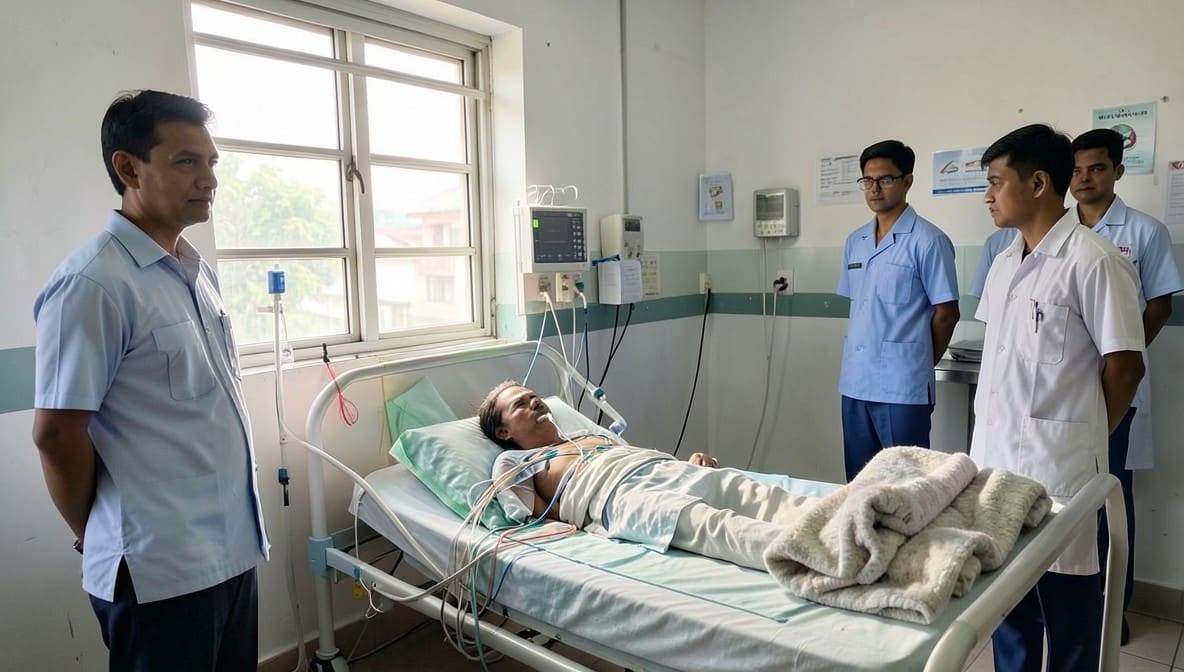
- He has been bedridden since 2017 due to bilateral lower limb paralysis with bowel and bladder dysfunction.
- He suffers from chronic bedsores over the left gluteal region.
- He requires a catheter in situ for urinary management.
- He is dependent on a helper for all routine activities.
- He is conscious, oriented, and afebrile as per medical examination conducted by jail authorities.
- Medical treatment as per Annexure R-1 is being provided to him in District Jail, Karnal.
Procedural History
- 08.11.2023: FIR No. 249 registered at Police Station Farakpur, District Yamuna Nagar.
- 06.04.2026: Petitioner filed Criminal Miscellaneous Petition No. 17154 of 2026 under Section 483 of the Bharatiya Nagarik Suraksha Sanhita, 2023 (BNSS), read with Section 439 CrPC and Section 482 CrPC, seeking interim regular bail on medical grounds.
- 06.04.2026: State filed affidavit of Kanwaljeet Singh, HPS, Deputy Superintendent of Police, Head Quarter, Yamuna Nagar, confirming the petitioner’s medical condition.
- 06.04.2026: Hearing conducted before Justice Sumeet Goel.
The Parties' Positions
For the Petitioner
The petitioner’s counsel argued that the petitioner’s medical condition is severe, chronic, and incompatible with continued incarceration. He emphasized that the petitioner has been bedridden since 2017 and requires continuous medical supervision, which is only marginally available in jail. The petition invoked the court’s inherent powers under Section 482 CrPC and Section 483 BNSS to prevent irreparable harm to life and health.
For the Respondent
The State, through the Additional Advocate General, submitted an affidavit confirming the petitioner’s medical status as recorded by jail authorities. The State did not oppose bail on medical grounds but reserved the right to seek cancellation if conditions were breached. The affidavit affirmed that the petitioner is receiving adequate medical care in District Jail, Karnal, and is not in immediate life-threatening condition.
Relief Sought
The petitioner sought interim regular bail for a specified period, subject to conditions, to receive adequate medical treatment outside prison walls while ensuring the trial process remains undisturbed.
The Legal Issue
Can a court grant interim regular bail under Section 483 BNSS read with Section 439 CrPC to an accused facing serious non-bailable offences solely on the ground of severe, long-standing medical disability, even when the charges involve life-threatening violence?
Arguments Presented
For the Petitioner
The petitioner’s counsel relied on the principle that the right to life under Article 21 of the Constitution includes the right to health and humane treatment in custody. He cited State of Rajasthan v. Balchand and Sanjay Chandra v. CBI to argue that medical exigency overrides the gravity of offence when incarceration poses a demonstrable threat to life. He emphasized that the petitioner’s condition has been stable but debilitating for nearly a decade, and continued detention serves no investigative purpose.
For the Respondent
The State acknowledged the medical condition but stressed the seriousness of the charges, including murder and attempt to murder. It contended that bail should not be granted merely on medical grounds unless the condition is acute and life-threatening. However, it did not resist the grant of bail, provided strict conditions were imposed to prevent abuse of liberty and ensure trial integrity.
The Court's Analysis
The Court examined the medical affidavit filed by the State, which confirmed the petitioner’s chronic, non-acute but debilitating condition. It noted that while the offences are grave, the petitioner’s physical state renders him incapable of fleeing, tampering with evidence, or intimidating witnesses. The Court observed that the petitioner has been under custody since 2023 and the investigation is likely complete. The Court emphasized that the purpose of bail is not punitive but procedural, and continued incarceration in the petitioner’s condition may amount to cruel and unusual punishment under Article 21.
"The petitioner has been bedridden since 2017 with bilateral paralysis and chronic bedsores. He requires constant assistance and medical care. Denying him interim relief under these circumstances would be inconsistent with the constitutional guarantee of humane treatment."
The Court distinguished this case from those involving acute, temporary illness, noting that the petitioner’s condition is permanent and institutional care is inadequate. It held that interim regular bail, not ordinary bail, is appropriate given the gravity of charges, to ensure the petitioner remains under judicial supervision while receiving better medical care.
The Verdict
The petition was allowed. The petitioner is granted interim regular bail for a period of two months from the date of his release, subject to furnishing bail/surety bonds to the satisfaction of the concerned CJM/Duty Magistrate. He shall remain bound by seven conditions: (i) no misuse of liberty; (ii) no tampering with evidence; (iii) no absence from trial dates; (iv) no commission of any offence; (v) deposit of passport, if any; (vi) disclosure and non-change of mobile number without court permission; and (vii) no attempt to delay the trial. The State may seek cancellation of bail upon breach of any condition. The Court clarified that nothing herein constitutes an opinion on the merits of the case.
What This Means For Similar Cases
Medical Disability Can Override Gravity of Offence in Bail Decisions
- Practitioners may now invoke Article 21 and Section 483 BNSS to seek interim regular bail for accused with chronic, irreversible medical conditions - even in cases involving murder or attempted murder.
- The burden shifts to the State to prove that the medical condition is either fabricated or adequately addressed in custody.
- Courts will prioritize medical necessity over the nature of charges when the condition is documented, stable, and incompatible with incarceration.
Interim Regular Bail Is a Viable Tool for Chronic Illness
- Interim regular bail, distinct from ordinary bail, is now recognized as appropriate for long-term medical cases where the accused cannot pose a flight risk.
- Conditions such as mobile number disclosure, passport deposit, and mandatory court appearances are enforceable and should be routinely imposed.
- The two-month duration sets a precedent for time-bound medical bail, requiring periodic review.
Procedural Compliance Is Non-Negotiable
- Any breach of bail conditions - especially tampering with evidence or absence from court - triggers automatic cancellation without further hearing.
- The State must file a fresh affidavit if it seeks cancellation, and mere suspicion is insufficient.
- Courts will not entertain applications for bail extension unless fresh medical reports are submitted.