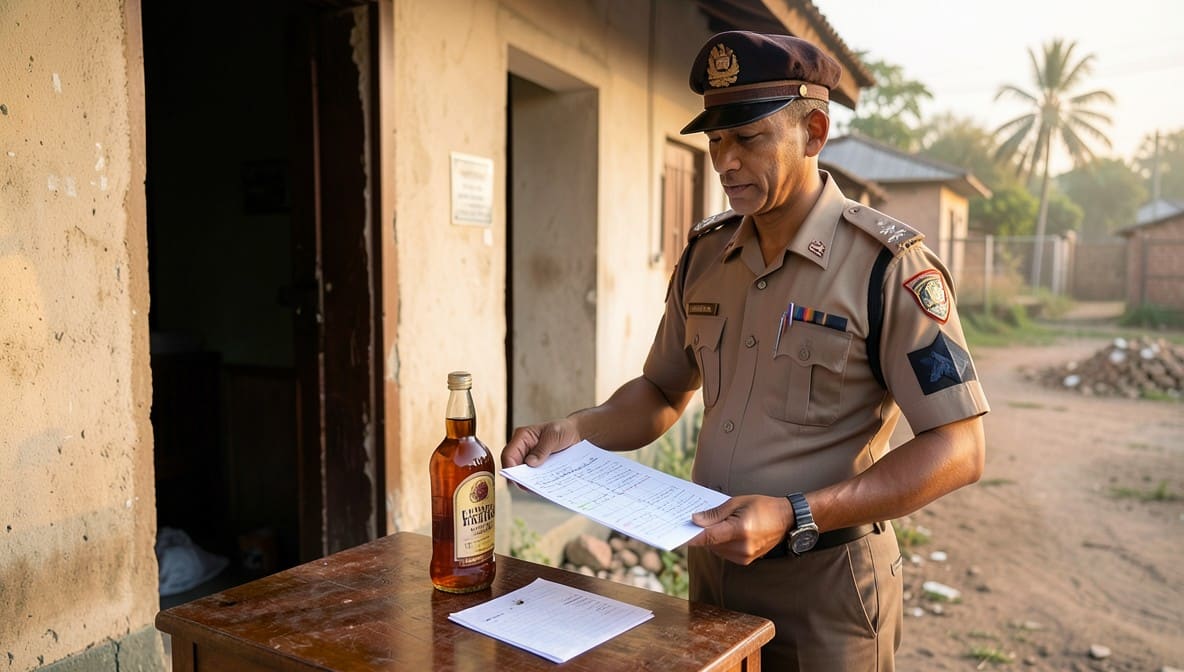
The Madhya Pradesh High Court at Gwalior has reaffirmed that arrest in offences under the Excise Act must strictly adhere to the procedural safeguards laid down by the Supreme Court in Arnesh Kumar v. State of Bihar and allied judgments. Though the anticipatory bail application was withdrawn, the Court issued a binding directive to investigating authorities, reinforcing that mechanical arrest cannot substitute due process.
Background & Facts
The Dispute
The applicant, Babuaa alias Suneel Singh, apprehended arrest in connection with Crime No. 89/2025 registered at Police Station Kailaras, District Morena, Madhya Pradesh, for an alleged offence under Section 34(2) of the Madhya Pradesh Excise Act, 1915. This provision pertains to possession of illicit liquor in quantities exceeding the threshold for petty offences, often attracting automatic arrest without application of judicial discretion.
Key Facts
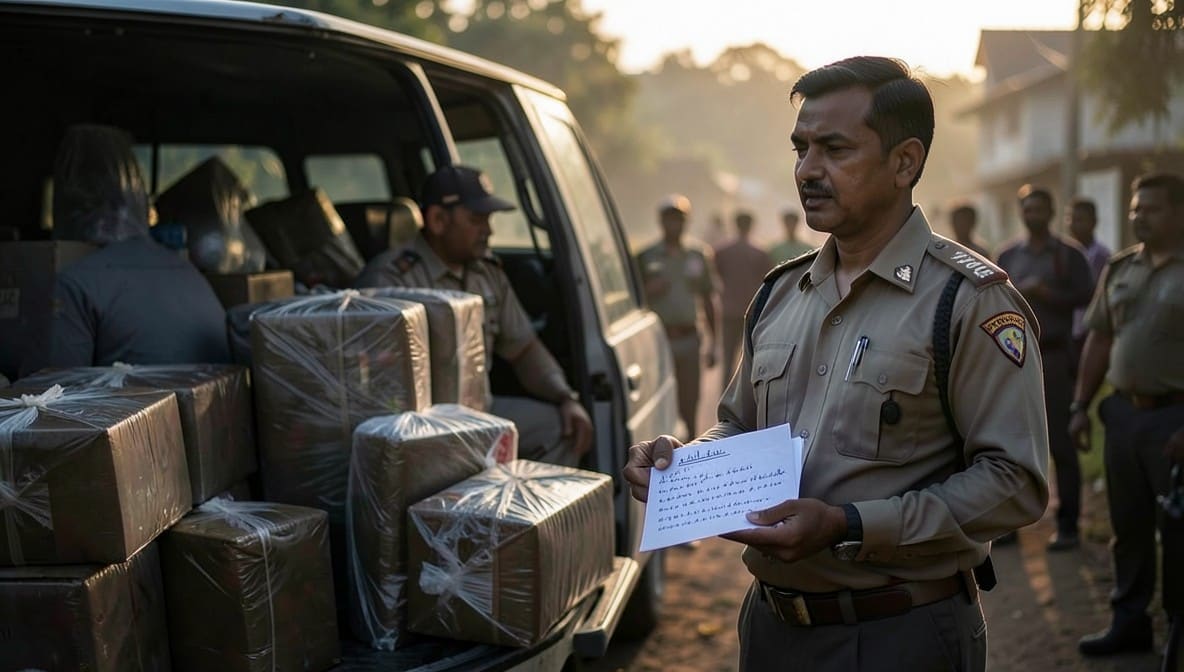
- The alleged offence arose from a raid conducted on 12.04.2025 at a residential premises in Kailaras
- Approximately 12 litres of country liquor were seized from the applicant’s possession
- No evidence of sale, transportation, or manufacturing was alleged
- The applicant had no prior criminal record under the Excise Act
- The investigation was conducted by the District Excise Department, not the regular police
Procedural History
- 12.04.2025: Seizure of illicit liquor and initiation of Crime No. 89/2025
- 25.05.2025: Investigation completed; charge sheet preparation initiated
- 10.06.2026: Applicant filed M.C.R.C. No. 29943 of 2026 seeking anticipatory bail under Section 482 of the Bharatiya Nagarik Suraksha Sanhita (BNSS)
- 30.06.2026: Hearing held before Justice Rajesh Kumar Gupta; applicant’s counsel requested withdrawal of application
The Parties' Positions
For the Applicant
The applicant’s counsel, Shri Anand Purohit, did not press for bail but sought a judicial directive to prevent arbitrary arrest. He emphasized that the offence was non-violent, non-heinous, and did not involve public nuisance or repeat offending. He urged the Court to direct compliance with Supreme Court precedents mandating prior scrutiny before arrest.
For the Respondent/State
The Public Prosecutor, Shri Samar Ghuraiya, did not oppose the withdrawal but did not resist the request for judicial guidance. He acknowledged that the investigation was still at a preliminary stage and no formal arrest had been made.
Relief Sought
The applicant sought no immediate relief in the form of bail but requested the Court to issue binding directions to the Investigating Officer and Trial Court to comply with the Supreme Court’s guidelines on arrest in non-serious offences.
The Legal Issue
The central question was whether, in cases under Section 34(2) of the Excise Act involving possession of small quantities of illicit liquor, the Investigating Officer is bound to follow the procedural safeguards laid down in Arnesh Kumar v. State of Bihar and subsequent judgments before effecting arrest.
Arguments Presented
For the Appellant/Petitioner
Counsel relied on Arnesh Kumar v. State of Bihar [(2014) 8 SCC 273], which held that arrest is not automatic even for offences punishable with up to seven years’ imprisonment. He cited Satender Kumar Antil v. CBI [(2022) 10 SCC 51], which reiterated that police must apply their mind to the necessity of arrest and record reasons. He further invoked Siddharth v. State of U.P. [(2022) 1 SCC 676] and Aman Preet Singh v. CBI [(2022) 13 SCC 764], which extended these principles to state-level statutes like the Excise Act, emphasizing that arrest must be a last resort.
For the Respondent/State
The State did not contest the legal propositions advanced by the applicant. The Public Prosecutor conceded that the offence did not involve violence, flight risk, or tampering with evidence, and that arrest was not immediately necessary. He acknowledged that the investigating agency had not yet applied the Arnesh Kumar checklist.
The Court's Analysis
The Court observed that while the application for anticipatory bail was withdrawn, the underlying legal concern remained valid and urgent. It noted that offences under Section 34(2) of the Excise Act are frequently treated as arrestable without any judicial or procedural scrutiny, despite being non-cognizable in nature under the spirit of the Supreme Court’s jurisprudence.
"The arrest of an individual under the Excise Act cannot be a mechanical exercise. The Investigating Officer must record reasons in writing as to why arrest is necessary, considering the nature of the offence, the role of the accused, and the possibility of investigation without detention."
The Court emphasized that the Supreme Court’s directives in Arnesh Kumar and its progeny are not optional guidelines but mandatory constitutional obligations under Article 21. It held that failure to apply these principles renders any arrest procedurally invalid, regardless of the statutory provision invoked.
The Court further noted that the applicant’s case was emblematic of a systemic pattern where police treat possession of small quantities of country liquor as an automatic ground for arrest, ignoring the proportionality principle and the availability of less intrusive measures such as notice to appear.
The Verdict
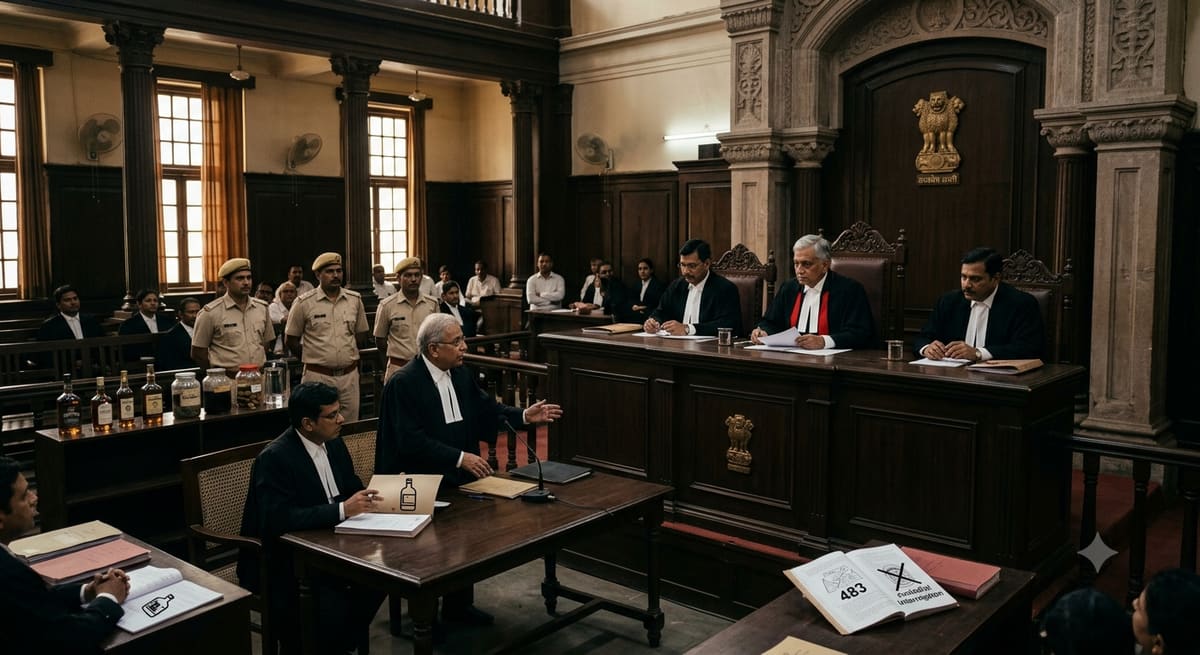
The application was dismissed as withdrawn. However, the Court directed the Investigating Officer and the Trial Court to strictly comply with the guidelines laid down in Arnesh Kumar v. State of Bihar, Satender Kumar Antil v. CBI, Siddharth v. State of U.P., and Aman Preet Singh v. CBI. The Court mandated that no arrest shall be made in cases under Section 34(2) of the Excise Act unless the officer records written reasons demonstrating necessity, and that the accused be given an opportunity to cooperate with investigation before detention.
What This Means For Similar Cases
Arrest Is Not Automatic in Excise Cases
- Practitioners must now challenge arrests under Section 34(2) of the Excise Act on grounds of non-compliance with Arnesh Kumar guidelines
- A mere seizure of liquor, without evidence of trafficking or violence, cannot justify detention
- Applications under Section 482 BNSS may be filed not only for bail but to enforce procedural compliance
Written Reasons Are Mandatory
- Investigating Officers must maintain a written record justifying arrest, including:
- Nature and gravity of the offence
- Role of the accused in the alleged crime
- Possibility of investigation without arrest
- Risk of evidence tampering or flight
- Absence of such a record renders arrest illegal and subject to quashing
Pre-Arrest Notice as Default
- In minor Excise offences, issuing a notice under Section 41A BNSS is now the norm, not the exception
- Courts will presume non-compliance with Arnesh Kumar as a violation of Article 21, entitling the accused to compensation