The Madhya Pradesh High Court has granted anticipatory bail in a case under the M.P. Excise Act, 1915, despite a statutory bar under Section 59A, holding that procedural irregularities in the raid and risk of false implication override rigid statutory restrictions. This ruling reinforces the principle that bail jurisprudence must balance statutory provisions with the fundamental right to liberty when evidence is suspect.
Background & Facts
The Dispute
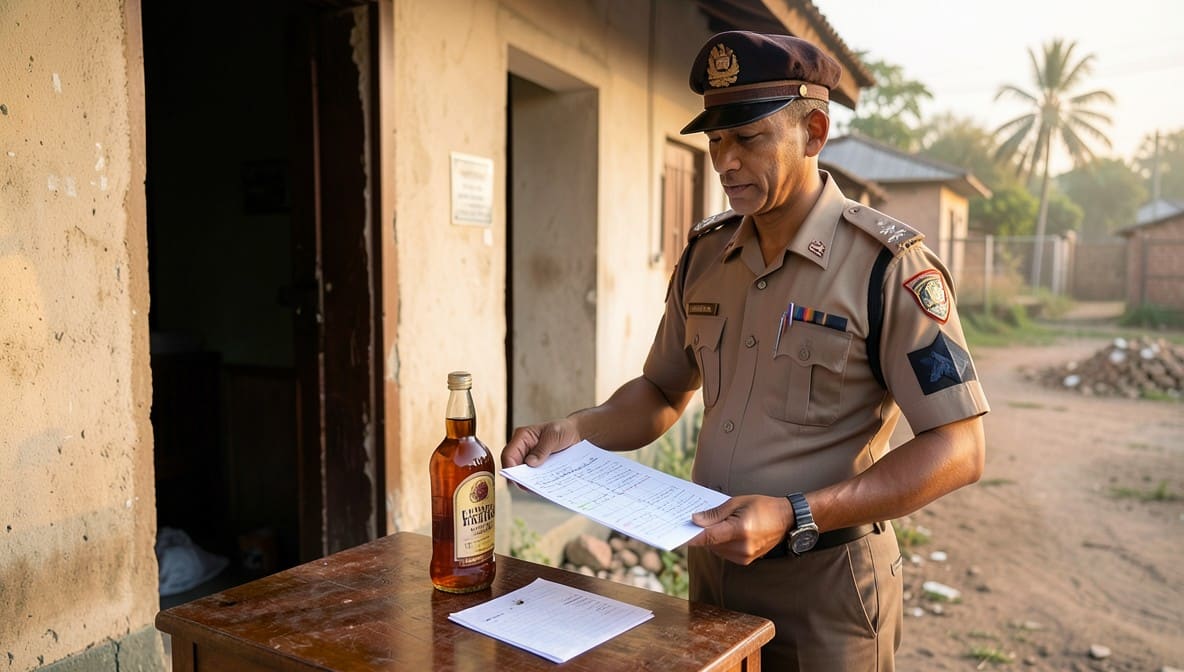
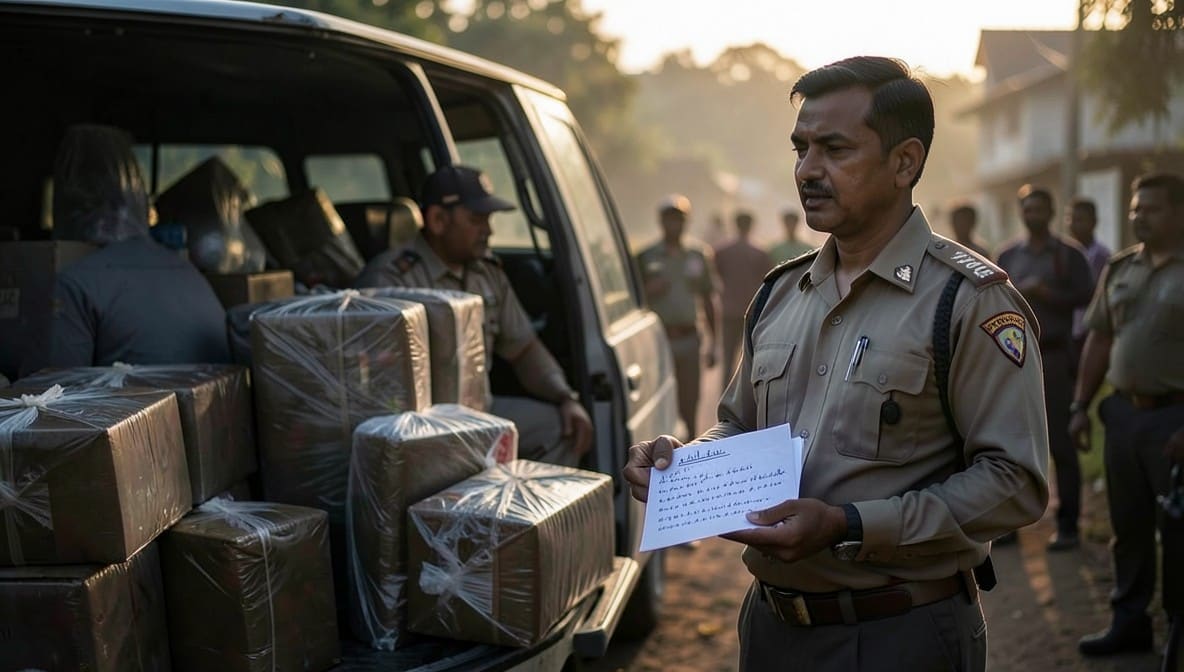
The applicant, Vikas @ Chintu Sonkar, is a professional football player who was named as an accused in Crime No. 09/2026 registered at Police Station Excise Circle 2A, District Jabalpur. The case pertains to the alleged possession of 67 liters of illicit liquor during a raid conducted by the Excise Department. The applicant claims he was falsely implicated and had no involvement in the offence.
Key Facts
- The raid was conducted by the Excise team on an unspecified date prior to the filing of the FIR
- 67 liters of illegal alcohol were allegedly recovered from the applicant’s possession
- The applicant fled the scene during the raid, which the State cites as evidence of guilt
- The applicant’s wife filed a complaint with the Superintendent of Police, Jabalpur, alleging false implication
- The applicant has no prior criminal record and is a known local football player
- The C.S.P. Omti, District Jabalpur, submitted an inquiry report highlighting procedural anomalies
Procedural History
- Date of Raid: Unspecified, but prior to 01.07.2026
- Date of FIR Registration: Crime No. 09/2026 at Excise Circle 2A, Jabalpur
- 01.07.2026: Application under Section 482 of Bharatiya Nagrik Suraksha Sanhita, 2023 filed seeking anticipatory bail
- 01.07.2026: Hearing before Justice Devnarayan Mishra
- 01.07.2026: Order passed granting anticipatory bail
The Parties' Positions
For the Applicant
- Asserts complete innocence and lack of involvement in the offence
- Claims the case is a result of false implication, possibly due to personal vendetta or administrative overreach
- Highlights that his wife had previously complained to the Superintendent of Police about potential misuse of excise powers
- Emphasizes his clean record and community standing as a sportsman
For the Respondent/State
- Argues that recovery of 67 liters of illicit liquor from the applicant’s possession establishes prima facie guilt
- Points to the applicant’s flight from the scene as evidence of consciousness of guilt
- Opposes bail on the ground that Section 59A of the M.P. Excise Act, 1915 bars anticipatory bail in such offences
Relief Sought
The applicant sought anticipatory bail under Section 482 of the Bharatiya Nagrik Suraksha Sanhita, 2023, to prevent arrest and detention pending investigation and trial.
The Legal Issue
Can a court grant anticipatory bail under Section 482 of BNSS in an offence under Section 34(2) of the M.P. Excise Act, 1915, despite the express bar under Section 59A of the same Act, when the raid proceedings are marred by procedural irregularities and there is a credible risk of false implication?
Arguments Presented
For the Appellant/Petitioner
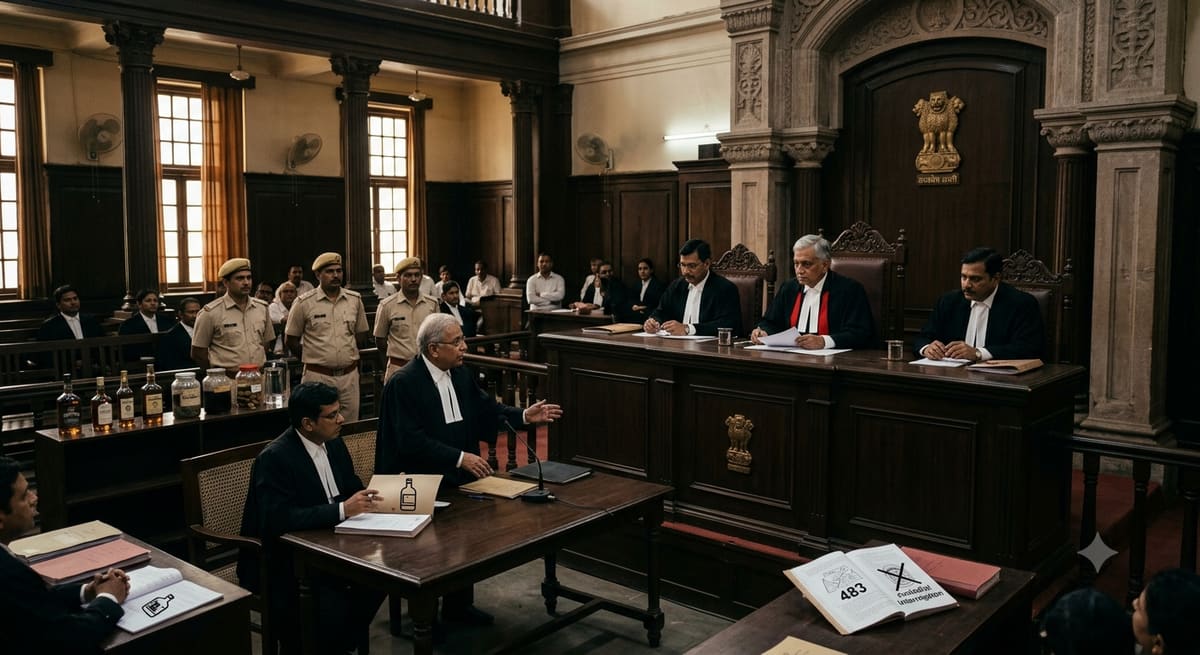
The applicant’s counsel argued that Section 59A of the M.P. Excise Act, while prohibiting anticipatory bail, cannot override the inherent powers of the High Court under Section 482 of BNSS to prevent abuse of process or protect liberty where the prosecution’s case is founded on dubious evidence. Reliance was placed on Arnesh Kumar v. State of Bihar to underscore that arrest is not automatic even in serious offences, and on Siddharam Satlingappa Mhetre v. State of Maharashtra to emphasize that liberty is the rule and incarceration the exception. The submission was that the C.S.P.’s report casts serious doubt on the legitimacy of the raid, making the case ripe for judicial intervention to prevent miscarriage of justice.
For the Respondent/State
The State’s counsel contended that Section 59A of the M.P. Excise Act is a clear legislative prohibition against anticipatory bail in offences involving illicit liquor, and that courts must respect such statutory exclusions. The recovery of a large quantity of illicit liquor (67 liters) and the applicant’s flight from the scene were presented as conclusive indicators of guilt. The State argued that the C.S.P.’s report was merely preliminary and not a finding of misconduct, and that granting bail would undermine the state’s regulatory efforts against illegal alcohol trade.
The Court's Analysis
The Court acknowledged the existence of Section 59A, which bars anticipatory bail for offences under the M.P. Excise Act. However, it emphasized that the High Court’s power under Section 482 of BNSS is not extinguished by such statutory bars when the very foundation of the prosecution’s case is suspect. The Court observed that the inquiry report submitted by the C.S.P. Omti revealed "certain time variations and some activities are doubtful in collecting, arranging and transferring the alcohol." This raised a legitimate concern about the integrity of the evidence.
"Looking to the aspect that when there are chances of falsely implication of a citizen in the guise of that offence without commenting that the report submitted by the C.S.P., Omti is final or the proceeding initiated by the Excise Department is false or forged to safeguard the interest of the applicant and to maintain the freedom of a citizen, this Court deems it fit to enlarge the applicant on anticipatory bail."
The Court explicitly declined to pronounce on the merits of the case or validate the C.S.P.’s report as conclusive. Instead, it held that the presence of procedural irregularities, coupled with the applicant’s clean record and the risk of arbitrary arrest, justified the exercise of inherent powers under Section 482. The Court reaffirmed that the right to personal liberty under Article 21 of the Constitution is not suspended merely because a statute prohibits bail; courts retain the duty to prevent abuse of process.
The Verdict
The applicant succeeded. The Court granted anticipatory bail subject to the following conditions: (1) personal bond of Rs. 50,000 with one solvent surety of like amount; (2) cooperation with the investigating agency; (3) no intimidation of witnesses; (4) regular appearance before the trial court; and (5) compliance with all conditions under Section 482(2) of BNSS. The Court directed that the applicant shall appear before the arresting officer or trial court as directed, and clarified that the order does not affect the trial’s outcome.
What This Means For Similar Cases
Statutory Bars Do Not Absolute the Court’s Inherent Powers
- Practitioners may now invoke Section 482 BNSS to seek anticipatory bail even in offences where bail is statutorily barred, if the prosecution’s case is tainted by procedural irregularities
- The burden shifts to the State to demonstrate that the irregularities are trivial or immaterial
- Courts will prioritize liberty over procedural rigidity where the risk of false implication is credible
Suspicion of Fabricated Evidence Triggers Judicial Intervention
- A C.S.P. or superior officer’s report highlighting inconsistencies in seizure, chain of custody, or timing can be sufficient to justify anticipatory bail
- Courts will not require a final finding of misconduct - mere suspicion of irregularity suffices
- This sets a precedent for challenging excise raids where recovery procedures are not documented or witnessed properly
Procedural Compliance Is Non-Negotiable in Excise Cases
- Law enforcement must maintain impeccable records of raids, including timestamps, witness signatures, and inventory logs
- Failure to do so may result in bail being granted despite statutory prohibitions
- Defence counsel should routinely request inquiry reports from senior officers in excise cases and move for anticipatory bail at the earliest opportunity