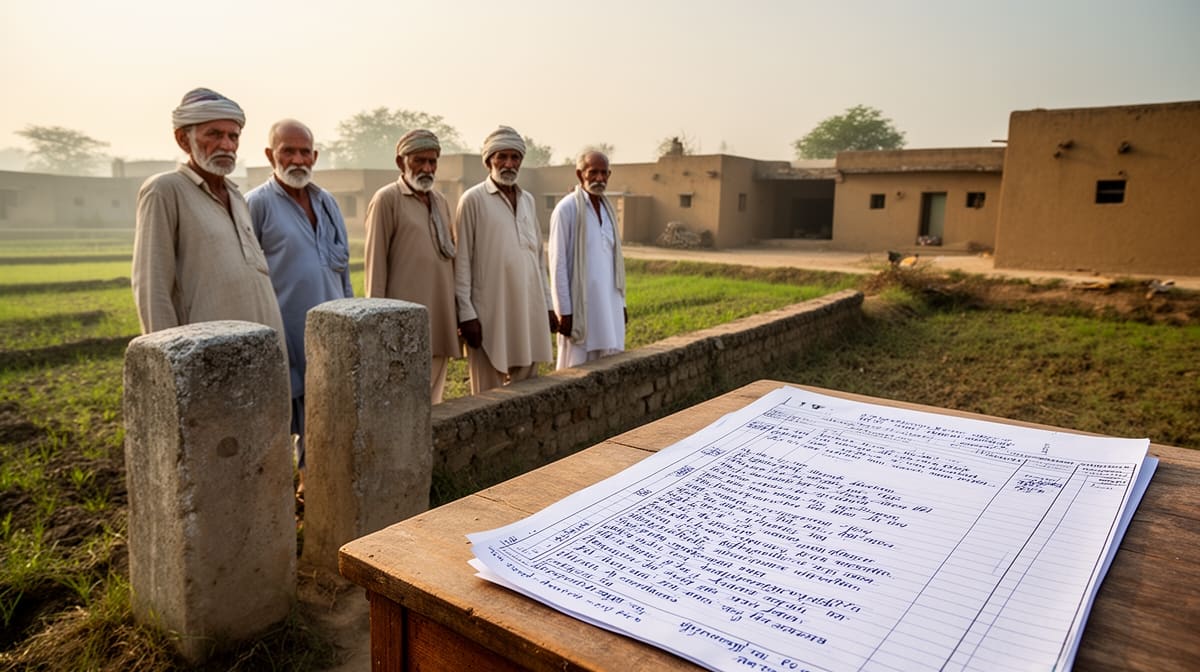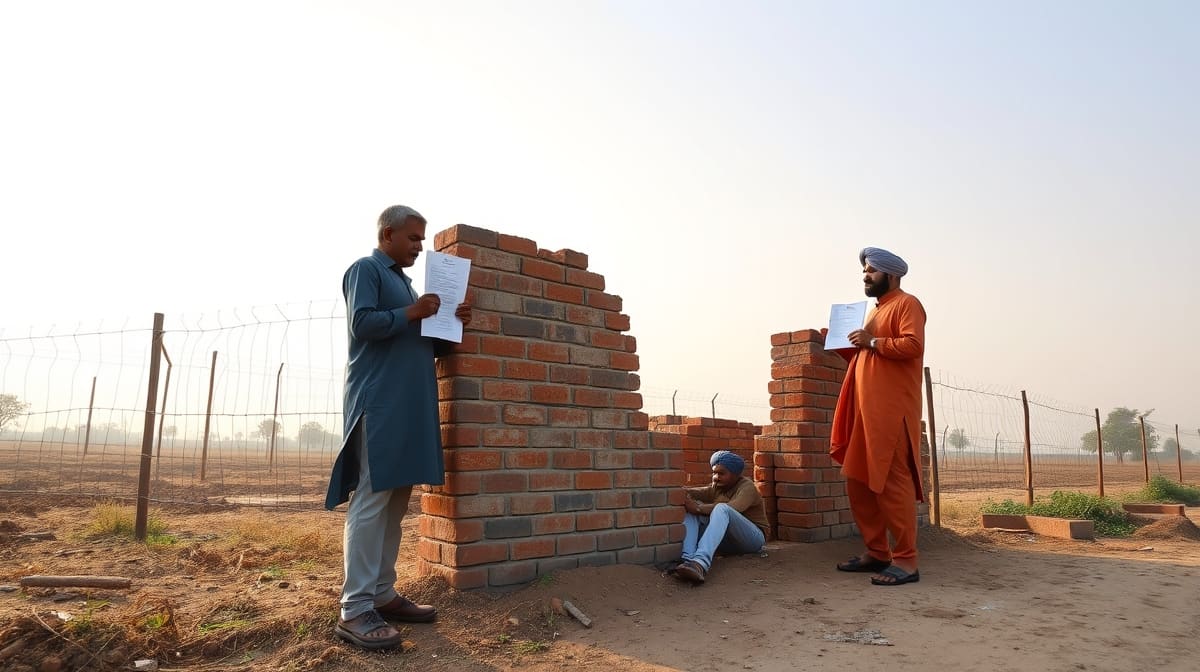
The Punjab & Haryana High Court has clarified that co-sharers in joint agricultural property retain the right to use shared irrigation infrastructure on a turn-based basis, even absent explicit mention in sale deeds. This ruling reinforces the principle that equitable access to essential utilities cannot be unilaterally denied pending partition.
Background & Facts
The Dispute
The dispute arose over the use of a 7.5 BHP electric motor (account No. K56-AP/43) installed for irrigation purposes on jointly owned agricultural land. The motor was originally registered in the name of Smt. Seeto, wife of Paras Ram. Upon her death, her legal heirs, including Sant Ram, inherited her share. The respondent purchased a portion of this joint land from Sant Ram through a registered sale deed. The respondent began using the electric motor for irrigation according to his share, without obstruction, until the petitioners - other co-sharers - disputed his right to do so.
Key Facts
- The electric motor was installed and operated as a shared utility for the entire joint property.
- The sale deed executed by the respondent did not expressly mention rights to use the motor.
- The respondent had been using the motor for irrigation without dispute until 2023.
- The motor is the sole source of irrigation for the respondent’s land.
- No alternative irrigation source exists for the respondent’s plot.
- The petitioners, who are also co-sharers, began objecting to the respondent’s use and sought to exclude him.
Procedural History
- 2023: Respondent filed an application under Order XXXIX Rules 1 and 2 of the Code of Civil Procedure, 1908, read with Section 151 CPC, seeking temporary injunction against petitioners to prevent interference with his use of the motor.
- 31.05.2023: Civil Judge (Senior Division), Fatehgarh Sahib, dismissed the application, holding that no right to use the motor was established in the sale deed and that there was no prima facie case.
- 18.11.2025: First Appellate Court (Additional District Judge, Fatehgarh Sahib) allowed the appeal, holding that the motor connection remained joint property and that each co-sharer was entitled to use it on a turn basis pending partition.
- 28.03.2026: Petitioners filed the present civil revision under Article 227 of the Constitution before the Punjab & Haryana High Court.
- 01.04.2026: High Court delivered judgment on the revision.
The Parties' Positions
Petitioners: Argued that the respondent had no legal right to use the motor as it was not mentioned in the sale deed. They claimed exclusive control over the motor and alleged that the respondent had obstructed their use. They cited FIR No. 95 dated 11.11.2019 under Sections 323, 325, 341, 506, 148, 149 IPC, alleging violence and intimidation by the respondent.
Respondent: Contended that the motor was a joint utility installed for the benefit of the entire joint property. He asserted that his use was consistent with customary practice and that denying him access would cause irreparable harm to his agricultural livelihood.
Relief Sought
The petitioners sought setting aside of the order dated 18.11.2025 and restoration of the dismissal order dated 31.05.2023. They also sought a direction restraining the respondent from using the motor.
The Legal Issue
The central question was whether a co-sharer in joint agricultural property has a right to use a shared irrigation motor on a turn basis, even if such right is not expressly mentioned in the sale deed, and whether such right can be enforced through a temporary injunction under Order XXXIX Rules 1 and 2 CPC.
Arguments Presented
For the Petitioner
Counsel argued that the absence of any mention of the motor in the sale deed negated any legal right to use it. They relied on the principle that easements or rights over immovable property must be expressly granted or implied by necessity. They further contended that the respondent’s alleged acts of violence and obstruction (cited via FIR and photographs) demonstrated bad faith and undermined any claim to equitable use.
For the Respondent
Counsel contended that the motor was an integral, shared utility installed for the benefit of the entire joint holding. They argued that the right to use such a utility is inherent in co-ownership and that denying access would render the respondent’s land unworkable. They cited customary practice and equitable principles under Section 151 CPC to support the claim of turn-based usage.
The Court's Analysis
The Court examined the nature of the electric motor as a shared infrastructure serving a joint property. It noted that the motor was installed prior to the partition and had been used by all co-sharers without dispute for years. The Court emphasized that the respondent’s prayer was not to exclude others from using the motor, but merely to secure his turn-based access.
"Impugned order clearly depicts that it has given rights to respondent, as per his turn, to use electric motor along with other co-sharers."
The Court rejected the petitioners’ argument that absence of mention in the sale deed extinguished the right. It held that the motor was not a standalone asset but an integral part of the irrigation system serving the joint land. The Court further observed that the First Appellate Court had correctly applied the principles of equity and necessity under Section 151 CPC, recognizing that the respondent had no alternative source of irrigation.
The Court also addressed the petitioners’ allegations of violence. While acknowledging the FIR, it held that these were separate criminal matters and could not override the civil right to equitable use of a shared utility. The Court clarified that the injunction granted did not prevent petitioners from using the motor; it only ensured the respondent’s access.
The Verdict
The petitioners’ civil revision was dismissed. The order dated 18.11.2025 of the First Appellate Court was upheld. The respondent is entitled to use the 7.5 BHP electric motor on a turn basis with other co-sharers pending partition. The petitioners are directed to file an application before the Court of First Instance for apportionment of the electricity bill in accordance with law. All pending applications are disposed of.
What This Means For Similar Cases
Turn-Based Use of Shared Utilities Is Enforceable
- Practitioners may now assert equitable rights to shared irrigation systems, power connections, or water sources in joint agricultural holdings, even without express grant in sale deeds.
- Courts will recognize such rights under Section 151 CPC where denial would cause irreparable harm to livelihood.
Sale Deed Silence Does Not Erase Implied Rights
- Absence of mention in a sale deed does not automatically negate rights arising from joint ownership or customary use.
- Evidence of long-standing, unchallenged usage strengthens claims of implied easement or equitable access.
Injunctions Must Be Tailored to Prevent Exclusion, Not Grant Exclusive Control
- Courts will not grant injunctions that exclude co-sharers from shared utilities.
- Relief must be framed to ensure equitable access, not exclusive possession.
Criminal Allegations Do Not Override Civil Equitable Rights
- FIRs or criminal complaints related to disputes over shared utilities cannot be used to defeat civil claims of equitable access.
- Separate criminal proceedings must be adjudicated independently.