The Himachal Pradesh High Court has clarified that a co-owner cannot be restrained from constructing on joint property merely because the land is undivided. The judgment reinforces that equitable relief requires clean conduct and that mere construction, without ouster or material prejudice, does not justify an injunction.
Background & Facts
The Dispute
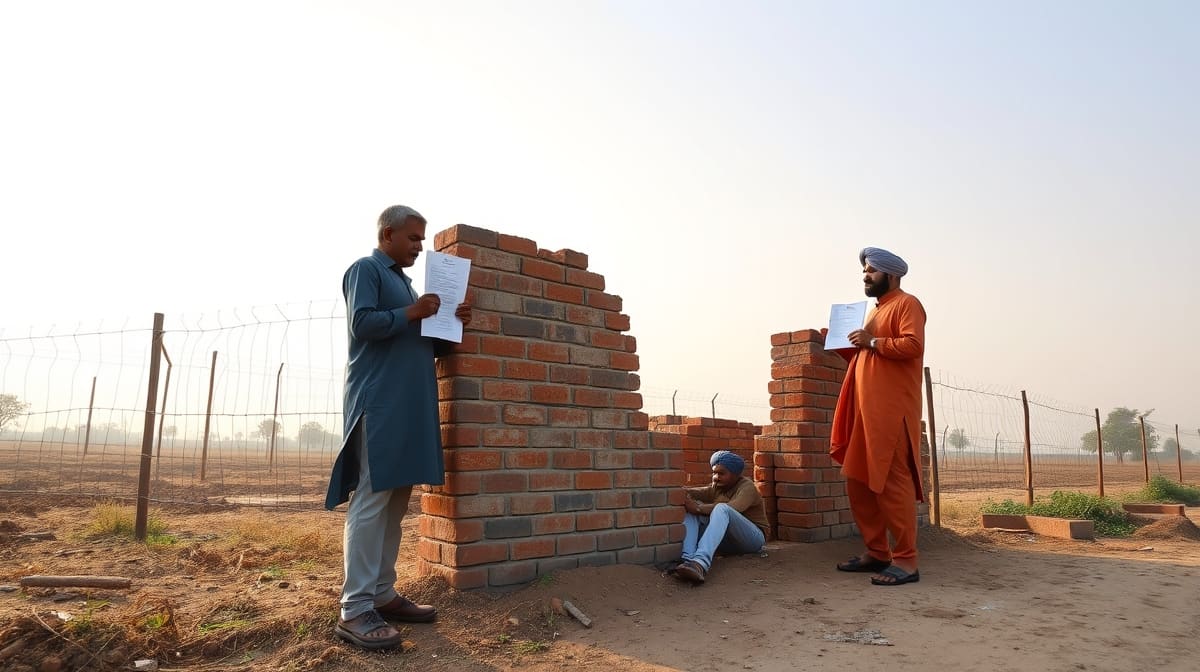
The plaintiff/respondent filed a suit for permanent prohibitory injunction against the defendant/petitioner, seeking to restrain him from raising construction on Khasra No. 436, measuring 00-01-62 hectares (Gair Mumkin Abadi), situated at Hadbast No. 66, Mohal Manghech, Tehsil and District Shimla. The plaintiff claimed joint ownership of the land, as recorded in the Jamabandi for 2012-13, and alleged that the defendant had demolished a portion of the existing house and was attempting to permanently alter the nature of the land to the plaintiff’s detriment.
Key Facts
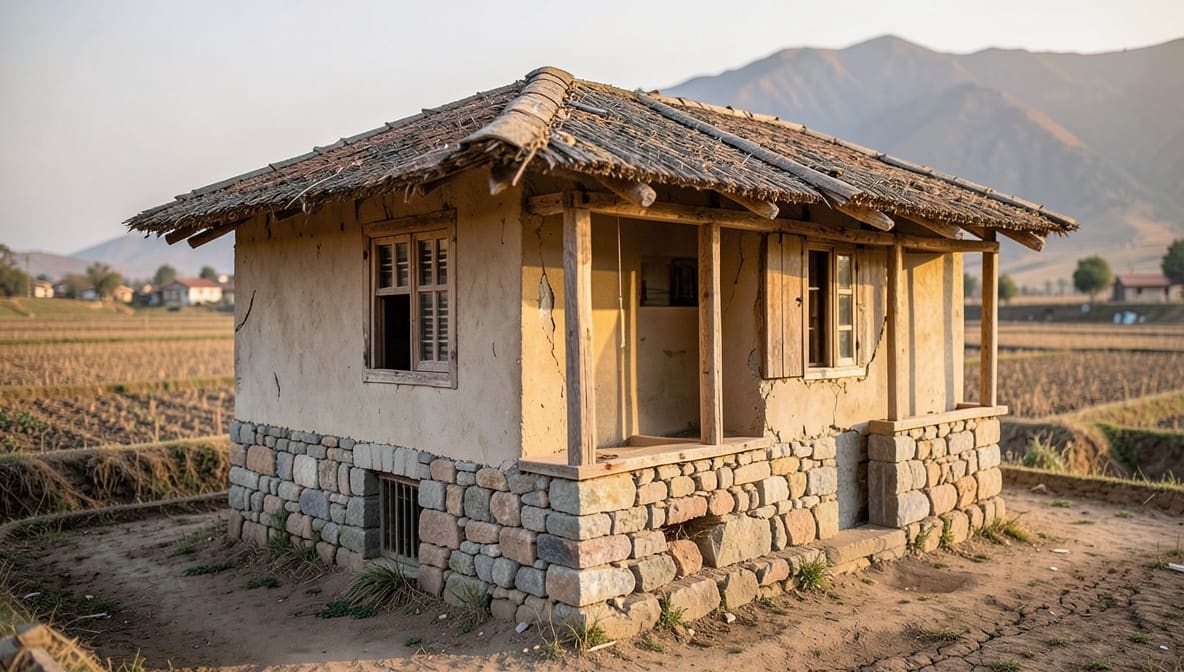
- The ancestral house on the joint land was constructed in 1975 by both parties’ predecessors.
- The defendant began demolishing his portion of the house on 16.12.2023 and commenced reconstruction.
- The plaintiff alleged the defendant was targeting the "best and most valuable portion" of the land.
- The defendant countered that the majority of the new construction (over 99%) was on Khasra Nos. 434 and 435, which are exclusively in his possession.
- Only approximately 15 square meters of the new construction overlapped with Khasra No. 436, which the defendant claimed was within his share of two biswas.
- The revenue record shows Khasra No. 436 as "Gair Mumkin Abadi" and in the exclusive possession of the defendant.
- The total joint land in Khata No. 16/16 exceeds 94 bighas, with multiple co-sharers.
- The defendant stated he and his family have been living in a canopy for one and a half years due to lack of adequate housing.
- The plaintiff and other co-sharers had previously constructed houses on the joint land over the last 30-40 years without objection.
- The plaintiff did not object to construction by his brother (another co-sharer) in 2010.
- The defendant’s construction is not on a new site but on the same ancestral site, consistent with family arrangement.
Procedural History
- 16.12.2023: Defendant commenced demolition and reconstruction on ancestral site.
- Early 2024: Plaintiff filed suit for permanent prohibitory injunction.
- 20.02.2024: Trial Court granted ad-interim injunction under Order 39 Rules 1 and 2 CPC, restraining defendant from construction.
- 02.03.2024: Defendant filed appeal before District Judge, Shimla.
- 14.05.2024: District Judge partly allowed appeal, directed both parties to maintain status quo.
- 22.07.2024: Petitioner filed Writ Petition under Article 227 before Himachal Pradesh High Court.
- 07.04.2026: Petition heard and reserved.
- 29.04.2026: Judgment delivered.
The Parties' Positions
Plaintiff/Respondent: Argued that joint ownership of land prohibits any construction without partition by metes and bounds. Claimed irreparable harm from alteration of land use and loss of structural integrity.
Defendant/Petitioner: Contended that he is in exclusive possession of Khasra Nos. 434, 435, and part of 436 under family arrangement. Asserted that construction is minimal, within his share, and on the same ancestral site. Alleged plaintiff’s lack of clean hands due to prior unchallenged construction by himself and other co-sharers.
Relief Sought
The petitioner sought setting aside of the orders dated 14.05.2024 (District Judge) and 20.02.2024 (Trial Court), dismissal of the plaintiff’s application under Order 39 Rules 1 and 2 CPC, and permission to proceed with construction within his share.
The Legal Issue
Can a co-owner obtain an injunction against another co-owner’s construction on joint land solely on the ground of joint ownership, without proving ouster, prejudice, or diminution in value?
Arguments Presented
For the Appellant/Petitioner
The petitioner’s counsel relied on multiple precedents from the Himachal Pradesh High Court, including Ashok Kapoor v. Murtu Devi, Ramesh Kumar v. Sheetal, and Raj Kumar v. Rakesh Kumar, to argue that mere construction by a co-owner does not amount to ouster or prejudice. He emphasized that the plaintiff had himself constructed on the joint land without objection and selectively targeted only the defendant, thereby failing to come with clean hands. He submitted that the 15 square meters of overlap on Khasra No. 436 was within the defendant’s share and that the defendant faced irreparable hardship due to lack of shelter.
For the Respondent
The respondent’s counsel contended that joint ownership under revenue records prohibits any unilateral construction until partition. He argued that the defendant’s actions altered the nature of the land and threatened structural safety of the plaintiff’s portion. He relied on the trial court’s finding that the plaintiff had a prima facie case and that status quo must be maintained pending final adjudication.
The Court's Analysis
The Court undertook a comprehensive review of its own precedents and established that the grant of injunction against a co-owner is not automatic. It held that the mere fact of joint ownership does not confer a right to restrain another co-owner from construction.
"A co-owner is not entitled to an injunction restraining another co-owner from exceeding his rights in the common property absolutely and simply because he is a co-owner unless any act of the person in possession of the property amounts to ouster, prejudicial or adverse to the interest of the co-owner out of possession."
The Court emphasized that the plaintiff failed to establish any of the three essential conditions for injunction: prima facie case, balance of convenience, and irreparable loss. It noted that the plaintiff did not allege the defendant was exceeding his share, nor did he prove that the construction diminished the value or utility of the property.
The Court further applied the doctrine of clean hands, citing Smt. Kalawati v. Netar Singh and Raj Kumar v. Rakesh Kumar, and observed that the plaintiff had himself constructed on the joint land and remained silent when other co-sharers did the same. The selective targeting of the defendant, without challenging similar acts by others, indicated an ulterior motive.
"The plaintiff has failed to demonstrate that the defendant’s construction on a meager 15 square meters within his own share constitutes any prejudice or ouster. The conduct of the plaintiff smacks of an attempt to pressurize the defendant into abandoning construction on Khasra Nos. 434 and 435."
The Court also upheld the presumption of truth attached to the revenue record, which showed the defendant in exclusive possession of Khasra No. 436. It concluded that the lower courts erred in granting injunction without applying the correct legal principles.
The Verdict
The petition was allowed. The orders dated 14.05.2024 of the District Judge and 20.02.2024 of the Trial Court were set aside. The application under Order 39 Rules 1 and 2 CPC filed by the plaintiff was dismissed. The defendant is permitted to proceed with construction on Khasra No. 436, provided it does not exceed his share of two biswas. The Court clarified that any construction shall remain subject to final adjudication in the pending suit and partition proceedings.
What This Means For Similar Cases
Injunction Against Co-Owners Requires Concrete Harm
- Practitioners must now prove actual ouster, diminution in property value, or material interference with enjoyment to obtain an injunction against a co-owner’s construction.
- Mere assertion of joint ownership is insufficient - courts will require evidence of prejudice, not just theoretical risk.
- Applications under Order 39 CPC must satisfy the triple test: prima facie case, balance of convenience, and irreparable loss.
Clean Hands Doctrine Is Strictly Enforced
- A plaintiff who has previously constructed on joint land without objection cannot later seek to restrain another co-owner.
- Selective litigation targeting one co-owner while ignoring identical acts by others invites adverse inference and dismissal.
- Failure to deny allegations in replication (e.g., para 5 of written statement) will be treated as admission.
Revenue Records Carry Presumptive Weight
- Exclusive possession recorded in revenue records (Jamabandi, Khasra) is a strong indicator of factual ownership, even in joint tenancy.
- Courts will not override revenue records without compelling contrary evidence.
- Family arrangements recorded in settlement operations are legally recognized and bind co-sharers.