The Madhya Pradesh High Court has reaffirmed that quasi-judicial authorities cannot issue orders affecting property rights without recording reasoned findings. In this case, the Collector’s directive to demolish a residential structure was quashed for failing to address prior lawful permissions granted decades earlier, underscoring the constitutional imperative of transparency in administrative action.
Background & Facts
The Dispute
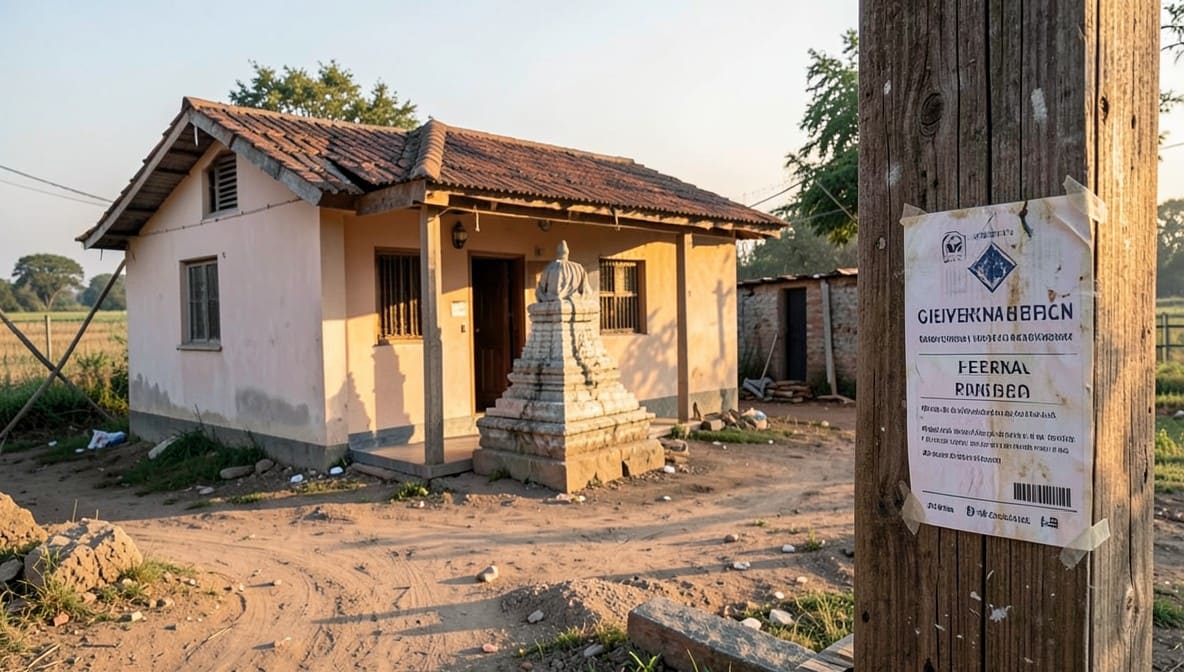
The petitioner, Ramswarup Tiwari, a Pujari of Shri Ramkumarji Mandir in Jatara, District Tikamgarh, sought to construct a small residential house on his ancestral plot adjacent to the temple. He claimed no other residential accommodation and relied on a 1981 order issued by the Sub Divisional Officer, Jatara, granting him permission to construct on the plot under Revenue Case No.10/A/20/80-81. The Municipal Council, Jatara, issued a notice on 28.12.2021 under Sections 187(8) and 223 of the M.P. Municipalities Act, 1961, directing cessation and removal of the construction, alleging encroachment on temple land. The petitioner filed a reply and appealed to the Collector, Tikamgarh.
Key Facts
- The petitioner has served as Pujari of Shri Ramkumarji Mandir for decades and resides near the temple
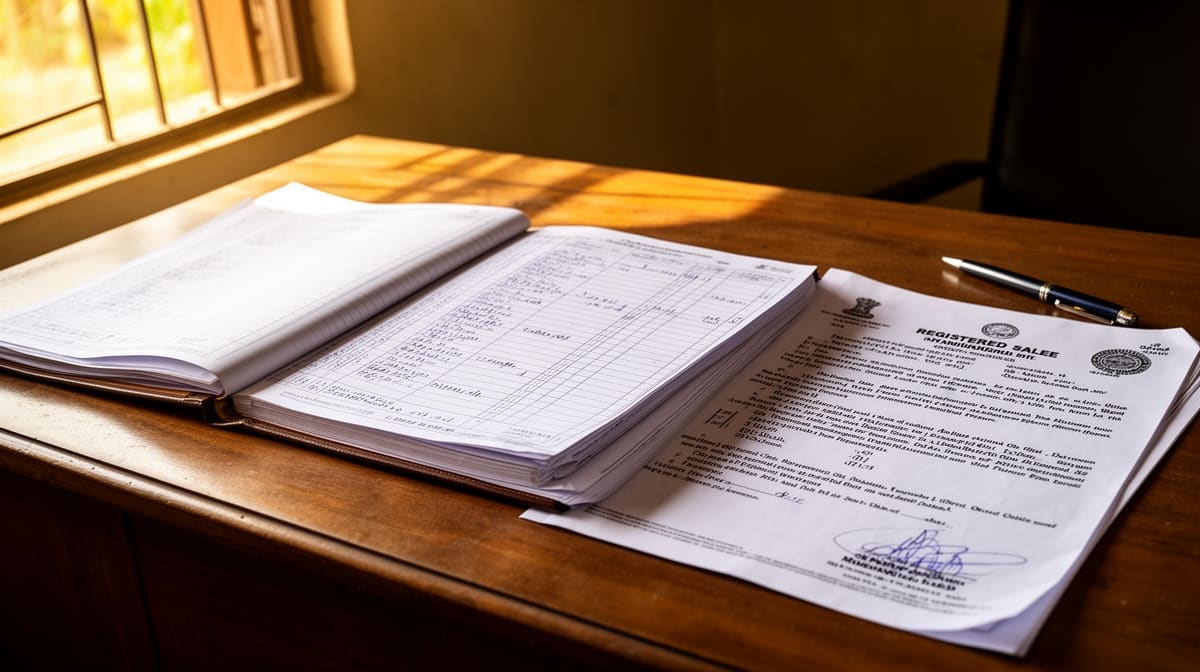
- The Sub Divisional Officer, Jatara, issued a "no objection certificate" and permission to construct on the ancestral plot via order dated 16.05.1981 in Revenue Case No.10/A/20/80-81 (Annexure P-1 and P-2)
- The Municipal Council issued a notice of violation on 28.12.2021 (Annexure P-3)
- The petitioner submitted a written reply on 15.01.2022 (Annexure P-5)
- The Collector, Tikamgarh, initially granted an interim stay but later passed an order on 10.04.2026 (Annexure P-8) directing demolition
- The Collector did not address the 1981 permission or verify whether the construction was on temple land or the petitioner’s ancestral plot
- The State relied on a 2005 civil appeal judgment (Annexure P-6) wherein the court held the petitioner had not established exclusive title over the temple land, but the judgment also acknowledged the disputed plot was not temple property but the petitioner’s ancestral land (para 35)
Procedural History
- 16.05.1981: Sub Divisional Officer, Jatara, grants permission to construct on ancestral plot under Revenue Case No.10/A/20/80-81
- 28.12.2021: Municipal Council, Jatara, issues notice under Sections 187(8) and 223 of the M.P. Municipalities Act, 1961
- 15.01.2022: Petitioner files written reply to the notice
- 10.04.2026: Collector, Tikamgarh, passes impugned order directing demolition without addressing prior permission or verifying land ownership
- 14.05.2026: Writ Petition No.14504 of 2026 filed before the High Court of Madhya Pradesh at Jabalpur
Relief Sought
The petitioner sought:
- Quashing of the Collector’s order dated 10.04.2026
- A writ of mandamus restraining respondents from interfering with construction or taking coercive action without due process
- Any other relief deemed fit
The Legal Issue
The central question was whether a quasi-judicial authority, in issuing an order that adversely affects property rights, is obligated to record reasoned findings addressing prior lawful permissions, and whether failure to do so renders the order legally unsustainable.
Arguments Presented
For the Petitioner
Learned counsel argued that the Collector’s order was arbitrary and violative of natural justice because it ignored the 1981 permission granted by a competent revenue authority. The petitioner relied on the 2005 civil appeal judgment, which explicitly recognized the disputed land as his ancestral property, not temple property. The Collector failed to reconcile this finding or explain why the prior permission was invalid. The absence of reasons rendered the order non-est in law.
For the Respondent
The State relied on the 2005 civil judgment to argue that the petitioner had not established exclusive title over the temple land. However, the State did not contest the existence or validity of the 1981 permission, nor did it provide any evidence that the construction was on government or temple land. The argument was essentially that the petitioner’s claim was unproven, without addressing the procedural illegality of the Collector’s reasoning.
The Court's Analysis
The Court examined the principles governing administrative and quasi-judicial decision-making, particularly the requirement to record reasons. It cited M/s. Kranti Associates Pvt. Ltd. v. Masood Ahmed Khan (2010) 9 SCC 496, emphasizing that "reasons have virtually become as indispensable a component of a decision making process as observing principles of natural justice."
"Reasons reassure that discretion has been exercised by the decision maker on relevant grounds and by disregarding extraneous considerations."
The Court noted that the Collector’s order was silent on the 1981 permission, which was a material document submitted by the petitioner. The failure to consider or refute this document rendered the order devoid of material and legal foundation. The Court observed that the Collector did not conduct any verification of land records or survey to establish that the construction was on temple or government land.
The Court further held that the 2005 civil judgment, while denying the petitioner title over the temple land, had explicitly recognized the disputed plot as his ancestral property. The Collector’s order ignored this critical finding, thereby committing a manifest error of law.
The Court concluded that the absence of reasoning was not a mere procedural lapse but a substantive violation of the doctrine of fairness and transparency. "A pretence of reasons or `rubber-stamp reasons' is not to be equated with a valid decision making process."
The Verdict
The petition succeeded. The Court set aside the Collector’s order dated 10.04.2026. The Collector is directed to reconsider the appeal after granting the petitioner a fresh hearing and specifically examining the 1981 permission order (Revenue Case No.10/A/20/80-81) and all documents submitted by the petitioner. The notices dated 28.12.2021 issued by the Municipal Council and the Sub Divisional Officer are stayed until the Collector passes a reasoned order on merit. The Collector shall dispose of the appeal within eight weeks from the date of this order.
What This Means For Similar Cases
Reasoned Orders Are Non-Negotiable
- Practitioners must challenge administrative orders that fail to address material documents submitted by the party
- Any order that ignores prior permissions, especially from revenue authorities, is vulnerable to quashing under Article 226
- The burden is on the authority to explain why a prior lawful act is being overridden
Quasi-Judicial Bodies Cannot Act as Rubber Stamps
- Authorities must engage with evidence, not merely recite statutory provisions
- In land disputes involving ancestral property, courts will scrutinize whether the authority verified ownership through revenue records
- Failure to reconcile conflicting judicial findings (e.g., the 2005 civil judgment) constitutes a jurisdictional error
Stay of Demolition Orders Is Warranted Pending Reconsideration
- Where a construction has been permitted under a valid order, interim demolition is impermissible without a reasoned reconsideration
- Courts will stay coercive action if the legality of the underlying permission remains unaddressed
- This precedent strengthens the position of individuals constructing on ancestral land with historical permissions