The Punjab and Haryana High Court upheld the National Consumer Disputes Redressal Commission’s order directing New India Assurance Co. Ltd to pay the balance of a marine cargo claim, clarifying that a discharge voucher signed under protest does not constitute a full and final settlement.
Background & Facts
The Dispute
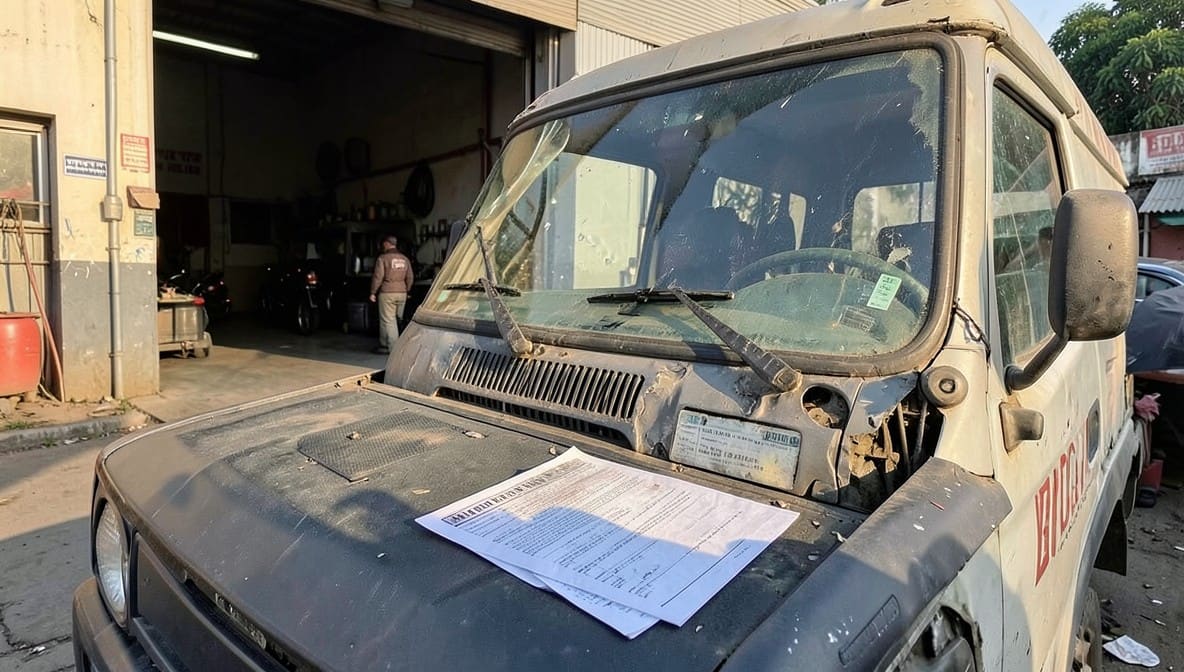
The petitioner, New India Assurance Company Ltd, issued a marine cargo policy to the respondent, M/S Nector Life Sciences Ltd, covering a shipment of 18,000 kg of menthol crystal from India to the United States for the period 06.05.2011 to 05.05.2012. The cargo was packed in 720 fiber drums. Upon arrival, several drums were found filled with sand, some were damaged and a few were missing.
Key Facts
- 06.05.2011 - 05.05.2012: Policy period for the marine cargo insurance.
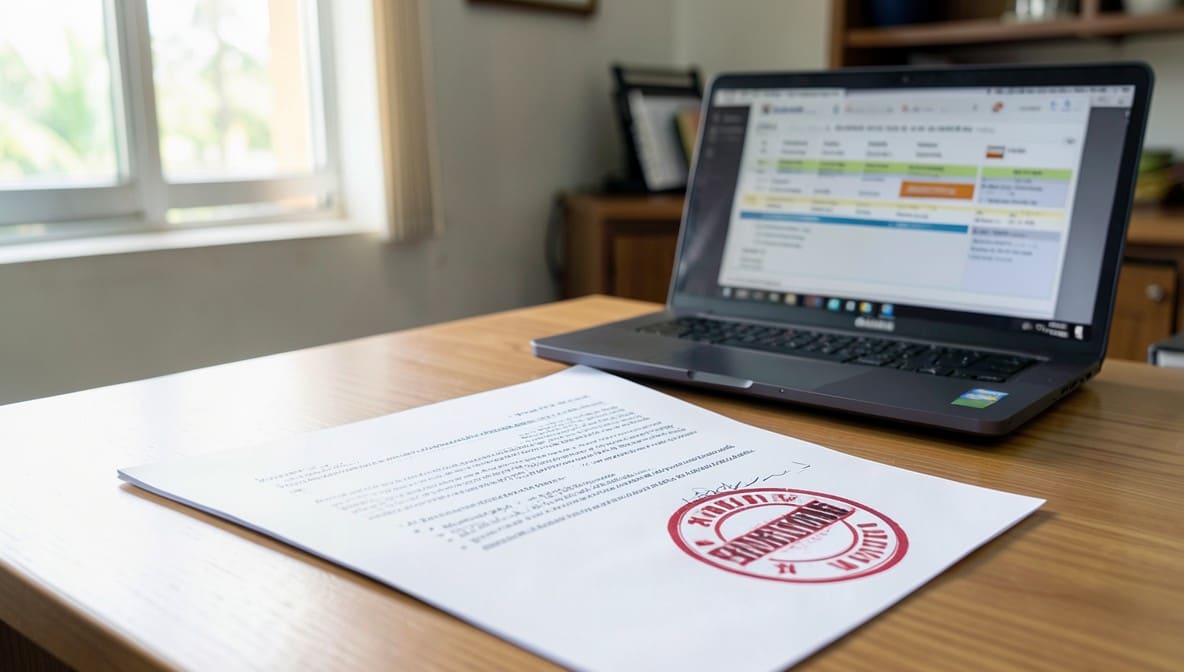
- 19.10.2012: The parties executed a discharge voucher in which the respondent accepted Rs.67,48,595 as part payment, representing 75 % of the assessed loss.
- 12.10.2012, 23.10.2012, 26.10.2012: Emails exchanged wherein the respondent indicated that the acceptance of the 75 % payment was "under protest" and objected to the deduction of the remaining 25 %.
- 09.03.2017: State Consumer Disputes Redressal Commission (SCDRC) passed an order directing the insurer to pay the balance amount of Rs.22,49,531 with interest at 9 % per annum from the date of payment of the 75 % claim, along with compensation of Rs.2,00,000 and costs of Rs.20,000.
- 13.02.2025: National Consumer Disputes Redressal Commission (NCDRC) affirmed the SCDRC order and imposed an additional cost of Rs.25,000 on the petitioner.
- 20.08.2026: Petition filed under Article 226 of the Constitution seeking quash of the NCDRC order dated 13.02.2025.
- 21.08.2026: Judgment pronounced by Hon’ble Justices Suvir Sehgal and Deepinder Singh Nalwa.
Procedural History
- 09.03.2017: SCDRC order directing payment of balance amount, interest, compensation and costs.
- 13.02.2025: NCDRC upheld SCDRC order and added Rs.25,000 cost on petitioner.
- 20.08.2026: Petition under Article 226 filed in the Punjab and Haryana High Court.
- 21.08.2026: High Court delivered judgment dismissing the petition.
Parties' Positions
- Petitioner (Insurer): Relied on United India Insurance Co. Ltd. v. Ajmer Singh (1999) 6 SCC 400, arguing that the discharge voucher constituted an accord and satisfaction, thereby extinguishing any further liability. Contended that the consumer complaint was not maintainable.
- Respondent (Insured): Asserted that the discharge voucher was signed under protest and duress, thus not a genuine full and final settlement. Sought payment of the remaining 25 % of the loss, compensation, and costs.
Relief Sought
The petitioner sought quash of the NCDRC order dated 13.02.2025 and a declaration that the insurer was not liable for the balance amount.
The Legal Issue
Whether a discharge voucher signed under protest can be treated as an accord and satisfaction that bars the insurer from paying the balance of a marine cargo claim, and whether the consumer complaint before the NCDRC is maintainable under the Consumer Protection Act, 1986.
Arguments Presented
For the Petitioner
- Relied on United India Insurance Co. Ltd. v. Ajmer Singh (1999) 6 SCC 400, contending that once a discharge voucher is executed, the contract stands discharged by accord and satisfaction.
- Submitted that the consumer forum lacks jurisdiction over a pure insurance claim, invoking the principle that insurance disputes are civil matters.
- Emphasised that the respondent’s emails merely expressed dissatisfaction but did not invalidate the voucher.
For the Respondent
- Cited SBI General Insurance Co. Ltd. v. Krish Spinning (2024) 12 SCC 1, emphasizing that a discharge voucher executed under economic compulsion or protest does not constitute free consent and therefore cannot extinguish liability.
- Argued that the Consumer Protection Act, 1986 is applicable because the insurer’s refusal to pay the balance amounts to deficiency in service.
- Highlighted the respondent’s email dated 23.10.2012 explicitly rejecting the deduction of the remaining 25 % as "unacceptable," demonstrating lack of genuine assent.
The Court's Analysis
The Court began by examining the nature of a discharge voucher under Indian jurisprudence. It noted that United India Insurance recognized a discharge voucher as evidence of an accord and satisfaction only when it is executed voluntarily and without coercion. The Court then turned to SBI General Insurance Co. Ltd. v. Krish Spinning, where the Supreme Court held that a voucher signed under economic compulsion does not bar the insurer from meeting the residual liability.
"A discharge voucher executed under protest or duress cannot be said to be out of free will; clear documentation of consent would invalidate the plea of accord and satisfaction."
The Court observed that the respondent’s email dated 23.10.2012, sent after the execution of the voucher, expressly rejected the deduction of the remaining 25 % and described the acceptance as "under protest." This correspondence demonstrated that the consent was not free, thereby negating the petitioner's reliance on United India Insurance.
Next, the Court addressed the maintainability of the consumer complaint. It held that the Consumer Protection Act, 1986 applies to insurance contracts where the insurer’s service is deficient, citing the statutory definition of a consumer. The Court rejected the petitioner's contention that the dispute was purely civil, emphasizing that the NCDRC is a specialised forum for consumer grievances and that its jurisdiction was correctly invoked.
Finally, the Court examined whether there was any jurisdictional error, perversity, or illegality in the NCDRC’s order. Finding none, it concluded that the High Court could not interfere with the NCDRC’s reasoned order absent a clear breach of law. Consequently, the petition was dismissed, and the NCDRC order was upheld.
The Verdict
The petition was dismissed. The High Court upheld the NCDRC order dated 13.02.2025, directing New India Assurance Co. Ltd to pay the balance amount of Rs.22,49,531 with interest at 9 % per annum from the date of payment of the 75 % claim, Rs.2,00,000 compensation, and costs of Rs.20,000. An additional cost of Rs.25,000 was imposed on the petitioner for the appeals.
What This Means For Similar Cases
Discharge Vouchers Signed Under Protest Do Not Bar Liability
- Courts will scrutinise the circumstances surrounding a discharge voucher; a protest or duress allegation can defeat the accord-and-satisfaction defence.
- Insurers should obtain unequivocal, unpressured consent before treating a voucher as a full settlement.
Consumer Complaints Against Insurers Remain Viable
- The Consumer Protection Act, 1986 applies to insurance services; deficiencies in claim settlement can be pursued in consumer forums.
- Parties cannot sidestep consumer jurisdiction by characterising the dispute as purely civil.
High Courts Will Not Overturn NCDRC Orders Without Jurisdictional Fault
- Appeals to higher courts must demonstrate a clear error of law, jurisdiction, or perversity; mere disagreement with the quantum of award is insufficient.
- Practitioners should focus on establishing procedural or legal infirmities rather than re-arguing factual assessments already made by the NCDRC.