A landmark public interest litigation before the Jharkhand High Court has established that entities operating large-scale coal stockpiles bear absolute liability for environmental harm caused by spontaneous combustion and resultant air pollution. The judgment clarifies that statutory obligations under environmental law cannot be evaded by blaming third parties, setting a critical precedent for industrial accountability in coal-rich regions.
Background & Facts
The Dispute
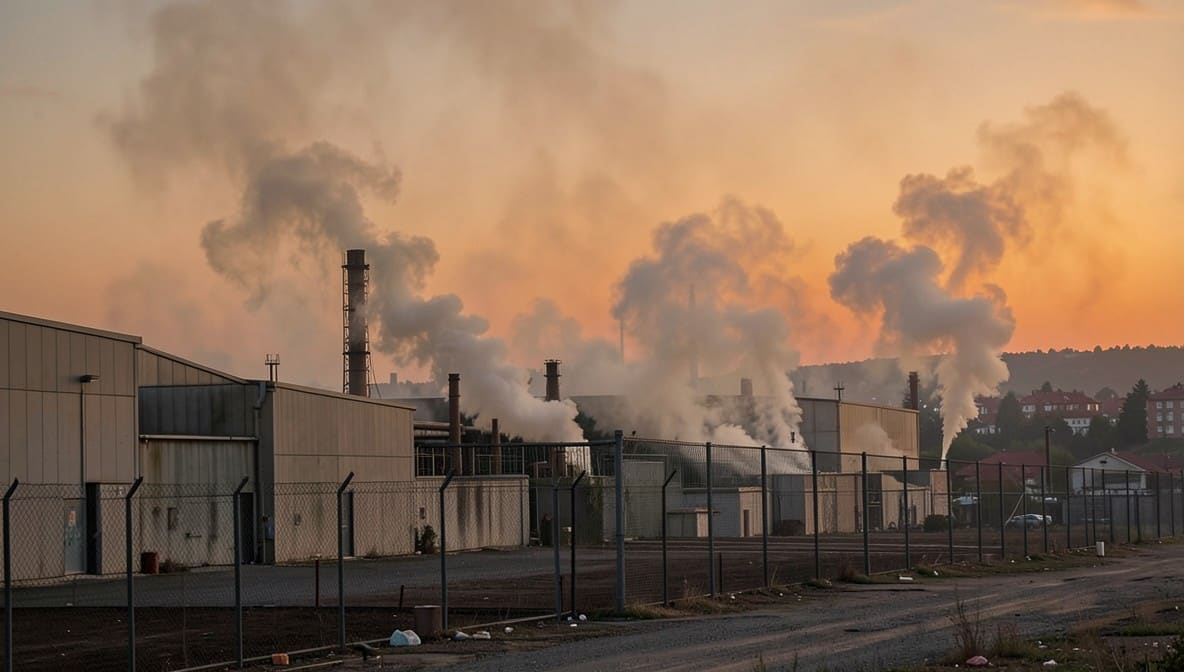
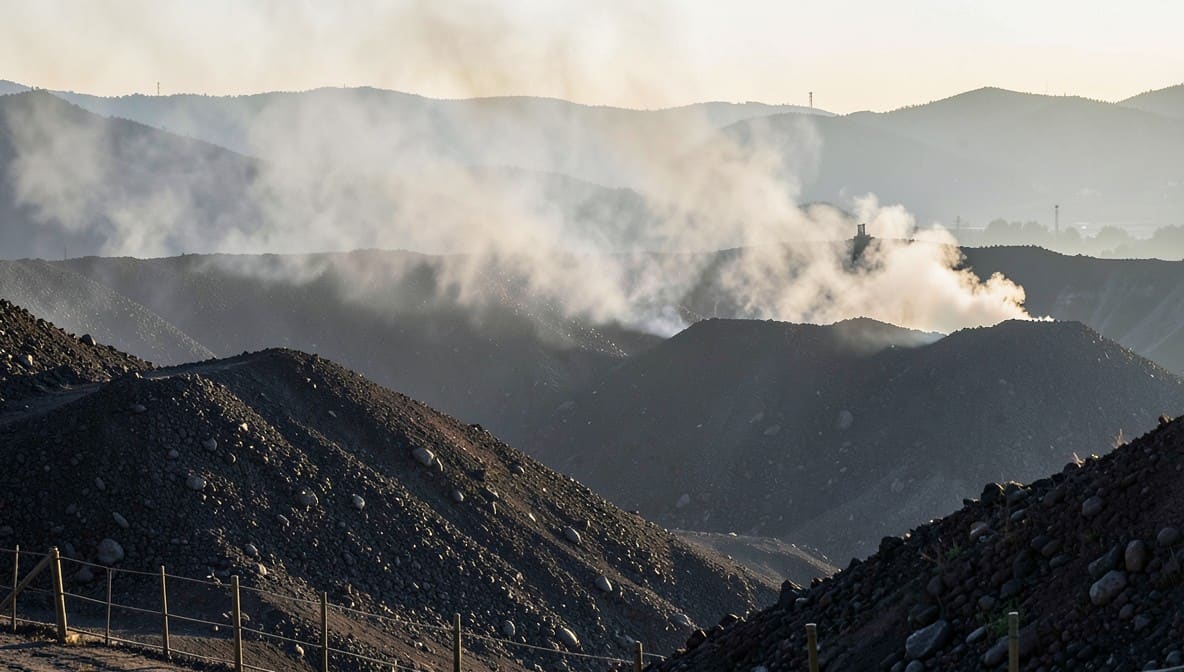
The petitioner, Birendar Kumar Oraon, a resident of Tetariyakhad, Latehar district, filed a public interest litigation seeking urgent intervention to address uncontrolled coal fires in the Tetariyakhad Open Cast Project (OCP), operated by Central Coalfields Limited (CCL). The fires, originating from massive coal stockpiles within CCL’s leased area, have been emitting toxic gases - including Sulphur Dioxide, Nitrogen Dioxide, Carbon Monoxide, and Carbon Dioxide - posing severe health and environmental risks to nearby villagers.
Key Facts
- The coal stockyard spans approximately 900 metres in length, 70 metres in width, and 12.5 metres in height
- Coal has a natural incubation period of 2 - 3 months, leading to spontaneous heating and combustion
- The fires have persisted for months, with visible smoke and ash affecting air quality in surrounding villages
- The petitioner submitted photographic evidence documenting the scale of the fires and their proximity to residential areas
- Respondents 7 to 10 (CCL officials) acknowledged in their affidavit that the stockpiling is "detrimental to business" and "poses severe environmental impact and is hazardous"
- Respondent No. 11 (M/s Pranab Naman Minerals Pvt. Ltd.) is alleged to have dumped coal that also contributes to the fire hazard
Procedural History
- 11.05.2026: Writ Petition (PIL) No. 1411 of 2026 filed before the Jharkhand High Court
- 11.05.2026: Hearing conducted before the Division Bench of Chief Justice M.S. Sonak and Justice Rajesh Shankar
- 11.05.2026: Affidavit filed by Mr. Vinayak Sawalkar, Senior Manager (HR), Rajhara Area, on behalf of CCL (Respondents 7 - 10)
- 11.05.2026: Court examined photographs, affidavit, and oral submissions
The Parties' Positions
Petitioner: Argued that the persistent coal fires constitute a grave public health emergency and violate the right to a clean environment under Article 21 of the Constitution. Demanded immediate cessation of burning, removal of stockpiles, and enforcement of environmental norms.
Respondents 7 - 10 (CCL): Admitted the existence of coal stockpiles and spontaneous combustion but claimed mitigation measures were in place: deployment of diesel pump sets, installation of new pipelines, and deployment of contractual manpower for firefighting. Attempted to deflect responsibility to truck owners, drivers, and alleged obstruction by villagers.
Respondents 1 - 2, 5 - 6 (State, DC, SP): Did not contest the factual allegations but deferred responsibility to CCL and the Pollution Control Board.
Respondent 3 - 4 (Pollution Control Board): Did not appear or file any response.
Relief Sought
The petitioner sought:
- Direction to CCL (Respondents 7 - 10) to immediately extinguish all coal fires
- Direction to the Pollution Control Board (Respondents 3 - 4) to enforce compliance and issue binding directions
- Direction to the State (Respondents 1 - 2) to supervise the entire operation of coal lifting and fire mitigation
- Direction to remove all piled coal stock from the area to prevent future hazards
The Legal Issue
The central question was whether an entity operating a large-scale coal stockpile that causes environmental harm through spontaneous combustion bears absolute liability under environmental law, even when mitigation efforts are partially undertaken, and whether it can evade responsibility by blaming contractors or local communities.
Arguments Presented
For the Petitioner
The petitioner’s counsel relied on the doctrine of absolute liability as established in M.C. Mehta v. Union of India (Oleum Gas Leak Case), arguing that hazardous industries engaged in inherently dangerous activities cannot escape liability by claiming due diligence. The persistent emission of toxic gases, the scale of the stockpile, and the proximity to habitation rendered CCL strictly liable. The petitioner emphasized that Article 21 guarantees the right to life with dignity, which includes protection from environmental degradation.
For the Respondent
CCL’s counsel conceded the existence of fires but contended that mitigation measures - including diesel pump sets, pipelines, and dedicated firefighting staff - demonstrated due care. They argued that external factors such as obstruction by villagers and actions of third-party transporters contributed to the delay in removal and should be considered in apportioning responsibility.
The Court's Analysis
The Court rejected CCL’s attempt to shift blame to contractors, truck drivers, or villagers. It emphasized that the coal stockpile lies entirely within CCL’s leased area and is a direct consequence of its industrial operations. The Court held that the principle of absolute liability applies unequivocally, citing M.C. Mehta v. Union of India to affirm that enterprises engaged in hazardous activities must bear full responsibility for all resultant harm, regardless of fault or negligence.
"Therefore, respondents 7 to 10, by applying the principle of absolute liability, are responsible for the piling up and the dangers or hazards that accompany it. Therefore, respondents 7 to 10, without trying to pass the blame on to others, must assume full responsibility for such piling up and the dangers and hazards that accompany it."
The Court noted that while CCL had taken some mitigating steps, these were insufficient to discharge its legal duty. The mere existence of firefighting equipment does not absolve the operator of the obligation to prevent the hazard at its source. The Court further held that the Pollution Control Board, as the statutory authority under the Environment (Protection) Act, 1986, has a non-delegable duty to monitor and enforce compliance. Its failure to act, even in the face of clear evidence, constitutes dereliction of statutory duty.
The Court also underscored that public interest litigation is not a forum for litigation by proxy. The State and regulatory bodies cannot defer responsibility to each other. Each entity must act within its mandate: CCL to extinguish fires, the PCB to enforce, and the State to supervise.
The Verdict
The petition was disposed of with the following directions:
- Respondents 7 to 10 (Central Coalfields Ltd.) must take all emergent and necessary steps to extinguish all existing coal fires immediately
- Respondents 7 to 10 must assume full responsibility for the coal stockpile and all associated hazards, without shifting blame to contractors, transporters, or villagers
- The Pollution Control Board (Respondents 3 - 4) must maintain constant vigil over the area and issue binding directions to ensure compliance
- The State (Respondents 1 - 2) must supervise the entire operation of coal lifting and fire mitigation in the public interest
- All parties must act without delay to prevent recurrence
No costs were awarded.
What This Means For Similar Cases
Absolute Liability Applies to Industrial Stockpiles
- Practitioners must now argue that any entity storing hazardous materials - coal, chemicals, or waste - in large quantities is strictly liable for environmental harm, irrespective of mitigation efforts
- The burden shifts entirely to the operator to prove that the hazard has been eliminated, not merely managed
- This precedent extends beyond coal to include fly ash dumps, slag heaps, and other industrial stockpiles
Regulatory Bodies Cannot Remain Passive
- Pollution Control Boards must proactively monitor high-risk sites and issue enforceable directions under Section 5 of the Environment (Protection) Act, 1986
- Silence or inaction by the PCB in the face of documented pollution constitutes a violation of statutory duty
- PILs can now be used to compel regulatory enforcement, not just to direct private actors
Blame-Shifting Is Legally Invalid
-
Claims that third parties (contractors, transporters, villagers) caused or exacerbated the hazard are legally irrelevant when the source lies within the operator’s premises
-
Courts will not permit industrial entities to evade liability by invoking external factors
-
Operators must design systems that are resilient to external interference
-
Practitioners should cite this judgment when challenging environmental negligence in coal mining, thermal power, and mineral processing sectors
-
Evidence of stockpile size, proximity to habitation, and emission data must be systematically documented in PILs
-
The judgment reinforces that environmental rights under Article 21 are enforceable against both private corporations and state agencies