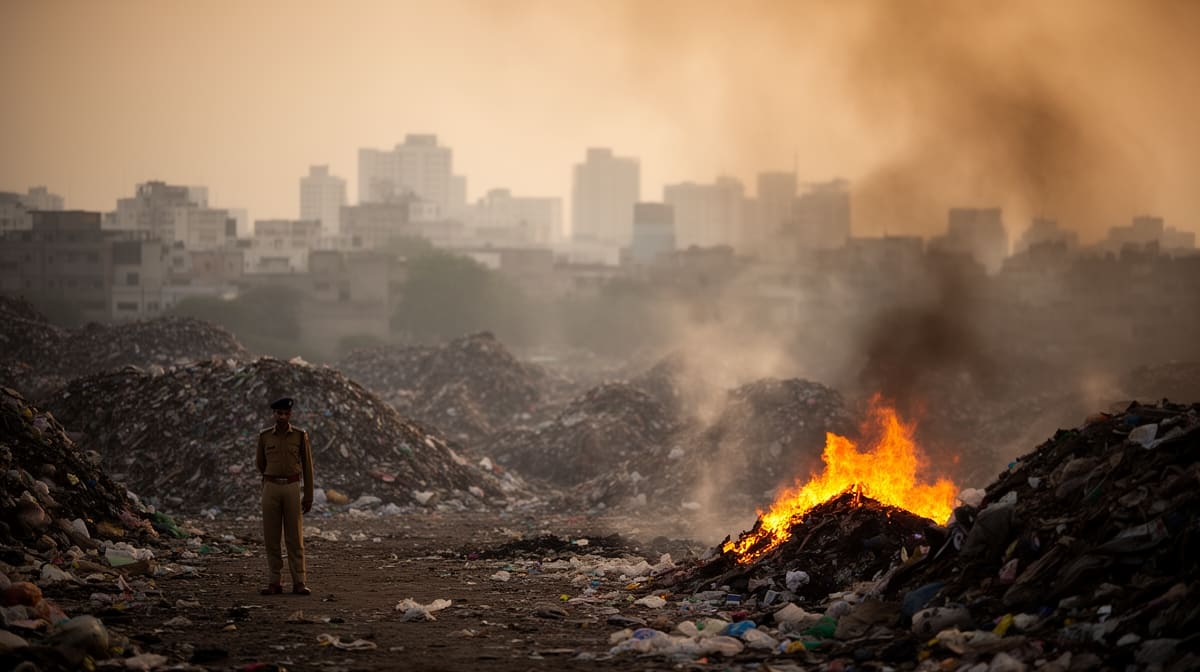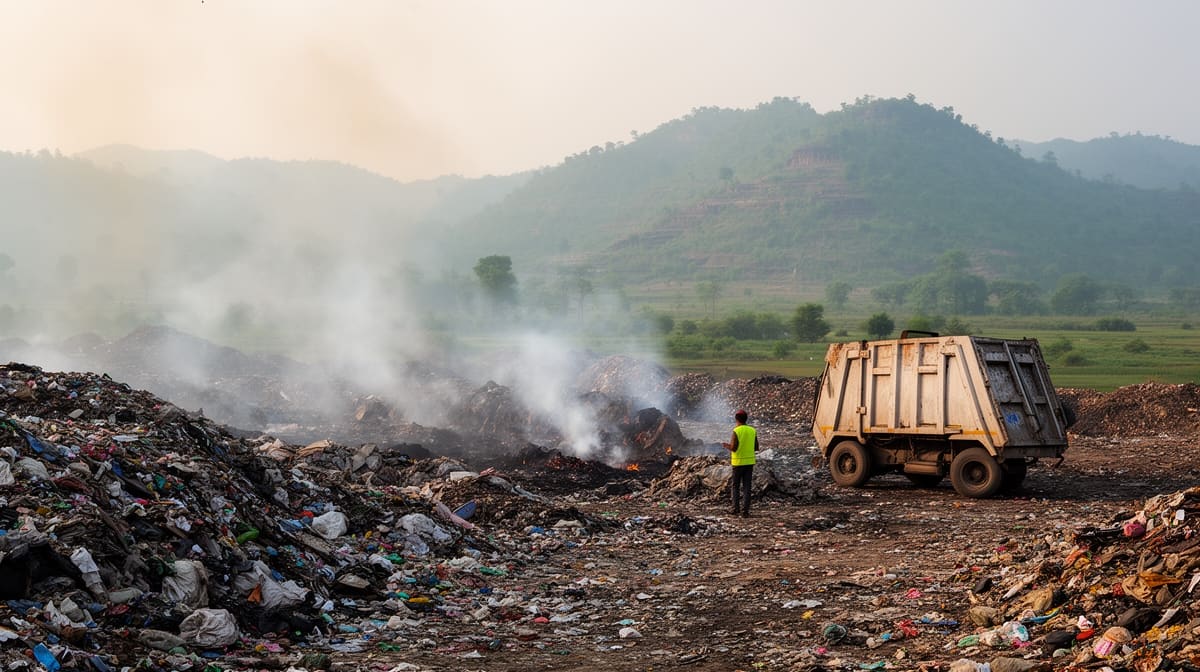
A major fire at a hazardous waste facility in Pithampur, Madhya Pradesh, has triggered a landmark intervention by the National Green Tribunal, establishing clear liability for environmental damage and mandating a comprehensive technical inquiry. The Tribunal’s order underscores the statutory obligations of waste occupiers and the duty of regulatory bodies to enforce environmental safeguards, setting a precedent for industrial accountability in India’s hazardous waste regime.
Background & Facts
The Dispute
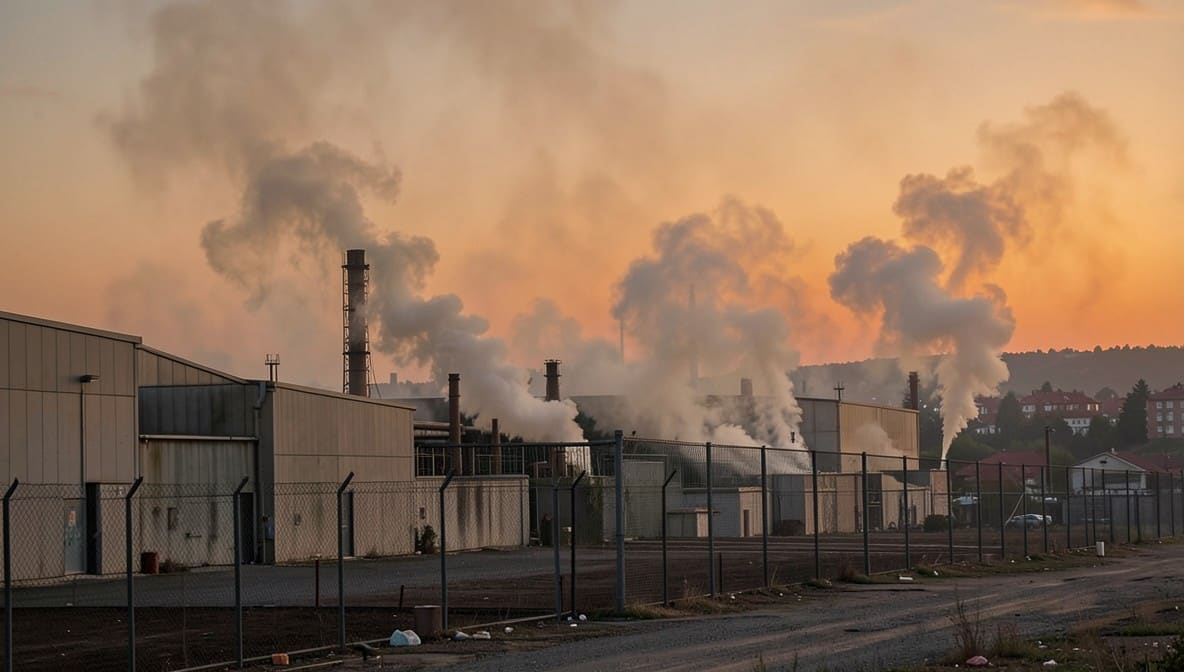
The applicant, Sleeploop India Pvt. Ltd., an industrial unit located adjacent to Respondent No. 9’s premises in the Pithampur Industrial Area, District Dhar (Madhya Pradesh), filed this Original Application alleging severe environmental harm caused by a fire incident on 21.04.2026. The fire, which occurred at the facility of Respondent No. 9, involved the uncontrolled burning of large volumes of hazardous and industrial waste, resulting in persistent toxic emissions that disrupted the applicant’s operations and endangered public health.
Key Facts
- Respondent No. 9 operates a 4.30 lakh square foot facility engaged in collection, storage, treatment, recycling, and disposal of hazardous waste including e-waste, plastic waste, pharmaceutical waste, metal scrap, and liquid industrial residues.
- The facility is alleged to hold authorizations for handling substantial quantities of hazardous waste under the Hazardous and Other Wastes (Management and Transboundary Movement) Rules, 2016.
- The fire on 21.04.2026 led to continuous release of toxic smoke and fumes, causing respiratory distress, nausea, vomiting, eye and throat irritation among workers in the vicinity.
- Sleeploop India’s operations were suspended immediately after the fire due to unsafe air quality, resulting in estimated financial losses of approximately Rs. 8 Crores.
- The applicant alleges chronic non-compliance with environmental norms, including open dumping, foul odour, and absence of proper containment systems.
- The facility is suspected to be operating without mandatory Environmental Clearance under Item 7(d) of the EIA Notification, 2006, which requires clearance for Common Hazardous Waste Treatment, Storage and Disposal Facilities (TSDFs).
- The Central Pollution Control Board’s January 2016 Guidelines on Environmental Liabilities explicitly recognize fire incidents involving hazardous waste as a primary risk scenario and impose strict liability on occupiers, transporters, and operators.
Procedural History
- 21.04.2026: Major fire incident at Respondent No. 9’s facility in Pithampur Industrial Area.
- 12.05.2026: Original Application No. 112/2026(CZ) filed before the National Green Tribunal, Central Zone Bench, Bhopal.
- 12.05.2026: Tribunal issued notice to respondents and constituted a technical committee for environmental assessment.
- 29.07.2026: Next hearing date set for review of committee report and responses.
The Parties' Positions
Applicant (Sleeploop India Pvt. Ltd.):
- Alleges direct economic and operational harm due to toxic emissions.
- Claims violation of Hazardous and Other Wastes (Management and Transboundary Movement) Rules, 2016, particularly Sections 4 and 8.
- Cites CPCB Guidelines to establish strict liability of occupier for fire-related environmental damage.
- Demands environmental compensation, remediation, and regulatory enforcement.
Respondents (Union of India & Ors.):
- Did not appear or file any response prior to the hearing.
- No counter-submissions were presented before the Tribunal.
Relief Sought
- Immediate cessation of operations at Respondent No. 9’s facility pending compliance.
- Environmental compensation for financial losses suffered by the applicant.
- Scientific assessment of environmental damage, including groundwater and soil contamination.
- Inquiry into validity of environmental clearances and compliance with lease conditions.
- Enforcement of liability under CPCB Guidelines and Hazardous Waste Rules, 2016.
The Legal Issue
The central question was whether the occupier of a hazardous waste facility is strictly liable for environmental damage arising from a fire incident, and whether regulatory authorities have a statutory duty to enforce compliance with the Hazardous and Other Wastes (Management and Transboundary Movement) Rules, 2016, particularly when operations may be conducted without mandatory Environmental Clearance.
Arguments Presented
For the Appellant/Petitioner
The applicant relied on Section 4 and Section 8 of the Hazardous and Other Wastes (Management and Transboundary Movement) Rules, 2016, to establish that the occupier bears absolute responsibility for safe handling, minimization, and disposal of hazardous waste. It further invoked the Central Pollution Control Board’s January 2016 Guidelines, which explicitly classify fire incidents as a primary risk scenario and impose liability on occupiers for all environmental damages caused by improper handling. The applicant argued that the failure to implement emergency response measures, as mandated by the Guidelines, constitutes a statutory violation. It also contended that operation of a TSDF without Environmental Clearance under the EIA Notification, 2006, renders the entire activity illegal.
For the Respondent/State
No arguments were presented by the respondents, as no reply was filed and no representative appeared before the Tribunal.
The Court's Analysis
The Tribunal found the applicant’s allegations prima facie credible and grounded in statutory obligations. It emphasized that Section 4(2) of the Hazardous Waste Rules, 2016, imposes a non-delegable duty on the occupier to ensure environmentally sound management of hazardous waste. The Tribunal noted that the CPCB Guidelines, though not statutory, are authoritative interpretations issued under the Environment (Protection) Act, 1986, and carry significant weight in determining liability.
"The occupier, importer, transporter and operator of the facility shall be liable for all damages caused to the environment or third party due to improper handling of the hazardous wastes or disposal of hazardous wastes."
The Tribunal held that the occurrence of a fire involving hazardous waste, as explicitly recognized in the CPCB Guidelines, triggers automatic liability. The absence of emergency response measures, containment, or remediation post-incident further aggravates the violation. The Tribunal also observed that the facility’s alleged operation since 2020-2021 without Environmental Clearance under Item 7(d) of the EIA Notification, 2006, raises serious questions about regulatory oversight by MPSEIAA and MPPCB.
The Tribunal rejected the notion that financial loss alone is dispositive, instead focusing on the broader environmental harm and systemic regulatory failure. It held that the scale of the incident, the persistence of emissions, and the potential for groundwater contamination necessitate a scientific, multi-disciplinary assessment.
The Verdict
The applicant succeeded. The Tribunal directed the constitution of a technical committee comprising representatives from the Ministry of Environment, Forest and Climate Change; CPCB; Central Ground Water Board; and State Pollution Control Board to conduct a comprehensive environmental impact assessment. The committee is mandated to evaluate the date of occurrence, extent of environmental damage, impact on property and human health, and potential groundwater and soil contamination. The District Collector of Dhar and the Director of Madhya Pradesh Industrial Development Corporation are directed to conduct an inquiry into the validity of environmental clearances and compliance with lease conditions. The facility’s operations are to be suspended pending compliance. The matter is listed for hearing on 29.07.2026.
What This Means For Similar Cases
Strict Liability for Hazardous Waste Fires Is Now Clear
- Practitioners can now invoke CPCB Guidelines to establish absolute liability of occupiers for fire-related environmental damage, even without proof of negligence.
- Claims for compensation under environmental torts can be framed with greater precision, citing the Guidelines as binding operational standards.
Regulatory Non-Compliance Triggers Collective Accountability
- Industrial units operating without EIA clearance under Item 7(d) are now exposed to immediate suspension and enforcement action.
- State Pollution Control Boards and regional authorities face heightened scrutiny for failure to monitor TSDFs.
Environmental Assessment Must Be Scientific and Multi-Disciplinary
- Future applications involving industrial accidents must demand technical assessments from CGWB, CPCB, and state agencies - not merely affidavits.
- Groundwater and soil testing must be explicitly requested as part of remedial orders.
Emergency Response Is Not Optional
- Failure to implement emergency protocols post-incident is now a standalone violation under the Hazardous Waste Rules and CPCB Guidelines.
- Legal notices to occupiers must now include demands for immediate containment and remediation, not just compensation.