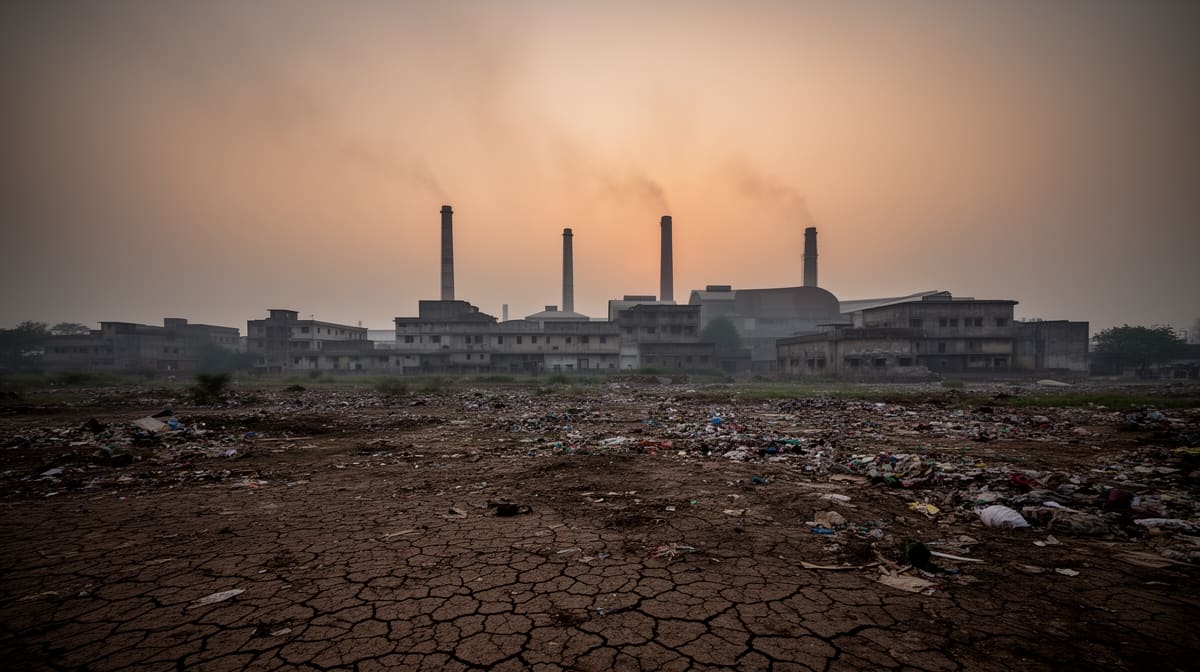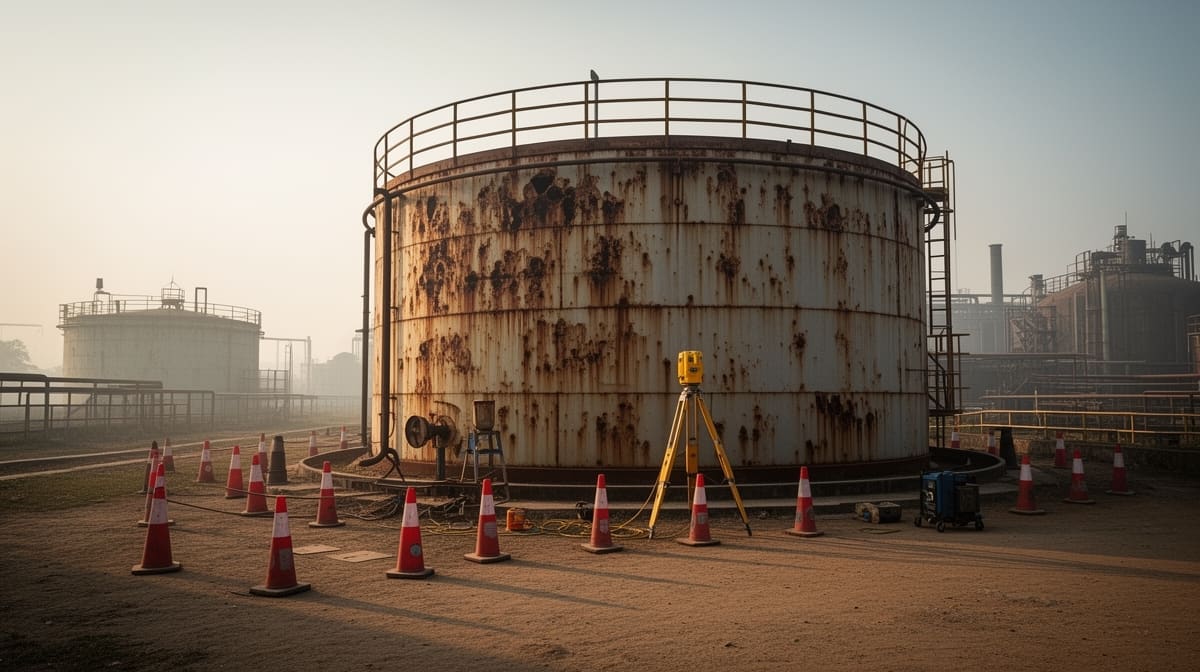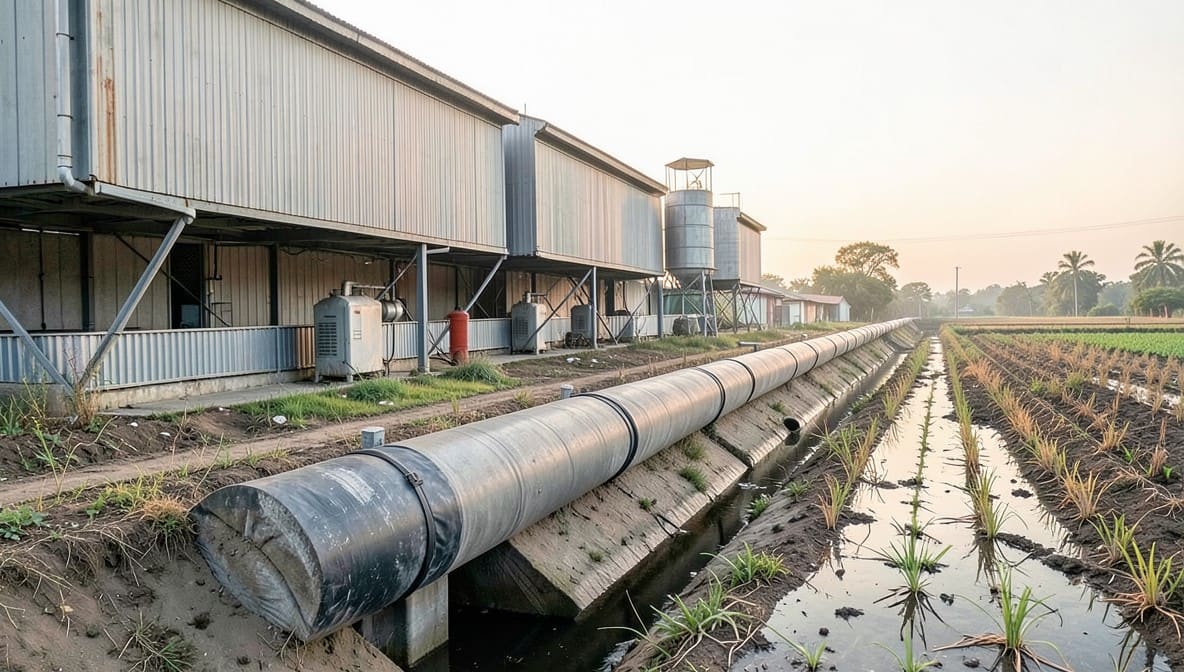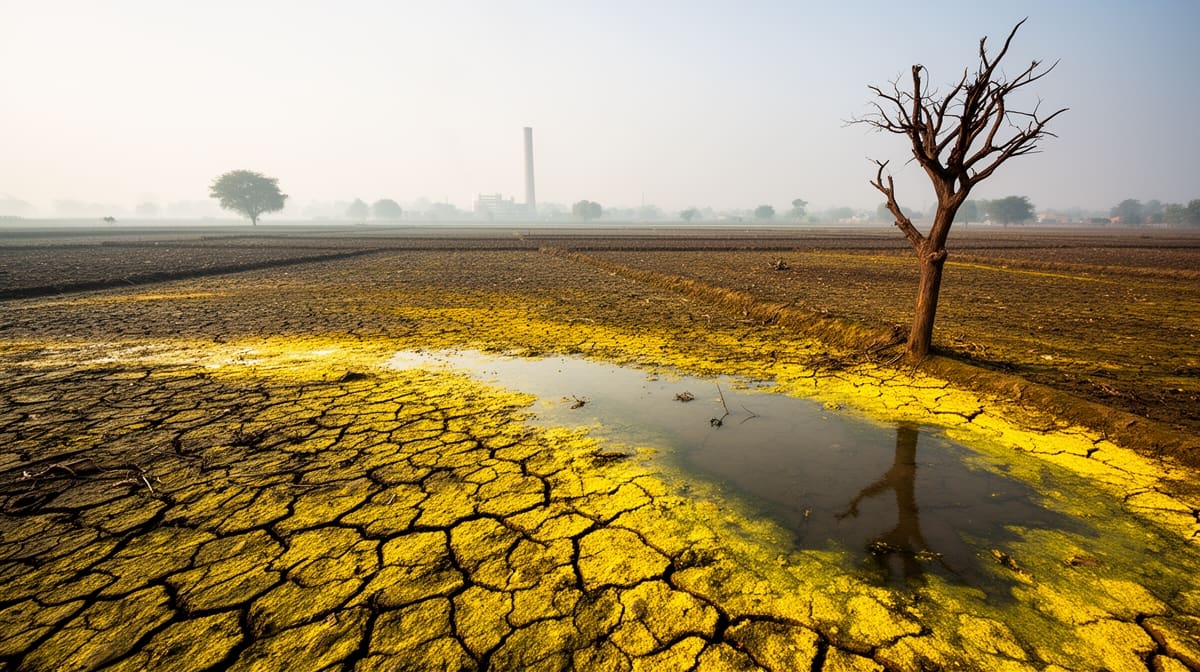
The National Green Tribunal has reaffirmed the primacy of the Polluter Pays Principle in environmental jurisprudence by holding a sugar and distillery unit liable for extensive ecological damage caused by a molasses tank blast and chronic non-compliance with effluent treatment norms. The judgment establishes a clear framework for quantifying environmental harm, mandating financial restitution and systemic remediation, and underscores the duty of regulatory bodies to standardize damage assessment protocols.
Background & Facts
The Dispute
The applicant, a farmer and social worker from Ahmednagar, alleged that M/s Sahakar Maharshi Shivajirao Narayanrao Nagawade SSK Ltd. (Sugar Unit) repeatedly discharged untreated effluents into the Ghod River and its tributaries, causing severe contamination of water, soil, and agricultural land. The pollution led to loss of aquatic life, crop damage, and health hazards for local communities. The situation escalated after a molasses storage tank explosion on 10 February 2022, which released approximately 12,255 metric tons of molasses-contaminated liquid and soil into the environment.
Procedural History
- February 2022: MPCB issued show-cause notices citing violations of consent conditions, including non-operational ETP, unconnected OCEMS, and failure to submit bank guarantees.
- 10 February 2022: Molasses tank blast occurred, spilling effluent into nearby nallas and farmlands.
- March - April 2022: MPCB collected water samples from Ghod River and surrounding areas; lab reports confirmed unfit drinking water.
- May 2022: NGT constituted a Joint Committee comprising MPCB, CPCB, and District Collector to investigate.
- October 2022: Joint Committee submitted findings confirming systemic non-compliance and environmental degradation.
- August 2023: M/s VSI, Pune submitted a damage assessment report estimating environmental harm.
- January 2026: NGT upheld the VSI report and dismissed objections raised by the industry.
Relief Sought
The applicant sought closure of the sugar unit’s crushing operations until environmental compliance was achieved and demanded compensation under the Polluter Pays Principle for ecological damage, loss of livelihood, and remediation costs.
The Legal Issue
The central question was whether the Polluter Pays Principle applies to environmental damage caused by an industrial accident, and whether compensation must be determined based on scientific assessment of ecological harm, even when the polluter claims compliance with consent conditions.
Arguments Presented
For the Petitioner
The applicant argued that the industry’s repeated violations - unauthorized discharge, non-functional monitoring systems, and failure to de-sludge old lagoons - constituted wilful negligence. The molasses blast was not an isolated incident but the culmination of chronic non-compliance. Citing M.C. Mehta v. Union of India, the petitioner emphasized that the Polluter Pays Principle is not contingent on intent but on causation and harm. Photographic and lab evidence demonstrated irreversible damage to soil, groundwater, and flora.
For the Respondent
The industry contended that the molasses blast was an unforeseen accident due to aging infrastructure, not operational negligence. It highlighted that it had obtained renewed consents in 2022 and had initiated remediation through VSI’s assessment. It argued that the VSI report was incomplete and that the EDC calculation by MPCB was arbitrary. The industry also claimed that the application had become infructuous due to subsequent compliance and that no separate compensation was warranted beyond the VSI estimate.
The Court's Analysis
The Tribunal conducted a rigorous examination of the Joint Committee’s findings and the VSI damage assessment report. It rejected the industry’s attempt to compartmentalize the accident as an isolated event, noting that the blast occurred against a backdrop of documented, persistent violations including seepage into kaccha pits, unconnected OCEMS, and failure to de-sludge lagoons.
"Whatever amount has been finally calculated by the VSI should be treated to be the correct calculation of the amount of EDC, which may be ordered to be levied from the Project Proponent."
The Court held that the Polluter Pays Principle requires not merely punitive action but restorative justice. The VSI report, despite industry objections, was deemed scientifically robust and methodologically sound. The Tribunal accepted the report’s use of shadow pricing to monetize BOD and COD impacts on water and soil, and its valuation of tree loss and agricultural uncertainty. Crucially, the Court found that pre-accident violations were not separate from the post-accident damage - they were cumulative. The contamination assessed by VSI inherently included the legacy of prior non-compliance.
The Tribunal also emphasized that regulatory compliance cannot be a shield against liability when environmental harm is demonstrable. The fact that MPCB had issued renewed consents did not absolve the industry of liability for harm already caused. The Court further noted that the absence of precise crop damage data did not negate liability; instead, it mandated the creation of standardized protocols for future cases.
The Verdict
The applicant prevailed. The National Green Tribunal held that the Polluter Pays Principle mandates full financial accountability for environmental damage, regardless of whether harm resulted from chronic negligence or an accident. The industry was ordered to deposit Rs. 1.06 crore with MPCB for site restitution and to spend an additional Rs. 1.26 crore on preventive and remedial measures as per VSI recommendations. The Tribunal also directed MPCB to formulate a Standard Operating Procedure for quantifying agricultural damage in industrial accidents.
What This Means For Similar Cases
Environmental Compensation Must Be Science-Based
- Practitioners must now insist on independent, third-party damage assessments (e.g., NEERI, IIT, VSI) in all NGT matters involving industrial accidents.
- Courts will not accept arbitrary EDC calculations by regulatory bodies without scientific underpinning.
- Shadow pricing models for BOD/COD, as validated here, are now admissible benchmarks for monetizing water and soil contamination.
Pre-Accident Violations Are Not Dismissed as ‘Background’
- Chronic non-compliance (e.g., unconnected OCEMS, un-de-sludged lagoons) is legally inseparable from acute incidents.
- The cumulative impact of prior violations must be factored into remediation costs, even if the accident is the proximate cause.
- Renewed consents do not extinguish liability for past harm.
SOPs for Agricultural Damage Are Now Mandatory
- Regulatory agencies must now develop standardized formats to record crop loss, soil contamination, and groundwater impact in industrial accidents.
- Failure to do so may result in courts inferring liability based on circumstantial evidence (e.g., proximity, timing, visible damage).
- Practitioners representing farmers should document crop conditions and water sources immediately after incidents to preserve evidentiary value.