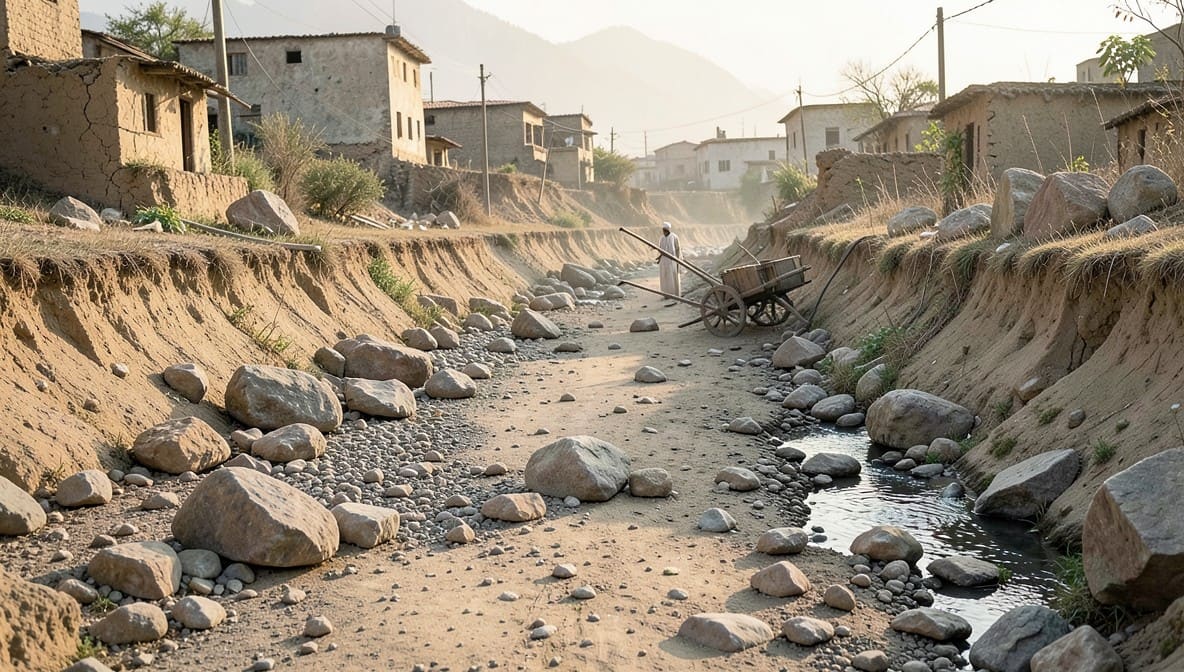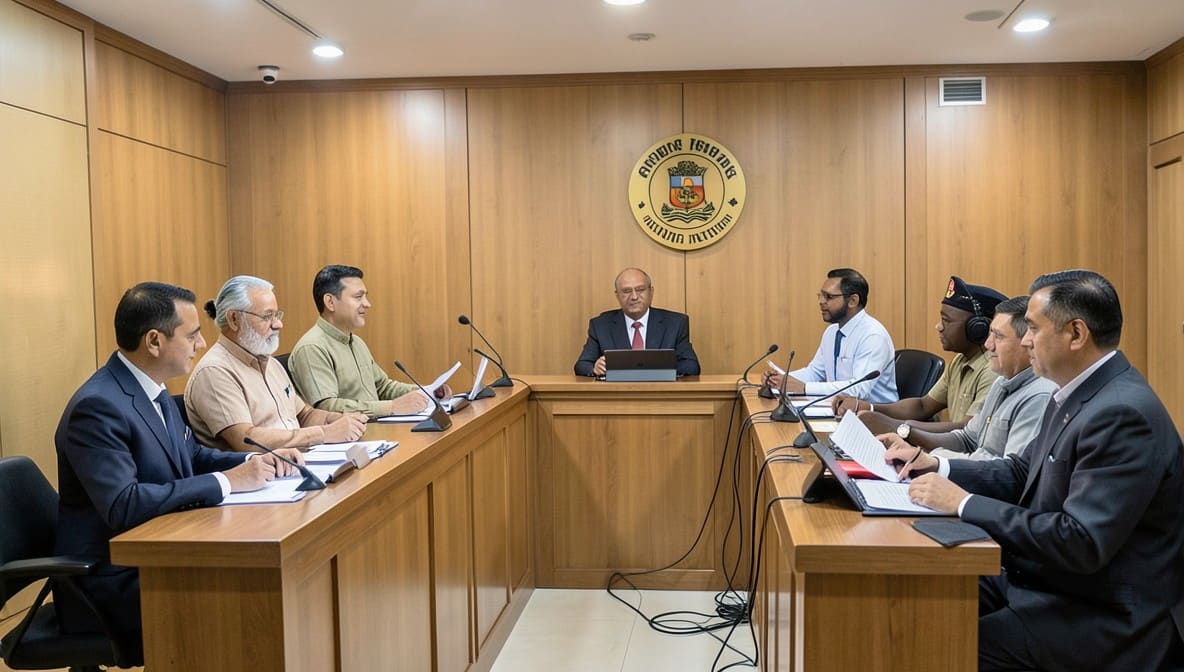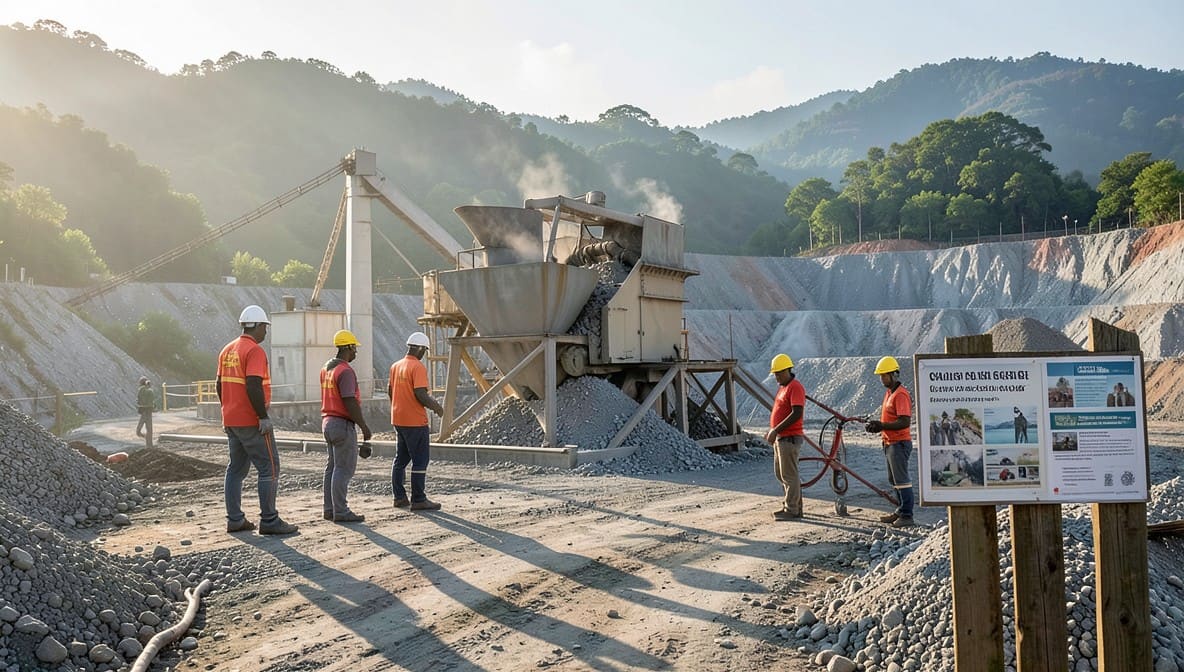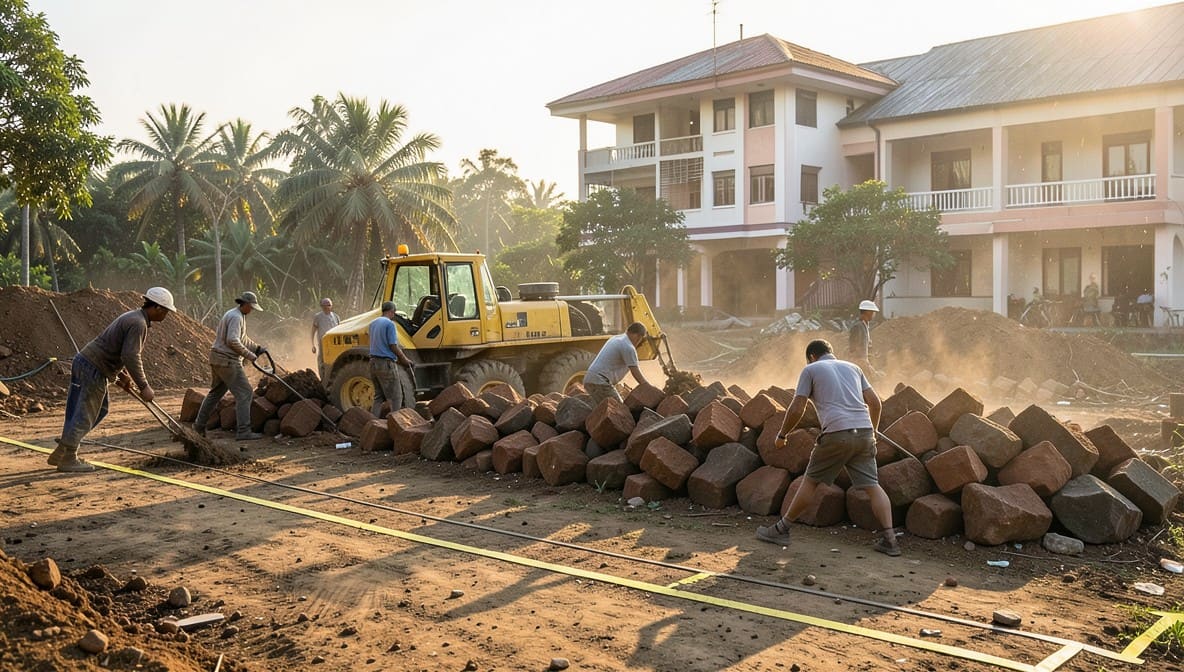
The Kerala High Court has affirmed that lawful mineral extraction under statutory permits entitles a property owner to police protection, but such rights are not absolute when they pose a tangible risk to adjacent properties. The judgment balances the right to utilize permitted resources with the duty to prevent harm to neighboring landowners, establishing a clear procedural framework for resolving such conflicts.
Background & Facts
The Dispute
The petitioner, Pramod T.P., sought police protection to remove laterite stones from his property in Kannur District, Kerala, pursuant to a movement permit issued by the District Geologist. The removal was part of construction activities authorized under a building permit. The fifth respondent, Sandeep Muttil, an adjacent landowner and physically handicapped individual, objected to the excavation, alleging that large-scale removal of earth and laterite stones would compromise the lateral support to his property, risking structural collapse.
Key Facts
- The petitioner was granted Ext.P1 Building Cum Development Permit by Ramanthali Grama Panchayat on 21.01.2026 for construction of a residential house.
- During excavation, laterite stones were encountered, necessitating additional authorization under the Kerala Minor Mineral Concession Rules, 2015.
- Ext.P2 Movement Permit for removal of laterite stones was issued by the District Geologist, Kannur, on 21.05.2026 under Rule 106 of the Rules.
- The petitioner submitted a request for police protection to the Deputy Superintendent of Police, Payyannur, on 22.05.2026 (Ext.P3).
- The fifth respondent, residing on 8 cents of land adjoining the petitioner’s property, opposed the excavation on grounds of potential damage to his building.
- No prior legal proceedings or complaints were filed by the fifth respondent before the writ petition.
Procedural History
- 21.01.2026: Ext.P1 Building Permit issued by Ramanthali Grama Panchayat.
- 21.05.2026: Ext.P2 Movement Permit issued by District Geologist, Kannur.
- 22.05.2026: Petitioner applied for police protection (Ext.P3).
- 09.06.2026: Writ Petition (WP(C) No. 18987 of 2026) filed before the High Court of Kerala at Ernakulam.
- 09.06.2026: Court heard arguments and delivered judgment on the same day.
The Parties' Positions
Petitioner’s Position: The petitioner asserted that his activities were fully compliant with Ext.P1 and Ext.P2 permits issued by competent authorities under the Kerala Minor Mineral Concession Rules, 2015. He argued that obstruction by the fifth respondent constituted unlawful interference with a lawful activity, warranting police protection under Article 226 of the Constitution.
Fifth Respondent’s Position: The fifth respondent, through counsel, contended that large-scale excavation adjacent to his property would remove lateral support, potentially causing structural failure. He emphasized his physical disability and vulnerability, arguing that the petitioner’s actions, though permitted, created an imminent risk to life and property.
Relief Sought
The petitioner sought a writ of mandamus directing the police authorities to provide protection for the removal of laterite stones under Ext.P2, free from obstruction by the fifth respondent.
The Legal Issue
The central question was whether a person lawfully extracting minor minerals under a statutory permit is entitled to police protection against obstruction by a neighboring landowner who alleges risk of structural damage, and if so, what safeguards must be imposed to balance competing rights.
Arguments Presented
For the Petitioner
The petitioner’s counsel relied on the validity of Ext.P1 and Ext.P2 permits issued by statutory authorities under the Kerala Minor Mineral Concession Rules, 2015. He argued that once permits are lawfully granted, the state has a duty to protect lawful activity from private obstruction. He cited State of Karnataka v. M. K. Srinivas to affirm that police protection is a constitutional obligation when lawful rights are threatened.
For the Respondent
The fifth respondent’s counsel contended that statutory permits do not override the fundamental right to safety and property under Article 21. He argued that the petitioner’s excavation, even if permitted, could cause irreversible harm to an adjacent structure, particularly given the fifth respondent’s physical vulnerability. He urged the Court to impose a precautionary buffer zone to prevent potential collapse.
The Court's Analysis
The Court acknowledged that the petitioner’s activities were fully authorized under Ext.P1 and Ext.P2, and that police protection is a legitimate remedy against unlawful obstruction. However, it recognized that the fifth respondent’s concerns about lateral support were not speculative but grounded in engineering risk. The Court emphasized that while statutory permits confer rights, they do not extinguish the duty to avoid causing harm to others.
"All the same, the concern of the 5th respondent also requires to be addressed."
The Court declined to invalidate the permits or halt the activity, but imposed a practical, proportionate condition: if the fifth respondent shares a boundary with the petitioner’s property, the petitioner must leave a three-meter buffer zone from that boundary for excavation. This condition was framed as a consensus-based compromise, not a legal admission of liability. The Court clarified that this arrangement does not prejudice either party’s right to seek remedies in civil court for damages or injunctions arising from the excavation.
The Court further noted that if no boundary is shared, the three-meter condition has no effect. This demonstrates a fact-sensitive, context-driven approach to balancing rights.
The Verdict
The writ petition was allowed. The Court directed the Station House Officer, Payyannur, to provide police protection for the removal of laterite stones under Ext.P2, subject to the condition that if the fifth respondent shares a boundary with the petitioner’s property, excavation must cease within a three-meter buffer from that boundary. The petitioner may proceed with extraction elsewhere on his land. The parties retain full rights to pursue civil remedies for any alleged damage. The direction is effective immediately.
What This Means For Similar Cases
Police Protection Is Conditional on Reasonable Safeguards
- Practitioners must now argue that police protection under Article 226 is not automatic, even with valid permits.
- Courts may impose site-specific conditions to mitigate demonstrable risks to adjacent properties.
- The burden shifts to the objecting party to demonstrate credible risk - not mere apprehension.
Statutory Permits Do Not Override Property Rights in Adjacent Land
- A permit under mining or building rules does not grant an unfettered right to cause structural harm.
- The Kerala Minor Mineral Concession Rules must be interpreted in harmony with common law principles of nuisance and negligence.
- Where excavation threatens lateral support, courts may require engineering assessments or buffer zones as a condition of lawful activity.
Procedural Clarity for Disputes Between Private Parties
- Objections to lawful extraction must be raised through civil courts for injunction or damages, not through obstruction.
- Police are not arbiters of civil disputes; their role is limited to maintaining order while rights are adjudicated.
- Parties should document boundary lines and structural conditions before commencing excavation to avoid future litigation.