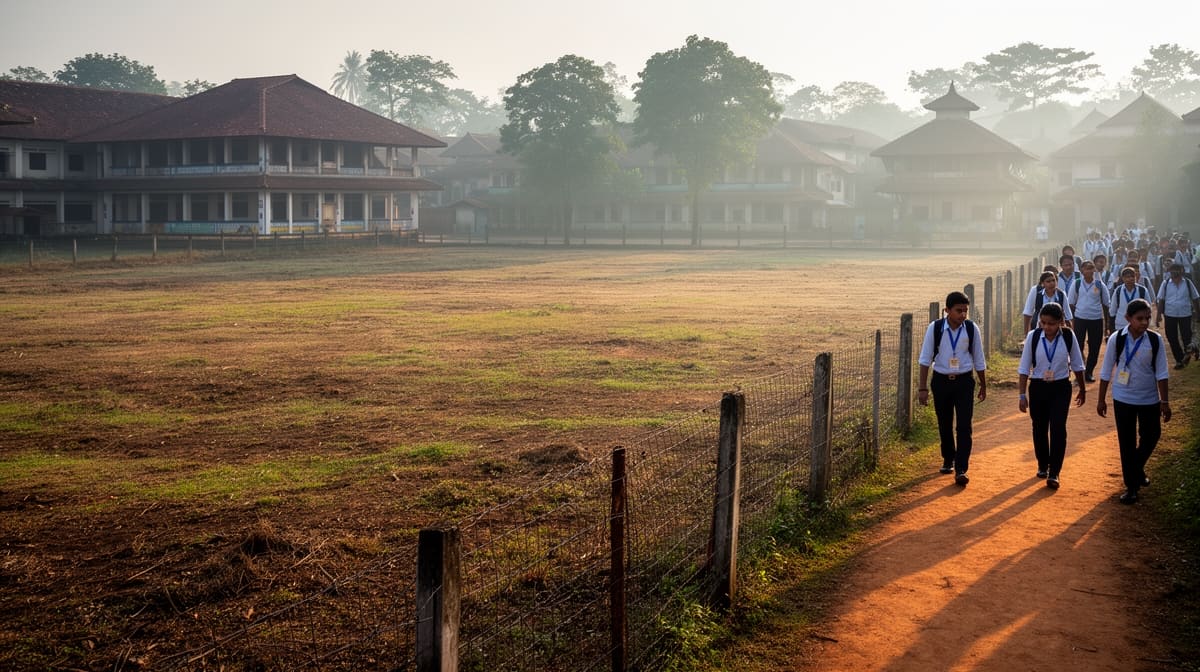
The Gauhati High Court has delivered a decisive affirmation of public interest in land use for educational purposes, holding that administrative inaction, even when cloaked in procedural excuses or financial constraints, cannot override the state’s duty to protect land lawfully allotted to public institutions. This judgment reinforces the principle that public resources must serve their intended purpose without undue delay.
Background & Facts
The Dispute
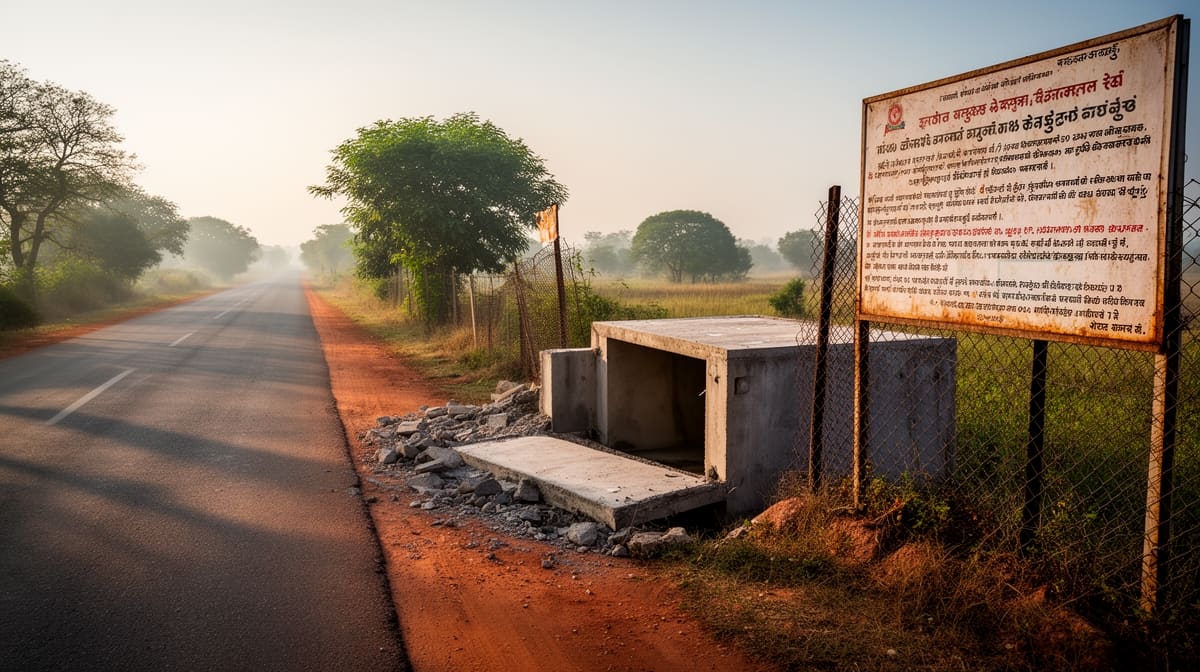
The petitioner, Eastern Karbi Anglong College, was allotted 100 Bighas of land in 1998 through an official order dated 26.03.1998, followed by possession being handed over on 30.03.1998. The land, comprising two Dags (Dag No.171: 70 Bighas and Dag No.286: 30 Bighas), was intended for academic infrastructure, including classrooms, hostels, and open spaces for sports. Despite this, illegal encroachments had taken root over time. The college, after years of inaction by authorities, initiated steps in 2017 to clear the encroachment.
Procedural History
The sequence of administrative action and inaction unfolded as follows:
- 2017: College approached Karbi Anglong Autonomous Council (KAAC) after noticing encroachment; Additional Deputy Commissioner directed Assistant Revenue Officer to act.
- December 2017: KAAC’s Revenue Department approved eviction process.
- 27.12.2017: Cost estimate of Rs.1,41,900/- prepared for eviction.
- 15.03.2018 & 17.03.2018: Authorities directed the college to deposit the estimated cost due to "fund crunch," promising reimbursement.
- 19.03.2018: College deposited the full amount via cheque.
- 12.06.2018: Eviction date fixed for 19.06.2018; action was not taken.
- 23.08.2018: Additional Deputy Commissioner issued a fresh order fixing 31.08.2018 as the eviction date; eviction plan prepared by Assistant Revenue Officer.
- 31.08.2018: No eviction occurred; no further action taken for over four years.
- 26.09.2022: College filed a petition with the Chief Executive Member of KAAC, seeking urgent action.
- 2023: Writ petition filed before the Gauhati High Court.
Relief Sought
The petitioner sought a writ of mandamus directing the respondents to immediately evict encroachers from the land, implement the 23.08.2018 order, and ensure the land is made encroachment-free to fulfill the educational purpose of the allotment.
The Legal Issue
The central question was whether procedural delays, fund crunch, and alleged non-utilization of land within one year can legally justify prolonged inaction by state authorities in evicting encroachers from land lawfully allotted to a public educational institution.
Arguments Presented
For the Petitioner
The petitioner’s counsel argued that:
- The allotment order and possession certificate were undisputed and legally valid.
- The college had acted in good faith, depositing Rs.1,41,900/- as directed by authorities, thereby fulfilling its part of the process.
- The repeated postponement of eviction dates without valid justification amounted to administrative negligence.
- The condition of utilizing land within one year was inapplicable to a 100-Bigha plot meant for a public college, where open spaces for playgrounds and future expansion are essential.
- The affidavit of Respondent No.6 admitted procedural hurdles as the reason for inaction, which the petitioner contended was legally insufficient.
For the Respondent
The respondents argued that:
- The land was subject to a condition of utilization within one year of allotment, and non-compliance could trigger reversion.
- The college had delayed in raising the issue until 2017, despite knowing of encroachments as early as 2007.
- Eviction required cooperation from encroachers, which was lacking.
- Procedural complexities and lack of funds justified the delay.
The Court's Analysis
The Court rejected the respondents’ defenses as legally untenable. It emphasized that the petitioner is a public educational institution, not a private entity, and the land was allotted for a public purpose. The Court observed that the condition of one-year utilization could not be mechanically applied to a 100-Bigha plot, where open areas are essential for academic infrastructure.
"It is a common knowledge that when such land is allotted to a college or a public institution, the construction could not be done in the entire plot of land and considerable area has to be left vacant for playground and other activities."
The Court further held that the deposit of Rs.1,41,900/- by the college constituted a clear act of cooperation, rendering the claim of "fund crunch" as a pretext. The repeated fixation of eviction dates, followed by inaction, demonstrated a pattern of administrative apathy. The Court noted that the respondents had not cited any court order restraining eviction, nor had they demonstrated any bona fide impediment beyond vague references to "procedural implications."
The Court also dismissed the argument of delay, noting that the state authorities themselves had initiated the eviction process in 2017 and had not raised the issue of delay until litigation commenced. The Court held that public interest in securing educational infrastructure outweighs technical defenses.
The Verdict
The petitioner won. The Court held that administrative inaction cannot override the state’s duty to protect land lawfully allotted for public education. It directed the Karbi Anglong Autonomous Council to complete eviction within 90 days, reimburse the deposited amount with 18% interest from 2017, and pay a cost of Rs.1,00,000/- to the college.
What This Means For Similar Cases
Procedural Excuses Are Not a Shield for Inaction
- Practitioners must challenge administrative delays in land eviction cases by highlighting conscious prior steps taken by authorities.
- Vague references to "procedural implications" without specific legal or factual barriers will not suffice to justify inaction.
- Courts will not tolerate bureaucratic inertia when public educational infrastructure is at stake.
Land Allotment Conditions Must Be Reasonably Interpreted
- Conditions like "utilization within one year" must be interpreted contextually, especially for large plots allotted to public institutions.
- Open spaces for sports, future expansion, and campus planning are legitimate uses under educational land allotments.
- Mechanical application of conditions to public institutions may be struck down as unreasonable.
Reimbursement and Costs Are Remedial Tools
- When public institutions are forced to fund state obligations, courts may order reimbursement with interest as a remedy for delay.
- Imposition of costs on errant authorities signals judicial disapproval of administrative negligence.
- Practitioners should routinely seek reimbursement and costs in similar writ petitions involving public funds.