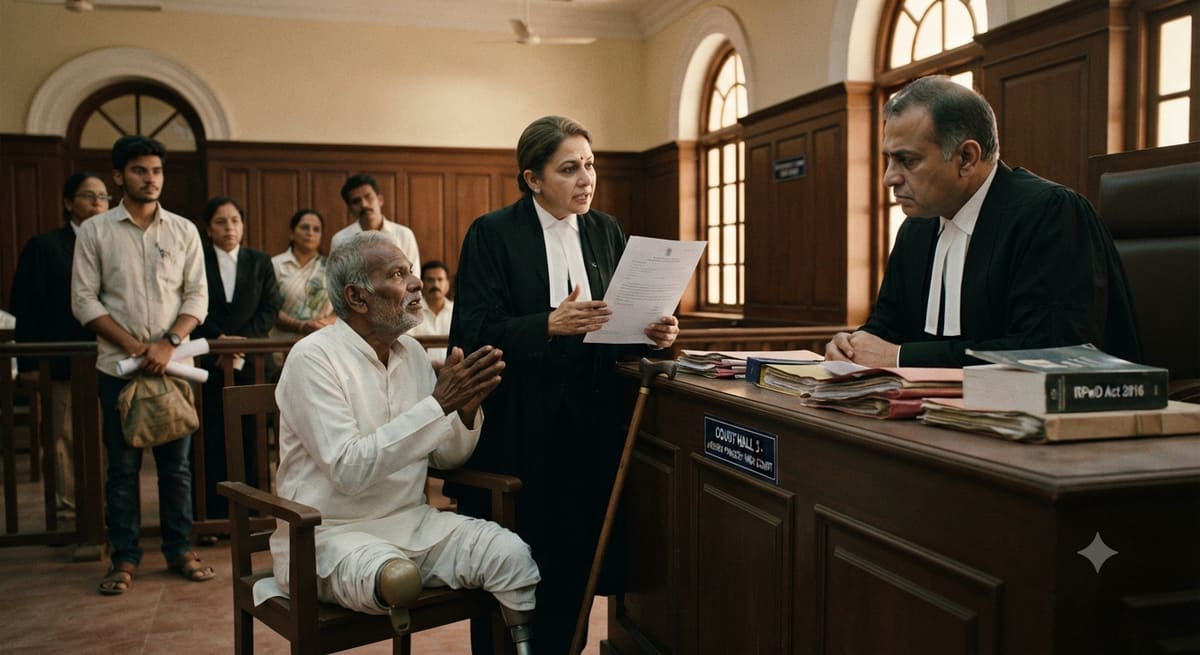
The Calcutta High Court set aside the withdrawal of a Letter of Intent for an LPG distributorship and the forfeiture of a Rs. 20,000/- deposit, holding that the respondent authority failed to consider the petitioner’s subsequent disability and the doctrine of reasonable accommodation under the Rights of Persons with Disabilities Act, 2016. The Court directed reconsideration of the petitioner’s request to substitute his elder brother within eight weeks, maintaining status quo on the approved premises.
Background & Facts
The Dispute
The petitioners, Rais Uddin Purkait and his elder brother (Petitioner No.2), challenged the order dated February 19, 2025 passed by Hindustan Petroleum Corporation Limited (HPCL) (respondent No.5) withdrawing the Letter of Intent (LOI) issued on March 30, 2015 for the award of Rajiv Gandhi Gramin LPG Vitarak (RGGLV) Distributorship at Dakshin Akraberia, District 24 Parganas and forfeiting the Rs. 20,000/- deposited towards field verification of credentials. The LOI had been issued pursuant to an advertisement dated January 21, 2014 and was subject to the final outcome of WPA No. 7302 of 2015 filed by Mozaffar Hossain Khan.
Key Facts
- The advertisement for RGGLV Distributorship appeared on 21 January 2014.
- Petitioner No.1 was selected under the “Open Category” and the LOI was issued on 30 March 2015.
- The LOI stipulated that the appointment was subject to the final outcome of pending litigation WPA No. 7302 of 2015.
- Petitioner No.1 obtained No Objection Certificates (NOCs) from the Sub-Inspector of Police, the Gram Pradhan, and the Joint Block Development Officer, Kulpi in 2015.
- On 5 May 2015 the Petroleum and Explosive Safety Organization (PESO) intimated conditional approval of the site layout and construction plan, subject to submission of a plan duly endorsed by the NOC issuing authority at the time of licence grant.
- A field enquiry was conducted on 26 June 2015 regarding joint verification, fulfilment of basic criteria and delivery potential; the enquiry report was forwarded to the District Magistrate.
- The Additional District Magistrate accorded the final NOC and intimated the same to HPCL on 24 July 2015.
- The appeal in WPA No. 7302 of 2015 was dismissed by the Hon’ble Apex Court by order dated 21 September 2023, thereby upholding the selection of petitioner No.1.
- On 7 October 2023 petitioner No.1 applied for trade registration; certificates for 2023-24, 2024-25 and 2025-26 were generated.
- On 28 November 2023 petitioner No.1 informed HPCL of the completion of the godown and showroom and requested issuance of a completion certificate.
- On 2 January 2024 the Senior Area Sales Manager, Kolkata LPG RO observed during an inspection on 14 December 2023 that the showroom and gate were not in conformity with the approved layout plan.
- A fresh plan was issued on 25 January 2024 (the earlier plan having been dated 20 April 2015).
- Petitioner No.1 joined as an Assistant Teacher (Primary) in a school in South 24 Parganas from February 2024.
- During the pendency of the proceedings petitioner No.1 was diagnosed with schizophrenia with 70 % temporary disability certified by a Medical Board.
- On 1 November 2024 and 20 December 2024 petitioner No.1 made applications before respondent No.4 seeking transfer of the LOI to his elder brother (Petitioner No.2) and his wife, citing investments made over the preceding nine and a half years.
- On 20 December 2024 Petitioner No.2 (the elder brother) made a representation before respondent No.5 requesting transfer of the LOI in his favour to carry out the necessary formalities in view of petitioner No.1’s health condition.
- Without considering the prayer, respondent No.5 merely reiterated its earlier contentions and called for a reconstitution proposal as per guidelines by letter dated 6 January 2025.
- On 17 January 2025 respondent No.5 called upon petitioner No.1 to provide an update on the commissioning process.
- On 19 February 2025 respondent No.5 issued the impugned letter withdrawing the LOI on the alleged ground of violation of Clause 1, 3.1 and 3.2 of the LOI and forfeiting the Rs. 20,000/- deposited towards field verification of credentials.
- On 3 March 2025 petitioner No.1 submitted a representation seeking withdrawal of the letter dated 19 February 2025 and requesting transfer of the LOI in favour of Petitioner No.2.
- Aggrieved by the rejection of the transfer request and the impugned order, the petitioners filed the present writ petition WPA No. 8308 of 2025.
- The matter was reserved on 19 August 2026 and judgment delivered on 15 September 2026.
Procedural History
- 19 February 2025: Impugned order withdrawing LOI and forfeiting deposit passed by HPCL (respondent No.5).
- 3 March 2025: Petitioner No.1 filed representation seeking withdrawal of the impugned letter and transfer of LOI to his elder brother.
- 19 August 2026: Case reserved for judgment.
- 15 September 2026: Judgment delivered by the High Court at Calcutta allowing the writ petition.
Parties' Positions
Petitioners: Contended that the LOI, though not creating a vested right, gave rise to a legitimate expectation; that the respondent was bound to consider the petitioner’s subsequent disability under the doctrine of reasonable accommodation in the RPWD Act, 2016; that the refusal to substitute the elder brother was arbitrary and violative of Articles 14, 19(1)(g) and 21 of the Constitution; and that an alternative remedy under Rule 2(7) of the Gas Cylinder Rules, 2016 did not bar the writ petition where the challenged action was arbitrary.
Respondents (Nos. 2-5): Argued that Petitioner No.2 had no contractual relationship with HPCL; that the LOI was issued only in favour of Petitioner No.1 and no legal right accrued to the brother; that the writ petition was not maintainable for non-joinder of necessary parties (IOCL and BPCL) under the joint guidelines; that Petitioner No.1 failed to obtain the mandatory PESO licence, which was a condition precedent under the LOI; that reconstitution at the LOI stage is permitted only in cases of death or total and permanent disability under Clauses 2.3 and 2.7 of the guidelines, and induction of an elder brother is barred by Clause 3.2; that the grant of an LPG distributorship is a commercial arrangement not covered by Section 37 of the RPWD Act, 2016; and that an employed applicant must resign from service before appointment under Clause 14(4) of the RPWD Act, 2016.
Respondent No.6: Objected to maintainability on the ground that the order of rejection dated 18 March 2024 was appealable under Rule 2(7) of the Gas Cylinder Rules, 2000 and that an effective alternative remedy existed.
Respondent No.1 (Union of India) did not make specific submissions recorded in the judgment.
Relief Sought
The petitioners sought quashing of the impugned letter dated 19 February 2025, direction to the respondent to reconsider the request for substitution of the elder brother in light of the petitioner’s disability and the RPWD Act, 2016, and to proceed with the LPG distributorship in accordance with law, maintaining status quo on the approved premises pending fresh orders.
The Legal Issue
The central questions were: (i) whether the writ petition is maintainable under Article 226 of the Constitution despite the availability of an alternative statutory remedy under Rule 2(7) of the Gas Cylinder Rules, 2016; (ii) whether the competent authority ought to have considered the petitioner’s request for substitution of his elder brother in view of his subsequent physical incapacitation, notwithstanding the absence of total and permanent disability, by invoking the doctrine of reasonable accommodation under Section 2(y) of the Rights of Persons with Disabilities Act, 2016; and (iii) whether the Letter of Intent issued at the pre-approval stage can be transferred to the elder brother when the proposed transferee satisfies all statutory licensing requirements.
Arguments Presented
For the Petitioner
The petitioners relied on the principle that a Letter of Intent, while not creating a vested right, generates a legitimate expectation that the authority will act fairly and in accordance with law. They cited Ayaaubkhan Noorkhan Pathan v. State of Maharashtra (2013) 4 SCC 465 regarding locus standi, State of Orissa v. Harinarayan Jaiswal (1972) 2 SCC 36 regarding government as seller, Jeeja Ghosh v. Union of India (2016) 7 SCC 761 regarding reasonable accommodation and human dignity, and Dresser Rand S.A. v. Bindal Agro Chem Ltd. (2006) 1 SCC 751 regarding LOI not binding. They argued that the LOI created a legitimate expectation; that the respondent must consider the supervening disability under the RPWD Act; that the refusal was arbitrary and violative of Articles 14, 19(1)(g) and 21; that the alternative remedy under Rule 2(7) of Gas Cylinder Rules does not bar writ where action is arbitrary; and that the doctrine of reasonable accommodation requires accommodation unless it causes undue burden.
For the Respondent
The respondents contended that Petitioner No.2 had no contractual nexus with HPCL; that the LOI was issued solely to Petitioner No.1 and no right accrued to the brother; that the writ was not maintainable due to non-joinder of IOCL and BPCL as necessary parties under the joint guidelines; that Petitioner No.1 failed to obtain the mandatory PESO licence, a condition precedent; that reconstitution at LOI stage is allowed only in cases of death or total and permanent disability per Clauses 2.3 and 2.7 of the guidelines, and Clause 3.2 bars co-ownership with spouse or induction of elder brother; that the LPG distributorship is a commercial venture not covered by Section 37 of RPWD Act, 2016; and that an employed applicant must resign before appointment under Clause 14(4) of the RPWD Act, 2016; further, that the rejection order was appealable under Rule 2(7) of Gas Cylinder Rules, 2000, providing an effective alternative remedy.
The Court's Analysis
The Court first addressed maintainability. It held that the petitioner, as the original selectee who suffered legal injury due to incapacitation and the impugned order, had locus standi, relying on Ayaaubkhan Noorkhan Pathan v. State of Maharashtra. The availability of an alternative remedy under Rule 2(7) of the Gas Cylinder Rules, 2016 did not bar the writ because the challenged action was arbitrary and violated constitutional guarantees and the beneficial RPWD Act, 2016.
On the nature of the LOI, the Court observed that a Letter of Intent merely indicates an intention to consider the applicant for grant of final licence, subject to fulfilment of prescribed conditions, and does not create any vested or enforceable right, citing Dresser Rand S.A. v. Bindal Agro Chem Ltd..
The Court then turned to the RPWD Act, 2016. It noted that Section 2(y) defines reasonable accommodation as necessary and reasonable changes to enable a person with disability to exercise legal rights, unless such changes cause disproportionate or undue burden, drawing on Jeeja Ghosh v. Union of India. The respondents’ refusal to consider substitution was based solely on the assumption that transfer at pre-approval stage is impermissible, ignoring the petitioner’s subsequent physical incapacitation. The Court emphasized that the approved premises and safety requirements remained unchanged, and the proposed transferee needed only to satisfy statutory licensing requirements.
The Court further held that the respondents could not claim unlimited power merely because the LOI states it is not a firm offer; such a clause only denies an automatic contractual right, not the duty to act fairly and reasonably, and their decision remained amenable to judicial review if arbitrary or based on irrelevant considerations.
Applying these principles, the Court concluded that, although the LOI itself does not confer a vested right, it imposes an obligation on respondents to consider the petitioner’s request fairly, reasonably, and in accordance with law. Since no PESO licence had been granted, the question of transferring an existing licence did not arise; rather, the respondents ought to have examined whether the elder brother could satisfy the statutory requirements and enable the licensing process to proceed.
"this Court, holds that the competent authority ought to have considered the petitioner's request for grant or transfer of the PESO licence in favour of his elder brother on the basis of the petitioner's incapacitation, notwithstanding, the absence of total and permanent disablement, provided the proposed transferee fulfils all statutory requirements under the applicable licensing regime."
The Verdict
The Calcutta High Court allowed writ petition WPA No. 8308 of 2025, quashing the impugned letter dated 19 February 2025 issued by HPCL (respondent No.5) and setting aside the forfeiture of Rs. 20,000/- deposited towards field verification of credentials. The Court directed the respondent to reconsider the petitioner’s request for substitution of his elder brother, taking into account the petitioner’s subsequent schizophrenia disability and the obligations under Section 2(y) of the Rights of Persons with Disabilities Act, 2016, within eight weeks from the date of communication of this order and to communicate the decision within a week thereafter, while directing that the status quo with regard to the approved premises be maintained pending fresh orders. No order as to costs was passed.
What This Means For Similar Cases
Reasonable Accommodation Extends to Pre-Approval Stage
Public authorities must consider disability-related requests even at the Letter of Intent stage. The RPWD Act, 2016 requires reasonable accommodation unless it causes undue burden, and the approved premises and safety requirements remaining unchanged means that substitution of a disabled applicant’s representative does not affect public safety or regulatory control.
Maintainability of Writ Petition Despite Alternative Remedy
The existence of an alternative statutory remedy (e.g., appeal under Rule 2(7) of Gas Cylinder Rules) does not preclude a writ petition under Article 226 where the challenged administrative action is arbitrary, irrational, or based on irrelevant considerations. Practitioners should still invoke writ jurisdiction to challenge such actions.
Legitimate Expectation Arising from Letter of Intent
A Letter of Intent, while not creating a vested right, generates a legitimate expectation that the authority will act fairly and in accordance with law. Any refusal to consider a request must be based on relevant considerations and cannot be arbitrary; the authority must provide a reasoned and speaking order after affording an opportunity of personal hearing.