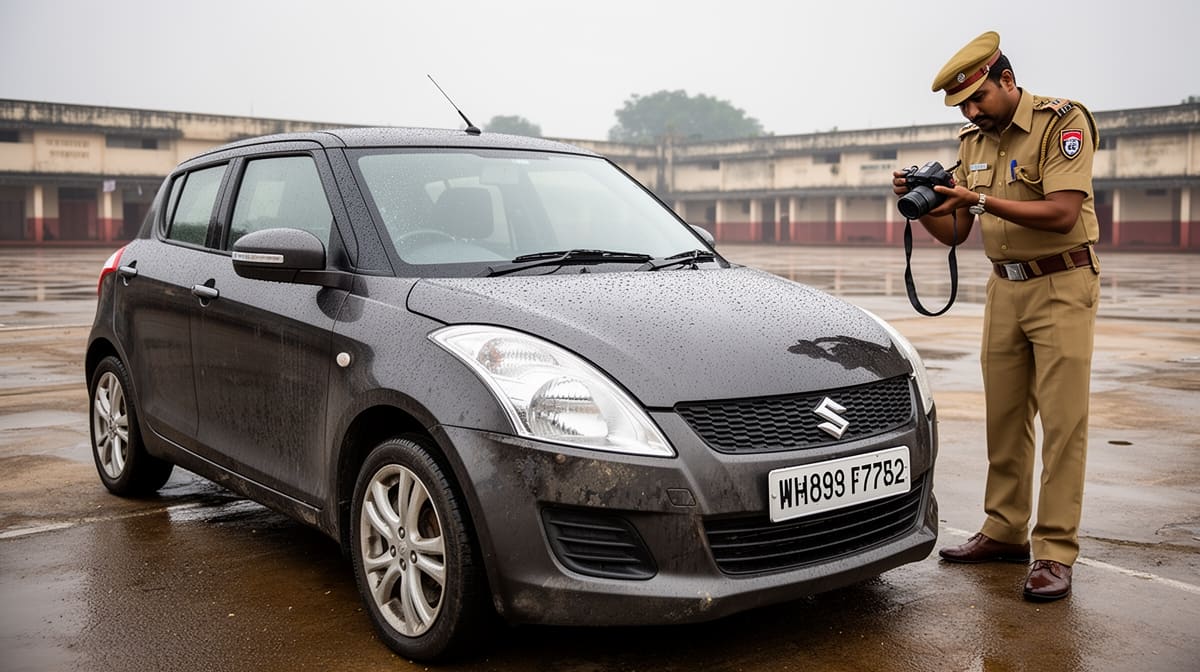
The Allahabad High Court has clarified that ownership of a vehicle alone cannot justify its confiscation under the U.P. Cow Slaughter (Prevention) Act, 1955. In a significant ruling, the Court held that confiscation requires concrete evidence linking the vehicle to the commission of the offence, not merely its presence at the scene or the confessional statements of unrelated accused.
Background & Facts
The Dispute
The petitioner, Mohammad Hanif, challenged the confiscation of his DCM truck under Section 5(A) of the U.P. Cow Slaughter (Prevention) Act, 1955, following its seizure during the investigation of an alleged smuggling case involving live and dead cows. The District Magistrate, Barabanki, ordered confiscation on 17.10.2025, rejecting the petitioner’s application for release. This order was upheld on appeal by the Commissioner, Ayodhya Division, on 29.12.2025.
Key Facts
- On 17.06.2025, F.I.R. No. 301 of 2025 was registered at Police Station Safdarganj, Barabanki, based on a complaint by the Inspector Incharge.
- The F.I.R. alleged interception of a DCM vehicle transporting 18 live cow progenies, including one dead cow.
- The F.I.R. did not mention the registration number of the vehicle involved.
- Two accused persons were arrested on the spot and allegedly confessed to catching stray animals for smuggling.
- The petitioner is the registered owner of the vehicle, but was not named as an accused in the F.I.R. or any charge sheet.
- The petitioner submitted that he had not authorized or permitted the use of his vehicle in any illegal activity.
- The vehicle’s registration number, UP-41 CT 0192, was identified only after seizure and was not referenced in the original complaint or FIR.
Procedural History
- 17.06.2025: F.I.R. No. 301 of 2025 registered at Police Station Safdarganj, Barabanki.
- 17.06.2025: Vehicle seized during investigation; two accused arrested.
- 17.10.2025: District Magistrate, Barabanki, passed order under Section 5(A) confiscating the vehicle in Case No. 2400 of 2025.
- 18.11.2025: Petitioner filed application for release of vehicle, which was rejected.
- 29.12.2025: Commissioner, Ayodhya Division, dismissed Appeal No. 3758 of 2025, upholding confiscation.
- 05.01.2026: Writ Petition No. 5062 of 2026 filed before the Allahabad High Court.
- 29.05.2026: Judgment delivered by the High Court.
Relief Sought
The petitioner sought quashing of the confiscation orders dated 17.10.2025 and 29.12.2025, and immediate release of his vehicle, UP-41 CT 0192, with appropriate security.
The Legal Issue
The central question was whether Section 5(A) of the U.P. Cow Slaughter (Prevention) Act, 1955 permits confiscation of a vehicle solely on the basis of ownership, without evidence that the owner knowingly permitted its use in the commission of the offence.
Arguments Presented
For the Petitioner
The learned counsel argued that confiscation under Section 5(A) requires proof that the vehicle was "used" in the commission of the offence, not merely present. He emphasized that the F.I.R. did not identify the vehicle’s registration number, the petitioner was not named as an accused, and there was no evidence linking him to the smuggling activity. He relied on State of U.P. v. Ramesh Kumar to argue that confiscation is a penal consequence requiring mens rea and direct nexus. He further contended that prolonged detention of a valuable asset pending trial violates the petitioner’s right to property under Article 300A and principles of natural justice.
For the Respondent
The Additional Government Advocate contended that the vehicle was found in actual possession of offenders transporting prohibited animals, and under Section 5(A), any vehicle used for such transport is liable to confiscation. The State argued that the burden of proving innocence lies with the owner and that the vehicle’s seizure was lawful under the statutory scheme.
The Court's Analysis
The Court examined the language of Section 5(A), which empowers confiscation of "any vehicle used for the transportation of cows or their progeny" in contravention of the Act. The Court held that the phrase "used for" implies active, intentional, or authorized use in the commission of the offence. Mere proximity or ownership without proof of knowledge or consent does not satisfy this requirement.
"The fact that a vehicle was found carrying prohibited animals does not, by itself, establish that the owner had knowledge of or consented to its use for illegal purposes. To hold otherwise would render the provision arbitrary and violative of Article 14 of the Constitution."
The Court noted that the F.I.R. failed to record the vehicle’s registration number at the time of seizure, and the petitioner was never named as an accused. The confessional statements of the two arrested individuals did not implicate the petitioner. The Court further observed that the State had not produced any evidence - such as communication records, route logs, or witness testimony - to establish the petitioner’s involvement.
The Court also rejected the State’s argument that confiscation is automatic upon seizure, stating that such an interpretation would violate the principle of proportionality and the requirement of due process under Maneka Gandhi v. Union of India. The Court emphasized that confiscation is not a mere administrative measure but a punitive action requiring judicial scrutiny.
The Verdict
The writ petition was allowed. The orders dated 17.10.2025 and 29.12.2025 were set aside. The District Magistrate, Barabanki, is directed to release the petitioner’s DCM truck bearing registration number UP-41 CT 0192 immediately upon the petitioner furnishing security equivalent to the insured deficit value of the truck. The security shall be refundable upon acquittal or final disposal of the criminal case, subject to any lawful claim by the State.
What This Means For Similar Cases
Confiscation Requires Proven Use, Not Mere Possession
- Practitioners must now insist on direct evidence linking the vehicle owner to the illegal activity before any confiscation order is upheld.
- Mere presence of a vehicle during a crime, without proof of owner’s knowledge or consent, is insufficient under Section 5(A).
Due Process Applies Even in Regulatory Offences
- The Court reaffirmed that even under special statutes like the U.P. Cow Slaughter Act, the principles of natural justice and Article 14 apply.
- Owners must be given an opportunity to rebut allegations before property is confiscated.
Delay in Trial Cannot Justify Prolonged Seizure
- The Court explicitly recognized that prolonged detention of vehicles pending trial is unjust.
- Courts must now consider interim release mechanisms, such as security deposits, to balance state interests and individual rights.
Key Takeaway for Practitioners
- In all cases involving confiscation under special statutes, challenge the absence of specific evidence linking the owner to the offence.
- File applications for interim release of seized property under Article 226 if the trial is likely to be delayed.
- Cite this judgment to oppose blanket confiscation policies by authorities.