The Madhya Pradesh High Court has clarified that ownership of a vehicle seized under the NDPS Act does not, by itself, justify its permanent retention by the state. In a significant ruling, the Court emphasized that confiscation must be tied to the owner’s direct involvement in the offence, and mere possession or incidental use of the vehicle cannot sustain denial of its release during trial.
Background & Facts
The Dispute
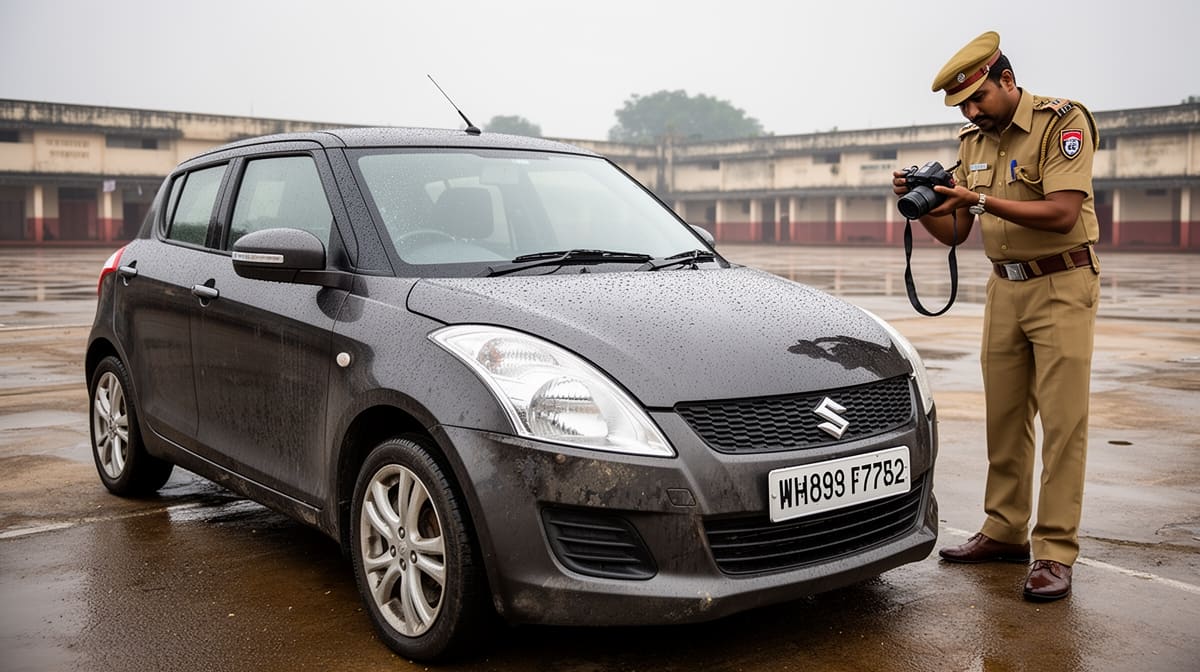
The petitioner, Sanjay Kumar Patel, sought the release of his Maruti Swift car, bearing registration number MP 17/CD-1431, which was seized by police during the investigation of a narcotics case. The vehicle was confiscated under Sections 8, 21, 22, and 25 of the Narcotic Drugs and Psychotropic Substances (NDPS) Act, 1985, and Sections 5/13 of the Drugs and Cosmetics Act. The Special Judge (NDPS), Rewa, rejected the petitioner’s application for release on supurdginama, citing the seriousness of the offence and the risk of reoffending.
Key Facts
- The vehicle was seized on 15.06.2022 from NH 30 Dhaba Ambi, Police Station Hanumana
- FIR No. 5992/2022 was registered on 16.06.2022 against unknown persons for offences under NDPS Act
- The petitioner was not named as an accused in the FIR or charge sheet
- The petitioner claims he is the lawful owner of the vehicle and had no knowledge of its use in any illegal activity
- The vehicle has been kept in open custody at the police station since seizure, exposing it to weather damage and depreciation
- The trial is ongoing and is expected to take considerable time to conclude
Procedural History
- 15.06.2022: Vehicle seized during investigation
- 16.06.2022: FIR No. 5992/2022 registered under NDPS Act
- 29.10.2025: Special Judge (NDPS), Rewa, dismissed petitioner’s application for release on supurdginama
- 12.12.2025: Petitioner filed M.C.R.C. No. 52329/2025 before the High Court of Madhya Pradesh at Jabalpur
- 12.03.2026: Hearing concluded before Justice Himanshu Joshi
Relief Sought
The petitioner sought quashing of the order dated 29.10.2025 and immediate release of the vehicle on supurdginama, with appropriate surety and conditions, to prevent irreversible deterioration of the asset.
The Legal Issue
The central question was whether Section 528 of the BNSS, 2023 permits the denial of release of a seized vehicle during trial solely on the ground of the seriousness of the offence, when the owner is not an accused and there is no evidence linking the owner to the commission of the offence.
Arguments Presented
For the Petitioner
Counsel for the petitioner argued that the petitioner is a third-party owner with no connection to the alleged offence. He cited State of Maharashtra v. Mohd. Yusuf to assert that property of an innocent owner cannot be confiscated merely because it was used in the commission of a crime. He emphasized that the vehicle is deteriorating in open custody and that its release on supurdginama with adequate surety and conditions would not prejudice the investigation. He further contended that the trial court’s order was arbitrary and violated the principle of proportionality under Article 21.
For the Respondent
The State’s counsel defended the trial court’s order, arguing that narcotics offences are grave and that releasing the vehicle might encourage repeat offences. She submitted that the vehicle was integral to the commission of the offence and that its retention was necessary as a deterrent. She relied on State of Punjab v. Baldev Singh to argue that courts must exercise caution in releasing property connected to serious drug offences.
The Court's Analysis
The Court examined the nature of Section 528 of the BNSS, 2023, which empowers courts to order the release of seized property during trial on conditions. It noted that the provision is designed to balance the interests of the state in preserving evidence with the rights of innocent owners to protect their property from unnecessary depreciation.
"The mere fact that a vehicle was used in the commission of an offence does not ipso facto justify its permanent retention, especially when the owner is not an accused and there is no material to suggest his complicity."
The Court distinguished between the role of the vehicle as an instrument of crime and the role of the owner as a participant. It held that the trial court’s reasoning - that release would embolden offenders - was speculative and not grounded in evidence. The Court further observed that the vehicle’s prolonged storage in open air was causing irreversible damage, which served no legitimate purpose of the investigation.
The Court also emphasized that supurdginama is not a novel concept but a well-established mechanism under criminal procedure to safeguard property rights without compromising the trial’s integrity. The conditions proposed by the petitioner - surety, undertaking, no alteration, and photographic documentation - were deemed sufficient to ensure the vehicle’s availability for trial.
The Verdict
The petition was allowed. The High Court set aside the order dated 29.10.2025 and directed the release of the Maruti Swift car (MP 17/CD-1431) on supurdginama. The petitioner must furnish a surety bond of Rs. 3,00,000 and a personal bond of the same amount, submit a written undertaking to produce the vehicle on demand, refrain from altering or using it unlawfully, and obtain prior court permission for any modification. The S.H.O. of Hanumana Police Station was directed to take 18 x 12 inch photographs of the vehicle from all angles, including engine and chassis numbers, and file them in the trial court record.
What This Means For Similar Cases
Innocent Ownership Protects Property from Confiscation
- Practitioners can now argue that Section 528 BNSS entitles innocent owners to seek release of seized property even in serious drug cases
- The burden shifts to the prosecution to prove the owner’s involvement or intent; mere association is insufficient
- Courts must evaluate whether retention serves a tangible investigative purpose or merely punitive deterrence
Supurdginama Is a Viable Alternative to Permanent Seizure
- Supurdginama with photographic documentation and surety bonds is now a recognized procedural safeguard
- Courts must consider the economic value and condition of seized assets - prolonged storage without use is not permissible
- Failure to impose conditions like those outlined here may render an order arbitrary under Article 14
Proportionality Must Guide Property Decisions
- The principle of proportionality under Article 21 applies to seizure and retention of property
- Courts must weigh the risk of reoffending against the risk of asset depreciation
- In cases where the owner is not an accused, the state’s interest in preservation must yield to the owner’s right to property