The Bombay High Court has delivered a decisive ruling affirming that long-standing possession, tax payments, or commercial licences cannot confer legitimacy on structures erected on public land. The judgment reinforces the principle that municipal authorities retain the power to remove encroachments without notice under Section 314 of the BMC Act, regardless of how long the violation has persisted.
Background & Facts
The Dispute
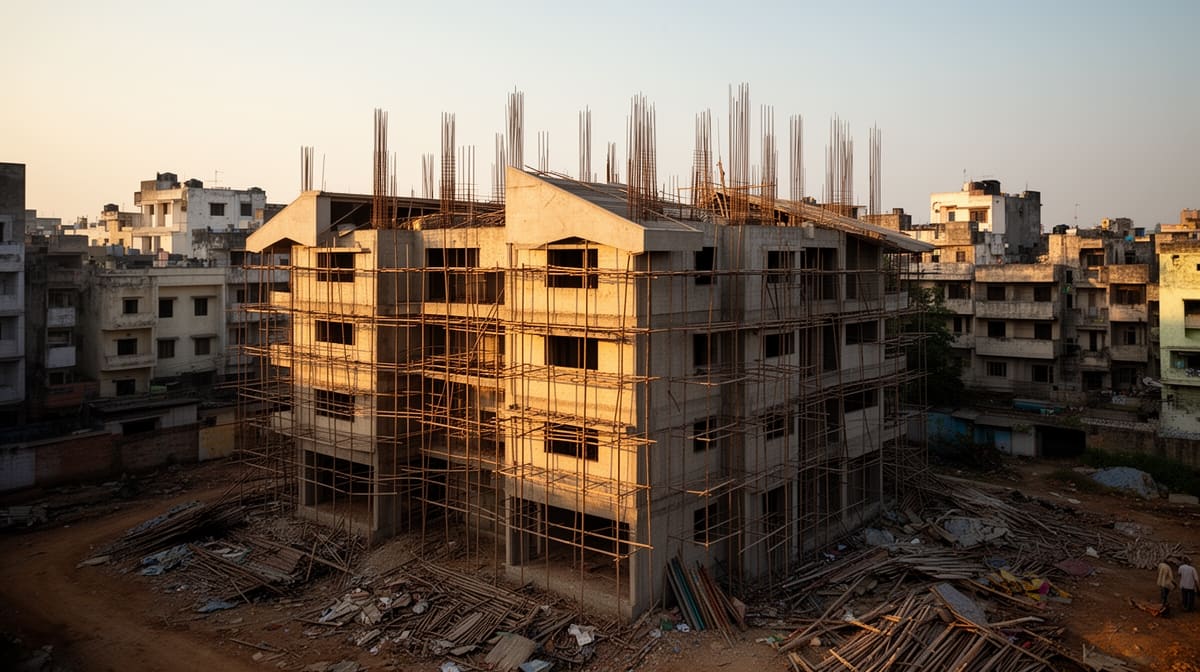
The petitioner, Preeti Manohar Sakpal, operated a video game parlour on M.G. Road, Santacruz (West), Mumbai, on land originally acquired by her father through an unregistered sale agreement dated 12 September 1986. The structure, measuring 40 x 10 feet, was built on what the BMC contends is a public footpath, part of a street as defined under Section 3(w) of the Brihanmumbai Municipal Corporation Act, 1888. Despite the absence of any sanctioned plan or permission from the BMC, the petitioner continued to occupy and operate the business for over three decades.
Procedural History
- 1986: Unregistered agreement executed for purchase of open land.
- 1987: Electricity meter transferred to petitioner’s name.
- 2012: Additional Tahsildar issued notice under Section 45 of the MRTP Act, which petitioner claimed proved pre-datum existence.
- 30 July 2019: BMC issued notice under Section 314 of the BMC Act directing removal of the structure as an encroachment on a public street.
- 2 August 2019: Petitioner filed a civil suit seeking injunction against demolition, bypassing statutory remedies.
- 7 May 2024: City Civil Court dismissed the injunction application, holding that the structure was unauthorised and no title was established.
- 27 November 2024: Bombay High Court granted interim stay against demolition.
- 15 May 2025: BMC partially demolished the structure during a city-wide drive; petitioner alleged contempt.
- 16 August 2025: Structure was reconstructed by petitioner, allegedly "without prejudice".
Relief Sought
The petitioner sought to set aside the dismissal of her injunction application and to initiate contempt proceedings against the BMC for violating the interim stay. She also sought restoration of the demolished portion to its original size.
The Legal Issue
The central question was whether payment of property tax, electricity bills, shop registration, or long-term possession can create a legal right or equity to protect an unauthorised structure erected on a public street under Section 314 of the BMC Act, or whether such structures remain liable to removal without notice regardless of duration of occupation.
Arguments Presented
For the Petitioner
The petitioner relied on: (1) the 1986 unregistered agreement to establish possession; (2) electricity bills spanning over 40 years as proof of continuous use; (3) payment of non-agricultural tax and municipal assessment; (4) issuance of a shop and establishment certificate by BMC; and (5) the 2012 MRTP Act notice as evidence of pre-datum existence. She argued that Section 314 was misapplied as it pertains to hawkers, not permanent structures, and that due process under Section 351 should have been followed. She further contended that the BMC’s delay in acting for over two decades estopped it from now seeking demolition.
For the Respondent
The BMC countered that the agreement was unregistered and related to public land, not private property. It submitted that none of the documents cited - tax payments, electricity bills, or commercial licences - confer title or legal right. It relied on Section 3(w) of the BMC Act to establish that the structure stood on a public street, making it subject to removal under Section 314. It further cited Municipal Corporation of Gr. Bombay v. Premnagar Zopadpatti Committee Society and Sidharam M. Yanagandul to affirm that tax assessment does not regularise illegal construction. The BMC also argued that the civil suit was an abuse of process, as the petitioner failed to exhaust statutory remedies under Section 527.
The Court's Analysis
The Court undertook a rigorous analysis of statutory provisions, precedent, and equitable principles. It held that Section 314 permits removal without notice of any structure erected on a public street, and that the definition of "street" under Section 3(w) explicitly includes footpaths and passages over which the public has uninterrupted access for twenty years. The structure, situated behind a chowki and abutting a railway line, clearly fell within this definition.
"The document does not transfer, nor does it even purport to transfer, any structure standing thereon. On the contrary, the agreement expressly contemplates transfer of 'open space'."
The Court categorically rejected the petitioner’s reliance on tax payments and commercial licences, citing Sidharam M. Yanagandul and Tata Hydro Electric Power Supply Co. Ltd. to affirm that municipal assessment of property tax does not regularise unauthorised construction. The Court noted that the BMC is statutorily empowered to levy taxes on both authorised and unauthorised structures, and that such levies are fiscal, not legitimising, in nature.
The Court also dismissed the argument that Section 314 was inapplicable because it was meant for hawkers, holding that Section 314(d) explicitly empowers removal of any person "unauthorisedly occupying or wrongfully in possession of any public land." The Court further held that the petitioner’s civil suit was an abuse of process, as Section 527 mandates exhaustion of statutory remedies before approaching civil courts.
The Court found the petitioner’s conduct to be in clear violation of the doctrine of clean hands, citing Dalip Singh v. State of Uttar Pradesh to hold that a litigant who attempts to mislead the Court by suppressing facts or relying on inadmissible documents is not entitled to equitable relief.
Regarding the partial demolition, the Court acknowledged the BMC’s violation of the interim order but accepted the explanation that it occurred during a city-wide drive and was promptly rectified. The unconditional apology and reconstruction were deemed sufficient to close contempt proceedings, though the Court issued a stern warning.
The Verdict
The petitioner’s appeal was dismissed. The Court upheld the trial court’s order, affirmed the BMC’s power to remove the structure under Section 314 of the BMC Act, and held that long possession, tax payments, and commercial licences do not confer legal rights on unauthorised structures on public land. The petitioner was ordered to pay ₹5 lakh as costs to the Armed Forces Battle Casualties Welfare Fund.
What This Means For Similar Cases
Tax Payments Do Not Regularise Illegal Structures
- Practitioners must advise clients that payment of property tax, electricity bills, or shop registration certificates cannot be used to establish legal title or resist demolition under BMC Act Section 314.
- Municipal assessments are fiscal tools, not authorisation mechanisms - this is now settled law in Maharashtra.
- Any claim of "deemed regularisation" based on tax history must be rebutted with reference to Sidharam Yanagandul and Laxmi Gopinath Shetye.
Statutory Remedies Must Be Exhausted First
- Civil suits challenging BMC demolition notices under Section 314 are maintainable only after exhausting remedies under Section 527.
- Filing a civil suit prematurely constitutes abuse of process and invites cost penalties, as seen in this case.
- Lawyers must verify whether the notice was issued under Section 314 (no notice required) or Section 351 (hearing required) before filing any remedy.
Contempt Cannot Be Used to Prolong Illegality
- Contempt proceedings initiated to delay demolition of unauthorised structures will be viewed as tactical abuse.
- Courts will not permit contempt jurisdiction to be weaponised to protect illegal occupation.
- While violations of stay orders are serious, prompt corrective action and apology may suffice to close proceedings - provided the underlying illegality is not condoned.