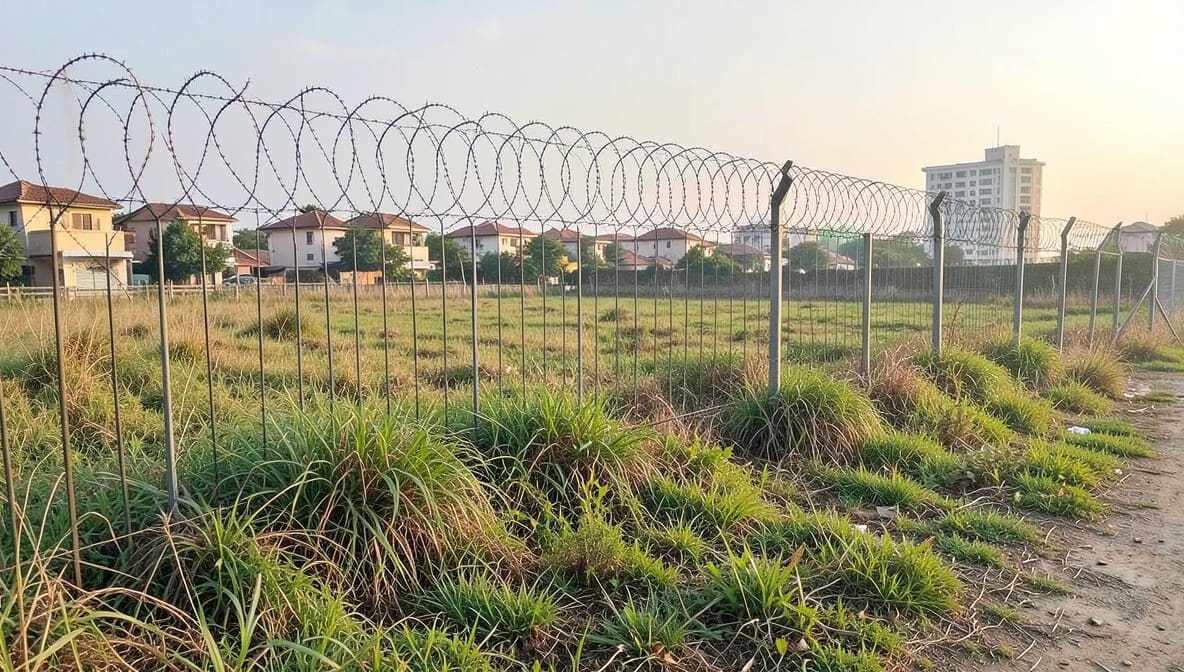
The Punjab & Haryana High Court has reaffirmed that municipal vesting of private property under Town Planning Schemes is contingent upon strict implementation within the statutory period. In a significant ruling, the Court held that mere sanctioning of a scheme does not divest private ownership unless the scheme is duly executed, and failure to implement development works within the prescribed timeframe results in automatic lapse of the scheme. The judgment also clarifies the limited scope of res judicata in cases where a predecessor-in-interest was merely a proforma party in earlier litigation.
Background & Facts
The Dispute
The case revolves around a plot measuring 812 square yards in Shivaji Nagar, Gurugram, claimed by the respondent, Smt. Kasturi Devi, as her lawful property through family settlement and a decree dated 30.03.1984. The appellant, Municipal Committee, Gurugram, asserted that the plot formed part of Town Planning Scheme No. 6-C and vested in the municipality as an open space. The respondent sought a decree of perpetual injunction to restrain the municipality from interfering with her possession and construction rights.
Procedural History
The dispute traversed multiple judicial forums:
- 1984: Respondent filed a suit for injunction before the trial court.
- 15.04.1991: Trial court decreed the suit, holding the respondent as owner in possession but acknowledging the plot’s inclusion in the Town Planning Scheme. The court, however, ruled that the scheme had lapsed due to non-implementation.
- 27.09.1996: First Appellate Court affirmed the trial court’s decree, reversing the finding on the plot’s inclusion in the scheme and rejecting the plea of res judicata based on earlier litigation involving the respondent’s husband.
- 1997: Municipal Committee filed a Regular Second Appeal before the High Court.
Relief Sought
The appellant sought to set aside the concurrent decrees of the lower courts, contending that:
- The suit property vested in the municipality under the Town Planning Scheme.
- The suit was barred by res judicata due to earlier litigation involving the respondent’s husband.
The Legal Issue
The High Court was called upon to determine:
- Whether the suit property vested in the Municipal Committee under Town Planning Scheme No. 6-C, notwithstanding its non-implementation within the statutory period.
- Whether the suit was barred by res judicata in light of earlier proceedings involving the respondent’s predecessor-in-interest.
Arguments Presented
For the Appellant (Municipal Committee)
The appellant contended that:
- The suit property formed part of Town Planning Scheme No. 6-C and vested in the municipality as an open space, relying on Section 203(6) of the Haryana Municipal Act, 1973.
- The respondent’s husband, Ram Chander, was a party to earlier litigation (Tara Wanti vs. Municipal Committee, Gurugram), and the dismissal of his appeal operated as res judicata against the respondent.
- The lower courts erred in holding that the scheme had lapsed due to non-implementation, as the statutory period was not strictly enforceable.
For the Respondent (Smt. Kasturi Devi)
The respondent argued that:
- The appellant failed to prove that the suit property fell within the reserved area of the Town Planning Scheme, as the site plan was defective and lacked demarcation.
- The scheme had lapsed due to non-implementation within five years, as mandated by Section 203(6) of the Haryana Municipal Act, and thus could not divest her ownership.
- The plea of res judicata was misconceived, as her husband was merely a proforma party in the earlier litigation, and his rights were never adjudicated.
The Court's Analysis
The High Court conducted a meticulous examination of the evidence and legal principles governing municipal vesting and res judicata.
Municipal Vesting and Lapse of Town Planning Schemes
The Court reiterated the settled legal position that vesting of private property in a municipality under a Town Planning Scheme is not automatic upon sanctioning. It emphasized that:
"Mere sanction of a planning scheme does not automatically divest private ownership unless the property is clearly reserved and the scheme is duly implemented in accordance with law."
The Court relied on Section 203(6) of the Haryana Municipal Act, 1973, which mandates that a Town Planning Scheme must be implemented within five years of its sanction, failing which it lapses. The appellant’s failure to prove implementation of essential development works, such as roads and sewerage, within the statutory period was held to be fatal to its claim. The Court noted:
"The Municipal Committee having failed to discharge this burden, the plea of vesting was rightly rejected."
The Court also highlighted the appellant’s inability to establish precise demarcation of the suit property within the scheme. The respondent’s evidence, including a clarification from the District Town Planner and reports of the Local Commissioner, demonstrated that the suit property did not fall within any reserved area. The Court observed:
"The documents relied upon by the defendant failed to clearly demarcate the boundaries of Khasra No. 252/2 or to demonstrate that the suit property specifically fell within an area reserved for a park or street."
Res Judicata and Proforma Parties
The Court addressed the appellant’s plea of res judicata, which hinged on earlier litigation involving the respondent’s husband, Ram Chander. The Court clarified the limited scope of res judicata in cases where a party was merely proforma and no substantive relief was claimed or adjudicated against them. It held:
"For an application of res judicata, it is essential that the issue must have been directly and substantially in issue between the same parties and must have been finally adjudicated. These ingredients are conspicuously absent in the present case."
The Court noted that Ram Chander was neither a signatory to the compromise in the earlier litigation nor were his rights adjudicated. The dismissal of his appeal as infructuous, due to the withdrawal of the main suit, could not operate as res judicata against the respondent.
Scope of Second Appeal
The Court underscored the limited scope of interference in second appeals under Section 100 of the Code of Civil Procedure, 1908. It held that concurrent findings of fact, based on appreciation of evidence, cannot be re-opened unless shown to be perverse or based on no evidence. The Court found no such perversity in the lower courts’ findings and declined to interfere.
The Verdict
The High Court dismissed the Regular Second Appeal, affirming the concurrent decrees of the lower courts. The Court held that:
- The suit property did not vest in the Municipal Committee, as the Town Planning Scheme had lapsed due to non-implementation within the statutory period.
- The suit was not barred by res judicata, as the respondent’s predecessor-in-interest was merely a proforma party in earlier litigation.
What This Means For Similar Cases
Strict Compliance with Statutory Timelines for Town Planning Schemes
Practitioners must note that municipal vesting under Town Planning Schemes is not automatic. The judgment reinforces that:
- Sanctioning of a scheme alone does not divest private ownership; implementation of development works within the statutory period is mandatory.
- Failure to implement the scheme within five years under Section 203(6) of the Haryana Municipal Act results in automatic lapse, restoring the original ownership rights.
- Municipal authorities must maintain clear demarcation records to establish that a property falls within a reserved area. Defective or incomplete site plans may be fatal to claims of vesting.
Limited Scope of Res Judicata for Proforma Parties
The judgment clarifies the narrow applicability of res judicata in cases involving proforma parties:
- Res judicata does not bind successors-in-interest where the predecessor was merely a proforma party and no substantive rights were adjudicated.
- Dismissal of an appeal as infructuous does not operate as res judicata, as it does not amount to a final adjudication on merits.
- Practitioners defending private property rights should scrutinize earlier litigation to determine whether the predecessor’s rights were substantively adjudicated.
Evidentiary Burden in Vesting Disputes
The judgment underscores the high evidentiary burden on municipal authorities claiming vesting:
- Documentary evidence must clearly establish that the property falls within a reserved area and that the scheme was implemented within the statutory period.
- Oral testimony of municipal officials must corroborate implementation; inability to do so may result in adverse findings.
- Local Commissioner’s reports and clarifications from planning authorities carry significant weight in determining the status of a property under a Town Planning Scheme.