The Punjab and Haryana High Court has clarified that municipal bodies cannot assert ownership over residual open spaces in a privately developed colony merely by assertion or general municipal practice. The judgment underscores the necessity of concrete evidence to establish vesting, reinforcing the principle that possession without legal title is insufficient.
Background & Facts
The Dispute
The appellant, The Hisar House Building Co-operative Society Limited, is a registered co-operative society under the Co-operative Societies Act, 1912. It purchased a parcel of land measuring 50 Bighas and 2 Biswas in Hisar through a registered sale deed dated 14.07.1959, comprising Khasra Nos. 5017, 5018, 5019, 5021, 5022, 5028, and 5029, as recorded in the Jamabandi for 1945 - 46. The society subsequently developed the land into a residential layout, carving out 121 plots and reserving portions for roads, streets, and parks. By Resolution No. 1076 dated 31.12.1964, the Municipal Committee declared certain areas depicted in yellow on the site plan as public streets, parks, and roads. The land shown in green was allotted to society members, while the land shown in red remained vacant and under the society’s ownership.
Key Facts
- The society obtained sanction for the layout plan, later revised vide memo No. 6446-PTP/H-19 dated 29.08.1960.
- The society allotted land shown in green to its members, evidenced by approved site plans of individual plots (Ex. P1, Ex. P2).
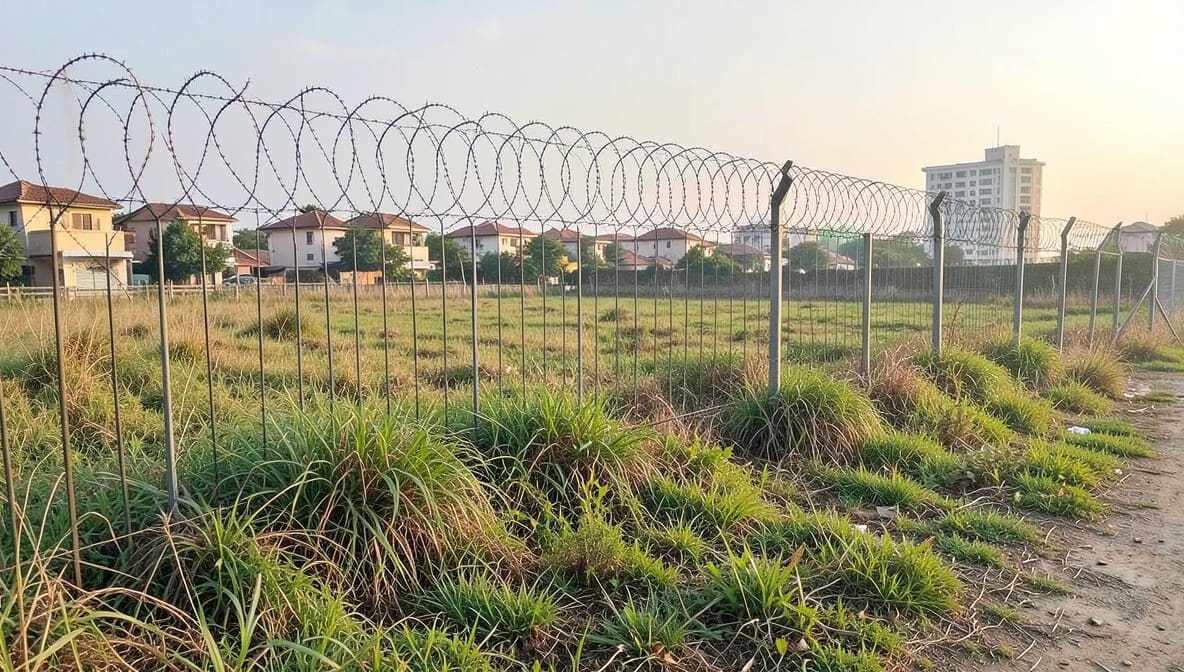
- The respondent, Municipal Committee, Hisar, fenced the red-marked vacant land (700 square yards) with barbed wire on 30.07.1983, claiming it was a public park.
- The society filed a suit for permanent injunction and mandatory injunction to remove the encroachment.
- The Municipal Committee admitted in its written statement that the society owned the plots and developed the colony, but denied ownership of the residual open spaces.
- The society attempted to procure Resolution No. 1076 and the original layout plan from the Municipal Committee, but officials failed to produce them despite repeated requests.
- The Municipal Committee did not lead any evidence to substantiate its claim of vesting.
Procedural History
- 14.07.1959: Registered sale deed executed for purchase of land.
- 31.12.1964: Municipal Committee issued Resolution No. 1076 declaring roads, streets, and parks as public.
- 29.08.1960: Revised layout plan issued.
- 30.07.1983: Municipal Committee fenced the disputed land.
- 1992: Suit filed by the society.
- 12.02.1992: Trial Court (Sub-Judge Ist Class, Hisar) decreed the suit, holding the society as owner and directing removal of barbed wire within one month.
- 14.08.1995: First Appellate Court (Additional District Judge, Hisar) reversed the trial court’s decree, dismissing the suit on grounds of failure to prove ownership.
- 23.04.2026: Regular Second Appeal heard and reserved.
- 30.04.2026: Judgment pronounced by the Punjab and Haryana High Court.
The Parties' Positions
Appellant (Society): Contended that the residual land (red-marked) was never transferred to the Municipal Committee and remained its property. It relied on admissions in the written statement, the absence of any vesting document, and the fact that other green-marked land had been allotted to members. It sought restoration of the trial court’s decree.
Respondent (Municipal Committee): Argued that all open spaces in a developed colony, including the disputed land, automatically vest in the Municipal Committee under the Haryana Municipal Act. It claimed the land was being used as a public park and that the society failed to prove title.
Relief Sought
The appellant sought: (1) setting aside of the First Appellate Court’s order dated 14.08.1995; (2) restoration of the Trial Court’s decree dated 12.02.1992; (3) mandatory injunction directing removal of barbed wire; and (4) costs. The appellant also sought permission to adduce additional evidence, including the sale deed and Jamabandis for 1974 - 75 and 2018 - 19.
The Legal Issue
The central question was whether a Municipal Committee can claim ownership over residual open spaces in a privately developed colony solely on the basis of general municipal practice or assertion, without any documentary evidence of transfer or vesting under law or agreement.
Arguments Presented
For the Appellant
The appellant relied on the Trial Court’s well-reasoned findings that the Municipal Committee failed to produce Resolution No. 1076 or the layout plan despite being in possession of the records. It argued that the written statement admitted the society’s ownership of the colony land and that the burden of proving vesting lay on the respondent. It cited the principle of adverse inference under Section 114 of the Indian Evidence Act for failure to produce best evidence. It further distinguished Jesico Agro Engineering Pvt. Ltd. v. Municipal Committee, Jagadhri on the ground that in that case, vesting was statutorily mandated under Section 61 of the Municipal Act, whereas here, no such provision applied.
For the Respondent
The respondent contended that under the Haryana Municipal Act and settled municipal law, all open spaces in a colony, including those not designated as roads or parks, vest in the Municipal Committee upon development. It argued that the appellant’s failure to produce the layout plan or prove the disputed land was part of the original Khasra numbers rendered its claim unproven. It opposed the application for additional evidence, invoking Order XLI Rule 27 CPC, asserting that the documents were always available and that the delay of over three decades attracted the doctrine of laches.
The Court's Analysis
The Court undertook a meticulous review of the pleadings, evidence, and findings of the courts below. It emphasized that the Municipal Committee’s claim of ownership was not based on any statutory provision, notification, or agreement, but on mere assertion. The Court noted that the respondent itself admitted in its written statement that the society owned the plots and developed the colony, thereby implicitly acknowledging the society’s original title.
"Municipal Committee has no right on the land of plaintiff society. There is no provision of law which authorises the Municipal Committee to become owner of any such vacant land."
The Court held that the burden of proving vesting rested squarely on the respondent, which failed to discharge it. The failure of Municipal Committee officials to produce Resolution No. 1076 and the layout plan, despite being summoned as witnesses and having custody of the records, justified the drawing of an adverse inference under Section 114 of the Indian Evidence Act. The Trial Court’s finding that the land remained with the society was therefore well-founded.
The Court further distinguished Jesico Agro Engineering Pvt. Ltd. v. Municipal Committee, Jagadhri, noting that in that case, vesting was explicitly provided for under Section 61 of the Municipal Act. Here, no such statutory provision was invoked or proved. The First Appellate Court’s reversal was based on conjecture and misappreciation of admissions, not evidence.
The Court also rejected the application for additional evidence, holding that the documents sought to be produced were not newly discovered and were within the appellant’s knowledge at the time of trial. The delay of nearly three decades rendered the application untenable under Order XLI Rule 27 CPC.
The Verdict
The appellant succeeded. The High Court set aside the judgment and decree of the First Appellate Court dated 14.08.1995 and restored the Trial Court’s decree dated 12.02.1992. The Municipal Committee was directed to remove the barbed wire encircling the 700 square yards of disputed land within one month from the date of the judgment. Costs of Rs. 50,000 were awarded to the appellant. The application for additional evidence was dismissed.
What This Means For Similar Cases
Vesting Requires Positive Proof, Not Presumption
- Municipal bodies cannot claim ownership of open spaces by default or through general administrative practice.
- Practitioners must insist on documentary proof of transfer, statutory vesting, or formal agreement before accepting municipal claims over residual land.
Adverse Inference Is a Powerful Tool Against Non-Production of Records
- When a party with custody of key documents fails to produce them, courts may draw adverse inference under Section 114 of the Indian Evidence Act.
- This principle applies equally to government bodies and private entities.
Pleadings Can Constitute Admissions of Title
- Even partial admissions in written statements can establish a party’s ownership, especially when the opposing party’s claim lacks evidentiary support.
- Lawyers should carefully analyze pleadings for implicit acknowledgments of title or possession.
Limitation on Additional Evidence Is Strict
- Applications under Order XLI Rule 27 CPC will be rejected if documents were available at trial, even if not formally exhibited.
- Delay of decades, as in this case, is fatal to such applications regardless of the document’s relevance.