The Bombay High Court has reaffirmed the principle that land reservations under Section 127 of the Maharashtra Regional and Town Planning Act, 1966 (MRTP Act) automatically lapse if the planning authority fails to take legally recognized steps for acquisition within the statutory period. This judgment underscores the mandatory nature of acquisition timelines and the rights of landowners when authorities neglect their statutory obligations.
Background & Facts
The Dispute
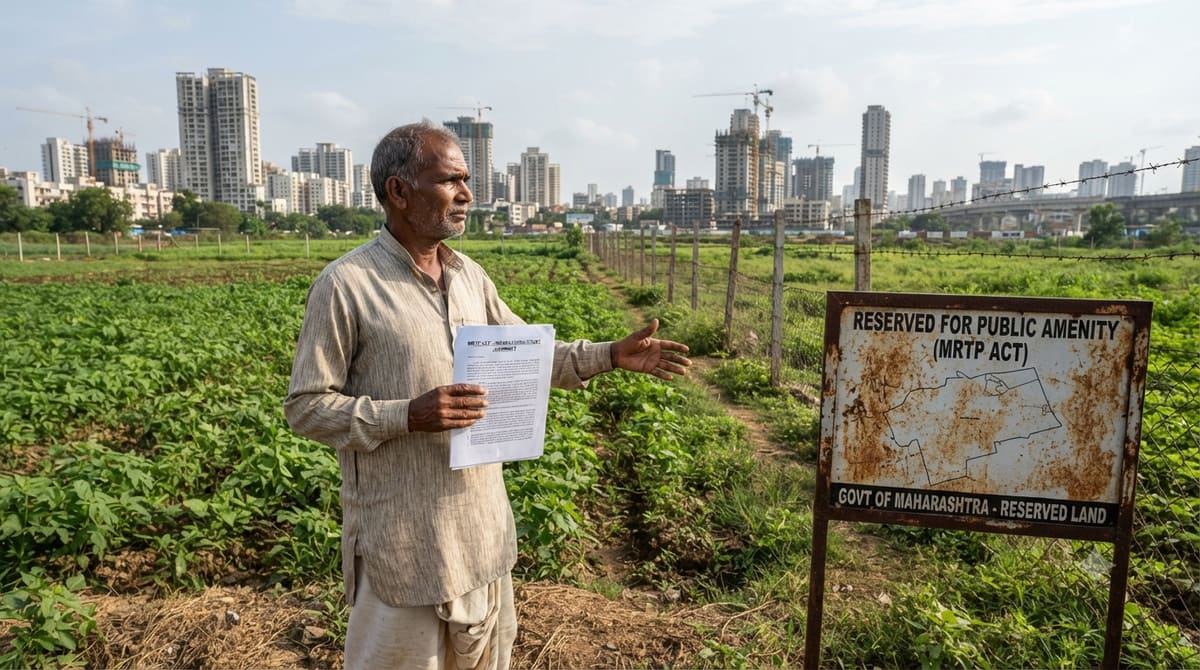
The petitioners, owners of land bearing Survey No. 117/4 admeasuring 1 Hectare 93 R, 2 Hectares 46 R, and 18 R (Potkharaba) situated at Village Sangmeshwar, Taluka Malegaon, District Nashik, challenged the reservation of their land for a burial ground under the Draft Development Plan sanctioned on 15 September 2006. Despite the reservation, the respondents failed to acquire the land within the statutory period, leading to the lapse of the reservation under Section 127 of the MRTP Act.
Key Facts
- The petitioners’ land was reserved for a burial ground in the Draft Development Plan sanctioned on 15 September 2006.
- The respondents failed to acquire the land within 10 years of the reservation, as required under Section 127 of the MRTP Act.
- The petitioners served a Purchase Notice on the Malegaon Municipal Corporation on 19 November 2018 by hand delivery.
- A second Purchase Notice was issued on 5 December 2018 due to non-response from the respondents.
- The statutory period of 24 months under Section 127 of the MRTP Act, reckoned from the date of service of the Purchase Notice, expired on 19 November 2020.
- The respondents failed to take any legally recognized steps for acquisition, such as issuing a declaration under Section 19 of the Fair Compensation Act, 2013 or Section 6 of the Land Acquisition Act, 1894.
Procedural History
- 19 November 2018: First Purchase Notice served on the Malegaon Municipal Corporation.
- 5 December 2018: Second Purchase Notice served due to non-response.
- 11 December 2018: Deputy Commissioner, Malegaon Municipal Corporation, requested documents of ownership.
- 20 December 2018: Petitioners submitted 7/12 extracts and measurement maps to the Municipal Corporation.
- 19 November 2020: Statutory period of 24 months under Section 127 MRTP Act expired without any acquisition steps.
- 2023: Petitioners filed Writ Petition No. 2732 of 2023 before the Bombay High Court.
- 23 April 2026: Matter reserved for judgment.
- 30 June 2026: Judgment pronounced.
The Parties' Positions
For the Petitioners
The petitioners argued that the reservation of their land lapsed under Section 127 of the MRTP Act due to the respondents' failure to take legally recognized steps for acquisition within 24 months of the Purchase Notice. They relied on precedents such as Girnar Traders vs. State of Maharashtra and Ramakant Vasudeo Pai vs. State of Maharashtra, which establish that mere administrative steps are insufficient to prevent the lapse of reservation.
For the Respondents
The respondents contended that:
- The COVID-19 pandemic disrupted acquisition proceedings, justifying an exclusion of the pandemic period from the statutory timeline.
- The land was measured on 18 April 2024, but discrepancies in the measurement required further action.
- Letters dated 6 May 2024 and 18 December 2024 were issued to rectify the measurement defects.
- The respondents assured that the petitioners would be compensated upon completion of the measurement process.
Relief Sought
The petitioners sought a declaration that Reservation No. 378 had lapsed under Section 127 of the MRTP Act and that their land was free from reservation. They prayed for the court to direct the respondents to notify the lapsing of the reservation.
The Legal Issue
The central question was whether the failure of the planning authority to take legally recognized steps for acquisition within 24 months of the Purchase Notice under Section 127 of the MRTP Act results in the automatic lapse of the land reservation, even if administrative steps were purportedly taken.
Arguments Presented
For the Petitioners
- The petitioners relied on Girnar Traders vs. State of Maharashtra and Ramakant Vasudeo Pai vs. State of Maharashtra to argue that Section 127 of the MRTP Act mandates the lapse of reservation if no legally recognized acquisition steps are taken within 24 months of the Purchase Notice.
- Mere administrative steps, such as measurement or correspondence, do not constitute commencement of acquisition proceedings under the law.
- The respondents’ failure to issue a declaration under Section 19 of the 2013 Act or Section 6 of the 1894 Act within the statutory period renders the reservation lapsed.
For the Respondents
- The respondents argued that the COVID-19 pandemic justified the exclusion of the pandemic period from the statutory timeline.
- They contended that steps such as measurement of the land and issuance of letters to rectify defects constituted commencement of acquisition proceedings.
- They assured that the petitioners would be compensated upon completion of the measurement process.
The Court's Analysis
The Court critically examined the respondents' arguments and the legal framework under Section 127 of the MRTP Act. It held that:
-
Legally Recognized Steps Are Mandatory: The Court reiterated the principle established in Girnar Traders vs. State of Maharashtra that commencement of acquisition proceedings requires the issuance of a declaration under Section 6 of the Land Acquisition Act, 1894 or Section 19 of the Fair Compensation Act, 2013. Mere administrative steps, such as measurement or correspondence, do not suffice.
"The legislative object underlying Sections 126 and 127 of the MRTP is to ensure the expeditious acquisition of the land reserved under the town planning plan. Section 127 grants the authorities not only an initial period of ten years but also a further period of 24 months (2 years), after service of a Purchase Notice, either to acquire the land or to take legally recognized steps towards its acquisition. Mere administrative steps that may eventually lead to acquisition are insufficient."
-
Purpose of Section 127: The Court emphasized that Section 127 of the MRTP Act is designed to prevent land from being locked under reservation indefinitely. If the land is not utilized for the reserved purpose within the statutory period, the owner must be allowed to use the land as permissible under town planning law.
-
Failure to Comply: The Court noted that the respondents failed to take any legally recognized steps within the 24-month period prescribed under Section 127. The affidavits filed by the respondents did not disclose the issuance of any declaration under Section 19 of the 2013 Act or Section 6 of the 1894 Act, which are prerequisites for commencing acquisition proceedings.
-
COVID-19 Pandemic: The Court rejected the respondents' argument that the COVID-19 pandemic justified the exclusion of the pandemic period from the statutory timeline. It held that the respondents had ample time to initiate acquisition proceedings but failed to do so.
The Verdict
The Bombay High Court allowed the writ petition and declared that Reservation No. 378 had lapsed under Section 127 of the MRTP Act. The Court directed Respondent No. 1 (State of Maharashtra) to notify the lapsing of the reservation within two months from the date of the judgment (30 June 2026). The petitioners' land was declared free from the reservation.
What This Means For Similar Cases
Strict Compliance with Statutory Timelines Is Non-Negotiable
- Section 127 of the MRTP Act imposes a mandatory obligation on planning authorities to either acquire the land or take legally recognized steps within 24 months of the Purchase Notice.
- Mere administrative steps, such as measurement or correspondence, do not constitute compliance with the statutory requirements.
- Practitioners must emphasize that declarations under Section 6 of the Land Acquisition Act, 1894 or Section 19 of the Fair Compensation Act, 2013 are essential to commence acquisition proceedings.
Landowners' Rights Are Protected Against Indefinite Reservations
- Landowners can challenge reservations if authorities fail to act within the statutory period.
- Courts are likely to strictly interpret the timelines under Section 127, ensuring that land is not locked under reservation indefinitely.
- Landowners should serve Purchase Notices and track compliance to enforce their rights under the MRTP Act.
COVID-19 Pandemic Is Not a Blanket Excuse
- Authorities cannot rely on the COVID-19 pandemic as a blanket justification for failing to comply with statutory timelines.
- Courts will scrutinize whether authorities took proactive steps to initiate acquisition proceedings during the pandemic.
- Landowners can challenge delays if authorities fail to demonstrate concrete steps taken during the pandemic period.