The Bombay High Court Nagpur Bench has remanded a Scheduled Tribe caste certificate claim for fresh consideration after quashing the rejection orders passed by the Sub-Divisional Officer and the Scrutiny Committee. The Court held that subsequent evidence, including a validity certificate issued to a close paternal blood relative, must be considered by the competent authority before adjudicating the claim.
Background & Facts
The Dispute
The petitioner, Mrs. Sangita Vilas Wankhede, claims to belong to the "Thakur" Scheduled Tribe. Her application for a caste certificate was rejected by the Sub-Divisional Officer (SDO), Daryapur, District Amravati, on 14.10.2022. The petitioner appealed to the Scheduled Tribe Caste Certificate Scrutiny Committee, Amravati, which dismissed her appeal vide order dated 29.12.2023. Both orders are challenged in the present writ petition.
Key Facts
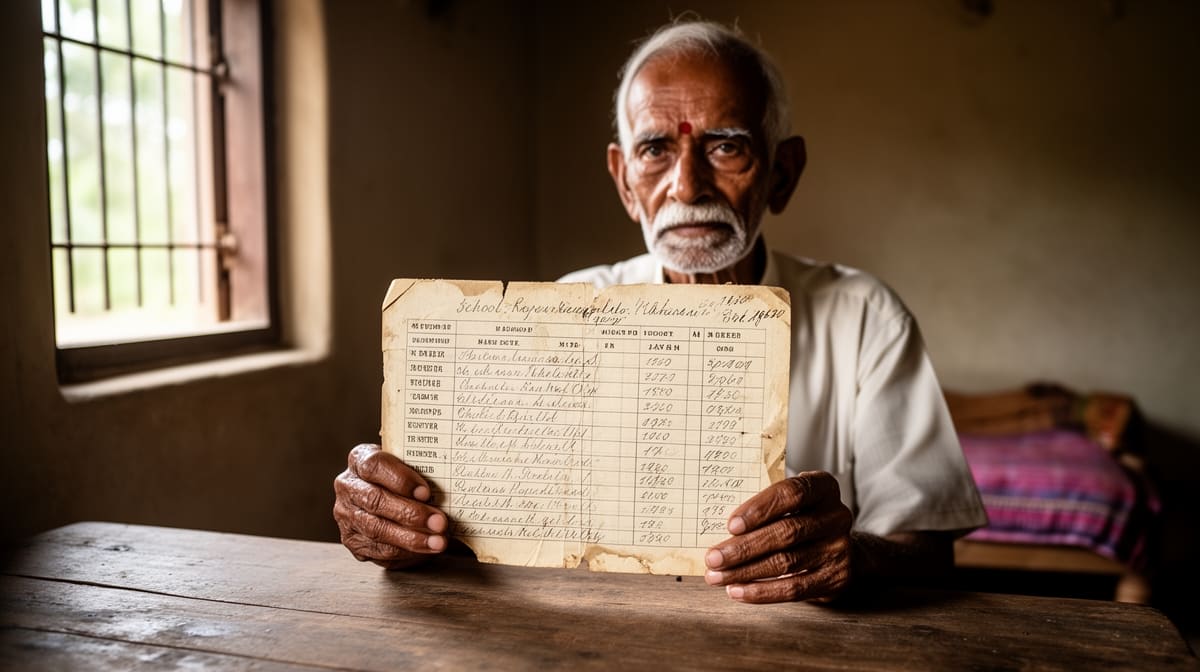
- The petitioner relied on a 1931 document of her great-great-grandfather, where the caste was recorded as "Thakore". The petitioner contends that this is merely a spelling variation of "Thakur".
- During the pendency of the writ petition, the petitioner's real cousin brother, Sarthak S/o Digambar Gite, was granted a Scheduled Tribe validity certificate by this Court in Writ Petition No. 5202 of 2023, dated 23.08.2024.
- The petitioner sought to place this validity certificate, along with other pre-Constitution documents of her blood relatives, before the competent authority for reconsideration of her claim.
Procedural History
- 14.10.2022: Order of rejection by Sub-Divisional Officer, Daryapur, District Amravati.
- 29.12.2023: Order of dismissal by Scheduled Tribe Caste Certificate Scrutiny Committee, Amravati.
- 2024: Writ Petition No. 5202 of 2023 decided by this Court on 23.08.2024, granting validity certificate to the petitioner's cousin brother.
- Present: Writ Petition No. 4933/2024 filed before the Bombay High Court Nagpur Bench.
The Parties' Positions
The petitioner argued that the 1931 document should be read as "Thakur" and that the subsequent validity certificate of her cousin brother is relevant evidence supporting her claim. The respondents supported the impugned orders, contending that the 1931 document recorded the caste as "Thakore" and that no interference was warranted.
Relief Sought
The petitioner sought quashing of the orders dated 14.10.2022 and 29.12.2023, and a direction to the competent authority to reconsider her application for a caste certificate, including the subsequent validity certificate and additional pre-Constitution documents.
The Legal Issue
The central question was whether the competent authority erred in rejecting the petitioner's caste certificate claim without considering subsequent relevant evidence, including a validity certificate issued to a close paternal blood relative.
Arguments Presented
For the Petitioner
- The 1931 document recording the caste as "Thakore" is merely a spelling variation of "Thakur".
- The validity certificate issued to the petitioner's real cousin brother in Writ Petition No. 5202 of 2023 is a subsequent and relevant development that supports her claim.
- Additional pre-Constitution documents of her blood relatives were not considered by the authorities.
For the Respondent
- The 1931 document recorded the caste as "Thakore", not "Thakur".
- The authorities correctly rejected the petitioner's claim based on the evidence before them.
- The Assistant Government Pleader, however, conceded that the subsequent validity certificate could be considered and left the matter to the discretion of the Court.
The Court's Analysis
The Court examined the rival submissions and the material on record. It noted that the impugned orders were passed prior to the issuance of the validity certificate to the petitioner's cousin brother. The Court held that a validity certificate issued in favor of a close paternal blood relative is a relevant piece of evidence, though not conclusive, and must be considered by the competent authority while adjudicating a caste claim.
The Court also observed that the petitioner sought to rely upon additional pre-Constitution documentary evidence, which was either not available or not placed before the authorities at the relevant time. The Court emphasized that a claim for a caste certificate must be adjudicated on the appreciation of the entire documentary evidence, including any subsequent material having a bearing on the claim.
"Since the claim for issuance of a caste certificate is required to be adjudicated by the competent authority on appreciation of the entire documentary evidence, including any subsequent material having a bearing on the claim, we are of the view that the ends of justice would be subserved by remanding the matter to the competent authority for a fresh consideration rather than undertaking such an exercise for the first time in exercise of our writ jurisdiction."
The Court distinguished the present case from those where the writ court undertakes a fresh adjudication, holding that remand is more appropriate where the competent authority has not considered all relevant evidence.
The Verdict
The Court allowed the writ petition. It quashed and set aside the orders dated 14.10.2022 and 29.12.2023. The matter was remanded to the Sub-Divisional Officer, Daryapur, District Amravati, for fresh consideration of the petitioner's application. The petitioner was permitted to place on record the validity certificate issued to her cousin brother, along with other relevant pre-Constitution documents and additional material permissible in law. The SDO was directed to pass a reasoned order in accordance with law, uninfluenced by any observations in the impugned orders or this order.
What This Means For Similar Cases
Subsequent Evidence Is Relevant and Must Be Considered
- Competent authorities adjudicating caste certificate claims must consider all relevant evidence, including subsequent developments such as validity certificates issued to close blood relatives.
- Failure to consider such evidence may vitiate the adjudication and warrant judicial intervention.
Remand Is Preferred Over Fresh Adjudication in Writ Jurisdiction
- Where the competent authority has not considered all relevant evidence, the writ court may remand the matter for fresh consideration rather than adjudicate the claim itself.
- This approach ensures that the competent authority, which is statutorily empowered to adjudicate such claims, performs its role after considering all material.
Pre-Constitution Documents Require Careful Scrutiny
- Pre-Constitution documents, such as the 1931 entry, must be carefully examined for variations in spelling or transcription errors.
- Such documents are relevant but not conclusive and must be considered alongside other evidence to determine the true caste of the claimant.