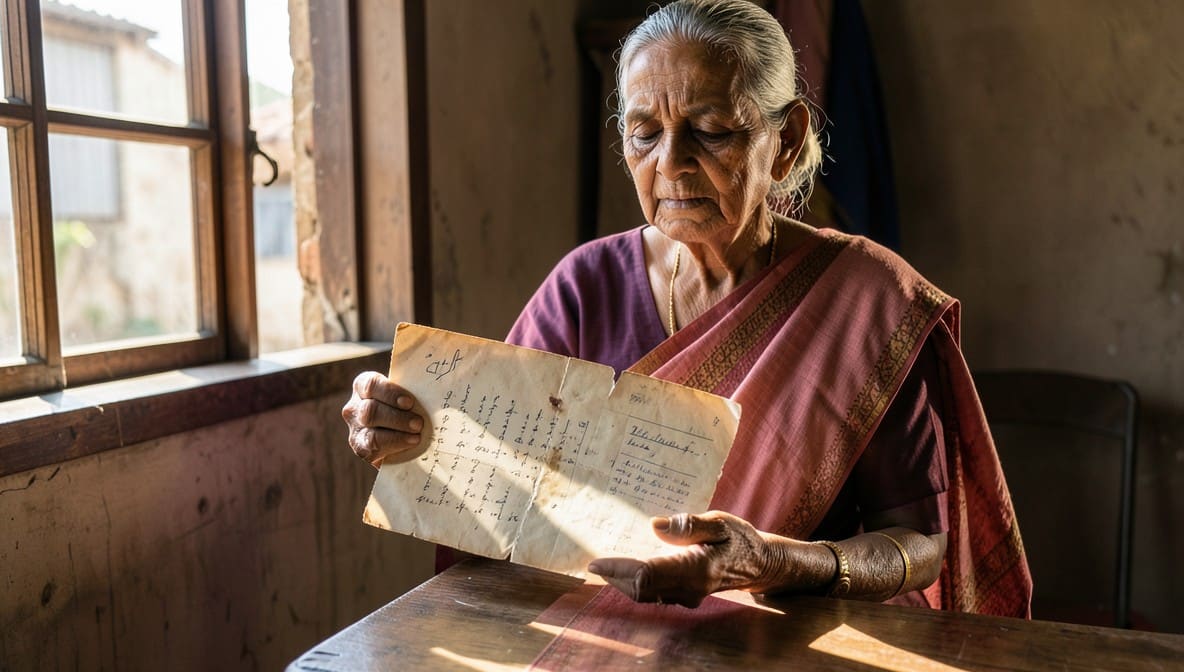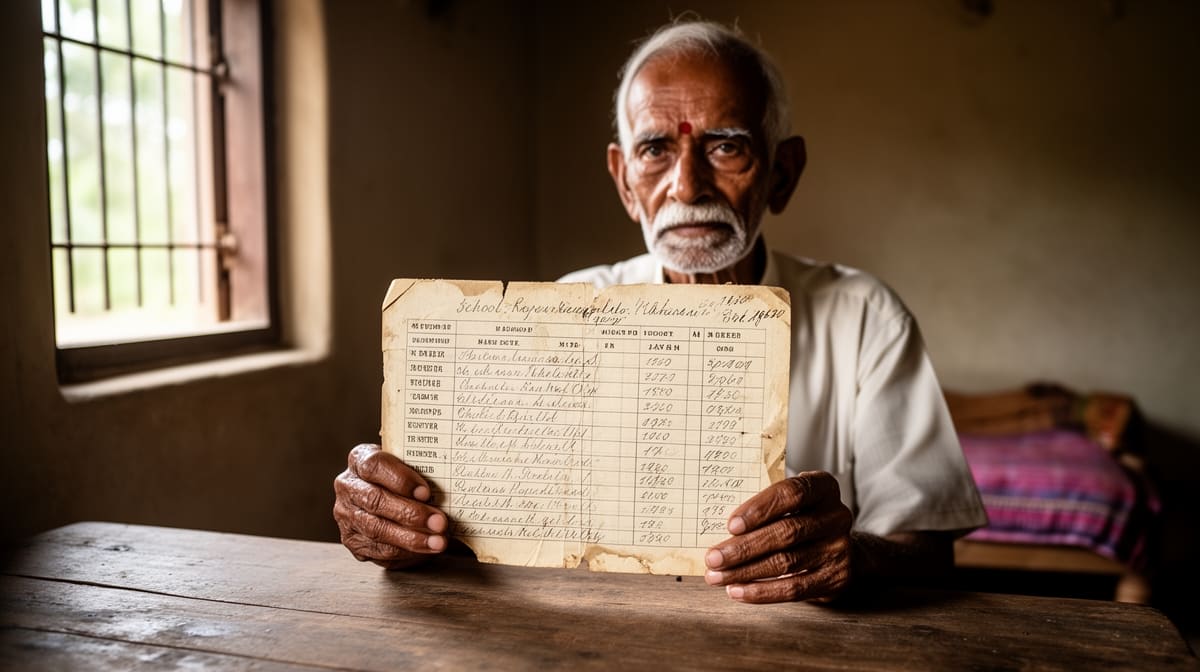
The Bombay High Court has reaffirmed that the discovery of a pre-constitutional document proving Scheduled Tribe status, even after an initial rejection, warrants a fresh opportunity to establish identity in the interest of justice. This ruling clarifies that procedural lapses in producing such documents do not permanently extinguish a claimant’s right to prove ancestral tribal affiliation under constitutional safeguards.
Background & Facts
The Dispute
The petitioner, Shivaji Shankar Baikar, sought recognition of his belonging to the Mahadeo Koli community, which is notified as a Scheduled Tribe under the Constitution (Scheduled Tribes) Order, 1950. His claim was rejected by the Scrutiny Committee of the State of Maharashtra on the ground that he failed to produce any pre-constitutional document establishing ancestral affiliation to the tribe. The petitioner challenged this rejection before the Bombay High Court in Writ Petition No. 9321 of 2016.
Key Facts
- The petitioner’s father’s earliest recorded caste in official documents is "Hindu Mahadev Koli" (post-1950)
- The petitioner’s school records and other documents consistently listed his caste as "Hindu Koli"
- No pre-constitutional document (i.e., issued before 26.01.1950) was produced during the Scrutiny Committee proceedings or during the initial hearing of the writ petition
- The Scrutiny Committee relied on the Apex Court’s decision in Kumari Madhuri Patil v. State of Maharashtra (1994) to hold that absence of pre-constitutional documents rendered the affinity test decisive
- The Vigilance Cell report concluded that the petitioner failed the affinity test
- On 16.08.2017, the Bombay High Court dismissed the writ petition, upholding the Scrutiny Committee’s order
Procedural History
- 1903: School admission record of petitioner’s great grandfather, Bandu Tukaram Baikar, recorded caste as "Mahadeo Koli" (pre-constitutional)
- 1969: School leaving certificate of petitioner’s father recorded caste as "Hindu Mahadev Koli"
- 2016: Petitioner applied for Scheduled Tribe certificate; application rejected by Scrutiny Committee
- 2016: Writ Petition No. 9321 of 2016 filed before Bombay High Court
- 16.08.2017: High Court dismissed writ petition, citing absence of pre-constitutional documents and failure of affinity test
- 19.07.2019: Petitioner obtained school leaving certificate and admission register extract of great grandfather (Bandu Tukaram Baikar) dated 19.11.1903
- 06.11.2019: Review Petition No. 16 of 2026 filed before Bombay High Court seeking recall of the 16.08.2017 order
Relief Sought
The petitioner sought recall of the High Court’s order dated 16.08.2017 and restoration of the writ petition for fresh adjudication on the basis of the newly discovered pre-constitutional document (Exh. 'B') relating to his great grandfather.
The Legal Issue
The central question was whether a court may recall its own order dismissing a Scheduled Tribe claim solely on the ground of non-production of pre-constitutional documents, when such a document is subsequently discovered and its authenticity is prima facie established.
Arguments Presented
For the Petitioner
Learned counsel argued that the document relating to the great grandfather, Bandu Tukaram Baikar, dated 19.11.1903, is a genuine pre-constitutional record establishing ancestral tribal identity. He emphasized that despite due diligence, the document was not locatable until 2019 due to the unavailability of school records and the passage of time. He relied on Kumari Madhuri Patil v. State of Maharashtra to assert that pre-constitutional documents are the primary evidence for tribal status and that courts must not deny opportunity where such evidence emerges post-decision.
For the Respondent-State
The Additional Government Pleader contended that the petitioner had ample opportunity to produce all documents before the Scrutiny Committee and during the writ petition. He argued that the review petition was an abuse of process, as the petitioner failed to exercise due diligence. He cited principles of finality of judgments and urged the court not to reopen matters based on documents that could have been produced earlier.
The Court's Analysis
The Court acknowledged that while diligence is expected, the nature of tribal identity claims often involves fragmented or lost records due to historical marginalization. The Court observed that the document produced - the 1903 school admission record of the great grandfather - is not merely a post-facto fabrication but a contemporaneous pre-constitutional record that directly links the petitioner’s lineage to the Mahadeo Koli tribe.
"With a view not to deprive an opportunity to the petitioner to establish his caste claim as belonging to Koli Mahadeo Scheduled Tribe, in the interest of justice, since the petitioner is relying upon the document which he claims to be that of his great grandfather, an opportunity needs to be given to the petitioner to establish his claim on the basis of the said pre-constitutional document."
The Court distinguished this case from instances of deliberate suppression or negligence, noting that the petitioner had actively searched for ancestral records and only discovered the document after extensive effort. The Court emphasized that the principle of substantive justice under Article 14 and Article 15(4) of the Constitution overrides rigid procedural finality when the claim involves recognition of historically disadvantaged communities.
The Court further noted that Kumari Madhuri Patil does not mandate automatic rejection in the absence of pre-constitutional documents, but rather requires a balanced evaluation where such documents, if available, must be given decisive weight. The discovery of such a document, even belatedly, triggers a duty to re-examine the claim.
The Verdict
The review petition was allowed. The order dated 16.08.2017 dismissing Writ Petition No. 9321 of 2016 was recalled. The writ petition was restored to file and directed to be placed before an appropriate Bench for fresh adjudication on the basis of the pre-constitutional document (Exh. 'B') relating to Bandu Tukaram Baikar. The Court directed that the Scrutiny Committee shall re-examine the petitioner’s claim with due regard to the 1903 school record and afford him a full opportunity to prove his tribal lineage.
What This Means For Similar Cases
Pre-constitutional Documents Are Decisive, Not Dispositive
- Practitioners must now argue that the absence of pre-constitutional documents at initial stages does not bar reconsideration if such documents are later discovered through due diligence
- Courts must treat newly unearthed pre-1950 records as potentially dispositive, even if previously overlooked
- The burden shifts to the state to prove fraud or fabrication when such documents are produced with credible provenance
Due Diligence Must Be Interpreted Contextually
- The Court’s recognition of the petitioner’s efforts to trace records across generations sets a precedent for contextual assessment of diligence in tribal identity cases
- Claims involving oral histories, displaced communities, or destroyed records must not be dismissed on technical grounds
- Legal aid providers should advise clients to maintain exhaustive documentation trails and revisit archival sources even after adverse orders
Judicial Review Is Not a Finality Trap
- This judgment reinforces that constitutional rights to identity and affirmative action cannot be extinguished by procedural lapses
- Courts must remain open to correcting errors where justice demands it, especially for marginalized groups
- Review petitions in caste-based claims should be treated with greater leniency than in commercial or civil disputes